
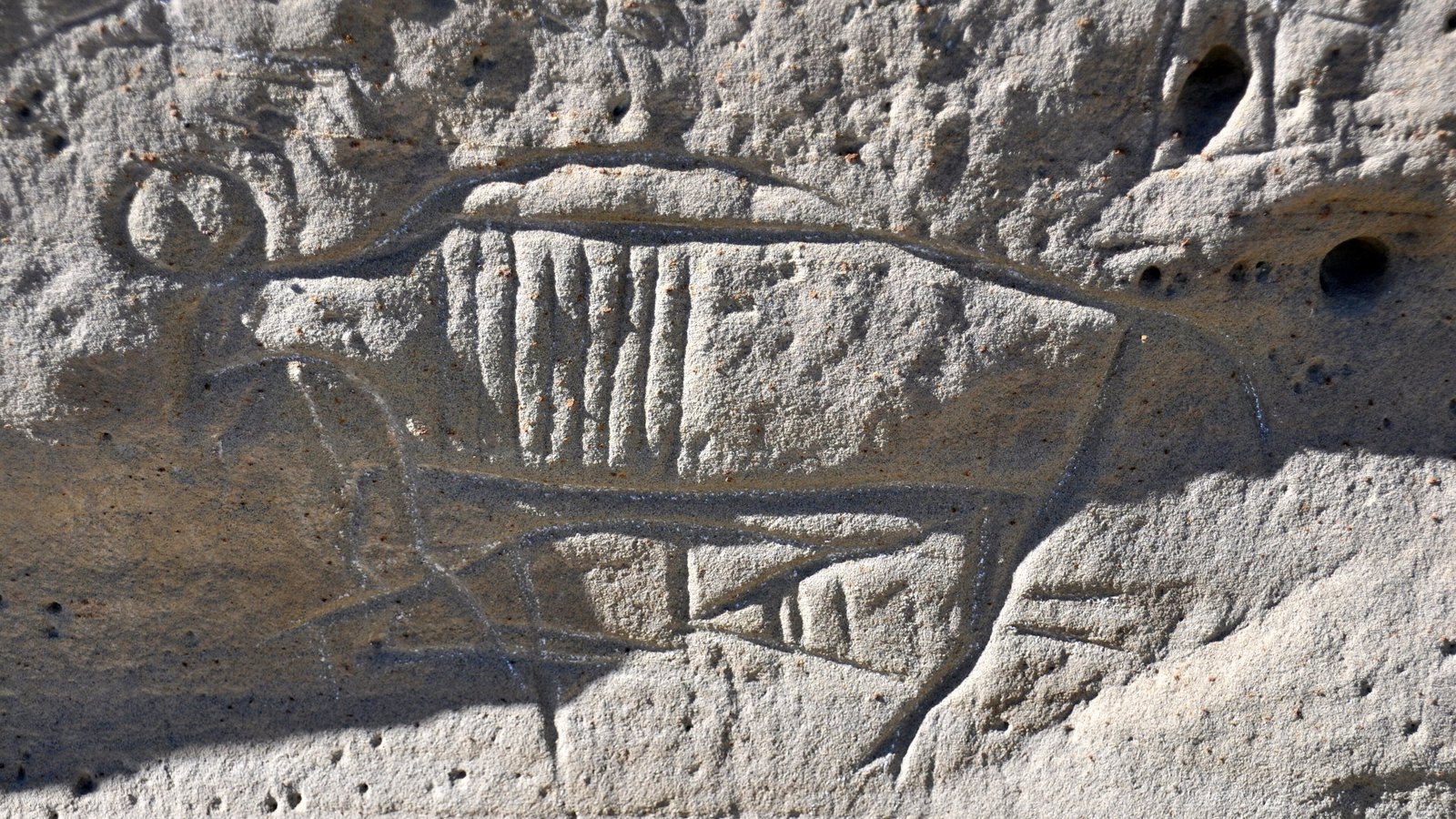
On 27 November 2026, the Bureau of Land Management published a proposed withdrawal extension notice to extend Public Land Order No. 6650 for an additional 20-year term across 20 acres in Sweetwater County, Wyoming. The action preserves the prehistoric Sugarloaf Petroglyphs and stratified Pine Spring archeological sites from mining claims and surface entry, protecting vital stratigraphic sequences and research integrity for academic field scientists and university research offices.
Federal Action to Extend Cultural Land Withdrawals
The Department of the Interior and the Bureau of Land Management (BLM) have initiated formal administrative proceedings to extend the protective withdrawal for two of southwestern Wyoming’s most significant cultural resources. Under Document 2026-24281, filed on public inspection on 27 November 2026 and scheduled for publication in the Federal Register on 30 November 2026, the Secretary of the Interior proposed extending Public Land Order (PLO) No. 6650 for an additional 20-year period.
The proposed order encompasses 20 acres of federally administered public lands in Sweetwater County, Wyoming. The withdrawal segregates these parcels from settlement, sale, location, or entry under the general land laws, including the United States mining laws, though it leaves leasing under the mineral leasing laws intact. The underlying petition, prepared by BLM Wyoming and approved by the Secretary, seeks to prevent surface disturbance that could permanently damage delicate rock art panels and irreplaceable subterranean archaeological strata.
Acting BLM Wyoming State Director Kristina Kirby submitted the proposal pursuant to Section 204 of the Federal Land Policy and Management Act of 1976 (FLPMA), codified at 43 U.S.C. 1714. The action ensures continuity of federal stewardship before the existing withdrawal authority lapses on 22 June 2027.
Key Provisions and Cadastral Specifications
The proposed withdrawal extension operates under federal land management regulations codified in 43 CFR Part 2300, specifically the procedural requirements of Subpart 2310.4 for extension applications. The targeted 20 acres are situated within the Sixth Principal Meridian and comprise three distinct fractional quarter-quarter sections across two townships in Sweetwater County.
Cadastral surveys define the protected acreage precisely: in Township 14 North, Range 107 West, the order covers the east half of the northwest quarter of the southeast quarter of the northwest quarter of section 27; in Township 14 North, Range 109 West, it encompasses the south half of the southwest quarter of the southwest quarter of the southeast quarter of section 19, along with the northwest quarter of the northwest quarter of the northeast quarter of section 30. BLM officials determined that alternative protective mechanisms, such as rights-of-way, interagency agreements, or cooperative agreements, would fail to supply adequate legal defenses against mining claims and entry.
The following table outlines the statutory evolution, administrative parameters, and protection terms governing the Sugarloaf Petroglyphs and Pine Spring sites:
| Administrative Order | Publication Date | Statutory Authority | Acreage and Jurisdiction | Protection Term and Status |
|---|---|---|---|---|
| Public Land Order No. 6650 | 23 June 1987 (52 FR 23549) | FLPMA Section 204 (43 U.S.C. 1714) | 20 acres, Sweetwater County, WY | 20-year initial withdrawal (expired 2007) |
| Public Land Order No. 7678 | 20 June 2007 (72 FR 35063) | FLPMA Section 204 (43 U.S.C. 1714) | 20 acres, Sixth Principal Meridian | 20-year extension (expires 22 June 2027) |
| Proposed Extension (Doc. 2026-24281) | 30 November 2026 (Scheduled) | 43 CFR 2310.4 / 43 U.S.C. 1714 | 20 acres (Sec. 27, 19, and 30) | Proposed 20-year term through June 2047 |
Archaeological Context of Sugarloaf and Pine Spring
The cultural resources protected under PLO No. 6650 represent critical touchstones in North American hunter-gatherer archaeology. The Pine Spring site (designated in archaeological records as 48SW101) is recognized among researchers as a premier deeply stratified prehistoric occupation and tool-stone workshop in southwestern Wyoming. Archaeological excavations have identified multiple stratified cultural horizons dating from the Paleoindian period through the Archaic and Late Prehistoric eras, documenting over 9,000 years of recurrent human occupation and lithic procurement.
At Pine Spring, prehistoric knappers exploited localized geological outcrops to produce projectile points, scrapers, and bifacial blanks. Because the stratigraphy preserves intact chronometric sequences, soil horizons, and pollen profiles, the site provides a baseline for paleoenvironmental reconstructions in the Green River Basin. Meanwhile, the Sugarloaf Petroglyphs preserve irreplaceable petroglyph panels carved into exposed sandstone cliffs. These images feature zoomorphic figures, anthropomorphic depictions, and abstract geometric engravings that reflect the artistic, ceremonial, and social practices of ancestral Indigenous populations.
Preserving these 20 acres intact directly aligns with national standards for cultural resource stewardship established by the National Register of Historic Places, protecting fragile petroglyph faces from mechanical vibration, vandalism, and surface mineral extraction that would compromise diagnostic rock varnishes.
Interagency Coordination and Stakeholder Consultations
In preparing the withdrawal application, BLM Wyoming consulted with local government officials and cooperating regional entities in Sweetwater County. According to the federal filing, municipal and county stakeholders expressed no objections to extending the withdrawal. The absence of objection reflects broad regional consensus that surface mining entry would inflict permanent harm on cultural tourism, heritage conservation, and non-renewable archaeological deposits.
Federal reviews confirmed that no alternative federal lands within the Green River Basin possess identical combinations of deep prehistoric stratigraphy and petroglyphic artistry. Furthermore, the agency verified that fulfilling the withdrawal’s protective goals requires no federal water rights. The administrative record demonstrates compliance with Section 106 review principles overseen by the Advisory Council on Historic Preservation, ensuring that federal land actions avoid adverse impacts on sensitive historic properties.
The decision reinforces the mandate of the BLM’s overarching cultural resources program, which manages hundreds of thousands of documented archaeological sites across Western public lands under a dual charter of resource conservation and public education.
Implications for Researchers and University Research Offices
The continuation of federal withdrawal status carries concrete legal, compliance, and scientific ramifications for academic archaeologists, university departments, and sponsored research administrators. Securing these parcels against mineral entry ensures that ongoing and future field studies can proceed within an undisturbed landscape, insulated from surface strip-mining or staking conflicts that disrupt field research.
For research offices managing field projects, several immediate operational requirements apply:
- Field Research Permitting: Academic investigators planning reconnaissance, surface collection, or excavation at Pine Spring or Sugarloaf must secure permits under the Archaeological Resources Protection Act (ARPA) through the BLM Wyoming State Office. Withdrawal from general mining laws does not waive ARPA permitting rules; rather, it solidifies the administrative framework governing scientific research access.
- Data Governance and Sensitive Geolocation: Because exposed rock art and stratified tool quarries are vulnerable to looting, institutional investigators must implement rigorous data handling protocols. Research offices must enforce restricted access for precise GPS coordinates in compliance with federal disclosure exemptions and FAIR data principles.
- Collections Management and Long-Term Curation: All artifacts, faunal remains, and sediment samples recovered from federal acreage remain federal property. Institutional proposals must budget for accessioning and permanent data curation in accredited repositories conforming to 36 CFR Part 79 standards.
- Institutional Compliance Frameworks: Sponsored research officers overseeing federal grants from agencies such as the National Science Foundation (NSF) must verify that project descriptions detail robust data management plans. These plans should align field workflows with institutional integrity and compliance frameworks, including formal tribal consultation protocols.
Next Steps and Public Participation Timeline
Publication of Document 2026-24281 in the Federal Register on 30 November 2026 opens a mandatory 90-day public comment and consultation window. The BLM invites citizens, tribal governments, academic institutions, and cultural heritage organizations to submit written comments, technical assessments, or requests for a public meeting on or before 1 March 2027.
Submissions and meeting requests must be directed in writing to the BLM Wyoming State Director, 5353 Yellowstone Road, Cheyenne, Wyoming 82009. The agency noted that Sarah Naranjo, Realty Specialist in the Wyoming State Office, serves as the primary technical point of contact. If the authorized officer determines that public interest warrants an oral hearing, formal notice detailing the date, time, and venue will appear in both the Federal Register and local Sweetwater County newspapers at least 30 days prior to the event.
Following the close of the comment window, BLM Wyoming will compile an administrative record and environmental review under the National Environmental Policy Act (NEPA). Once the Secretary of the Interior executes the final public land order, the new 20-year term will take effect, maintaining seamless legal protection through June 2047.
Sources
- Office of the Federal Register: Public Inspection: Proposed Withdrawal Extension: Sugarloaf Petroglyphs and Pine Spring Archeological Sites, WY, checked 2026-11-27
- National Archives and Records Administration: eCFR :: 43 CFR Part 2300 — Land Withdrawals, checked 2026-11-27
- Bureau of Land Management: Cultural Resources | Bureau of Land Management, checked 2026-11-27
- Advisory Council on Historic Preservation: Protecting Historic Properties | Advisory Council on Historic Preservation, checked 2026-11-27
- National Park Service: National Register of Historic Places (U.S. National Park Service), checked 2026-11-27






