
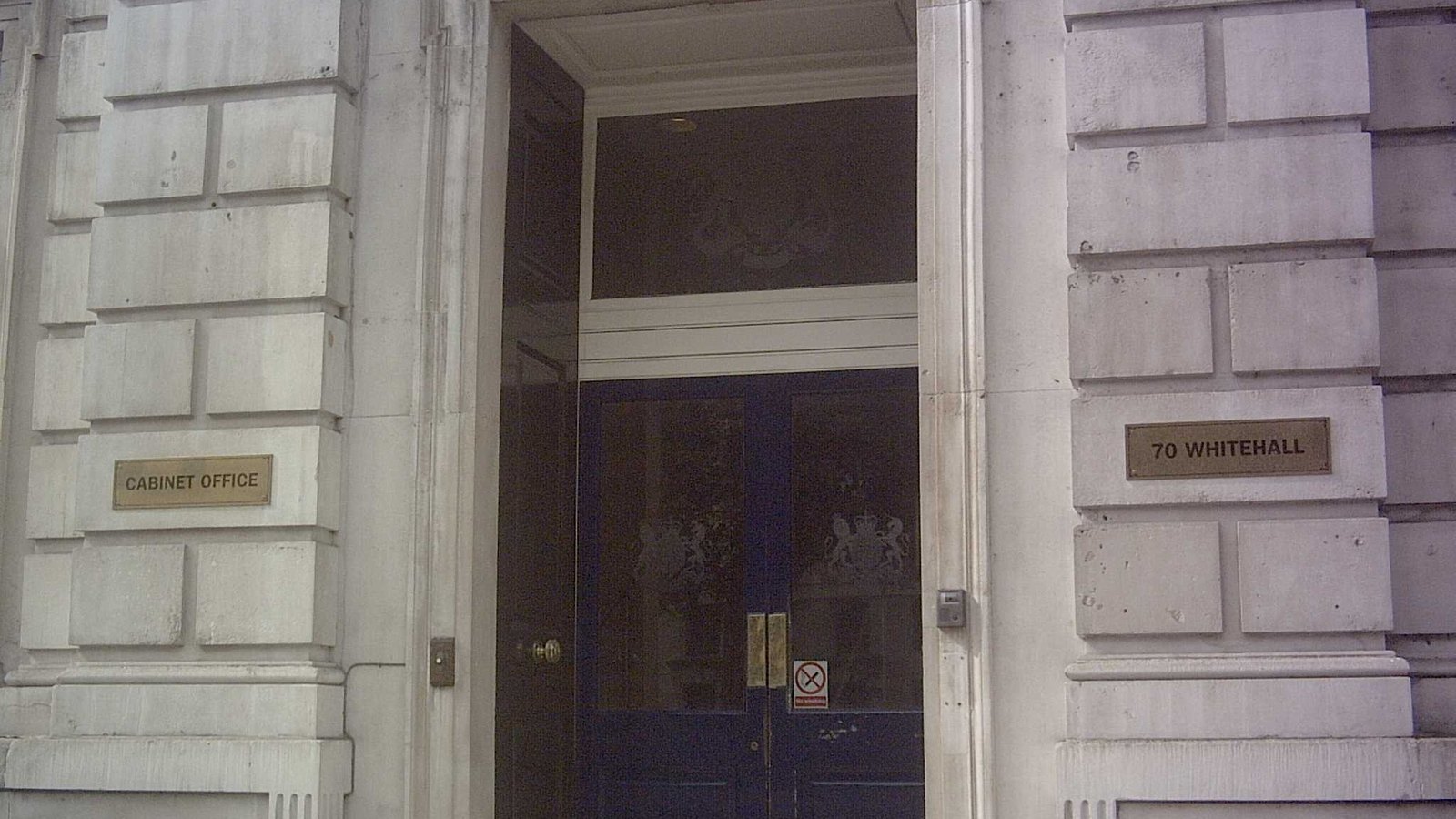
On 26 November 2026, the UK Cabinet Office announced the appointment of Richard Las CBE as the inaugural Independent Reviewer of Public Sector Authorities Fraud Investigation and Enforcement Services, establishing statutory oversight over the Public Sector Fraud Authority. The appointment introduces heightened scrutiny over cross-departmental data sharing, civil recovery powers, and public grant assurance mechanisms, directly impacting university research administration offices and recipient institutions managing public funding.
Statutory appointment and oversight remit
The creation of the Independent Reviewer role follows the enactment of the Public Authorities (Fraud, Error and Recovery) Act 2025 (PAFER). The legislation equips central authorities with modernized civil powers to investigate and recover public funds lost to fraud, including pandemic-era scheme abuse. Operating within the Cabinet Office, the Public Sector Fraud Authority Fraud Investigation and Enforcement Services (PAFIES) can initiate civil investigations across central departments and public bodies.
As the first Independent Reviewer, Richard Las CBE holds a statutory mandate to examine investigative practices, civil enforcement procedures, and recovery actions conducted by PAFIES to ensure legal compliance, fairness, and proportionality. The appointment followed pre-appointment scrutiny by the House of Commons Public Administration and Constitutional Affairs Committee (PACAC) on 24 November 2026 under the Governance Code for Public Appointments.
The supervisory framework ensures that as the Public Sector Fraud Authority exercises intrusive civil powers, independent oversight protects procedural rights and upholds public trust.
Legislative framework and enforcement specifications
The PAFER Act 2025 establishes statutory mechanisms replacing fragmented departmental counter-fraud processes. Counter-fraud officers now hold civil capabilities to compel the production of banking records and access communications data authorized by the Investigatory Powers Commissioner’s Office, backed by systemic data analytics.
The operational rationale reflects persistent public sector losses. A National Audit Office report on tackling fraud and corruption against government found that fraud and error cost UK taxpayers between £33 billion and £58 billion annually, excluding pandemic schemes. The NAO stressed that consistent functional standards and independent scrutiny are essential to secure recoveries without impeding legitimate public activity.
The table below summarizes the operational structure of PAFER powers and the Reviewer’s oversight responsibilities:
| Functional Area | Statutory Basis | Operational Authority | Reviewer Oversight Role |
|---|---|---|---|
| Investigation Initiation | PAFER Act 2025 s. 28 | Adoption of civil fraud investigations for public bodies | Monitors jurisdictional thresholds and procedural propriety |
| Information Gathering | PAFER civil notice powers | Compulsory production notices to banks and third parties | Evaluates necessity, burden, and statutory compliance |
| Digital Data Analytics | PSFA mandate | Cross-matching across National Fraud Initiative databases | Reviews privacy safeguards and false-positive handling |
| Direct Debt Recovery | PAFER enforcement powers | Administrative penalties, recovery orders, and clawbacks | Audits recovery proportionality and dispute resolution |
| Grant Funder Assurance | GovS 013 standard | Assessment of arm’s-length bodies and grant controls | Reviews systemic assurance standards for grant programs |
Institutional background and evolution of the PSFA
This statutory oversight marks a major milestone in restructuring the UK government’s counter-fraud infrastructure. In August 2022, the government launched the Public Sector Fraud Authority jointly under the Cabinet Office and HM Treasury, backed by £25 million in initial investment. The authority developed the Government Counter Fraud Profession and established Government Functional Standard GovS 013: Counter Fraud.
While the PSFA initially focused on preventative controls and departmental risk assessments, the enactment of PAFER in 2025 expanded its role into active civil enforcement. In research and public administration, these structural transitions parallel evolving standards across CASRAI grants management frameworks, where transparent stewardship underpins funding integrity.
Richard Las brings extensive enforcement experience to the role. A career public servant with over three decades in government counter-fraud, Las served until 2026 as Director and Chief Investigation Officer of HM Revenue and Customs’ Fraud Investigation Service, directing major inquiries into serious financial fraud and illicit finance.
Leadership perspectives and governance standards
Cabinet Office and PSFA leadership highlighted that independent scrutiny is critical when exercising intrusive civil powers. Mark Cheeseman, Chief Executive of the Public Sector Fraud Authority, welcomed the appointment: “His extensive experience leading complex fraud investigations at HMRC will be invaluable as we embed the new enforcement and recovery powers under the Public Authorities (Fraud, Error and Recovery) Act 2025. Independent oversight of these powers is essential to maintaining public confidence, ensuring they are used proportionately, effectively, and to the highest professional standards.”
Richard Las CBE emphasized his statutory role: “Rigorous, independent scrutiny is vital to ensuring that the new investigative and recovery powers are exercised lawfully, fairly, and proportionately as the Public Authorities Fraud Investigation and Enforcement Service becomes established. I look forward to working constructively with the Authority, wider government, and Parliament to uphold public trust and protect taxpayers’ money.”
This commitment to proportionate oversight aligns with broader sector governance. UK research institutions operate within the Concordat to Support Research Integrity, which commits institutions and funders to accountability, ethical stewardship, and transparency in public spending.
Implications for universities and research administration
For universities, research institutes, and academic centers, the operationalization of PAFER reinforces a demanding compliance environment. Major funders have updated their governance requirements to reflect central counter-fraud rules. UK Research and Innovation details these expectations in the UK Research and Innovation counter fraud and bribery policy and its 2025–2028 strategy, enforcing a zero-tolerance approach across all seven research councils and Innovate UK.
A major development for higher education is expanded automated data matching under the National Fraud Initiative. Recipient organizations face cross-system checks analyzing payroll, vendor registries, and grant disbursements to detect duplicate claims, undeclared conflicts, or improper invoices. Research organizations must ensure employee records and project disclosures withstand external audit scrutiny.
In collaborative projects, institutions must strengthen controls during the post-award phase. Lead recipients should employ a systematic subrecipient monitoring checklist to audit partner costs, verify eligibility, and confirm partner compliance. Because PAFIES holds powers to compel records from third-party contractors, universities must retain complete audit trails for subawards, procurement files, and personnel allocations.
Implementation roadmap and next steps
Following parliamentary scrutiny, Richard Las has initiated his oversight review across PSFA and PAFIES operational units. Initial priorities include auditing case referral thresholds, examining the proportionality of civil information notices, and reviewing privacy safeguards within data-matching tools.
The Independent Reviewer will submit an annual statutory report to Parliament and Cabinet Office ministers detailing enforcement compliance and recommendations. Concurrently, the PSFA will issue updated assurance guidance for arm’s-length bodies and grant-awarding departments across 2027. Research institutions should review their internal counter-fraud risk assessments, ensure robust subaward monitoring, and align financial administration with PAFER standards.
Sources
- Cabinet Office: Appointment of the Public Sector Fraud Authority Independent Reviewer, checked 2026-11-28
- Public Sector Fraud Authority: Public Sector Fraud Authority – GOV.UK, checked 2026-11-28
- The National Archives: Public Authorities (Fraud, Error and Recovery) Act 2025, checked 2026-11-28
- National Audit Office: Tackling fraud and corruption against government – NAO report, checked 2026-11-28
- UK Research and Innovation: UK Research and Innovation counter fraud and bribery policy – UKRI, checked 2026-11-28






