
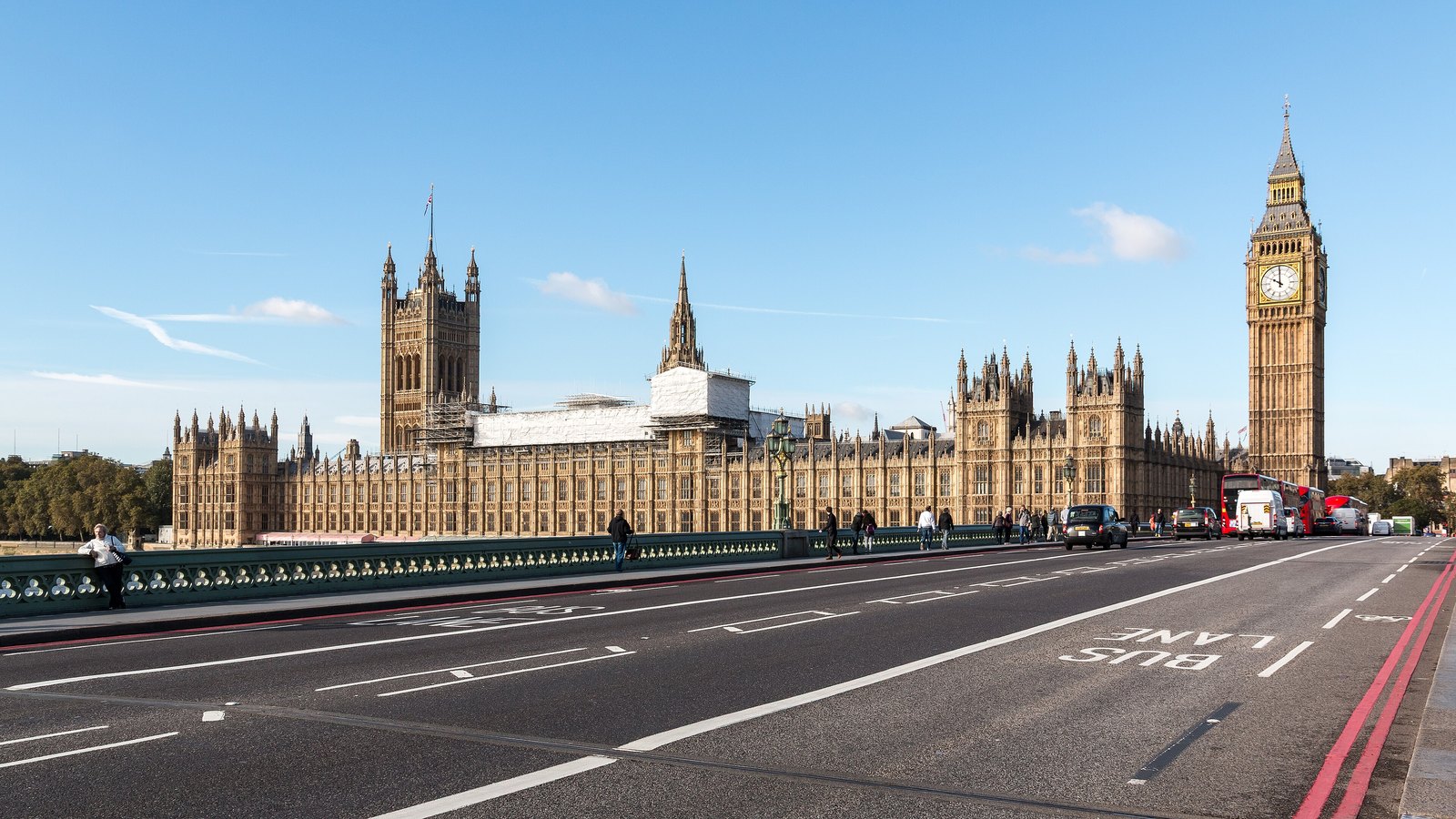
On 26 November 2026, the UK Cabinet Office presented Command Paper CP 1725 to Parliament, issuing the formal Government Response to the Retirement and Participation Committee’s Report to enact a mandatory retirement age of 80 alongside a 20 percent attendance threshold for members of the House of Lords. The paper establishes binding transition arrangements for the upper chamber that provide vital administrative models for institutional governance, tenure transitions, and public-sector labour analysis across higher education and research sectors.
What happened
Presented by the Lord Privy Seal and Leader of the House of Lords by Command of His Majesty, Command Paper CP 1725 (ISBN 978-1-5286-6932-0) endorses the structural conclusions formulated by the select committee appointed in December 2025. Chaired by Baroness Taylor of Bolton, the House of Lords Retirement and Participation Committee delivered its substantive blueprint (HL Paper 32) in July 2026, establishing administrative mechanisms to fulfill manifesto commitments regarding the size and activity of the second chamber.
The Government confirmed its acceptance of the Committee’s central recommendations, agreeing that all members must be subject to an equitable retirement threshold without exemptions based on prior ministerial rank or judicial seniority. Rather than imposing an immediate departure deadline that would truncate parliamentary capacity, ministers accepted a five-year transitional phase beginning in July 2029. Alongside age thresholds, the response approved a participation requirement demanding that peers attend at least one-fifth of parliamentary sitting days over two consecutive sessions to maintain their seats.
Crucially, ministers affirmed that the reforms will proceed via internal resolutions of the House and amendments to Standing Orders rather than requiring contentious primary legislation. The Leader of the House will collaborate across party groups and the Usual Channels to table formal approval resolutions, establishing an agreed framework to govern upper-house tenure into the 2030s.
Key details
The government response codifies distinct operational timelines and statutory instruments to govern chamber departures, prospective peer appointments, and participation monitoring. These provisions balance workforce renewal against the retention of specialized legislative expertise.
Under the agreed transition plan, the mandatory retirement requirement will begin on 8 July 2029, starting with peers aged 85 and above. The age ceiling will ratchet downward annually each July over five successive parliamentary years until reaching the permanent threshold of age 80 in 2034. To ensure future compliance without drafting an entirely new constitutional statute, all nominees for future peerages will sign a formal undertaking prior to conferral pledging to retire upon reaching age 80. Failure to honour this undertaking will trigger disciplinary procedures and expulsion under the House of Lords (Expulsion and Suspension) Act 2015.
Participation compliance will be benchmarked at 20 percent of sitting days averaged across two full parliamentary sessions, with formal allowances made for official leaves of absence and verified personal exemptions. Qualifying participation explicitly incorporates formal committee service, including evidence sessions conducted across the UK. Furthermore, the Government endorsed assessing automated pass readers to record attendance accurately while offering peers real-time transparency dashboards to monitor their attendance standing. In parallel, the administration supported creating an emeritus association to retain institutional memory and alumni connections for departed members.
| Reform Dimension | Adopted Threshold | Implementation Mechanism | Governance Scope |
|---|---|---|---|
| Retirement Phase-In | Age 85 (2029) lowering to Age 80 (2034) | Annual July ratchets over five years | Equitable application across all existing peers |
| Prospective Appointees | Mandatory retirement at age 80 | Pre-conferral written undertaking | Enforced via Expulsion and Suspension Act 2015 |
| Participation Floor | 20% of sittings across two sessions | Standing Orders and pass-reader logging | Includes select committees and scrutiny boards |
| Crossbench Allocation | Maintained at approximately 20% | Inter-party convention alignment | Preserves non-partisan and former judicial expertise |
| Former Member Engagement | Emeritus association status | House-administered parliamentary network | Maintains advisory and institutional continuity |
Background and context
The House of Lords has long represented one of the largest legislative assemblies in the democratic world, expanding past 800 members as successive prime ministerial appointments outstripped voluntary retirements under the House of Lords Reform Act 2014. The 2024 general election manifesto pledged to address the chamber’s scale by removing hereditary peers and instituting a definitive retirement age of 80 by the end of the parliamentary term.
However, evidence submitted to the Retirement and Participation Committee underscored severe operational risks associated with a sudden departure cliff edge. Immediate application of an age-80 threshold would have forced the abrupt exit of more than 160 parliamentarians—nearly a quarter of the active chamber—disproportionately eroding independent crossbench expertise and judicial scrutiny. The Committee’s phased timetable was engineered specifically to prevent administrative paralysis while achieving demographic renewal.
This institutional recalibration mirrors wider demographic transitions observed across the UK economy. Ongoing statistical tracking by the Office for National Statistics reveals evolving economic activity patterns among older cohorts, where labour market exits, phased retirement practices, and occupational health considerations increasingly shape workforce planning. By deploying gradual transitions, automated activity monitoring, and formal emeritus structures, Parliament is executing an institutional test case for managing demographic aging within high-seniority professional environments.
Reaction and institutional perspectives
Parliamentary leaders and constitutional researchers have largely commended the Government for choosing pragmatic procedural instruments over legislative confrontation, while emphasizing critical unresolved questions regarding executive patronage.
In an analytical review published by the UCL Constitution Unit, Unit Director Professor Meg Russell observed that while the Committee delivered an effective mechanism to regulate the parliamentary exit route, retirement rules alone cannot permanently resolve chamber overcrowding unless the executive voluntarily restrains prime ministerial appointments. Without statutory caps on new creations, departures driven by retirement and attendance thresholds risk being neutralized by subsequent patronage waves.
Within Westminster, crossbench leaders welcomed the explicit ministerial pledge to protect the 20 percent independent crossbench quota previously recommended by the Lord Speaker’s committee. Legal scholars, meanwhile, noted that using standing orders backed by the 2015 expulsion statute avoids lengthy judicial review while establishing an enforceable code of conduct that respects parliamentary privilege.
What it means for researchers, universities and research offices
The Cabinet Office’s endorsement holds immediate relevance for academic institutions, research managers, and social scientists studying public administration, demographic trends, and higher education governance.
For demographic economists and sociologists, the staggered transition generates an invaluable natural experiment in late-career labour market dynamics, senior executive retirement timing, and public leadership renewal. Researchers conducting cohort study methodology and utilizing longitudinal social datasets—such as the survey infrastructure maintained by the English Longitudinal Study of Ageing—will be able to benchmark state-level administrative departures against broader national retirement trajectories. These datasets provide critical comparative baselines alongside national longitudinal data collections tracking generational change.
For university human resources departments, faculty senates, and research offices, Westminster’s framework provides an instructive precedent. As higher education institutions navigate the abolition of default retirement ages, ensuring sustainable career progression for mid-career researchers while preserving the contributions of distinguished senior academics remains a persistent challenge. The model of phased thresholds, quantifiable engagement expectations, and structured emeritus associations offers a concrete administrative blueprint that informs ongoing public administration research into organizational design and tenure reform.
What happens next
Implementation now transitions into the procedural and technical arena of the House of Lords. The Leader of the House of Lords will introduce formal government motions inviting the chamber to adopt the Committee’s recommendations by resolution. This parliamentary debate will formalize the phased departure schedule and mandate the relevant domestic committees to draft corresponding amendments to House Standing Orders.
Concurrently, the House of Lords Commission will deliberate on the technical, privacy, and security parameters of automated pass-reader systems to log attendance accurately. Discussions within party groups will establish guidelines for assessing medical and compassionate exemptions to the 20 percent participation rule. If approved as scheduled, the first tranche of retirements governing members aged 85 and older will take statutory effect on 8 July 2029, completing the transition to a universal retirement ceiling of 80 by July 2034.
Sources
- Cabinet Office: Government Response to the Retirement and Participation Committee’s Report, checked 2026-11-28
- The National Archives / UK Legislation: House of Lords (Expulsion and Suspension) Act 2015, checked 2026-11-28
- UCL Constitution Unit: What next for House of Lords reform? Retirement and participation requirements have been proposed, but Andy Burnham’s government must couple them with other action, checked 2026-11-28
- Office for National Statistics: Employment and labour market, checked 2026-11-28
- English Longitudinal Study of Ageing: Projects, checked 2026-11-28






