
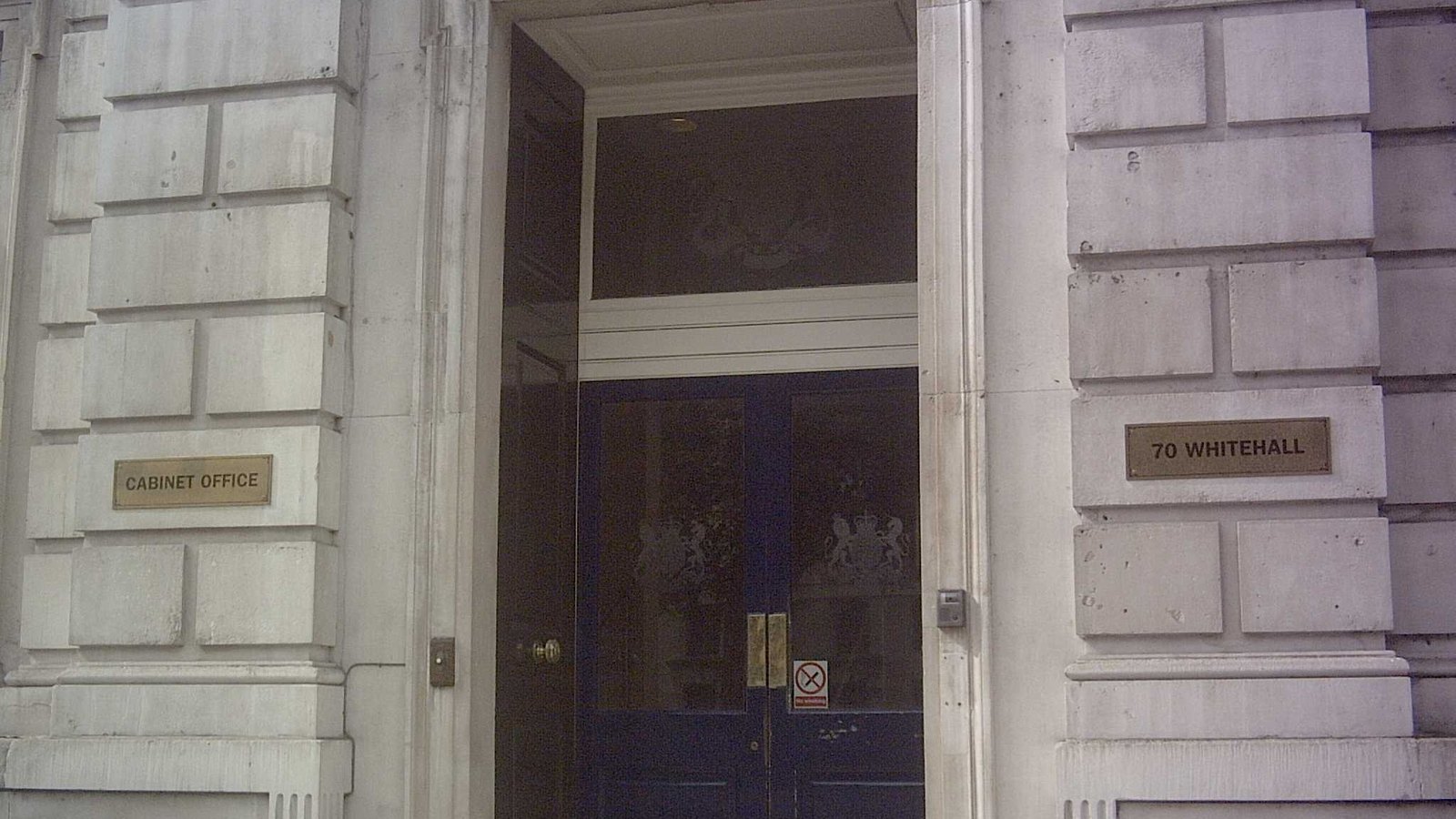
On 27 November 2026, the UK Cabinet Office published an updated implementation tracking framework and digital monitoring system to oversee government actions across the recommendations of the independent UK Covid-19 Inquiry. The redesigned framework establishes structured cross-departmental oversight for emergency preparedness, requiring lead departments to deliver transparent milestones across scientific advisory committee transparency, rapid clinical-trial surge capacity, and health data infrastructure that directly impact university medical faculties, clinical trial units, and epidemic modelling consortia.
Cabinet Office Establishes Centralized Oversight for Covid-19 Inquiry Reforms
The UK Cabinet Office released its official publication on the UK Covid-19 Inquiry recommendations on 27 November 2026, launching a redesigned digital tracking dashboard and user guide for central departments. Operating under the statutory framework of the Inquiries Act 2005, the release establishes central administrative machinery across Whitehall to follow up on determinations issued by Inquiry Chair Baroness Heather Hallett. Managed by the Cabinet Office, the platform centralizes departmental responses, implementation timelines, and evidentiary milestones for systemic reforms.
The system replaces earlier static updates from 2025 and early 2026 with an interactive dashboard logging recommendations across ten modular inquiry areas. Lead government departments must submit verifiable progress updates, designated target completion dates, and named administrative accountability to ensure institutional commitments translate into operational capabilities across civil contingency and health delivery bodies.
Key Details of the Multi-Module Tracking Architecture
The tracking framework structures government commitments across ten distinct inquiry modules, classifying each recommendation under two operational categories: Open, denoting that implementation work is active within designated departments, and Closed, signifying that required institutional, legislative, or operational actions have been fully executed. The official Inquiry Recommendations Hub organizes inquiries by thematic scope, enabling external comparison against original inquiry findings.
Participating ministries must align disclosures with the published Lead Government Department Expectations Set, which defines emergency readiness, risk ownership, and resilience planning across central government. The framework encompasses scientific advisory architecture, health data sharing, and rapid research surge capabilities.
The table below outlines core modules tracked by the framework, their lead departments, and the key institutional mechanisms governing academic and clinical research sectors:
| Inquiry Module | Primary Lead Body | Research and Regulatory Focus Area | Institutional Implementation Mechanism | Tracking Category |
|---|---|---|---|---|
| Module 1: Resilience and Preparedness | Cabinet Office | Civil emergency planning, national risk assessment, horizon scanning | National Resilience Standards and cross-departmental stress-testing exercises | Open |
| Module 2: Decision-Making and Governance | Cabinet Office and No. 10 | Scientific advisory transparency, SAGE governance, intergovernmental coordination | Codified operational mandates and open publication of scientific consensus papers | Open |
| Module 3: Healthcare Systems | DHSC | Infection prevention protocols, surge staffing, clinical data interoperability | Standardised NHS clinical escalation triggers and trusted research environment pathways | Open |
| Module 4: Vaccines and Therapeutics | DHSC and DSIT | Clinical trial surge networks, platform trial readiness, expedited MHRA reviews | Standing multi-centre clinical trial agreements and fast-track ethical review protocols | Closed |
| Module 5: Emergency Procurement | Cabinet Office and DHSC | Diagnostic consumables, laboratory reagents, PPE stockpiles | Strategic resilience reserves and dynamic purchasing frameworks for diagnostics | Open |
| Module 7: Test, Trace, and Isolation | UKHSA | Pathogen genomic sequencing, laboratory surge sharing, diagnostic scaling | Integrated public health laboratory networks and academic partner surge contracts | Open |
The dashboard provides downloadable datasets in CSV, XLSX, and JSON formats, allowing watchdogs, parliamentary committees, and university researchers to audit status shifts across publication cycles.
Evolution of Scientific Advice and Emergency Preparedness Governance
The tracking framework reflects lessons from systemic vulnerabilities exposed during the 2020 pandemic. Early government decision-making faced intense scrutiny over the opacity of scientific advice, delays in initiating multi-centre clinical trials, and administrative barriers to health data integration across NHS trusts. While bodies like the Scientific Advisory Group for Emergencies (SAGE) provided rapid counsel, the inquiry documented critical gaps in recording divergent scientific perspectives and coordinating research priorities across departments.
As documented in The UK Covid-19 Inquiry Explainer by the Institute for Government, pre-pandemic planning suffered from institutional silos and a failure to prepare for novel pathogens beyond influenza. Whitehall restructuring has since established open minutes, conflict-of-interest declarations, and formal integration of epidemiological models into ministerial policy deliberations, embedding principles outlined in the Science and Public Policy: Methods and Governance Guide.
Institutional Perspectives and Sector Scrutiny
Cabinet Office officials have presented the redesigned tracking system as an essential step toward permanent civil contingency preparedness, ensuring that structural lessons remain embedded in departmental business plans beyond the lifespan of the inquiry. Senior civil servants highlighted that aligning tracking with Lead Government Department expectations establishes clear accountability lines for departmental accounting officers and resilience directors.
Public policy researchers and university governance experts have welcomed the interactive architecture while emphasizing that transparency metrics must reflect authentic operational readiness rather than tick-box compliance. Analysts noted that marking complex recommendations as Closed requires independent verification, particularly where devolved healthcare administrations and cross-border pathogen surveillance data flows are involved. Academic commentators also stressed that sustained surge capabilities require multi-year research infrastructure funding rather than ad-hoc crisis allocations.
Implications for University Research Offices, Clinical Trial Units, and Modelling Groups
The tracking framework directly affects how higher education institutions and clinical trial units interact with national emergency response mechanisms. For academic clinical trial units, Module 4 commitments require pre-established surge protocols, standardized multi-centre site agreements, and agile governance models that align with the UK clinical trials regulations reform. Trial sponsors must maintain pre-approved platform protocols capable of rapidly evaluating novel therapeutic candidates during declared health emergencies.
Research offices managing health studies also face rigorous oversight regarding trial transparency. Compliance teams must observe mandatory registration rules detailed in the guide on clinical trial registration and reporting compliance, ensuring trial registrations, protocol amendments, and public results summaries are submitted without administrative delay. This standard forms a core benchmark within central monitoring metrics.
Epidemiology and mathematical modelling groups must navigate restructured data governance frameworks. Modules 3 and 7 establish streamlined pipelines for sharing anonymized NHS clinical datasets and UKHSA genomic surveillance feeds with university consortia. Academic teams handling sensitive health data must adhere to Secure Data Environment standards and maintain rigorous protocols under the GDPR and data protection compliance in research guidance, balancing rapid analytical response with statutory privacy protections.
Scheduled Implementation Milestones and Next Steps
The Cabinet Office will issue implementation updates on a biannual schedule, alternating between November and May reporting windows. Progress reports will be formally laid before Parliament alongside written ministerial statements, enabling select committees to review departmental delivery against established timetables.
Key milestones across 2027 include the anticipated publication of Module 8 and Module 9 inquiry reports addressing economic support schemes and cross-border travel rules. Central departments are also scheduled to conclude a triennial review of national resilience standards by late 2027, integrating closed inquiry recommendations into statutory guidance for local resilience forums across the UK.
Sources
- UK Cabinet Office: UK Covid-19 Inquiry Recommendations, checked 2026-11-28
- UK Covid-19 Inquiry: Inquiry Recommendations Hub, checked 2026-11-28
- Institute for Government: The UK Covid-19 Inquiry Explainer, checked 2026-11-28
- The National Archives: Inquiries Act 2005, checked 2026-11-28
- UK Cabinet Office: Department Overview and Responsibilities, checked 2026-11-28
- UK Cabinet Office: Lead Government Department Expectations Set, checked 2026-11-28






