
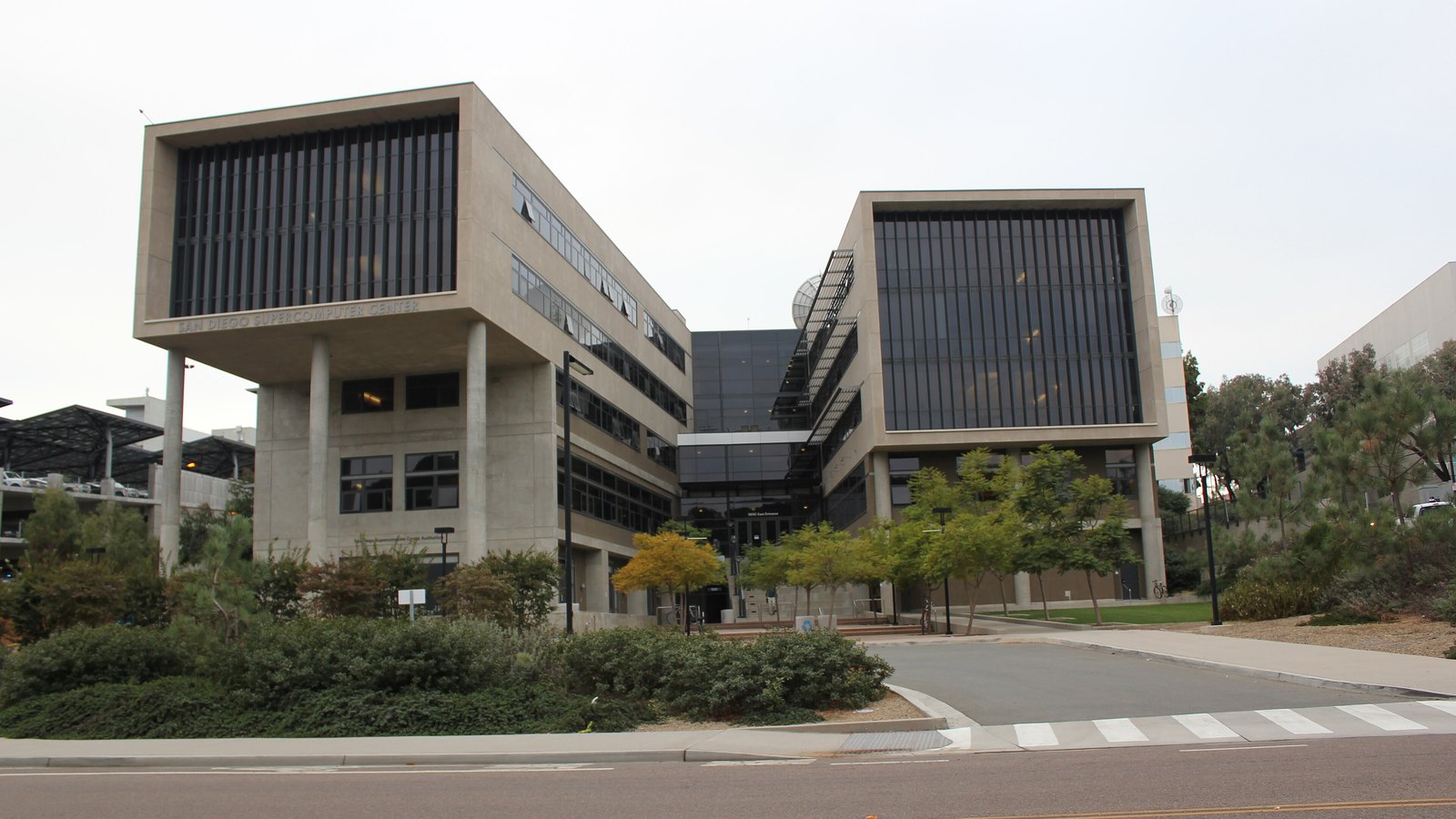
On November 23, 2026, California higher education systems, including the University of California, California State University, and California Community Colleges, accelerated investments in on-campus artificial intelligence data centers and localized open-weight computing clusters. The push establishes institutional digital sovereignty to control escalating commercial software licensing fees, eliminate vendor lock-in, and safeguard sensitive research and student records under strict university governance.
What happened
Public universities and community colleges across California are deploying on-premises hardware clusters and open-weight artificial intelligence models to counter growing dependence on commercial vendors. According to investigative reports published on November 23, 2026, by CalMatters and partner outlet LAist, institutional leaders across the University of California (UC), California State University (CSU), and the California Community Colleges system are launching on-campus AI data centers and localized computing infrastructure.
The push toward local compute is grounded in physical campus deployments. At California Polytechnic State University, San Luis Obispo, university leadership unveiled an on-campus computing facility known as the AI Factory, detailed in an official announcement by California Polytechnic State University. Housed in the computer science building, the facility provides dedicated computing power for students and faculty. Simultaneously, the University of California, San Diego expanded its campus AI platform, documented by the University of California San Diego, which operates TritonGPT out of the San Diego Supercomputer Center (SDSC).
Concurrently, the California Community Colleges system—representing 116 colleges and the largest postsecondary education network in the United States—submitted a formal budget proposal seeking 21 million dollars in state funding to build an interconnected, sovereign AI compute network. The initiatives represent an institutional effort to control escalating subscription fees and protect student records, even as university systems maintain commercial enterprise agreements.
Key details of campus AI deployments
Campus computing architectures across California reflect diverse strategies tailored to undergraduate education, high-performance academic research, and statewide community college administration.
| Institution or System | Hardware and Investment | Primary Focus | Network and Model Architecture |
|---|---|---|---|
| Cal Poly San Luis Obispo | 4 NVIDIA DGX B200 systems, 1,300 TB storage (3 million dollar Noyce endowment) | Undergraduate computing, machine learning research, protected medical and legal datasets | On-premises AI Factory cluster; evaluating CalREN connection |
| UC San Diego / SDSC | San Diego Supercomputer Center multi-GPU clusters and high-speed storage fabric | TritonAI platform, campus administrative workflows, research computing, inter-campus code sharing | LiteLLM gateway routing open-weight Llama models and commercial APIs; code shared with UC Berkeley and UC Merced |
| California Community Colleges | Proposed 21 million dollar statewide compute network across 20 participating districts | Student advising, financial aid navigation, administrative automation, sovereign data control | Decentralized campus nodes linked over the 8,000-mile California Research and Education Network (CalREN) |
| California State University | 22-campus systemwide network participating in exploratory multi-tier AI discussions | Administrative efficiency, routine faculty workloads, student service support | Centralized commercial contract management paired with local campus cluster experiments |
Cal Poly’s AI Factory was funded by a 3 million dollar gift from the estate of Intel co-founder Robert N. Noyce through the School of Applied Computing. Providing 1,300 terabytes of storage and four NVIDIA DGX B200 systems, it enables faculty like Dr. Jonathan Ventura (drone ecology) and Dr. Paul Anderson (spinal cord genomics) to train models on university-controlled hardware without transmitting protected data externally.
At UC San Diego, TritonGPT has evolved into TritonAI, serving administrative and research queries across campus. UCSD shares its underlying software architecture with peer campuses, supporting BearGPT at UC Berkeley and SCOUT at UC Merced. Linking these distributed facilities is the California Research and Education Network (CalREN), an 8,000-mile fiber-optic network operated by CENIC that currently connects approximately 20 community college districts, UC campuses, and CSU universities.
Background and commercial cloud tensions
The turn toward on-campus compute stems from mounting fiscal and governance friction between public university administrations and commercial artificial intelligence vendors. Systemwide enterprise agreements have grown increasingly expensive. The University of California negotiated enterprise terms for ChatGPT Edu starting at 10 dollars per user per month, with advanced capabilities reaching 30 dollars per user per month. The California State University system signed enterprise contracts with OpenAI extending through 2029 with commitments totaling roughly 56 million dollars.
Per-seat commercial licensing creates unpredictable operational expenditures that strain departmental budgets when usage spikes beyond contract quotas. In contrast, acquiring on-premises server hardware converts variable operational costs into amortized capital investments, allowing universities to deploy open-weight models without per-query token fees.
Statutory privacy compliance presents an equally critical driver. Public universities manage legally protected records under the FERPA (Family Educational Rights and Privacy Act) and the HIPAA Privacy Rule. Commercial vendor contracts generally stipulate that user data will not be used to train frontier models, but campus administrators remain wary of potential data leakage. On-premises clusters ensure strict data residency within university firewalls.
Environmental transparency also shapes compute governance. Assessing the direct compute carbon footprint of closed cloud queries remains difficult due to commercial vendor opacity. Running localized infrastructure under sustainable HPC practices allows university facility managers to monitor power draw and cooling demands directly against institutional sustainability targets.
Faculty, student, and governance reactions
The expansion of commercial AI contracts and the parallel investment in local compute have triggered significant debate across California academic senates, student groups, and administrative councils. Faculty bodies have voiced skepticism toward top-down commercial software procurement, arguing that automated text tools compromise educational integrity.
On November 5, 2026, the Academic Senate of the California State University approved formal resolution AS-3813-26/AA/FA: Reorientation of Faculty Engagement With Generative A.I., calling on CSU leadership to redirect generative AI toward administrative workflows rather than classroom instruction. The resolution cautioned that widespread chatbot use undermines student assessment and urged caution against uncontrolled educational rollouts.
At San Francisco State University, professor Matha Kenney collected approximately 4,000 signatures on a faculty petition demanding the termination of the CSU-OpenAI agreement over academic integrity concerns. Similarly, the University of California Academic Council sent a formal letter to UC President James Milliken protesting that system leadership finalized commercial agreements without adequate shared governance consultation.
Advocates of university-owned infrastructure emphasize that physical hardware protects academic autonomy. Alex Bisberg, a computer science professor at Cal Poly, stated that owning the hardware allows the university to control its digital destiny. Craig Hayward, strategic AI advisor to the California Community Colleges Chancellor’s Office, noted that while open-weight models require more precise prompting than commercial interfaces, they provide full end-to-end data control.
What it means for researchers, universities, and research offices
The establishment of campus AI data centers introduces concrete operational shifts for higher education leadership and research administrators:
- Hybrid Architectural Planning: University CIOs must balance commercial frontier tools against local open-weight clusters. Deploying local gateways like LiteLLM allows institutions to route routine tasks to internal clusters while reserving commercial APIs for specialized needs.
- Research Data Security and Privacy by Design: Institutional Review Boards and research offices can enforce privacy by design, ensuring that sensitive datasets—such as genomic sequences or clinical trials—remain isolated on university-managed infrastructure.
- Budget Predictability: Capital investments in campus hardware insulate university departments from recurring commercial subscription increases and unexpected token billing spikes.
- Experimental Reproducibility: Academic researchers avoid model drift and API deprecations that frequently disrupt multi-year studies dependent on proprietary cloud endpoints.
- Facility and Energy Management: High-performance computing directors must manage the physical constraints of dense GPU hardware, implementing efficient liquid cooling and power backup systems.
What happens next
California higher education systems will advance their localized compute initiatives across multiple legislative and administrative venues in the coming months. The California Community Colleges Chancellor’s Office will present its 21 million dollar sovereign AI proposal to state budget committees during the spring 2027 legislative cycle to expand campus connectivity over CalREN.
Within the University of California, the UC Board of Regents is slated to review recommendations from the presidential AI steering committee concerning internal SDSC computing expansion alongside commercial vendor agreements. Cal Poly San Luis Obispo will explore connecting its AI Factory directly to the CalREN network to facilitate resource sharing with other CSU campuses.
Across the California State University system, administrative and academic working groups will begin implementing resolution AS-3813-26/AA/FA in early 2027, establishing guidelines that restrict generative AI in formal assessments while testing localized administrative tools on campus hardware.
Sources
- California Polytechnic State University: Cal Poly Unveils NVIDIA-Powered AI Factory to Expand AI Education and Research, checked 2026-11-23
- CalMatters: California colleges are creating their own AI alternatives, checked 2026-11-23
- LAist: Why California’s universities are setting up their own AI data centers, checked 2026-11-23
- Academic Senate of the California State University: Resolution AS-3813-26/AA/FA: Reorientation of Faculty Engagement With Generative A.I., checked 2026-11-23
- University of California San Diego: TritonGPT is Here and Ready to Help, checked 2026-11-23






