
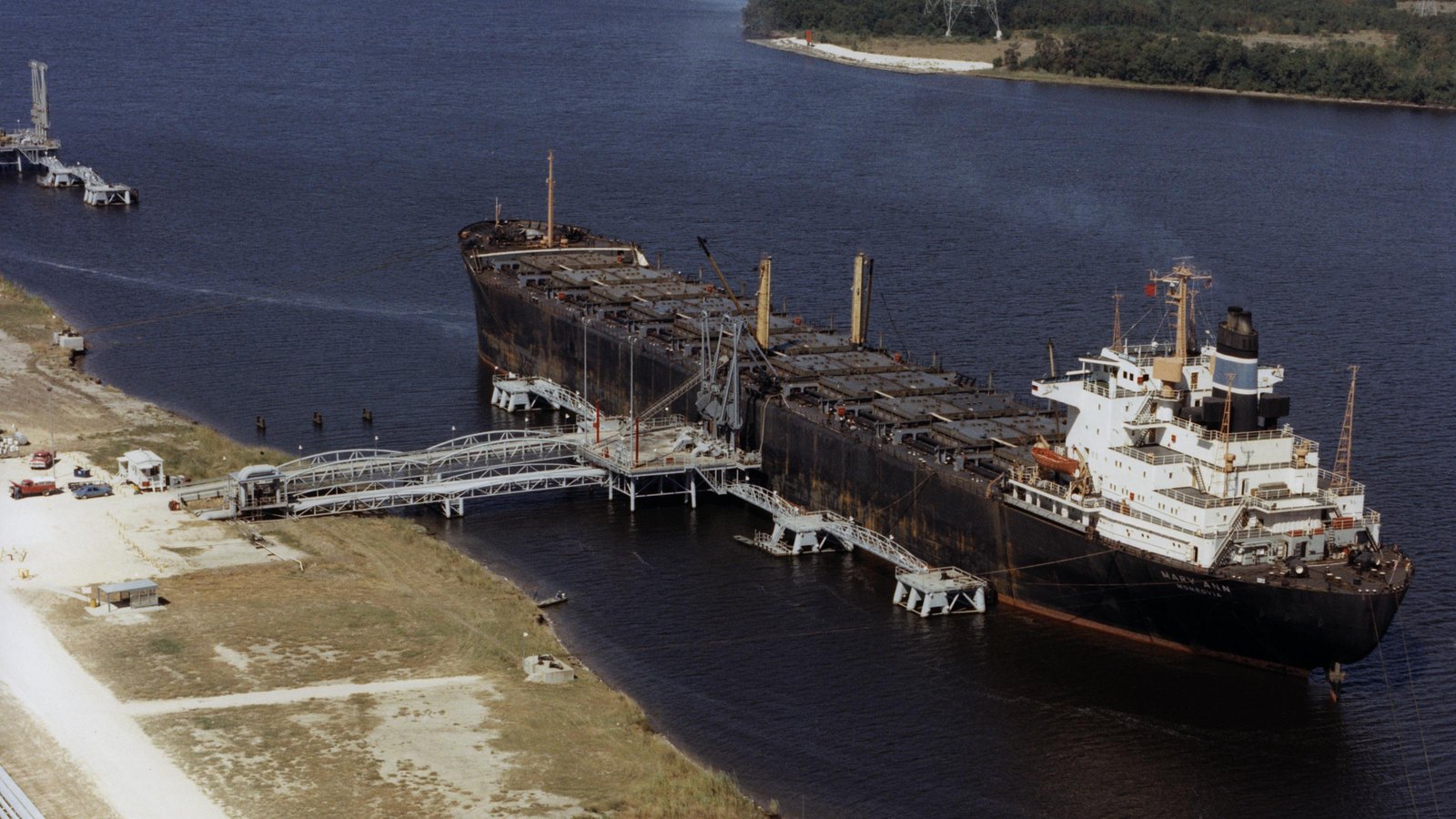
On November 20, 2026, U.S. Customs and Border Protection announced in the Federal Register that it has accredited and approved the Texas City, Texas facility of Intertek USA, Inc. as an authorized commercial laboratory and commercial gauger under federal trade regulations, establishing rigorous chemical testing and volume measurement standards that directly inform university metrology programs and industrial research partnerships.
Customs Accreditation and Gauger Approval for Texas City Facility
Under a formal notice published in the Federal Register (Document Number 2026-23722, 91 FR 75338–75339), U.S. Customs and Border Protection (CBP), an agency of the Department of Homeland Security, confirmed the triennial accreditation and approval of Intertek USA, Inc. for commercial laboratory testing and bulk gauging services. The formal approval covers the company’s operational site located at 728 4th Avenue South in Texas City, Texas. The administrative action was issued under the authority of Patricia A. Coleman, Acting Assistant Commissioner of CBP’s Laboratories and Scientific Services Directorate (LSSD).
The accreditation and approval took effect retroactively as of October 28, 2025, and extends through the next triennial inspection window scheduled for October 2028. Under the provisions of 19 U.S.C. 1499, commercial laboratories and commercial gaugers play an essential statutory role in the examination of merchandise imported into the United States. Through the CBP Commercial Gaugers and Laboratories program, private technical entities that satisfy federal qualification standards are authorized to generate certified quantitative and qualitative reports that determine tariff classifications, customs duty assessments, excise liabilities, and import quota eligibility.
Approved Testing Methods and Gauging Standards
The federal notice grants approval to the Texas City facility across two technical disciplines: volumetric gauging governed by the American Petroleum Institute (API), and analytical laboratory testing governed by Customs and Border Protection Laboratory (CBPL) methods and American Society for Testing and Materials (ASTM) specifications.
For commercial gauging, the facility is approved for five procedures from the API Manual of Petroleum Measurement Standards (MPMS):
- API Chapter 3: Tank Gauging (shore tanks and floating roof vessels).
- API Chapter 7: Temperature Determination (liquid temperature for volume correction).
- API Chapter 8: Sampling (manual and automatic hydrocarbon sampling).
- API Chapter 12: Calculations of Petroleum Quantities (net standard volume calculations).
- API Chapter 17: Marine Measurement (marine vessel and custody transfer verification).
Accurate implementation of these volumetric procedures connects directly with industrial flowmeter types and principles, ensuring custody transfer meters and storage tanks align with certified baseline measurements.
For laboratory testing, the facility achieved accreditation across eighteen CBPL and ASTM analytical procedures spanning crude petroleum, middle distillates, fuel oils, and asphalt binders:
| CBPL Method | ASTM Standard | Test Method Title | Customs Analysis Scope |
|---|---|---|---|
| 27-01 | D287 | API Gravity by Hydrometer | Tariff classification by gravity |
| 27-02 | D1298 | Density and API Gravity by Hydrometer | Standard volume correction at 60 °F |
| 27-03 | D4006 | Water in Crude Oil by Distillation | Deduction of basic sediment and water |
| 27-04 | D95 | Water in Petroleum Products by Distillation | Purity verification for imported fuels |
| 27-05 | D4928 | Water in Crude Oils by Karl Fischer Titration | Trace moisture quantification |
| 27-06 | D473 | Sediment in Crude and Fuel Oils by Extraction | Particulate contamination assessment |
| 27-07 | D4807 | Sediment in Crude Oil by Membrane Filtration | Micron-level filtration profiling |
| 27-08 | D86 | Atmospheric Distillation of Petroleum Products | Boiling range and cut-point analysis |
| 27-11 | D445 | Kinematic Viscosity of Liquids | Flow resistance and heavy fraction grading |
| 27-13 | D4294 | Sulfur by Energy-Dispersive X-ray Fluorescence | Sulfur content and emission compliance |
| 27-46 | D5002 | Density and API Gravity by Digital Analyzer | Automated crude oil density profiling |
| 27-48 | D4052 | Density and Relative Density by Digital Meter | Oscillating U-tube liquid density validation |
| 27-50 | D93 | Flash Point by Pensky-Martens Closed Cup | Combustion hazard and safety grading |
| 27-53 | D2709 | Water and Sediment in Middle Distillates | Centrifuge purity assessment |
| 27-54 | D1796 | Water and Sediment in Fuel Oils | Residual fuel centrifuge testing |
| N/A | D4007 | Water and Sediment in Crude Oil | Crude centrifuge procedure |
| N/A | D70 | Density of Semi-Solid Asphalt Binder | Pycnometer specific gravity testing |
| N/A | D97 | Pour Point of Petroleum Products | Low-temperature flow characterization |
Analytical instrumentation for digital density validation follows precise protocols documented in technical guides on digital density meter operating specifications, while rheological and kinematic evaluations correspond to mechanics outlined in guides on rotational viscometer spindle mechanics. Detailed compliance specifications for spectroscopic sulfur analysis are maintained under the ASTM D4294 standard specification.
Regulatory Framework Under 19 CFR Part 151
The statutory basis governing commercial customs testing is codified under Title 19 of the Code of Federal Regulations. Specifically, 19 CFR 151.12 laboratory accreditation regulations establish administrative criteria for commercial laboratories, while 19 CFR 151.13 governs commercial gaugers. Importers are legally bound by the Customs Modernization provisions of the Tariff Act of 1930, which place the burden of reasonable care on the importing community.
To maintain federal accreditation, commercial testing facilities must meet four core requirements:
- Quality Management Systems: Laboratories must align with ISO/IEC 17025 general requirements for testing and calibration laboratories, ensuring metrological traceability to national standards.
- Proficiency Testing and Audits: Facilities must participate in collaborative round-robin proficiency sample programs administered by CBP LSSD or recognized proficiency testing providers.
- Operational Independence: Testing entities must operate free from commercial interest in the merchandise being tested.
- Record Retention: Analytical records, calibration certificates, and raw instrument datasets must be preserved for at least five years under customs recordkeeping rules.
Commercial facilities like those within Intertek commercial petroleum testing operations provide essential geographic throughput in high-volume shipping corridors like Galveston Bay, complementing CBP’s federal laboratories. Methodologies applied in customs testing also mirror environmental hydrocarbon testing protocols reviewed in total petroleum hydrocarbons analytical protocols.
Agency Oversight and Quality Verification Protocols
In the accreditation notice, CBP emphasized that trade entities cannot rely on generic corporate credentials when submitting certified laboratory findings. The agency explicitly directed that parties seeking to employ the Texas City facility must request and receive written assurances from Intertek USA confirming that the specific test method or gauging procedure requested is actively accredited or approved by CBP.
Inquiries regarding individual test method coverage or facility credentials may be directed to Dr. Laura Granell at the Laboratories and Scientific Services Directorate in Washington, D.C. CBP maintains strict monitoring authority, including unannounced facility inspections, blind sample audits, and procedural spot-checks. Should an accredited facility fail proficiency tests or violate quality standards, CBP possesses statutory authority under 19 CFR 151.12(h) and 151.13(h) to suspend or revoke accreditation immediately. These oversight mechanisms reflect core tenets found across national laboratory compliance standards.
Implications for University Metrology, Academic Labs, and Research Partnerships
While commercial customs accreditation primarily facilitates international energy commerce, the formal approval of analytical methods carries direct relevance for university research administrators and academic research partnerships:
- Sponsored Research and Pilot Facilities: University engineering and chemistry departments collaborating with industry partners on synthetic fuels, advanced biofuels, or carbon capture feeds often import experimental materials. When research materials enter through commercial ports, customs clearance relies on certified assays from CBP-accredited facilities to verify chemical composition and duty exemptions.
- Metrological Traceability in Academic Labs: Academic laboratories performing contract testing or baseline characterization often benchmark their internal instruments against CBPL and ASTM methods. Familiarity with 19 CFR 151 standards ensures academic research data aligns with regulatory criteria accepted by federal enforcement bodies.
- Export Controls and Customs Compliance: Research administration offices overseeing the import of specialized reagents, reference standards, or hydrocarbon fractions must ensure logistics providers utilize accredited testing entities to prevent classification discrepancies or delayed shipment releases.
- Student Training and Professional Accreditation: Analytical chemistry curricula that incorporate standardized ASTM protocols—such as coulometric Karl Fischer water determination, automated distillation, and digital density measurement—prepare students for careers in certified industrial and governmental testing laboratories.
Triennial Audit Timeline and Next Steps
The accreditation and approval of Intertek USA’s Texas City facility represents a continuing three-year regulatory cycle. Following its formal approval as of October 28, 2025, and official publication in November 2026, the facility will operate under CBP oversight through October 2028. Prior to the expiration of this triennial cycle, the facility must submit formal re-accreditation documentation and undergo comprehensive on-site inspections conducted by CBP technical staff.
Organizations utilizing the Texas City laboratory for customs entries should update their compliance documentation, confirm method-specific accreditations in writing, and maintain all associated testing records in accordance with federal customs regulations.
Sources
- Federal Register: Accreditation and Approval of Intertek USA, Inc. (Texas City, TX), as a Commercial Gauger and Laboratory, checked 2026-11-25
- U.S. Customs and Border Protection: Commercial Gaugers and Laboratories Program, checked 2026-11-25
- Legal Information Institute: 19 CFR § 151.12 – Accreditation of Commercial Laboratories, checked 2026-11-25
- ASTM International: ASTM D4294 Standard Test Method for Sulfur in Petroleum and Petroleum Products, checked 2026-11-25
- Intertek Group: Commercial Petroleum and Chemical Laboratory Services, checked 2026-11-25






