
The Centers for Disease Control and Prevention and the National Institute for Occupational Safety and Health have issued a draft technical reassessment proposing a 200 parts-per-million, 10-minute time-weighted average Short-Term Exposure Limit for occupational carbon monoxide. Published in the Federal Register under dockets CDC-2026-1849 and NIOSH-357, the proposal modernizes federal guidance established in 1972, requiring university Environmental Health and Safety offices, academic chemical laboratories, and research facility directors to re-evaluate acute toxic gas monitoring protocols ahead of the February 22, 2027 public comment deadline.
What Happened: NIOSH Proposes First Carbon Monoxide Limit Revision Since 1972
The National Institute for Occupational Safety and Health (NIOSH), operating within the Centers for Disease Control and Prevention (CDC) under the Department of Health and Human Services (HHS), published a Federal Register request for public comment on a draft technical document titled Proposed Short-Term Exposure Limit for Occupational Exposure to Carbon Monoxide. The regulatory notice, designated Document Number 2026-23798 (Citation: 91 FR 75512), officially opens a 90-day docket for public feedback, scientific review, and technical data submissions through February 22, 2027.
Under the proposed update, NIOSH recommends replacing its longstanding 200 parts-per-million (ppm) ceiling limit—a threshold established in 1972 that was never to be exceeded at any moment—with a 200-ppm short-term exposure limit (STEL) calculated as a 10-minute time-weighted average (TWA). NIOSH Director John J. Howard and primary contact R. Todd Niemeier confirmed that this reassessment updates five decades of industrial hygiene policy to reflect modern toxicological modeling, continuous datalogging sensors, and revised risk assessment practices.
The agency operates under dockets CDC-2026-1849 and NIOSH-357 on the federal eRulemaking docket on Regulations.gov, where researchers and safety managers can access supporting documentation and submit evaluations. The reassessment retains NIOSH’s full-shift Recommended Exposure Limit (REL) of 35 ppm as an 8-to-10-hour TWA while updating acute excursion management for research and chemical environments.
Key Details and Parameter Comparison
Workplace carbon monoxide (CO) exposure limits in the United States span multiple federal agencies and consensus bodies, each adopting distinct averaging intervals and enforcement mechanisms. While NIOSH RELs serve as authoritative health benchmarks, federal safety standards enforced under OSHA 29 CFR 1910.1000 Table Z-1 govern general industry compliance across research, pilot plant, and testing facilities.
The table below summarizes the key occupational parameters governing carbon monoxide exposure, comparing the historical 1972 NIOSH benchmarks, the 2026 proposed STEL, the binding federal OSHA standard, and private consensus guidelines:
| Standard / Organization | Limit Designation | Concentration | Averaging Period | Regulatory & Scientific Status |
|---|---|---|---|---|
| NIOSH (1972 Baseline) | Recommended Exposure Limit (REL) | 35 ppm (40 mg/m³) | Up to 10-hour TWA (40-hour week) | Non-mandatory federal health recommendation; retained in 2026 review |
| NIOSH (1972 Ceiling) | Recommended Ceiling Limit | 200 ppm (229 mg/m³) | Instantaneous ceiling (no averaging) | Legacy threshold proposed for replacement due to measurement limits |
| NIOSH (2026 Proposal) | Proposed Short-Term Exposure Limit (STEL) | 200 ppm (229 mg/m³) | 10-minute time-weighted average (TWA) | Draft technical document under review in Docket CDC-2026-1849 |
| OSHA (29 CFR 1910.1000) | Permissible Exposure Limit (PEL) | 50 ppm (55 mg/m³) | 8-hour time-weighted average (TWA) | Enforceable federal regulation under General Industry Table Z-1 |
| ACGIH (Consensus) | Threshold Limit Value (TLV-TWA) | 25 ppm (29 mg/m³) | 8-hour time-weighted average (TWA) | Voluntary industrial hygiene guideline designed to limit COHb to 3.5% |
Background: Toxicology, Risk Modeling, and Sensor Capabilities
The basis for NIOSH’s carbon monoxide guidance originates in its 1972 publication, Criteria for a Recommended Standard: Occupational Exposure to Carbon Monoxide (DHEW/NIOSH Publication No. 73-11000). At the time, analytical instrumentation relied on grab samples, colorimetric detector tubes, and stationary infrared analyzers. Because instant detection technology was constrained, the 200 ppm ceiling served as an absolute safeguard against rapid carboxyhemoglobin (COHb) accumulation.
Carbon monoxide exerts toxicity through competitive binding to hemoglobin, possessing an affinity roughly 200 to 250 times higher than that of oxygen. Formation of COHb alters the allosteric structure of hemoglobin, shifting the oxyhemoglobin dissociation curve leftward and impairing tissue oxygen release. The physiological rate of CO uptake and elimination is governed by the Coburn-Forster-Kane differential equation, which models blood COHb saturation based on ambient CO concentration, minute alveolar ventilation, barometric pressure, pulmonary diffusing capacity, and endogenous production.
In its 2026 reassessment, NIOSH applied modern quantitative risk frameworks outlined in Current Intelligence Bulletin 69: NIOSH Practices in Occupational Risk Assessment (DHHS/NIOSH Publication No. 2020-106). Modern computational modeling demonstrates that transient spikes lasting seconds do not cause instantaneous blood carboxyhemoglobin surges to dangerous clinical levels, whereas sustained concentrations over several minutes do. Moving to a 10-minute averaging window aligns the exposure standard directly with physiological response kinetics and the capabilities of modern personal electronic sensors.
Reaction and Industrial Hygiene Perspectives
The transition from an absolute ceiling limit to a 10-minute time-weighted average has generated focused discussion across safety professionals. A detailed regulatory analysis published by Foresight emphasized that the proposal addresses an operational challenge in field monitoring: distinguishing between transient electronic sensor noise and genuine hazardous exposure events. Direct-reading electrochemical dosimeters frequently record fleeting electrical spikes or minor localized excursions that do not represent true physiological hazards under biological uptake models.
Industrial hygiene specialists have long noted disparities between federal benchmarks. An industrial hygiene comparison by Aethair highlights that while OSHA’s legal PEL remains fixed at 50 ppm as an 8-hour TWA without an explicit federal STEL in Table Z-1, practicing hygienists often struggle to harmonize older NIOSH ceiling values with voluntary ACGIH guidelines. A formal 10-minute STEL provides safety professionals with a mathematically verifiable integration window that can be directly configured into modern wearable datalogging instruments and telemetry-enabled facility monitoring networks.
What the Proposed STEL Means for Research Laboratories and Universities
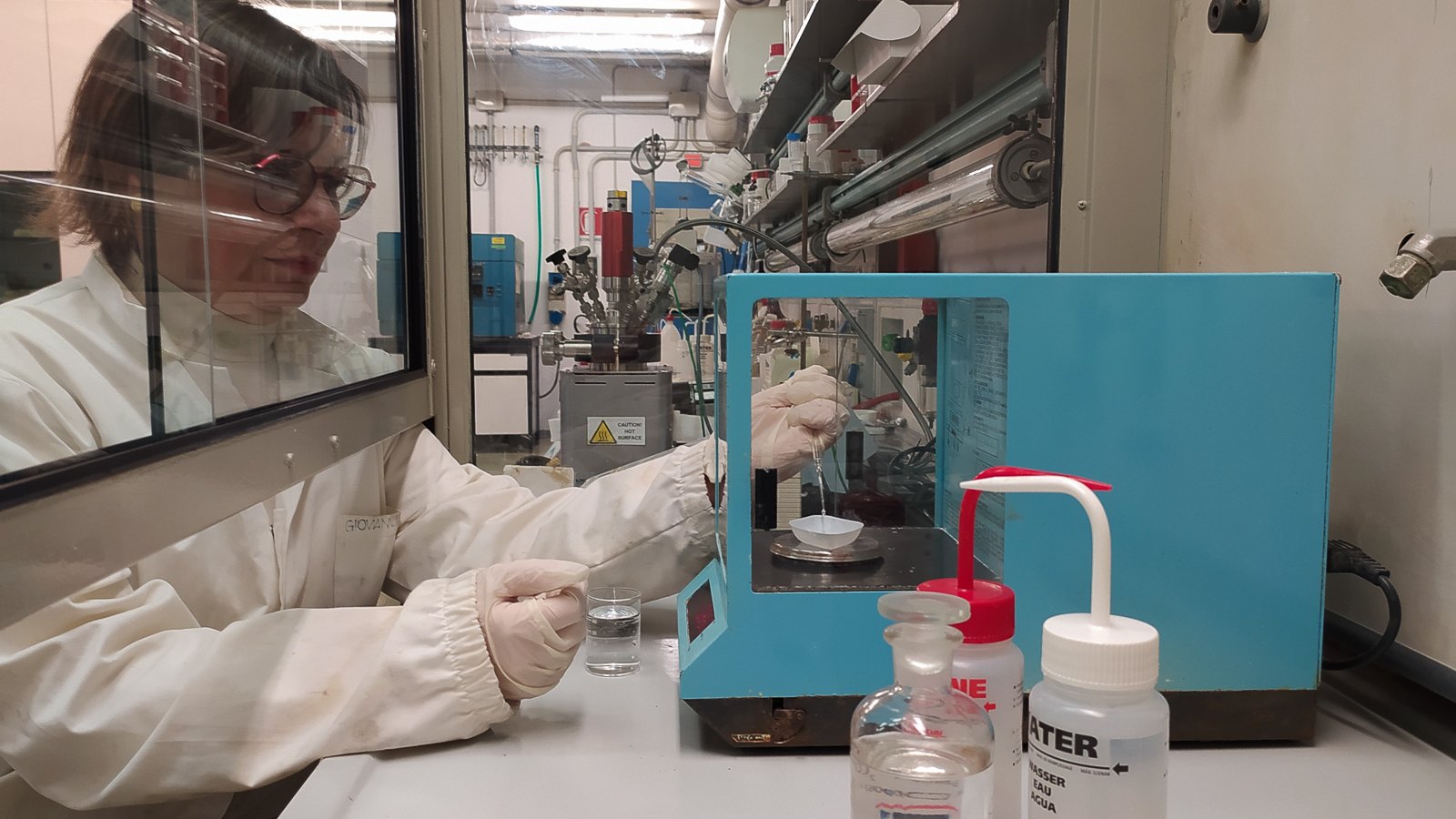
University safety administrators, Environmental Health and Safety (EHS) officers, and principal investigators must evaluate several concrete operational aspects across laboratory facilities before the public comment window closes on February 22, 2027. Academic and commercial research laboratories that handle synthesis gas, combustion testing, furnace operations, or organometallic carbonyl reagents face direct procedural implications under OSHA General Industry standards under 29 CFR 1910.
First, institutions must review their chemical safety documentation. Under federal laboratory standards, maintaining a Chemical Hygiene Plan requires establishing specific exposure monitoring criteria when hazardous substances with recommended limits are utilized. Safety committees must determine whether their current laboratory chemical hygiene plan protocols define action thresholds against instantaneous ceiling readings or whether monitoring procedures will integrate rolling 10-minute averages.
Second, containment and ventilation infrastructure must be validated. Research facilities utilizing carbon monoxide cylinders or generating CO during thermal decomposition rely on chemical fume hood containment systems and continuous duct sensors. When exhaust airflow fluctuates, continuous sensor systems trigger visual and audible alarms. Upgrading alarm algorithms from instantaneous peak trips to sliding 10-minute TWA calculations can significantly reduce false evacuation alarms while maintaining strict safeguards against toxic accumulation.
Third, research groups must update experimental risk assessments and laboratory standard operating procedures. Tasks involving compressed gas manifold connections, glovebox exhaust lines, or catalyst testing reactors require dedicated personal air monitoring. Principal investigators should verify that handheld multi-gas meters deployed in laboratory suites have firmware configured to log short-term exposure intervals aligned with the 10-minute averaging methodology.
What Happens Next: Comment Deadlines and Regulatory Timeline
Public review for the draft exposure document remains open through February 22, 2027. NIOSH has framed five explicit scientific questions for public and peer-review feedback, focusing on whether empirical data and mathematical modeling justify replacing the 200 ppm ceiling with a 10-minute TWA, whether the 10-minute window adequately shields workers from acute cardiovascular and central nervous system effects throughout full work shifts, and whether the analytical equations are clearly articulated for practitioner implementation.
Comments must be submitted electronically via Regulations.gov under docket number CDC-2026-1849 or by physical mail directed to the NIOSH Docket Office at 1090 Tusculum Avenue in Cincinnati, Ohio. Following the close of the comment period, NIOSH will conduct an external scientific peer review, assess public and technical submissions, and prepare a final document in its Current Intelligence Bulletin or Criteria Document series.
While NIOSH recommendations do not automatically amend OSHA’s enforceable Table Z-1 standards, OSHA frequently utilizes finalized NIOSH criteria when evaluating National Emphasis Programs, issuing safety advisories, and defending citations under Section 5(a)(1) of the Occupational Safety and Health Act. Academic institutions and research enterprises should document their operational findings and submit technical feedback before the February deadline.
Sources
- Federal Register: Request for Public Comment on the Proposed Short-Term Exposure Limit for Occupational Exposure to Carbon Monoxide, checked 2026-11-22
- Regulations.gov: Docket CDC-2026-1849 (NIOSH-357), checked 2026-11-22
- Occupational Safety and Health Administration: 1910.1000 TABLE Z-1 Limits for Air Contaminants, checked 2026-11-22
- Foresight: NIOSH Proposes A Ten-Minute Carbon Monoxide Exposure Limit, checked 2026-11-22
- Aethair: NIOSH REL Limits: CO, CO2, H2S, SO2, checked 2026-11-22


