
On November 27, 2026, researchers from the Chinese Academy of Sciences and the University of California San Diego published findings in Communications Earth and Environment demonstrating that microplastic chemical polymer hazard, rather than gross particle abundance, governs microbial community restructuring and functional impairment in agricultural soils, establishing critical chemical benchmarks for environmental monitoring protocols and research compliance.
Spatial Decoupling of Polymer Hazard and Particle Load in Agricultural Farmlands
In a peer-reviewed investigation published on November 27, 2026, an international research team led by Dr. Yuxiao Zhang and Professor Haiyan Chu from the Institute of Soil Science at the Chinese Academy of Sciences, alongside Professor Jack A. Gilbert from the University of California San Diego, revealed that the chemical hazard profile of microplastic polymers is the primary driver of microbial disruption in agricultural soils. Reporting in Communications Earth and Environment, the authors evaluated soil samples collected across 50 commercial farmlands within Northeast China’s black soil region, one of the world’s premier grain-producing Mollisol belts. By pairing regional field surveys with controlled laboratory stress-gradient incubation experiments, the scientists investigated how microplastic particle contamination alters soil microbial community structure, network stability, and biogeochemical functionality.
The field survey identified a profound spatial decoupling between microplastic physical abundance and chemical polymer hazard across agricultural zones. In southern farmlands, soils contained extensive particle accumulations dominated by conventional agricultural commodity plastics, including polyethylene (PE), polypropylene (PP), and polyethylene terephthalate (PET). These sites recorded high Polymer Load Index (PLI) scores ranging between 3.0 and 4.7. However, because these standard polyolefins possess comparatively low chemical toxicity classifications, the corresponding Polymer Hazard Index (PHI) remained relatively modest, spanning from 23 to 53.
In contrast, northern agricultural farmlands demonstrated the inverse relationship. These northern soils exhibited markedly lower microplastic particle loads, with PLI values spanning only 1.8 to 2.5. Despite the smaller physical volume of plastics, these sites registered substantially elevated chemical hazard ratings, with PHI scores reaching between 57 and 107. The higher toxicity scores stemmed from the selective presence of chemically hazardous polymers, notably polyvinyl chloride (PVC), polyurethane (PU), and polycarbonate (PC), which release hazardous monomer residues, chlorinated compounds, and endocrine-disrupting plasticisers into surrounding soil pores.
Experimental Findings and Metagenomic Shifts Across Soil Microbial Networks
To quantify the environmental variables mediating these microplastic impacts, the researchers analysed baseline soil properties across all 50 sampling locations. Statistical modelling revealed that soil carbon and nitrogen characteristics explained between 42% and 78% of the total spatial variation observed in microplastic pollution indices. Farmlands featuring elevated baseline organic matter exhibited distinct binding dynamics with synthetic polymers, moderating the bioavailability of leached additives while altering microbial exposure thresholds.
Controlled laboratory incubation experiments over a 21-day timeline demonstrated that polymer toxicity imposes severe taxonomic and functional stress on soil microbiota. High-hazard polymer exposures triggered an asymmetric collapse in microbial biomass pools, selectively suppressing fungal necromass far more aggressively than bacterial necromass. Over the three-week incubation period, the soil fungal-to-bacterial necromass ratio dropped from 0.61 at day zero to 0.17 at day 21. Quantitative polymerase chain reaction (qPCR) assays corroborated these necromass biomarker trends, confirming significant absolute declines in fungal ribosomal gene copy numbers.
To provide researchers with comparative baseline metrics across geographic zones, the team compiled standardized measurements contrasting physical burdens with chemical hazard classifications:
| Sampling Zone | Dominant Polymer Types | Polymer Load Index (PLI) | Polymer Hazard Index (PHI) | Microbial Impact Profile |
|---|---|---|---|---|
| Southern Agricultural Belt | Polyethylene (PE), Polypropylene (PP), PET | 3.0 to 4.7 | 23 to 53 | Elevated particle accumulation, moderate metabolic stress, stable fungal biomass |
| Northern Agricultural Belt | Polyvinyl Chloride (PVC), Polyurethane (PU) | 1.8 to 2.5 | 57 to 107 | Severe fungal suppression, fungal-to-bacterial ratio drops from 0.61 to 0.17 |
| Laboratory Incubation Benchmark | Graded PVC, PU, and Commodity Blends | 1.5 to 5.0 | 20 to 110 | Biofilm gene upregulation, sulfur cycling shift, carbon and nitrogen cycling gene repression |
High-throughput shotgun metagenomic sequencing unmasked the biological mechanisms underpinning this ecological disruption. Soils subjected to high-hazard microplastic stress exhibited pronounced transcriptional and genomic enrichment in microbial energy metabolism pathways, sulfur cycling pathways, and biofilm formation genes. Stressed bacterial communities shifted resources toward defensive extracellular polymeric substance (EPS) production to colonize plastic surfaces and isolate cells from toxic chemical leachates. Concurrently, functional genes governing vital soil carbon and nitrogen cycling pathways suffered substantial suppression, signaling potential long-term degradations in soil fertility and nutrient turnover.
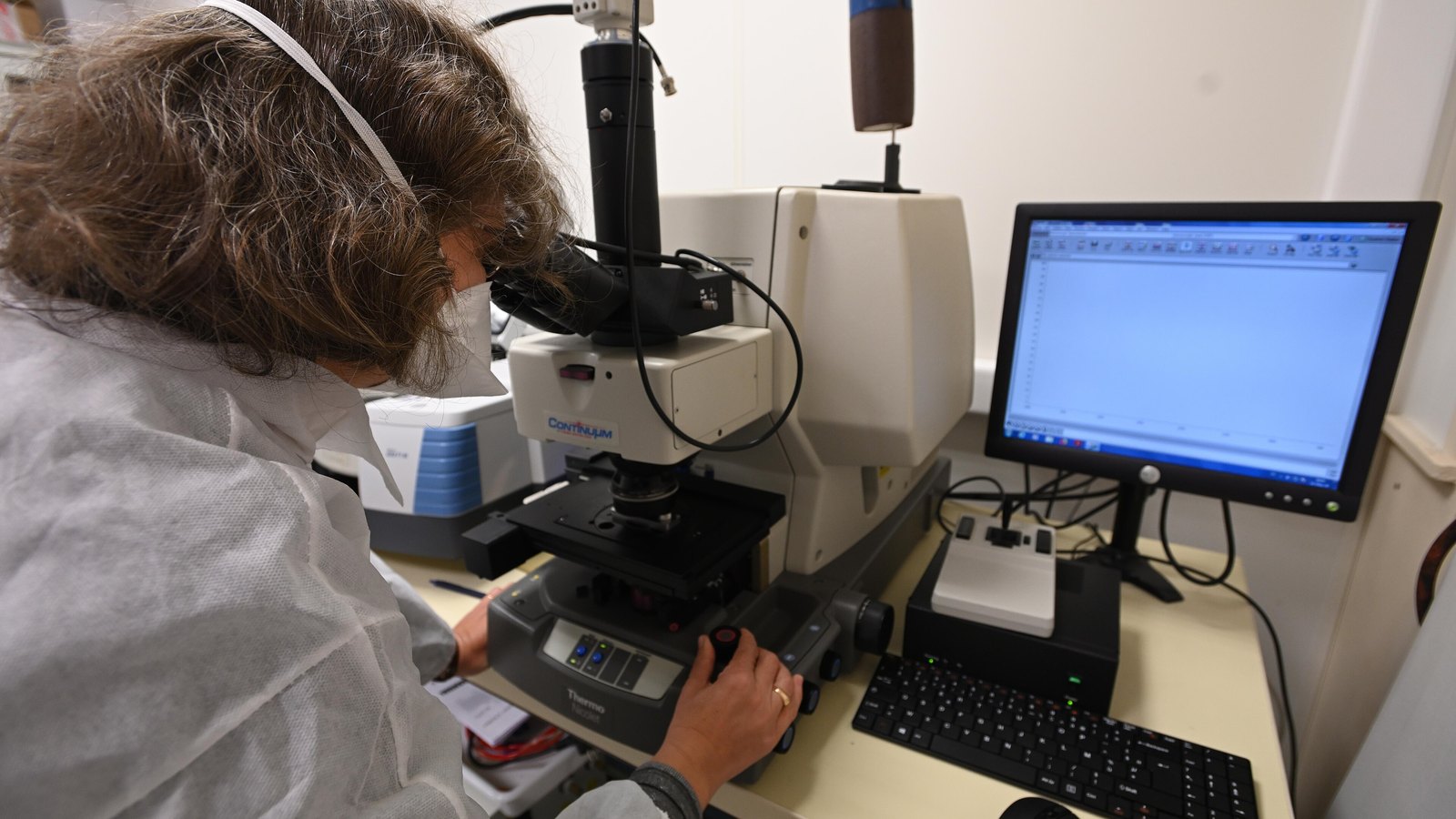
Accurate identification of these diverse polymer types in agricultural soils requires specialized spectroscopic characterisation methods, prompting laboratories to evaluate trade-offs between infrared absorption and vibrational scattering in Raman vs FTIR spectroscopy.
Evolution of Soil Contaminant Frameworks and Agricultural Plastics Monitoring
For more than two decades, terrestrial microplastic monitoring initiatives concentrated almost exclusively on physical metrics, quantifying contaminants as particle counts per kilogram of dry soil or milligrams of plastic per hectare. This numerical convention treated chemically inert fragments identically to polymers containing hazardous vinyl chloride monomers, bisphenols, or phthalate plasticisers. Global assessments coordinated under the FAO Global Soil Partnership have documented the accelerating accumulation of agricultural mulch films, drip irrigation lines, and agrochemical packaging across arable acreage worldwide.
The findings published in Communications Earth and Environment challenge this conventional quantification paradigm. By demonstrating that soils with lower particle counts can sustain significantly greater biological and functional degradation when contaminated with high-hazard polymers, the study provides empirical evidence that particle abundance is an inadequate proxy for ecotoxicological risk. Soil health frameworks that tally only particle counts fail to warn agricultural managers and regulatory bodies of acute chemical hazards accumulating in crop root zones.
Scientific and Regulatory Responses to Polymer-Specific Hazard Scoring
The publication has drawn strong interest from environmental toxicologists, agronomic research councils, and environmental protection agencies evaluating soil protection standards. Soil scientists note that the steep decline in fungal biomass has direct ramifications for soil structure, as saprophytic and arbuscular mycorrhizal fungi produce hyphal networks and glomalin necessary to stabilize soil aggregates against erosion and maintain organic carbon retention.
In Europe, environmental policymakers drafting technical implementation rules for the European Commission’s Soil Monitoring Law are reviewing terrestrial contaminant benchmarks. Experts advising EU technical committees argue that emerging monitoring mandates must incorporate polymer identification alongside particle enumeration to distinguish benign polyolefin debris from high-hazard industrial plastics. Agronomic researchers in North America and Asia have similarly urged standard-setting bodies to adopt hazard-weighted scoring models that reflect real-world microbiological toxicity.
Implications for Environmental Laboratories, Research Compliance, and Data Governance
The demonstration that microplastic polymer chemistry governs microbial toxicity introduces immediate practical implications for academic research institutions, environmental testing laboratories, and agricultural grant recipients:
- Grant application protocols: University environmental chemistry and soil microbiology laboratories preparing federal research proposals must expand analytical budgets beyond simple optical microplastic counting, incorporating micro-spectroscopic identification and polymer toxicity index calculations.
- Open science and data stewardship: In line with modern research data standards, academic institutions must ensure that large-scale environmental metagenomics datasets adhere strictly to FAIR data principles, making raw sequence libraries findable, accessible, interoperable, and reusable for peer verification.
- Data management mandates: Research offices supporting principal investigators must confirm that multi-omic soil pollution projects include robust data archiving strategies formalised within an approved institutional data management plan.
- Standardized environmental indexing: Environmental surveillance programmes must record comprehensive geographic, edaphic, and chemical metadata for each soil horizon to enable meaningful cross-regional comparisons.
- Repository deposition: Raw amplicon and shotgun metagenomic sequencing files must be deposited promptly in public genomic databases such as the NCBI Sequence Read Archive under registered BioProject accessions prior to formal manuscript publication.
Upcoming Methodological Standards and Policy Implementation Timelines
Looking ahead, standardization bodies and environmental regulators have scheduled key milestones through 2027 to address polymer-specific contamination risks. The International Organization for Standardization technical committee on soil quality (ISO/TC 190) is slated to review proposed polymer hazard scoring frameworks during its 2027 working group sessions, seeking to establish internationally harmonized guidance for agricultural soil ecotoxicity testing.
Across the European Union, technical implementation specifications for the Soil Monitoring Law will proceed through delegated act reviews through mid-2027, establishing uniform testing criteria and surveillance obligations for member state agricultural authorities. Meanwhile, the Chinese Academy of Sciences research consortium plans to expand its Northeast China field surveillance network throughout 2027, tracking multi-season crop yields and testing targeted biochar and microbial inoculation amendments designed to restore fungal community functionality in high-hazard soils.
Sources
- Communications Earth and Environment: Microplastic polymer hazard is associated with soil microbial community structure and functionality, checked 2026-11-28
- European Commission: Soil Monitoring Law, checked 2026-11-28
- Food and Agriculture Organization: Soil Data and Global Soil Partnership, checked 2026-11-28
- National Center for Biotechnology Information: Sequence Read Archive (SRA), checked 2026-11-28






