
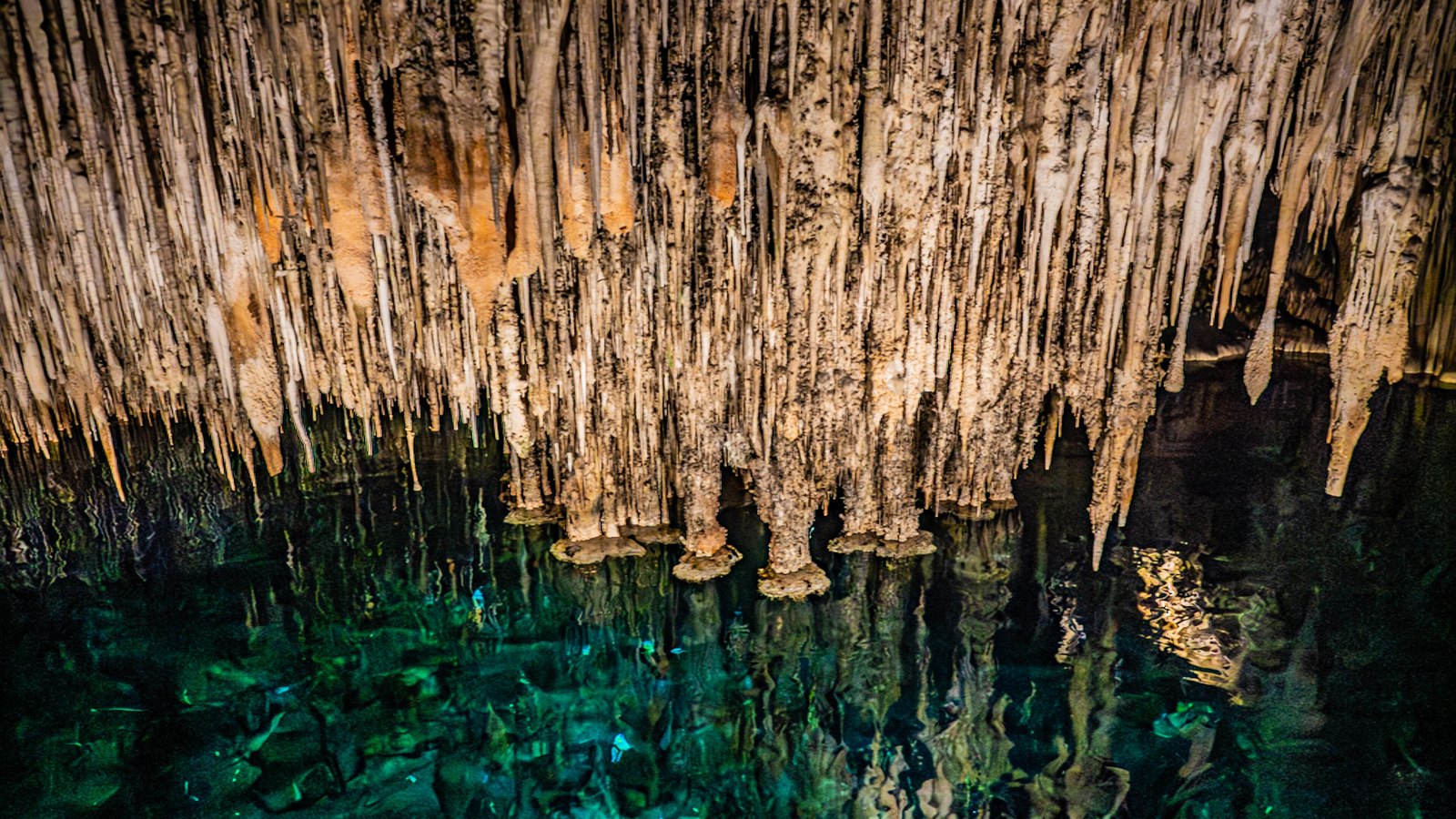
On 28 November 2026, an international research team published isotopic and atmospheric findings in Communications Earth and Environment demonstrating that subterranean microbial communities actively consume methane and generate distinct volatile organic biosignatures within isolated karst cave systems across Portugal, providing vital empirical models for subsurface astrobiology and biogeochemical monitoring.
Subterranean microbial activity detected through cave gas dynamics
The investigation, led by Dr. Kajsa Roslund and Professor Riikka Rinnan of the University of Copenhagen with Professor Ana Sofia Reboleira of the Universidade de Lisboa, resolves a longstanding puzzle in subterranean biogeochemistry. Although subterranean cave voids represent vast terrestrial habitats sheltered from solar radiation, atmospheric characterisation has historically focused on basic inorganic gases such as carbon dioxide and methane. The newly published research provides the first comprehensive census of volatile organic compounds (VOCs) in cave air coupled with high-resolution stable isotope analyses and sediment microbial community profiling.
Field campaigns examined two distinct Portuguese karst landscapes: Gruta de Vale Telheiro in the southern Algarve karst massif and Gruta da Nascente do Almonda (Almonda Novo) in the Estremenho karst massif. Transects spanned from ambient surface air through intermediate twilight zones to deep dark chambers. Across four seasonal campaigns at Vale Telheiro and comparative validation at Almonda Novo, the team recorded consistent accumulation of carbon dioxide paired with substantial depletion of subterranean methane relative to ambient atmospheric levels.
Stable carbon isotope ratios (δ¹³C) evaluated through Keeling plot and Rayleigh distillation models established that these gas variations were biological. Carbon dioxide enrichment exhibited isotopic signatures consistent with microbial respiration and organic matter decomposition. Concurrently, methane depletion coincided with progressive ¹³C enrichment in residual gas, confirming preferential enzymatic uptake of lighter ¹²C by subterranean methanotrophic bacteria.
Key findings and comparative isotopic measurements
Sediment microbiome analyses revealed that subterranean microbial assemblages differ starkly from surface soils. High-throughput 16S ribosomal RNA amplicon sequencing identified bacteria from the phylum Methylomirabilota as the primary taxonomic marker distinguishing cave sediment from exterior ground. The relative abundance of Methylomirabilota in cave sediment exhibited a statistically robust negative correlation with atmospheric methane concentrations, confirming that subterranean sediments act as active methane sinks.
Beyond inorganic carbon fluxes, the study catalogued 140 volatile organic compounds in cave air using thermal desorption gas chromatography–mass spectrometry (TD-GC-MS). Terpenoids, including monoterpenes such as α-pinene, β-pinene, camphene, and limonene, alongside sesquiterpenoids like caryophyllene oxide and nerolidol, dominated the volatile profile. Co-occurrence networking evaluated 11,340 potential correlations between amplicon sequence variants (ASVs) and airborne VOCs along depth and seasonal gradients. Applying simultaneous filtering (|r| ≥ 0.8 and Bonferroni-adjusted p < 0.05), the authors identified 89 significant microbe-volatile pairings, confirming that cave bacteria directly shape the surrounding atmosphere through metabolic volatile turnover.
| Sampling Location and Zone | Cave System and Season | δ¹³C-CO₂ (‰) | δ¹³C-CH₄ (‰) | Microbiological and Gas Dynamics |
|---|---|---|---|---|
| Ambient Exterior (O) | Vale Telheiro (Summer/Winter) | −9.9 ± 0.62 to −7.8 ± 0.29 | −47 ± 0.38 to −48 ± 0.33 | Baseline atmospheric background; phototrophic surface inputs. |
| Transition Zone (T) | Vale Telheiro (Seasonal Mean) | −21 ± 0.50 to −22 ± 0.04 | −32 ± 3.4 to −52 ± 5.2 | Partial atmospheric exchange; epikarst respiratory CO₂ ingress. |
| Deep Dark Chamber (3D) | Vale Telheiro (Summer) | −22 ± 0.02 | −40 ± 4.5 | Stable thermal isolation; methanotrophic consumption and terpene accumulation. |
| Deep Dark Chamber (3D) | Vale Telheiro (Winter) | −47 ± 1.10 | −58 ± 3.0 | Maximum biogenic CO₂ fraction; minimal external ventilation. |
| Exterior Baseline (O) | Almonda Novo (Spring Validation) | −12 ± 0.32 | −46 ± 0.57 | Regional Estremenho atmospheric baseline prior to cave ingress. |
| Shallow Dark Zone (1D) | Almonda Novo (Spring Validation) | −24 ± 0.05 | −27 ± 2.6 | Pronounced ¹³C enrichment in methane demonstrating high methanotrophic oxidation. |
| Deep Dark Chamber (3D) | Almonda Novo (Spring Validation) | −23 ± 0.23 | −34 ± 3.4 | Sustained subterranean methane sink; convergent karst gas patterns. |
Biogeochemical context and subterranean astrobiology analogs
Karst landscapes cover over ten percent of continental Earth, yet cave atmospheres have traditionally been treated as passive reservoirs governed solely by convective airflow and barometric pumping. Earlier speleological studies focused on cave microclimates and tourist carrying capacities, missing the functional metabolic contributions of oligotrophic microbiomes. The Portuguese findings demonstrate that subterranean voids maintain dynamic metabolic exchanges where biological communities actively consume atmospheric trace gases while releasing complex volatile biosignatures.
These findings carry immediate relevance for planetary science and life-detection frameworks. Subterranean cavities, including volcanic lava tubes and fracture networks on Mars and icy moons, are regarded by astrobiologists as promising microenvironments shielded from surface radiation and thermal extremes. Initiatives coordinated through the NASA Astrobiology program emphasize that atmospheric trace gas anomalies, particularly fluctuations in methane and volatile organic fingerprints, serve as primary biosignatures when evaluating habitability. Understanding how terrestrial extreme microbiomes generate isotopic shifts inside enclosed karst systems provides calibration criteria for future planetary rovers and subsurface exploratory probes.
Similarly, the European Space Agency has long utilised European karst caverns as operational analogs through its astronaut training curriculum, as detailed in reports on what is CAVES and related planetary exploration campaigns. The Portuguese dataset demonstrates that subterranean caverns are not merely structural analogs for crew logistics, but living biogeochemical testbeds where microbial gas cycling can be mapped against host rock in real time.
Institutional perspectives and international funding
The research brought together interdisciplinary institutions across Denmark, Portugal, and Sweden. Academic leadership centered within the Centre for Ecology, Evolution and Environmental Changes (CE3C) at the University of Lisbon and the Center for Volatile Interactions (VOLT) at the University of Copenhagen emphasized that preserving subterranean karst integrity is critical for regional biodiversity and planetary research.
The multi-year project received financial backing from several major European research organizations. Primary grant funding was awarded by the Danish National Research Foundation under Center for Volatile Interactions grant DNRF168, supplemented by fellowship support from the Jenny and Antti Wihuri Foundation. In Portugal, the investigation received competitive funding through the Belmiro de Azevedo-FCT Prize (ref. 2023.10009.PRIZE) and Portuguese National Funds managed by the Fundação para a Ciência e a Tecnologia under CE3C Unit funding UIDB/00329/2025 and the CHANGE Global Change and Sustainability Institute (DOI: 10.54499/LA/P/0121/2020). Additional operational backing was provided through the Chair in Sustainability of Subterranean Ecosystems in Loulé, established via a joint protocol connecting FCUL, Câmara Municipal de Loulé, and Bondstone, alongside the University of Lisbon College on Polar and Extreme Environments (Polar2E).
What it means for researchers, universities and research offices
For environmental scientists, microbiologists, and research administrators, the study highlights key operational priorities:
- Subterranean atmospheric monitoring protocols: Research teams monitoring subterranean cavities can no longer rely solely on temperature, humidity, and gross carbon dioxide loggers. Comprehensive assessments require multi-gas sensors sensitive to methane depletion and volatile organic compounds to distinguish biological turnover from abiotic air circulation.
- Integration of molecular and gas analytical pipelines: Characterizing extreme biomes requires coupling thermal desorption gas chromatography with next-generation sequencing. Researchers examining soil microbiome dynamics must ensure field sampling captures concurrent atmospheric VOCs and sediment specimens to avoid misattributing subterranean signatures to external soil advection.
- Sample provenance and metadata compliance: Curating deep subterranean microbial datasets requires rigorous accessioning in public biological registries. Research offices should support investigators in registering environmental isolates and metagenomic reads with standardized BioSample metadata and cross-referencing phenotypic isolates within bacterial metadatabases such as BacDive.
- Open science data stewardship: The multidimensional datasets generated by coupled GC-MS and microbial amplicon sequencing necessitate adherence to FAIR data principles. Principal investigators must work with institutional data managers when selecting an open data repository that supports complex environmental matrices and raw sequence files.
What happens next
Building on the baseline gas inventory established across Vale Telheiro and Almonda Novo, the collaborative research consortium plans to expand subterranean sampling campaigns to additional karst massifs across southern Europe. Upcoming fieldwork will incorporate stable isotope probing with ¹³C-labelled methane and volatile substrates in laboratory microcosm cultures to directly quantify carbon turnover rates among specific Methylomirabilota strains and associated microbial consortia.
Furthermore, the participating institutions are coordinating with international space agencies and cave conservation authorities to establish long-term automated gas sensor nodes inside pristine caves. These sensor arrays will deliver continuous time-series data on trace gas fluxes, refining biosignature detection thresholds for future robotic missions targeting Martian sub-surface caves and deep planetary crustal environments.
Sources
- Communications Earth and Environment: Portuguese cave atmospheres reveal rich biosignatures of subterranean life, checked 2026-11-28
- European Space Agency: What is CAVES?, checked 2026-11-28
- NASA Astrobiology: Life Detection, checked 2026-11-28
- Fundação para a Ciência e a Tecnologia: Funding Programmes, checked 2026-11-28






