
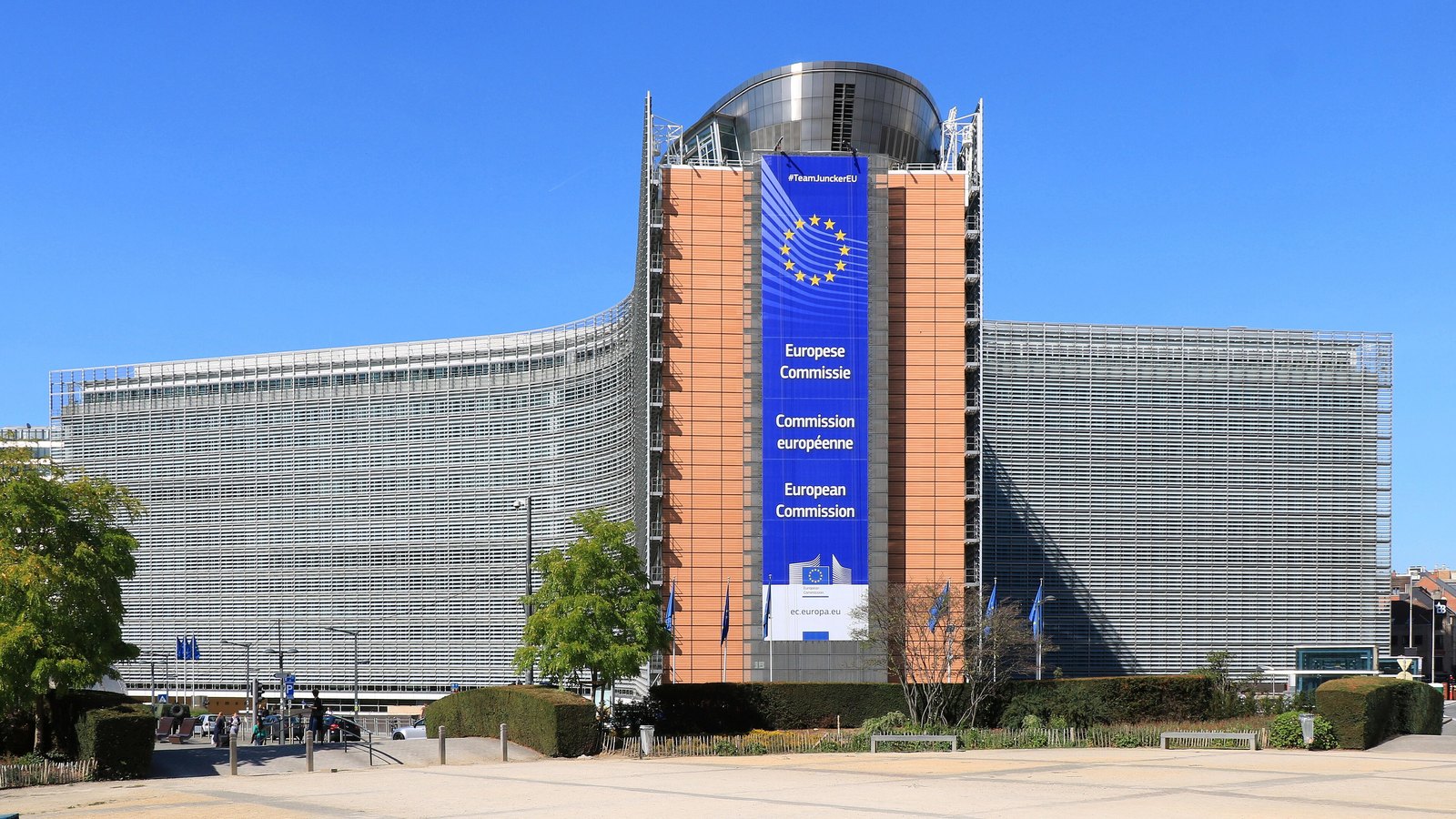
Trade ministers from the Comprehensive and Progressive Agreement for Trans-Pacific Partnership (CPTPP), the European Union, and the Association of Southeast Asian Nations (ASEAN) convened in Hanoi on November 26, 2026, to issue joint ministerial statements establishing coordinated cross-regional frameworks for technology supply chains, paperless digital commerce, and rules-based international trade cooperation.
Ministerial dialogues in Hanoi establish multilateral trade framework
On November 26, 2026, the UK Department for Business, Innovation, Science and Trade and ministerial counterparts across twelve Comprehensive and Progressive Agreement for Trans-Pacific Partnership (CPTPP) economies concluded the second high-level Trade and Investment Dialogue with the European Union, releasing their official Joint Ministerial Statement on the second CPTPP-EU Trade and Investment Dialogue. Concurrently, the CPTPP ministerial commission held an adjacent session with the Member States of the Association of Southeast Asian Nations (ASEAN), producing a companion Joint Ministerial Statement on the second CPTPP-ASEAN Trade and Investment Dialogue. Together, the twin communiqués connect twenty-eight economies spanning the Atlantic, Indo-Pacific, and Southeast Asia that account for more than one-third of global economic output.
Chaired by Viet Nam as host nation in Ha Noi, the delegations brought together senior ministers from Australia, Brunei Darussalam, Canada, Chile, Japan, Malaysia, Mexico, New Zealand, Peru, Singapore, the United Kingdom, and Viet Nam, alongside European Commissioner for Trade and Economic Security Maroš Šefčovič and ASEAN economic representatives. The meetings built upon foundational discussions held in Melbourne in November 2025, reaffirming a joint defense of open, transparent, rules-based commerce while directly confronting trade distortions, industrial overcapacity, and economic coercion.
Key provisions across supply chains, digital trade, and customs rules
The twin ministerial statements establish concrete operational commitments across supply chain security, digital data governance, multilateral reform, and enterprise trade facilitation. A primary deliverable from the CPTPP-EU dialogue is the formal launch of the EU-CPTPP Supply Chain Early Warning Network. Scheduled to hold its first operational meeting in early 2027, the network creates a structured mechanism for member states to share early disruption alerts, identify choke points, and coordinate emergency mitigation for critical technologies and research inputs.
Addressing digital trade uncertainty following the lapse of the multilateral moratorium on electronic transmissions at the 14th World Trade Organization (WTO) Ministerial Conference in Yaoundé, all parties committed to maintaining their established practice of not imposing customs duties on electronic transmissions. While multilateral talks documented in the WTO Work Programme on Electronic Commerce encountered negotiation impasses, CPTPP, EU, and ASEAN partners reaffirmed regional and plurilateral treaty commitments prohibiting tariffs on cross-border software, scientific datasets, and digital services.
| Pillar Dimension | CPTPP–EU Dialogue Commitment | CPTPP–ASEAN Dialogue Commitment |
|---|---|---|
| Supply Chain Coordination | Deployment of the EU-CPTPP Supply Chain Early Warning Network in early 2027 and development of a logistics reference paper. | Expansion of the Partnership on Wide Energy and Resources Resilience Asia (POWERR Asia) and collective customs compliance actions. |
| Digital Commerce and Data | Mutual commitment to duty-free electronic transmissions, commercial paperless trade, and interoperable digital identity systems. | Harmonisation with the ASEAN Digital Economy Framework Agreement (DEFA) and deployment of the CPTPP-ASEAN Joint Learnings Report. |
| Multilateral Trade Architecture | Incorporation of WTO plurilateral deals on Electronic Commerce and Investment Facilitation; expansion of the MPIA dispute appeals framework. | Reinforcement of WTO dispute settlement mechanisms and maximisation of tariff preference utilisation under regional free trade agreements. |
| Enterprise and Small Business Support | Joint engagement via the CPTPP-ASEAN-EU Business Forum in Ha Noi to lower regulatory trade barriers for high-technology sectors. | Targeted capacity-building programmes and international value chain integration for Micro, Small, and Medium Enterprises (MSMEs). |
To safeguard trade integrity, officials were tasked with strengthening rules-of-origin verification and customs cooperation. Authorities will implement targeted enforcement measures against unlawful transshipment and tariff circumvention, ensuring that preferential duty rates remain confined to verified production within participating member territories.
Institutional background and post-MC14 trade fragmentation
The Hanoi summit represents an acceleration of plurilateral trade diplomacy designed to overcome institutional gridlock in Geneva. With consensus-based negotiations stalled at the WTO, major trading democracies have turned to overlapping regional agreements to protect high-standard commercial rules. The failure of WTO MC14 in Yaoundé to extend the historic 1998 e-commerce moratorium highlighted the fragility of global digital trade governance, prompting CPTPP, European, and Southeast Asian partners to lock in reciprocal duty-free commitments through inter-bloc declarations.
The initiative also capitalises on recent geopolitical realignments, including the United Kingdom’s accession to the CPTPP in late 2024. As an economy embedded in European research networks and trans-Pacific commercial structures, the UK provides an institutional bridge across regulatory zones. The Hanoi declarations formalise outcomes from technical workshops hosted by Japan in Tokyo on supply chain resilience in July 2026 and by Canada in October 2026 on digital trade integration, converting informal working group findings into binding policy mandates.
Multilateral perspectives and inter-bloc trade alignment
European Commissioner Maroš Šefčovič highlighted that structured inter-bloc cooperation is indispensable for de-risking critical technologies and shielding industrial manufacturing against asymmetric external shocks. The European Commission noted that the early warning mechanism will facilitate rapid intelligence sharing across allied economies without resorting to protectionist barriers. UK trade delegates underscored that stable plurilateral frameworks provide long-term commercial certainty for technology innovators, advanced engineering firms, and export-oriented research enterprises.
Southeast Asian delegates emphasised that bridging the CPTPP and the ASEAN Digital Economy Framework Agreement will lower cross-border friction for commercial enterprises, standardise paperless customs documentation, and prevent regulatory fragmentation across the Indo-Pacific. Business leaders participating in the parallel CPTPP-ASEAN-EU Business Forum welcomed the emphasis on interoperable technical standards, noting that transparent customs rules are vital for maintaining agile, multi-country supply networks.
Operational implications for research universities and compliance offices
For research universities, academic medical centres, and institutional laboratories, the Hanoi ministerial statements carry tangible operational significance. Academic research infrastructure depends heavily on international sourcing for semiconductor processing tools, advanced optical sensors, gene sequencers, and specialized reagents. The EU-CPTPP Supply Chain Early Warning Network provides an advance alert channel that institutional procurement officers and laboratory managers can leverage to anticipate delivery disruptions and component shortages.
The mutual guarantee of duty-free cross-border electronic transmissions is equally vital for academic institutions. International research consortia transfer massive datasets, computational models, and scientific algorithms across borders daily. Preserving zero tariffs on digital transmissions shields universities from administrative burdens and financial liabilities that would have arisen had national customs duties been imposed following the expiration of the WTO moratorium. Cloud computing platforms and distributed data repositories can operate without tariff-induced friction.
Concurrently, enhanced customs scrutiny on rules of origin requires universities to reinforce institutional compliance. Campus teams managing research security policies must ensure that international research collaborations maintain verifiable component provenance and strict end-user documentation. When research projects involve advanced computing hardware or machine learning tools, administrators must cross-reference activities with export control and AI regulations to prevent unauthorized technology transfers across intermediate transshipment hubs.
University technology commercialisation units working within a technology licensing office (TLO) must also account for regional preference rules when structuring spinout manufacturing partnerships across Japan, the UK, Europe, and Southeast Asia. Furthermore, laboratories working with dual-use research of concern (DURC) materials must maintain rigorous material transfer agreements and audit trails to comply with heightened border enforcement protocols across trans-Pacific freight corridors.
Implementation milestones and upcoming 2027 review cycle
The Hanoi statements mandate specific implementation actions leading into 2027. Senior officials across CPTPP parties, the EU, and ASEAN will establish operational working protocols for the Supply Chain Early Warning Network ahead of its inaugural meeting in early 2027. Simultaneously, trade authorities will finalise a reference paper on logistics services to standardise cross-border trade facilitation metrics.
Throughout 2027, working groups will continue plurilateral engagements in Geneva to incorporate digital commerce agreements into the WTO architecture. Progress across all supply chain, digital trade, and customs workstreams will be reviewed when ministers reconvene for the third CPTPP-EU and CPTPP-ASEAN Trade and Investment Dialogues in 2027.
Sources
- UK Department for Business, Innovation, Science and Trade: Joint Ministerial Statement on the occasion of the second Trade and Investment Dialogue between the Comprehensive and Progressive Agreement for Trans-Pacific Partnership (CPTPP) and the European Union (EU), checked 2026-11-26
- UK Department for Business, Innovation, Science and Trade: Joint Ministerial Statement on the occasion of the second Trade and Investment Dialogue between the Comprehensive and Progressive Agreement for Trans-Pacific Partnership (CPTPP) and the Member States of the Association of Southeast Asian Nations (ASEAN), checked 2026-11-26
- European Commission Directorate-General for Trade: EU launches Supply Chain Early Warning Network with Trans-Pacific bloc, checked 2026-11-26
- World Trade Organization: Work Programme on Electronic Commerce – Moratorium on Customs Duties on Electronic Transmissions, checked 2026-11-26






