
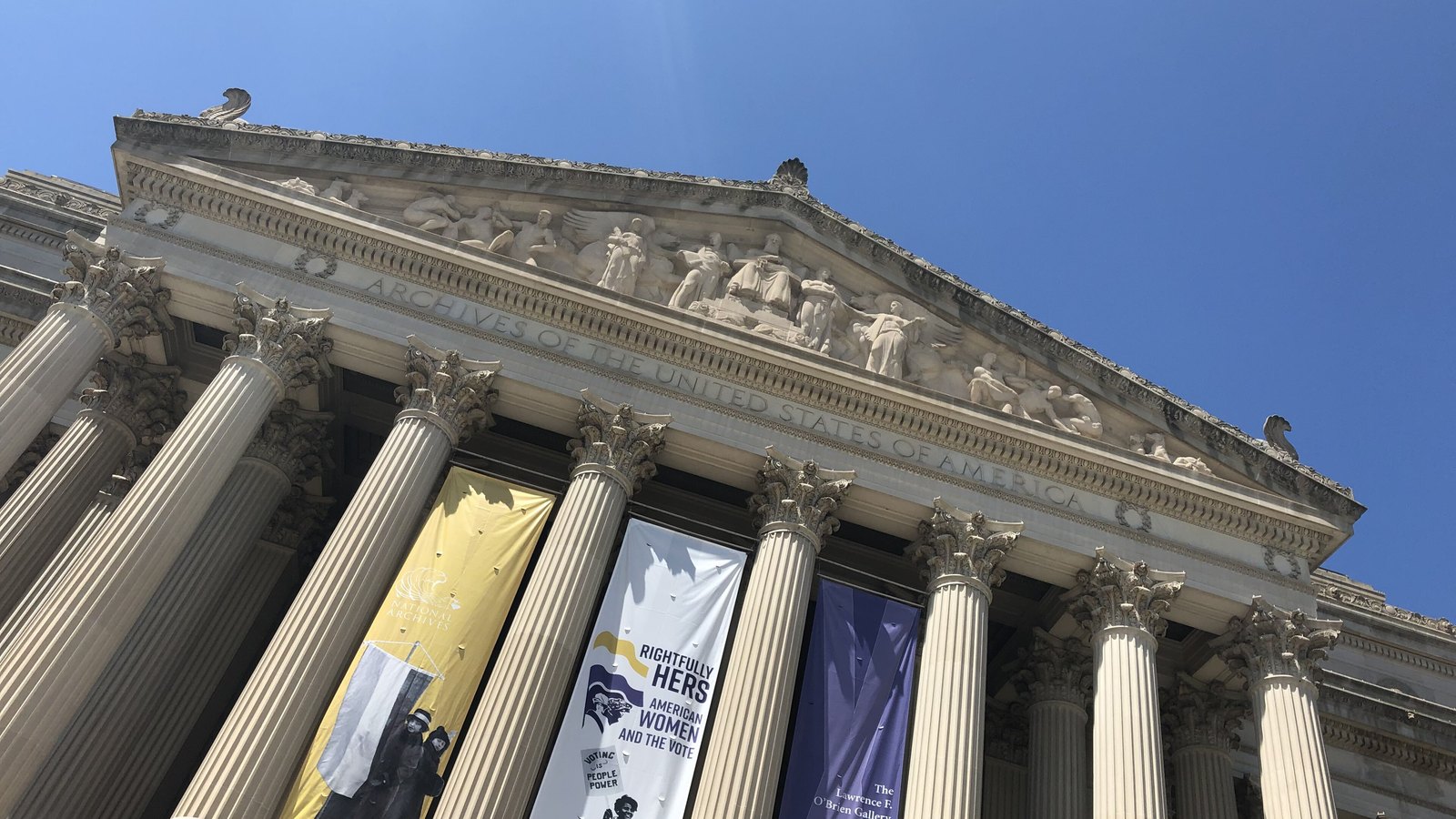
On November 27, 2026, the Civil Rights Cold Case Records Review Board issued a formal determination notice ordering the public disclosure of 1,847 federal archival pages concerning unresolved historical civil rights cases. The decision compels the National Archives, Department of Justice, Federal Bureau of Investigation, and Department of Veterans Affairs to open previously withheld investigative files, significantly expanding primary source access for university researchers and legal historians.
Review Board Orders Full Release of 1,827 Case Pages After Agency Postponement Review
Under Agency Docket Number CRCCRRB-2027-0004-N and Document Number 2026-24206, the Civil Rights Cold Case Records Review Board announced its formal determination regarding records transmitted under incident identifier 2024-003-002. The multi-agency evidentiary corpus encompasses 1,847 pages assembled across four federal entities: the National Archives and Records Administration (NARA), the Department of Justice (DOJ), the Federal Bureau of Investigation (FBI), and the Department of Veterans Affairs (VA).
The formal review resolved interagency negotiations over proposed government redactions. Originally, the DOJ and FBI requested 76 distinct postponements of public disclosure, citing sensitive investigative methods and statutory withholding justifications. Following direct consultations convened by the Review Board, the submitting agencies agreed to withdraw five postponement requests in whole or in part, including FBI docket entries 2025-FBI-03-0001 and 2025-FBI-03-0002. During its formal adjudication session on November 20, 2026, the Board conducted a line-by-line review of the remaining claims, ordering that 1,827 pages must be released in full, while permitting redactions on only 20 pages.
Board Chief of Staff Stephannie Oriabure signed the official notice on November 24, 2026, certifying that all records covered by the determination must be transferred for public research ingest. The determination represents one of the most substantial unified disclosures under the federal cold case review framework, rejecting agency attempts to withhold historical law enforcement files behind categorical exemptions.
Postponement Adjudications and Agency Submission Breakdown
The Review Board evaluated each proposed withholding against strict statutory standards. Of the 76 initial postponements sought, the Board approved 65 in full and accepted partial modifications on seven additional requests. Significantly, the Board rejected 14 proposed agency withholdings outright, determining that originating departments failed to provide the clear and convincing evidence required to delay public access.
The adjudicated files reflect distinct operational histories across the contributing federal departments, summarized below:
| Contributing Agency | Case Identifier | Postponements Proposed | Postponements Withdrawn | Board Adjudication Summary | Final Disclosure Status |
|---|---|---|---|---|---|
| Department of Justice (DOJ) | 2024-003-002 | 58 proposed (2025-DOJ-03-0001 to 0058) | Consultation adjustments | 46 approved, 4 approved with changes, 8 rejected outright | Disclosed in full or part |
| Federal Bureau of Investigation (FBI) | 2024-003-002 | 18 proposed (2025-FBI-03-0001 to 0018) | 2 withdrawn in full (0001, 0002) | 4 approved, 4 approved with changes, 8 rejected outright | Disclosed in full or part |
| Department of Veterans Affairs (VA) | 2024-003-002 | 14 applied (2026-VA-03-0001 to 0014) | None | 14 approved for specific personal privacy protections | Disclosed in part |
| National Archives and Records Administration (NARA) | 2024-003-002 | Custodial transmittal (1,847 pages) | N/A (custodial entity) | Ingest ordered for 1,827 full and 20 partial pages | Public archival deposit |
Among the rejected requests were DOJ submissions 2025-DOJ-03-0048, 2025-DOJ-03-0051, and sequential entries 2025-DOJ-03-0053 through 2025-DOJ-03-0058, alongside FBI submissions 2025-FBI-03-0008, 2025-FBI-03-0011, and 2025-FBI-03-0013 through 2025-FBI-03-0018. The Board determined that redactions proposed for these entries failed to demonstrate identifiable contemporary harm that could outweigh the public interest in disclosure. All approved redactions were confined to the 20 pages disclosed in part, primarily shielding sensitive personal privacy data such as medical records and surviving family identifiers.
Statutory Framework Under the Civil Rights Cold Case Records Collection Act
The Review Board operates under the mandate of the Civil Rights Cold Case Records Collection Act of 2018 (Public Law 115-426, codified at 44 U.S.C. 2107 note). Enacted by Congress with bipartisan support, the statute was designed to overcome systemic barriers that historically prevented the disclosure of federal documentation relating to unsolved, racially motivated crimes committed between January 1, 1940, and December 31, 1979.
Modeled after the President John F. Kennedy Assassination Records Collection Act of 1992, Public Law 115-426 establishes an explicit legal presumption of immediate public disclosure. Federal agencies possessing qualifying records are required to identify, organize, and transmit all relevant documents to the National Archives. Under Section 7 of the Act, an agency seeking to postpone disclosure bears the burden of establishing by clear and convincing evidence that release would cause identifiable harm to personal privacy, law enforcement sources, or ongoing judicial proceedings.
The statute created the Review Board as an independent agency whose members are nominated by the President and confirmed by the Senate to provide objective oversight. Crucially, the legislation imposes a strict transparency timeline: Section 7(c) dictates that the Board must publish its formal determinations in the Federal Register no more than 14 days after rendering a decision. The Board’s November 20 determination and subsequent November 27 public inspection filing satisfy this statutory deadline, ensuring public visibility into government withholding deliberations.
Interagency Coordination and Resolution of Withholding Claims
The release reflects extensive coordination between the Review Board and federal law enforcement agencies operating under existing civil rights review mandates, including the Justice Department’s Cold Case Initiative. That initiative, established under the Emmett Till Unsolved Civil Rights Crime Act, has long investigated racially motivated homicides from the civil rights era, generating voluminous investigative archives across regional FBI field offices and federal prosecutorial divisions.
In historical practice, researchers attempting to obtain these materials faced prolonged Freedom of Information Act (FOIA) backlogs and multi-year administrative appeals. Federal agencies frequently applied broad statutory exemptions to redact entire interviews, informant summaries, and interoffice communications. The Review Board’s formal determination demonstrates the practical effectiveness of specialized declassification boards in expediting archival access.
By engaging in structured consultative dialogues before formal voting, the Board encouraged DOJ and FBI review teams to narrow their redaction demands prior to final adjudication. Archival specialists have commended this collaborative review process, noting that independent review boards create institutional incentives for agencies to abandon unsupportable withholding claims before formal administrative rejection.
Implications for Archival Researchers, Academic Historians, and University Repositories
For scholars conducting rigorous archival research into twentieth-century civil rights struggles, the release provides an unprecedented volume of unredacted documentary evidence. Historians investigating cold case incidents have frequently been stymied by heavily blacked-out files that obscured institutional decision-making, local law enforcement collusion, and federal investigative priorities. Opening 1,827 complete pages allows researchers to reconstruct event timelines, verify witness statements, and evaluate how federal authorities handled civil rights violations across Southern jurisdictions.
The transfer of these materials into the central National Archives data repository infrastructure establishes robust provenance and discoverability for academic libraries. Research institutions and university special collections will be able to incorporate persistent government record identifiers into their digital scholarship platforms, adhering to international records management standards such as ISO 23081 metadata frameworks. Furthermore, tracking the digital chain of custody from FBI field records through Review Board adjudication aligns with provenance ontologies like PROV-O, ensuring that academic citations link directly to verified federal repository objects.
University legal clinics, journalism investigative units, and civil rights history initiatives can immediately utilize these newly disclosed materials without pursuing separate litigation. By establishing clear public precedents on which redaction categories are unacceptable under Public Law 115-426, the Board’s ruling also provides a powerful benchmark for researchers challenging improper withholdings in other federal archival holdings.
Archival Processing Schedules and Federal Register Publication Timelines
Following the public inspection filing on November 27, 2026, the formal determination is scheduled for official publication in the Federal Register on November 30, 2026. Simultaneously, custodial personnel at the National Archives are executing technical ingest protocols to integrate the 1,847 pages into the dedicated Civil Rights Cold Case Records Collection portal.
NARA archival staff will assign standardized finding aid metadata, digital object identifiers, and page-level pagination before releasing the scans for public download. The 20 partially postponed pages will be ingested with clear redaction markers indicating the specific statutory justifications upheld by the Review Board. The Review Board is actively preparing additional tranches of records under case series 2024-003 and related dockets, with further public determinations expected as agency review deadlines mature over the coming calendar quarter.
Sources
- Federal Register Public Inspection: Formal Determination on Records Release, checked 2026-11-27
- Civil Rights Cold Case Records Review Board: About the Board, checked 2026-11-27
- National Archives and Records Administration: About the Civil Rights Cold Case Records Portal, checked 2026-11-27
- U.S. Government Publishing Office: Public Law 115-426, Civil Rights Cold Case Records Collection Act of 2018, checked 2026-11-27
- U.S. Department of Justice: Civil Rights Division Cold Case Initiative, checked 2026-11-27






