
On 28 November 2026, the UK Department for Environment, Food and Rural Affairs and the Environment Agency published project allocations for the Water Environment Improvement Fund projects for 2026 to 2027, committing £11 million across 300 English catchment restoration schemes. The package reallocates water company pollution fines into river habitats, opening co-funding and ecological monitoring partnerships for academic environmental researchers.
Allocation of Water Company Penalties to Catchment Initiatives
The newly confirmed allocations under the Water Environment Improvement Fund (WEIF) represent a direct deployment of the polluter-pays principle in English river basin management. Out of the £11 million funding commitment managed by the Environment Agency for the 2026 to 2027 financial year, nearly £6 million is derived from regulatory enforcement fines and penalties levied on commercial water companies for sewage pollution and permit breaches. Instead of entering central Treasury accounts, these penalty funds are ring-fenced to repair ecological damage across degraded catchments.
The portfolio comprises more than 300 local projects across all Environment Agency operational areas. Across England, the programme aims to improve over 1,300 kilometres of river corridors, create or restore more than 800 hectares of natural habitat, and plant upwards of 100,000 riparian trees to stabilise riverbanks, attenuate flood risk, and provide thermal shading for freshwater wildlife.
Programme Architecture, Grant Allocations and Target Outcomes
Project delivery under WEIF relies on a devolved, partnership-led delivery model. The Environment Agency distributes capital to regional Rivers Trusts, wildlife charities, local authorities, and academic partners implementing site-specific nature-based solutions. Grant allocations within the 2026 to 2027 round range from targeted species recoveries to extensive river corridor engineering.
In Surrey, the National Trust receives £49,000 for the Wey Water Vole Recovery project along the River Wey. Spanning an 87-mile catchment, the project follows releases of 190 captive-bred water voles across six sites since August 2025, supported by Derek Gow Consultancy and 83 partner groups contributing 3,000 volunteer hours. The scheme couples 140 kilometres of riparian habitat restoration with continuous environmental DNA (eDNA) surveillance.
In the North East, Groundwork North East and Cumbria secured £165,000 for its Newburn Estuary Edge Improvements scheme on the River Tyne. Co-funded by NatWest Group, the project installs 230 metres of engineered brushwood bundles along the tidal margin to dampen wave energy and trap sediment, encouraging saltmarsh regeneration as a juvenile fish nursery.
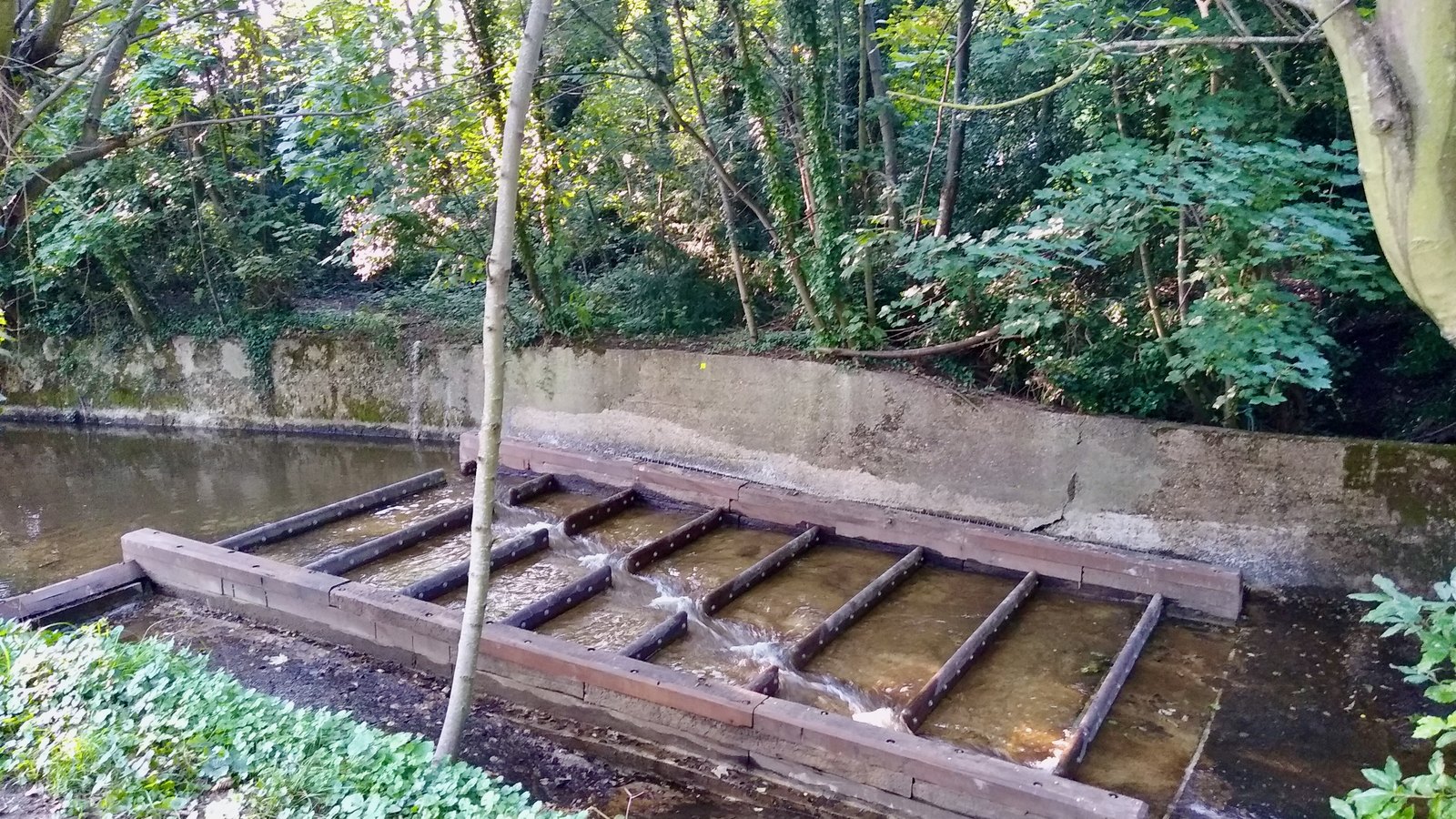
In Gloucestershire, the Severn Vale Catchment Partnership received £60,000 for the Wilder Frome initiative on the River Frome. The grant funds weir easing and fish pass construction to reopen migratory routes for Atlantic salmon and European eels, alongside upper-catchment interventions with farmers to curb diffuse sediment run-off.
| Project Name | Catchment Location | Lead Delivery Partner | Grant Allocation | Target Environmental Outcomes |
|---|---|---|---|---|
| Wey Water Vole Recovery | River Wey, Surrey | The National Trust | £49,000 | 140 km protected river; 190 voles released; eDNA surveillance |
| Newburn Estuary Edge Improvements | River Tyne, Newcastle | Groundwork NE and Cumbria | £165,000 | 230 m brushwood barrier; saltmarsh growth; juvenile fish habitat |
| Wilder Frome Migration and Habitat | River Frome, Gloucestershire | Severn Vale Catchment Partnership | £60,000 | Fish barrier easing; wetland creation; diffuse sediment reduction |
| National Portfolio Aggregate | England (Nationwide) | 300+ Local Partnerships | £11,000,000+ | 1,300+ km river improved; 800+ ha habitat; 100,000+ trees planted |
Catchment Partnerships, Regulatory Penalties and Statutory Frameworks
The 2026 to 2027 WEIF funding directly supports statutory targets under The Water Environment (Water Framework Directive) (England and Wales) Regulations 2017. These regulations require all surface water bodies to reach Good Ecological Status or Good Ecological Potential while preventing environmental deterioration. Official assessments on the Environment Agency Catchment Data Explorer indicate that only 16% of English rivers currently achieve good ecological status, impacted by agricultural runoff, physical modifications, and wastewater discharges.
To reverse these trends, WEIF works alongside the Environment Act 2021 statutory targets, which mandate halting species decline by 2030 and reducing nutrient pollution. On-the-ground interventions are planned through the Catchment Based Approach (CaBA), a national initiative across all English river basins that brings together public agencies, non-profit trusts, water companies, and academic hydrologists to coordinate catchment management plans.
Agency Statements and Conservation Sector Response
Announcing the fund allocations, Environment Secretary Dame Angela Eagle highlighted the polluter-pays mechanism: “For too long, water companies have got away with polluting our environment, but now the polluter will pay. The water system has failed people and nature, and we are determined to put that right. We are overhauling the system to make sure it works for local communities, and this funding means money from fines goes straight back into restoring the rivers and waterways they care about.”
Environment Agency Chief Executive Philip Duffy emphasised community-led delivery: “Local people know their rivers best. We’re backing them with this funding and working alongside communities, charities and partners to improve our waterways. We will continue to hold polluters to account. Local communities will use the Water Environment Improvement Fund to fix problems that would otherwise go unaddressed, backed by local knowledge and evidence of what works.”
Conservation partners welcomed the targeted investments. David Elliott of the National Trust noted that extensive community collaboration and eDNA monitoring have validated species recovery along the Wey. In Gloucestershire, George MacDonald-Clark of the Severn Vale Catchment Partnership confirmed that WEIF support allows local partnerships to turn ambitious restoration visions into measurable biodiversity and water quality gains.
Implications for Environmental Researchers and Academic Grant Teams
The expansion of WEIF allocations creates clear opportunities for university researchers in freshwater ecology, ecohydrology, and environmental data science. While non-profit trusts lead construction and land management, academic groups are indispensable for baseline environmental impact assessments, post-restoration monitoring, and eDNA biodiversity tracking.
Field researchers involved in catchment restoration frequently publish findings in leading specialist journals such as the Environmental Monitoring and Assessment Journal, which covers aquatic ecosystem health, pollutant tracking, and habitat quality metrics. Similarly, academic teams benchmarking UK catchment models against international research funding models often consult resources like the Water Research Foundation guide to evaluate co-funded aquatic research programmes.
For university research offices managing WEIF monitoring subcontracts, robust data governance is critical. Investigators must ensure water chemistry, telemetry, and ecological datasets comply with FAIR data principles to ensure public findability and reuse. Teams must also generate standardized spatial and observational metadata to enable seamless ingestion into national river monitoring portals and open-access environmental repositories.
Implementation Milestones, Water Bill Provisions and Next Steps
Project delivery for the 2026 to 2027 WEIF cohort will commence across the upcoming financial year. In-stream physical modifications, weir removals, and fish passage works are scheduled between July and October 2026 to avoid disruptions to fish migration and salmonid spawning runs. Riparian tree planting and wetland reconnection schemes will run through the 2026 to 2027 winter planting window.
In parallel, the UK government is advancing legislative reforms through the upcoming Water Bill. This legislation will establish statutory Regional Water Councils, giving local communities, local councils, and catchment trusts a formal role in scrutinising water companies and setting regional river priorities, ensuring polluter penalties continue to support community-led restoration.
Sources
- UK Department for Environment, Food and Rural Affairs: Water Environment Improvement Fund projects for 2026 to 2027, checked 2026-11-28
- UK Statutory Instruments: The Water Environment (Water Framework Directive) (England and Wales) Regulations 2017, checked 2026-11-28
- Environment Agency: England Catchment Data Explorer, checked 2026-11-28
- Catchment Based Approach: About CaBA, checked 2026-11-28






