
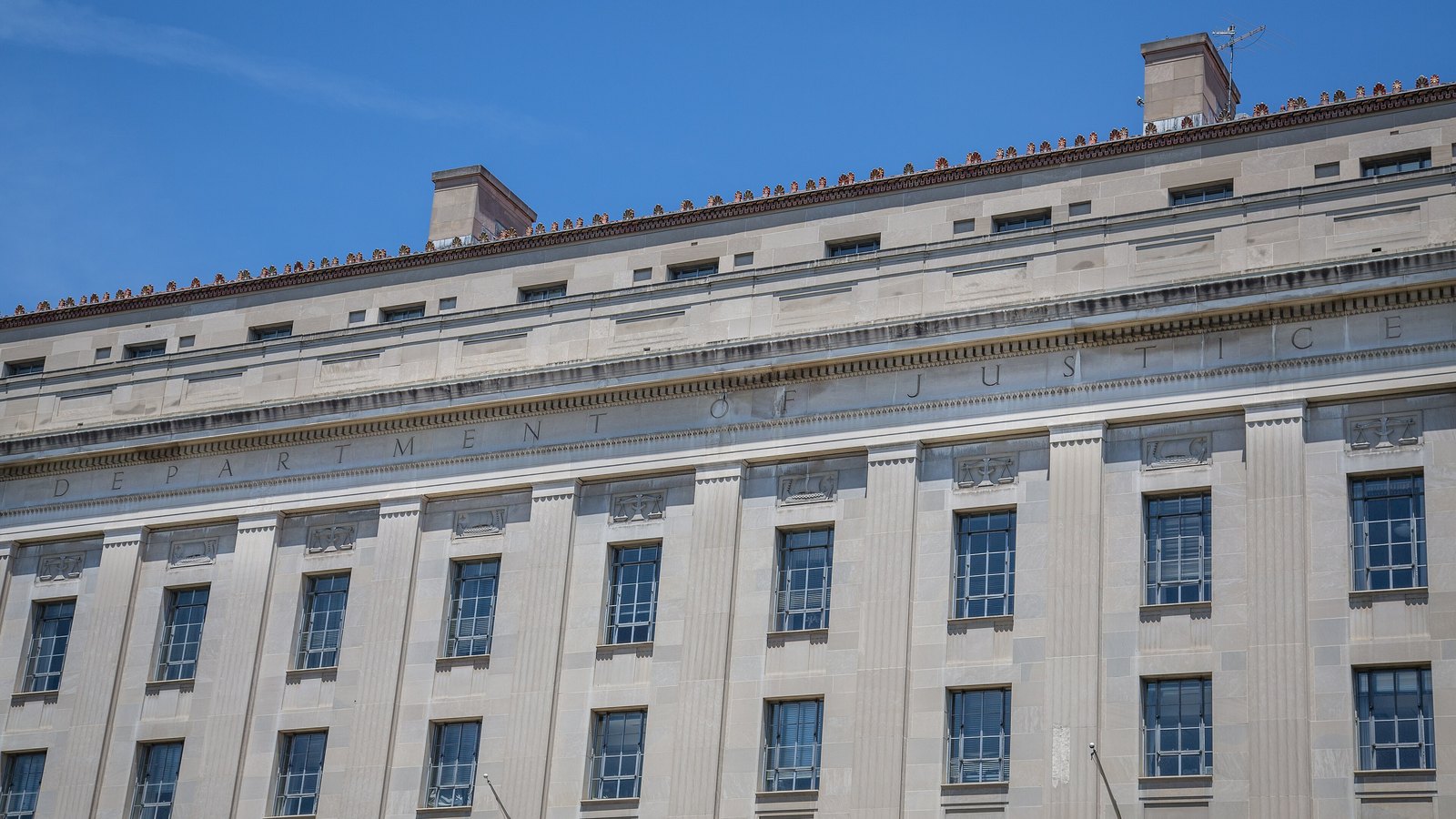
On November 27, 2026, the Department of Justice published a Federal Register final rule correction amending 28 CFR Part 106 to extend HAVANA Act brain injury compensation eligibility back to September 11, 2001. The corrective action (91 FR 76634) establishes interagency parity across national security bodies, creating clinical documentation, research security, and compliance priorities for universities and affiliated medical centers.
Corrective Action Under 28 CFR Part 106
The Department of Justice issued Federal Register Document 2026-24141 (A.G. Order No. 7256-2026; JMD Docket No. 157; RIN 1105-AB71), effective November 27, 2026, to resolve an editorial error in its earlier final rule published on October 27, 2026 (91 FR 67476). In the original publication, two distinct amendatory instructions governing 28 CFR § 106.2 and 28 CFR § 106.5 had been inadvertently merged into a single instruction, creating ambiguity regarding eligibility dates and internal review roles. The correction, signed on November 24, 2026, by Deputy Assistant Attorney General Rosemary Hart, formally separates the instructions and codifies critical substantive updates.
Under the corrected regulation, codified in the Electronic Code of Federal Regulations, the Department amends 28 CFR § 106.2 paragraphs (a)(1) and (b) by removing the previous qualifying injury date of January 1, 2016, and inserting in its place September 11, 2001. This adjustment expands the temporal window for covered employees and their covered dependents who sustained qualifying brain injuries in connection with war, insurgency, hostile acts, or terrorist activity. The rule also updates 28 CFR § 106.5(d) by adjusting official titles within the review hierarchy: the role formerly designated as Executive Assistant Director, Human Resources Branch is updated to Operations Director, Human Capital Branch, while Deputy Assistant Attorney General, Human Resources and Administration is redesignated as Deputy Assistant Attorney General, Human Capital within the Justice Management Division.
Key Regulatory Provisions and Administrative Structure
The correction establishes operational parity between Department of Justice personnel and counterparts in the Department of State, Department of Defense, and Central Intelligence Agency. To qualify for a lump-sum payment under 28 CFR Part 106, an applicant must demonstrate a qualifying brain injury sustained on or after September 11, 2001, while serving as an eligible employee or covered dependent, linked to designated hostile actions or anomalous health incidents.
| Regulatory Provision | October 27, 2026 Text (91 FR 67476) | November 27, 2026 Corrected Text (91 FR 76634) | Operational Impact for Claimants |
|---|---|---|---|
| 28 CFR § 106.2(a)(1) Eligibility Threshold | Inadvertently merged; referenced January 1, 2016 | Separated instruction; establishes September 11, 2001 | Extends retroactive compensation eligibility back nearly fifteen additional years. |
| 28 CFR § 106.2(b) Dependent Coverage Window | Referenced January 1, 2016 qualifying date | Amended to September 11, 2001 qualifying date | Permits covered dependents injured after September 11, 2001, to file claims. |
| 28 CFR § 106.5(d) Initial Review Authority | Executive Assistant Director, Human Resources Branch | Operations Director, Human Capital Branch | Realigns claims processing within the current FBI and DOJ organizational chart. |
| 28 CFR § 106.5(d) Appellate Review Official | Deputy Assistant Attorney General, HR and Administration | Deputy Assistant Attorney General, Human Capital | Designates updated appellate review authority within the Justice Management Division. |
Under the established procedural rules, claimants submit an official eligibility questionnaire accompanied by medical certifications. Board-certified neurologists or equivalent clinical specialists must certify that the applicant suffered acute or chronic encephalopathy, traumatic brain injury, or vestibular dysfunction linked to an anomalous event. The Justice Management Division coordinates with federal security agencies to verify that the incident occurred in connection with designated hostile activities.
Statutory Authority and Clinical Context
The statutory basis for 28 CFR Part 106 derives from Section 3 of the Helping American Victims Afflicted by Neurological Attacks (HAVANA) Act of 2021 (Public Law 117-46; 135 Stat. 391; codified at 22 U.S.C. 2680b note). Congress enacted the legislation following reports from diplomatic, intelligence, and law enforcement personnel who experienced unexplained neurological symptoms. While initial administrative guidance focused on events reported after January 1, 2016, following initial reports in Havana, subsequent congressional inquiries and statutory clarifications directed agencies to recognize qualifying injuries sustained since September 11, 2001, to ensure equitable treatment for personnel affected during counterterrorism deployments.
The medical assessment of anomalous health incidents has undergone extensive evaluation across federal research entities and academic medical centers. Multi-year clinical investigations conducted at the National Institutes of Health Clinical Center examined affected federal personnel utilizing advanced neuroimaging and biomarker batteries. While those evaluations highlighted the clinical complexity of chronic neurological and vestibular symptoms, the regulatory framework under 28 CFR Part 106 establishes administrative compensation criteria focused on objective clinical deficits, functional impairment, and accredited medical certifications rather than requiring proof of a specific weapon mechanism.
Stakeholder Alignment and Interagency Parity
The correction brings the Department of Justice’s regulatory framework into full synchronization with parallel regulations administered by the Department of State (22 CFR Part 135) and the Department of Defense. Legal analysts and federal personnel associations noted that the inadvertent conflation of instructions in the October 2026 rule created administrative confusion for claimants seeking retroactive review for pre-2016 injuries. The publication of Document 2026-24141 eliminates statutory ambiguity and clarifies the internal appeals process for personnel whose claims require departmental review.
Personnel covered under the Justice Department framework include Special Agents of the Federal Bureau of Investigation, Drug Enforcement Administration operatives, Bureau of Alcohol, Tobacco, Firearms and Explosives personnel, and United States Marshals Service deputies, along with qualifying intelligence staff. Incorporating the September 11, 2001 date into both employee and dependent definitions ensures that personnel who sustained permanent neurological impairment during sensitive assignments over the past two decades possess access to authorized statutory benefits.
Implications for Universities, Research Hospitals, and Research Security
While 28 CFR Part 106 directly governs federal employee compensation, the rule carries immediate operational significance for universities, research institutions, and academic medical centers:
- Clinical Documentation and Specialty Evaluations: Academic medical centers frequently serve as referral hubs for federal personnel undergoing neurocognitive and vestibular assessments. Clinicians completing evaluations for HAVANA Act claims must navigate strict documentation requirements, including objective neuropsychological testing, computerized dynamic posturography, and formal clinical certifications verifying chronic impairment.
- Research Security and International Travel Protocols: University research offices managing international fieldwork and dual-use collaborations must maintain rigorous travel security briefings. Personnel participating in projects governed by the Export Control Reform Act must report unexplained physiological sensations or abrupt sensory disturbances experienced abroad to institutional security officers immediately.
- Data Protection and Secure Records Handling: Medical records and incident documentation associated with federal anomalous health incidents often intersect with controlled environments. Institutions handling related health metrics or specialized research registries must maintain strict boundaries, differentiating general university data from records governed by CUI NOFORN protocols or Federal Contract Information standards.
- Facility Security and Threat Preparedness: Research facilities operating high-containment laboratories or electromagnetic test beds must ensure that their institutional system security plan templates account for physical facility monitoring, electromagnetic baseline logging, and documented reporting pathways for personnel reporting acute sensory or vestibular events.
Implementation Timeline and Claim Processing
The corrective final rule took effect immediately upon filing for public inspection and carries a formal Federal Register effective date of November 27, 2026. The full regulatory text is accessible via the Legal Information Institute’s 28 CFR Part 106 reference. Claimants seeking payments under the expanded retroactive eligibility period must submit their completed eligibility questionnaires, clinical records, and authorized medical certifications directly to their respective bureau human capital offices or to the Justice Management Division.
Under the revised administrative framework, claims initially adjudicated by the Operations Director, Human Capital Branch may be appealed to the Deputy Assistant Attorney General, Human Capital within the Justice Management Division. Formal inquiries regarding regulatory interpretations and claims packet requirements may be directed to Assistant General Counsel Gordon R. Jimison at the Justice Management Division ([email protected]). Interagency coordination panels are scheduled to review ongoing claims data periodically through 2027 to ensure uniform application of disability standards across all national security departments.
Sources
- Federal Register: Implementation of HAVANA Act of 2021; Correction, checked 2026-11-26
- Federal Register: Implementation of HAVANA Act of 2021, checked 2026-11-26
- Electronic Code of Federal Regulations: 28 CFR Part 106 — Implementation of the Havana Act of 2021, checked 2026-11-26
- GovInfo: Public Law 117-46 — Helping American Victims Afflicted by Neurological Attacks Act of 2021, checked 2026-11-26
- U.S. Department of Justice: Justice Management Division, checked 2026-11-26
- Legal Information Institute: 28 CFR Part 106 — Implementation of the Havana Act of 2021, checked 2026-11-26






