
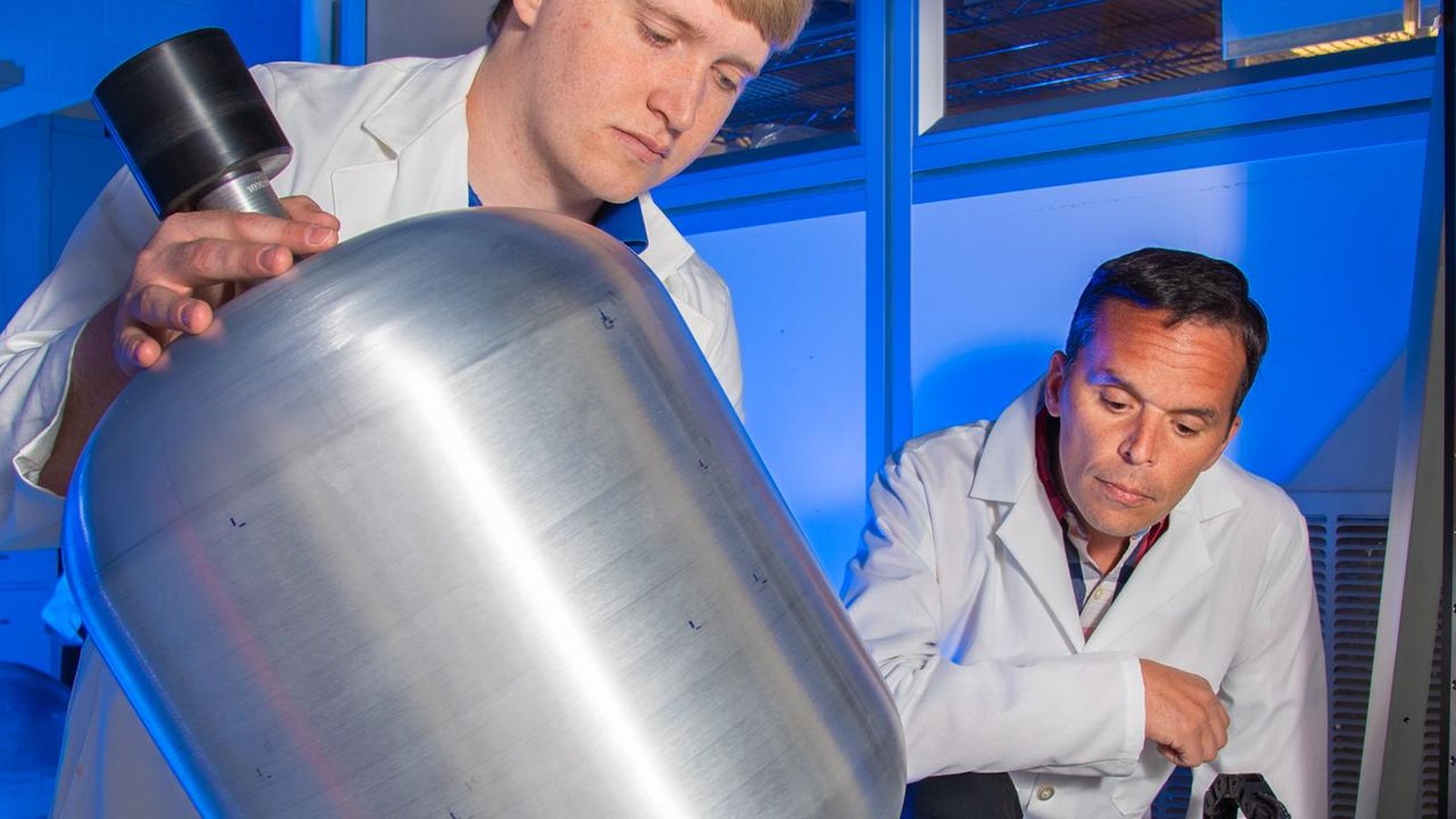
On November 27, 2026, the Department of Labor officially submitted an information collection package to the Office of Management and Budget governing Mine Safety and Health Administration safety defect examination and recordkeeping mandates for compressed-air receivers, boilers, and unfired pressure vessels. The regulatory filing enforces inspection standards across metal and nonmetal mining facilities, establishing strict defect correction protocols and maintenance documentation that directly impact academic experimental mines, geotechnical test stations, and deep underground research laboratories.
Federal Information Collection Submission for MSHA Pressure Vessel Rules
The Department of Labor (DOL) and the Mine Safety and Health Administration (MSHA) submitted the information collection request (ICR) under Paperwork Reduction Act provisions as Document 2026-24200, with official publication in the Federal Register scheduled for November 30, 2026. The filing seeks a three-year extension from the Office of Management and Budget (OMB) for collection requirements catalogued under OMB Control Number 1219-0089, titled “Safety Defects; Examination, Correction, and Records.” The submission follows an initial 60-day notice published on July 27, 2026 (91 FR 46967), which solicited preliminary feedback on industry reporting burdens and inspection verification procedures.
Federal mine safety regulators underscored that unfired pressure vessels and high-pressure compressed-air receivers represent critical mechanical hazards in extractive and underground facilities. Historical MSHA incident surveillance confirms that structural safety defects, inadequate relief valving, and deferred vessel maintenance have triggered catastrophic ruptures resulting in severe worker injuries and fatal concussive blasts. The submission formalizes the administrative mechanism through which MSHA inspectors review inspection logs, defect notifications, and equipment repair certifications across 11,687 surface and underground operations nationwide.
Core Inspection Standards and Documentation Mandates
The regulatory structure renewed in the submission encompasses several distinct titles under Chapter I of Title 30 of the Code of Federal Regulations. Specifically, 30 CFR 56.13015 governs compressed-air receivers and unfired pressure vessels at surface metal and nonmetal facilities, while 30 CFR 57.13015 imposes parallel requirements on underground operations. Both standards compel facility operators to subject compressed-air receivers and unfired pressure vessels to routine structural examinations and maintain records in strict alignment with the National Board Inspection Code (NBIC). These records must be retained on site and made immediately available to the Secretary of Labor or authorized safety inspectors during unannounced compliance audits.
For fired pressure vessels such as auxiliary steam boilers, 30 CFR 56.13030 and 57.13030 mandate functional safety devices, including water level gauges, pressure gauges, automatic pressure-relief valves, and blowdown piping certified by the American Society of Mechanical Engineers Boiler and Pressure Vessel Code (ASME BPVC). Operators must preserve all boiler inspection and repair logs under ASME and National Board frameworks. These specialized requirements intersect with the pre-shift machinery examination mandates codified in 30 CFR 56.14100 and 57.14100, which require competent personnel to inspect all operational tools and mechanical systems for defects before each working shift begins.
| Regulatory Authority | Equipment Classification | Governing Technical Code | Recordkeeping Requirement | Annual Industry Burden |
|---|---|---|---|---|
| 30 CFR 56.13015 | Surface compressed-air receivers and unfired vessels | National Board Inspection Code (NBIC) | Written inspection logs retained for federal audit | Shared component of 1.35M annual burden hours |
| 30 CFR 57.13015 | Underground compressed-air receivers and unfired vessels | National Board Inspection Code (NBIC) | On-site logs and authorized inspector sign-offs | Part of 6,055,179 total documentation responses |
| 30 CFR 56/57.13030 | Fired pressure vessels and steam boilers | ASME BPVC Section VIII and 1977 Boiler Code | Relief valve checks, gauge calibrations, repair records | Included in $427,919 annualized non-labor cost |
| 30 CFR 56/57.14100 | Pre-shift tools, machinery, and pressure fittings | MSHA Shift Examination Framework | Pre-operational defect logs and corrective action records | Applies across 11,687 responding entities |
Background on MSHA High-Pressure Safety Oversight
Compressed air serves as a foundational power source in heavy extraction and mining environments, energizing pneumatic drills, rock bolters, automated ventilation gates, and underground refuge chambers. However, the pneumatic energy stored in large air receivers poses significant physical explosion hazards if internal moisture induces wall thinning, corrosion pitting, or cyclic fatigue cracks. General industry facilities operating under general safety rules comply with OSHA air receiver regulations under 29 CFR 1910.169, but the mining sector has maintained specialized Title 30 standards due to harsh subterranean conditions, continuous vibration, and extreme atmospheric dust.
Congress mandated periodic reassessment of federal paperwork requirements through the Paperwork Reduction Act to ensure that reporting burdens placed on operators produce tangible safety utilities without unnecessary administrative friction. In the July 2026 notice, MSHA reviewed fatal gram reports and non-fatal accident data across four decades, finding that rigorous pre-shift examinations and certified pressure vessel testing directly prevent catastrophic failures. The three-year renewal package ensures uninterrupted legal authority for MSHA field enforcement while OMB evaluates agency estimates of compliance time and non-labor testing fees.
Engineering Perspectives and Regulatory Feedback
Mechanical engineers, safety inspectors, and mining industry stakeholders have consistently pointed to ASME Section VIII standards and National Board Commission certifications as the bedrock of pressure safety. Technical inspectors note that air receivers operating in humid, variable-temperature underground mines experience accelerated condensate accumulation, necessitating frequent drainage and ultrasonic thickness testing. Compliance experts emphasize that failure to log safety defect corrections creates legal exposure during mandatory post-incident investigations conducted by federal inspectors.
Institutional compliance specialists also emphasize that comprehensive equipment management requires structured operational checklists. Facilities often coordinate these mechanical reviews alongside broader institutional procedures, integrating detailed protocols such as those outlined in the Laboratory Safety Inspection Programme to manage multi-tiered audit frequencies, corrective actions, and inspection logs. Engineering safety committees maintain that standardized recordkeeping provides vital operational data that helps facility engineers track component degradation before mechanical failure occurs.
Implications for University Mines and Underground Research Facilities
While MSHA regulations primarily target commercial mineral extraction, Title 30 requirements directly govern university-operated experimental mines, university geotechnical field stations, and subterranean research consortia. Facilities such as the Sanford Underground Research Facility in South Dakota, the Colorado School of Mines Edgar Experimental Mine, and the University of Arizona San Xavier Mining Laboratory operate under MSHA jurisdiction for underground workings, shaft operations, and compressed-air infrastructure.
Academic institutions and research facilities that operate large-scale pneumatic compressors, underground environmental testing chambers, or high-pressure gas distribution networks must maintain rigorous compliance records. University environmental health and safety offices must ensure that all pressure vessels bear valid ASME code symbol stamps, that pressure relief valves receive scheduled bench testing, and that daily pre-shift examinations are formally documented by designated competent persons. Research project managers can benchmark their mechanical documentation using a standardized Laboratory Safety Self-Inspection Checklist to ensure equipment verification aligns with federal regulatory mandates.
Furthermore, research laboratories that interface with heavy pneumatic infrastructure must ensure appropriate personal protective equipment, pressure isolation barriers, and emergency protocols are actively maintained. Safety managers should cross-reference site protocols against standard guidelines detailed in Laboratory Safety Equipment and review specific verification steps in the Lab Safety Equipment Checklist to ensure that auxiliary pressure fittings, gauges, and safety shutoff valves meet both institutional and federal inspection criteria.
Next Steps and Comment Timelines
Following the formal filing on November 27, 2026, the official notice will appear in the Federal Register on November 30, 2026. The Office of Management and Budget will accept public comments on Document 2026-24200 for 30 calendar days following official publication, establishing a public comment deadline of December 30, 2026. Submissions must be delivered electronically via the federal regulatory portal at www.reginfo.gov under the “Currently under 30-day Review – Open for Public Comments” section.
Stakeholders, including university research administrators, professional engineering societies, and facility safety directors, may comment on whether the proposed information collection is necessary for proper agency oversight, the accuracy of MSHA burden estimates, and opportunities to adopt automated digital recordkeeping. While OMB conducts its formal review, the existing collection authorization remains protected under a month-to-month extension, ensuring continuous enforcement across all covered surface and underground facilities.
Sources
- Federal Register: Public Inspection: Agency Information Collection Activities; Proposals, Submissions, and Approvals: Safety Defects; Examination, Correction, and Records, checked 2026-11-28
- eCFR: 30 CFR 56.13015 — Inspection of compressed-air receivers and other unfired pressure vessels, checked 2026-11-28
- eCFR: 30 CFR 57.13015 — Inspection of compressed-air receivers and other unfired pressure vessels, checked 2026-11-28
- American Society of Mechanical Engineers: BPVC Section VIII Rules for Construction of Pressure Vessels Division 1, checked 2026-11-28
- Occupational Safety and Health Administration: 1910.169 – Air receivers, checked 2026-11-28





