
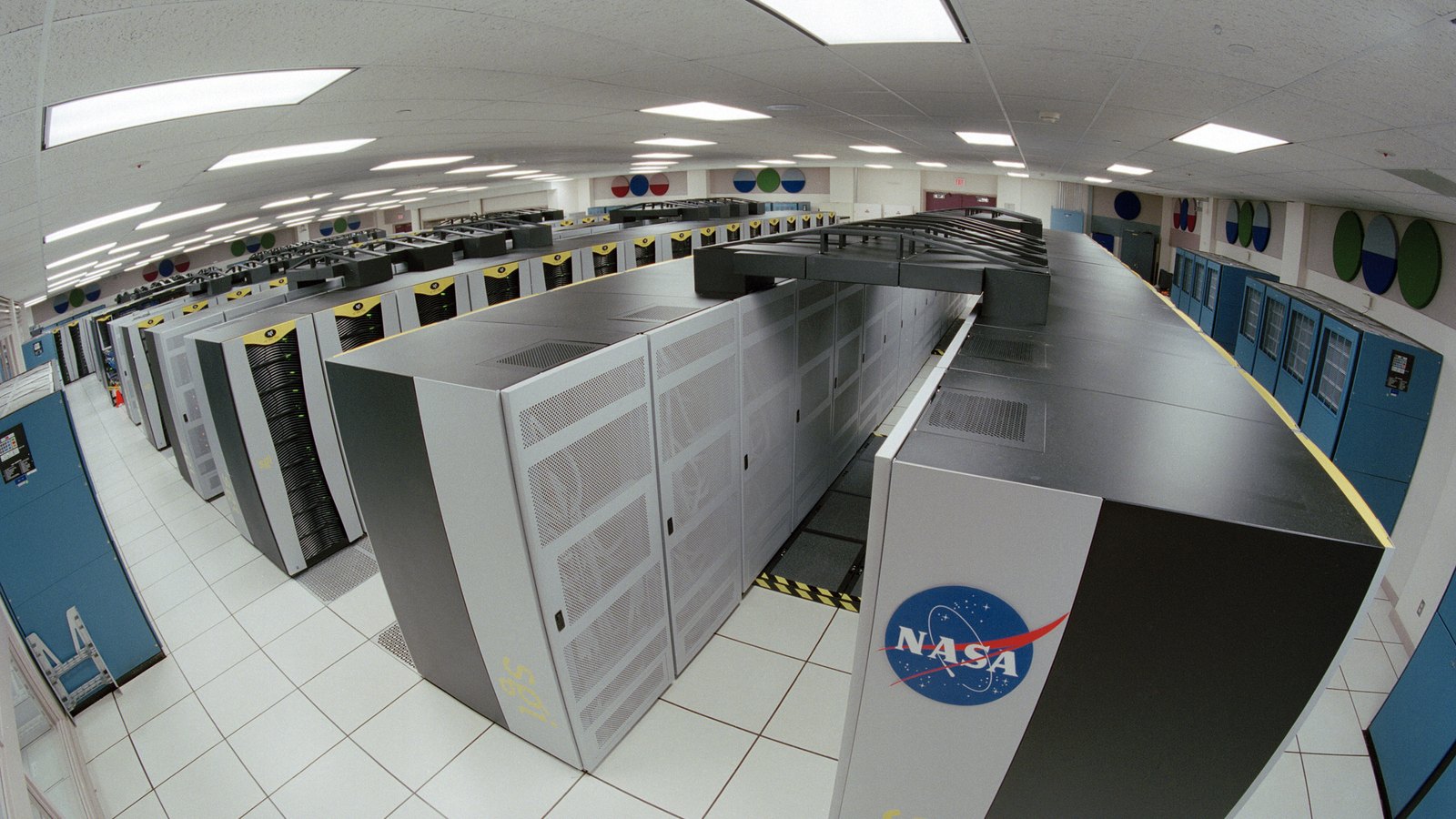
On 26 November 2026, the UK Department for Science, Innovation and Technology published the baseline evaluation of the national AI Research Resource supercomputing programme, reviewing operational delivery across Cambridge’s Dawn and Bristol’s Isambard-AI. The independent report reveals surging university demand outstripping allocated capacity, while detailing essential technical and governance expectations for academic principal investigators, high-performance computing centres, and university research grant offices.
Evaluation of the National AI Research Resource
The UK Government has published its official Baseline evaluation of the AI Research Resource (AIRR), offering the first formal assessment of the UK’s public AI supercomputing infrastructure. Commissioned by the Department for Science, Innovation and Technology (DSIT) and authored by economic consultancy London Economics with survey assistance from IFF Research, the 131-page study evaluates how the initial £250 million investment in high-performance hardware performed throughout its first operational year.
The national resource comprises two dedicated supercomputers: Dawn, hosted by the University of Cambridge within the Cambridge Service for Data Driven Discovery (CSD3), and Isambard-AI, hosted at the University of Bristol’s Centre for Supercomputing. Designed and delivered in partnership with UK Research and Innovation (UKRI), these facilities aim to rebuild the UK’s domestic computational capacity across machine learning development, scientific modelling, and frontier safety validation.
Applying a formal operational Theory of Change, the report traces the transition from capital procurement to early research outcomes. While technical delivery achieved unprecedented speed for UK public infrastructure, the evaluation highlights critical administrative bottlenecks in operational staffing, funding approvals, and grant onboarding.
Compute Allocation Pathways and Operational Metrics
To distribute compute time across research communities, the programme established unified access routes managed through the centralised AIRR Portal, developed with StackHPC and Waldur. Rather than applying separately to individual host universities, researchers access both systems through one front door.
As of March 2026, the resource had onboarded 583 projects across 147 unique organisations, including 43 universities and 86 small businesses. Compute awards operate across structured tiers:
- Gateway Route: Allocates up to 10,000 GPU hours over three months for first-time users, novel algorithm testing, and exploratory benchmarking on high-performance computing infrastructure.
- Rapid Access Route: Provides up to 20,000 GPU hours over three months for UK-registered small and medium-sized enterprises preparing commercial AI products for market.
- Innovator Calls: Awards between 50,000 and 150,000 GPU hours for larger follow-on projects demonstrating computational reproducibility from prior Gateway awards.
- Strategic and National Priorities: Direct allocations supporting the AI Safety Institute, Sovereign AI missions, and cross-disciplinary scientific projects.
The table below presents the operational breakdown of projects across allocation tracks recorded in the baseline evaluation:
| Allocation Track | Target Community | Maximum Allocation | Project Window | Projects (March 2026) |
|---|---|---|---|---|
| Gateway Access | Academic and Industry Benchmarking | 10,000 GPU Hours | 3 Months | 355 |
| Rapid Access | UK Small and Medium Enterprises | 20,000 GPU Hours | 3 Months | 69 |
| Early Access Pilots | Initial University Shakedown Users | Pilot Testing Quotas | Pre-launch Phase | 60 |
| Strategic AI and AISI | AI Safety Institute and Sovereign AI | Strategic National Quotas | Strategic Lifecycle | 58 |
| Innovator Calls | Advanced Gateway Graduates | 50,000 to 150,000 GPU Hours | 6 to 12 Months | 19 |
| AI for Science | Mission-Led Research Consortia | Consortium Grants | Annual Calls | 22 |
Universities account for 414 of the 583 total projects. On average, participating universities ran 10 concurrent research teams on the systems, while industry participants focused primarily on single product-validation projects.
The UK Compute Deficit and Infrastructure Delivery
The baseline evaluation contextualises AIRR against years of national compute decline documented in the 2023 Future of Compute Review. By November 2024, the UK held only 0.7% of global computing power among the world’s top 500 supercomputing clusters, trailing France, Germany, and Italy.
The commissioning of Dawn and Isambard-AI swiftly reversed this trend. According to the international TOP500 list, the UK’s global performance share rose to 2.9%, placing the nation ahead of France. Isambard-AI secured 11th position globally with 5,448 NVIDIA GH200 Grace Hopper superchips in a custom modular facility, while Dawn ranked 92nd with 1,024 Intel Data Centre GPU Max processors.
However, compressed timelines created delivery challenges. In Bristol, civil construction faced grid connection hurdles, datacentre security enhancements, and financial year budget slippage. In Cambridge, where hardware built on existing vendor agreements, delays in operational revenue funding slowed recruitment, leaving technical support teams understaffed during peak onboarding.
Researcher Uptake and Multi-Model Service Approaches
User surveys indicate significant early benefits for researchers. Nine in ten surveyed users reported improvements in their capacity to conduct AI research, with 70% rating their capabilities as substantially improved. Furthermore, 40% confirmed that their compute access had already produced formal research publications or conference submissions, reinforcing open science practices across the UK network.
Groundbreaking initiatives emerged quickly, notably Nightingale-AI at Imperial College London, which is building a foundation world model for healthcare using NHS clinical records and biomedical datasets. Other projects have tackled cancer biomarker identification, climate modelling, and protein structure prediction.
The evaluation revealed contrasting operating models across the two centres:
- Bristol’s Cloud-Inspired Model: Isambard-AI prioritises automated self-service, requiring research groups to possess strong in-house technical and software engineering capabilities.
- Cambridge’s High-Touch Support: Dawn delivers traditional academic support, offering dedicated research software engineers who assist with compiler optimisation and workflow parallelisation.
While technically mature teams navigated Bristol’s self-service environment easily, less experienced researchers experienced initial friction, occasionally delaying compute consumption until late in their award periods.
Implications for Principal Investigators and Research Offices
The baseline report offers concrete operational lessons for university research offices, research software engineering groups, and prospective principal investigators:
- Prepare Code Before Award Activation: Because Gateway and Rapid Access allocations expire after three months, research teams must complete environment containerisation before compute windows commence. Unused hours cannot be rolled forward.
- Match Technical Competencies to Cluster Architecture: Principal investigators must assess whether their teams have the DevOps expertise required for Bristol’s self-service cluster or whether they need Cambridge’s hands-on support.
- Track Milestone Metrics for Scaled Calls: Progression to larger Innovator awards of up to 150,000 GPU hours requires documented computational efficiency and published outputs. Institutional research offices should track allocation performance centrally.
- Incorporate Environmental and Power Monitoring: High-performance workloads carry significant carbon and energy costs, making compute efficiency and environmental footprint tracking essential for mandatory funder reporting.
Upcoming Expansion and Next Steps for UK Compute
The baseline evaluation provides the framework for the UK’s planned 20x compute expansion towards 2030. DSIT has committed £36 million to expand Dawn up to six-fold, while future allocation rounds will integrate newer processor architectures across national sites.
The evaluation recommends that future capital programmes separate hardware procurement from software service layers, establish dedicated training bootcamps for smaller enterprises, and introduce test micro-allocations to verify software scaling prior to full grant awards. With demand now exceeding available capacity, universities that invest in local research software engineering support will be best positioned for upcoming rounds.
Sources
- UK Department for Science, Innovation and Technology: Baseline evaluation of the AI Research Resource (AIRR), checked 2026-11-26
- London Economics: Data Science, Machine Learning and Artificial Intelligence Services, checked 2026-11-26
- University of Bristol: UK’s most powerful supercomputer, checked 2026-11-26
- University of Cambridge: BRICS-RCS Collaboration on AIRR Priorities, checked 2026-11-26
- Imperial College London: Launching Nightingale AI: A New Foundation World Model for Health, checked 2026-11-26
- TOP500: The 500 Most Powerful Supercomputers, checked 2026-11-26






