
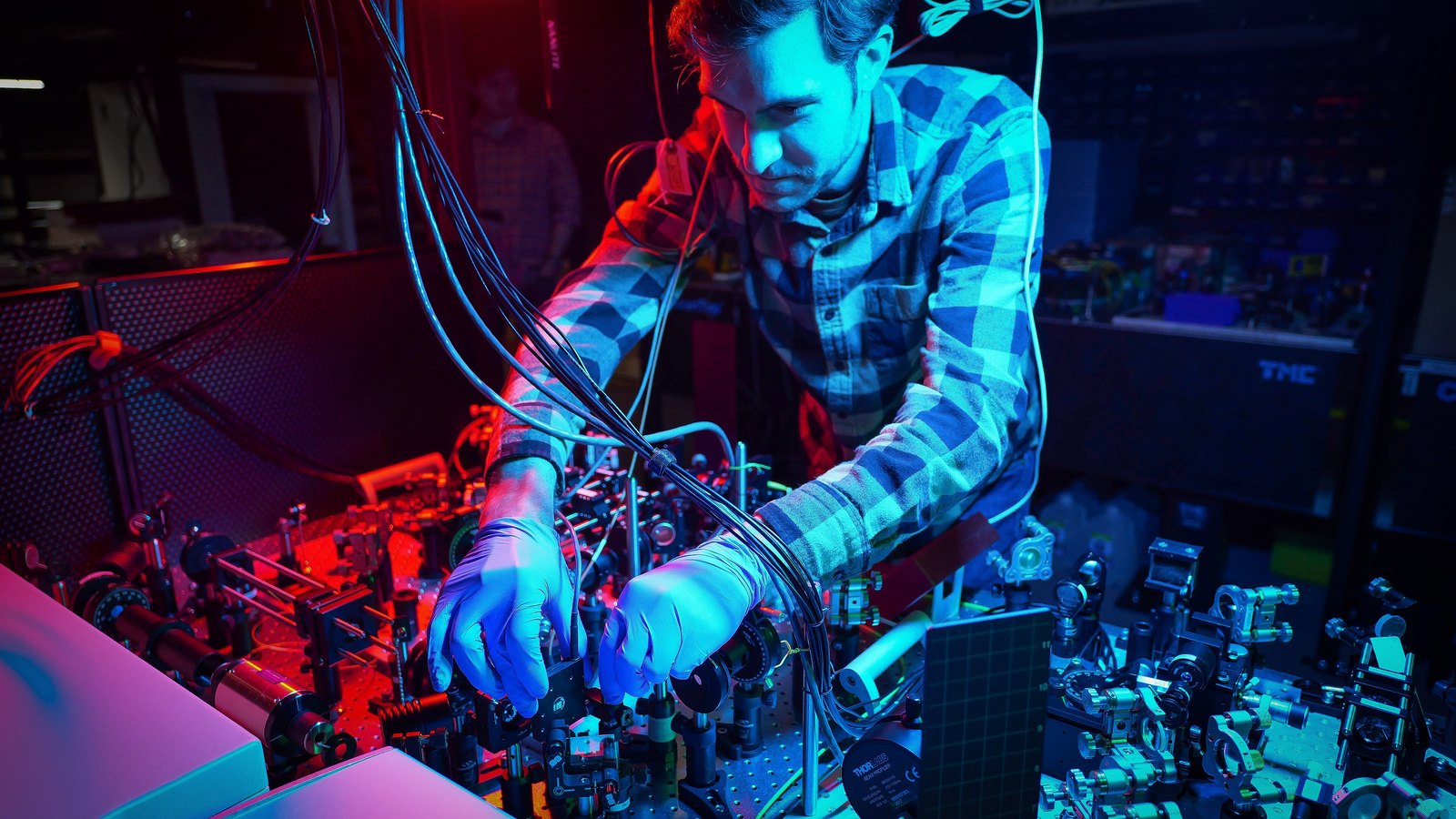
On November 26, 2026, the European Commission announced at the EU–Western Balkans Investment Conference in Tirana that it is allocating €30 million in dedicated funding under the European Innovation Council to back innovative deep-tech start-ups and university spinouts across Albania, Bosnia and Herzegovina, Kosovo, Montenegro, North Macedonia, and Serbia, expanding direct non-dilutive grant access and commercialisation pathways for regional academic researchers.
Allocation Structure and Target Pillars
The €30 million package, presented during investor sessions in Tirana, accelerates technology transfer and industrial scaling across the Western Balkans. Financed through the Instrument for Pre-accession Assistance (IPA III) in alignment with Horizon Europe, the package establishes two distinct funding compartments administered through the European Innovation Council (EIC). These compartments support deep-tech ventures across sequential readiness thresholds, bridging the gap between laboratory research and commercial deployment.
The first compartment directs €10 million into an EIC Pre-Accelerator facility for early-stage deep-tech start-ups and academic spinouts. Participating ventures can secure non-dilutive grants of up to €1 million to validate emerging technologies, advance prototype testing, build viable commercial cases, and prepare for follow-on equity rounds. Applications for this facility open in May 2027 and close in November 2027.
The second compartment directs €20 million toward the EIC Accelerator mechanism to assist mature deep-tech enterprises whose technologies have demonstrated feasibility and require capital for commercial piloting, regulatory validation, and market scaling. Eligible companies can access grants of up to €2.5 million, with applications opening immediately in November 2026. Western Balkan applicants submit through regular EIC Accelerator grant-and-equity funding evaluation channels, with proposals that pass quality thresholds drawing directly from this dedicated regional reserve if pan-European budgetary ceilings are met.
Key Programme Details and Allocation Framework
The initiative sets clear eligibility boundaries, funding ceilings, and operational goals across both EIC tracks. The table below compares key technical and financial provisions established for each compartment.
| Programme Compartment | Allocated Budget | Maximum Grant Per Entity | Target Maturity Level | Application Window | Primary Focus |
|---|---|---|---|---|---|
| EIC Pre-Accelerator | €10 million | Up to €1.0 million | Early-stage deep tech (TRL 3–5) | May 2027 – November 2027 | Technology validation, feasibility testing, IP strategy, and business readiness. |
| EIC Accelerator | €20 million | Up to €2.5 million | Advanced scale-up (TRL 5/6–8) | Open November 2026 onwards | System demonstration, field trials, regulatory compliance, and market scaling. |
Administered under the European Innovation Council and SMEs Executive Agency (EISMEA), regional applicants follow the standard multi-stage EIC evaluation process, featuring remote technical evaluations by independent experts followed by in-person jury interviews in Brussels. Technical evaluation criteria align with standard EIC Accelerator programme rules, ensuring regional beneficiaries satisfy the same excellence benchmarks applied across EU member states.
Regional Innovation Context and Horizon Europe Association
This dedicated envelope builds on two decades of scientific cooperation between the EU and the Western Balkans. All six regional partners—Albania, Bosnia and Herzegovina, Kosovo, Montenegro, North Macedonia, and Serbia—are fully associated with Horizon Europe, according regional research institutions and enterprises full access to European research consortia. As noted in official records on European Commission research cooperation agreements with the Western Balkans, regional entities have secured approximately €237 million across more than 1,000 projects since 2021.
However, academic research groups across the region have historically encountered structural hurdles when attempting to spin out laboratory inventions. Researchers navigating venture formation frequently face funding gaps between consortium grants and commercial venture capital. This challenge reflects dynamics addressed across EIC Pathfinder vs. EIC Transition vs. EIC Accelerator pathways, where laboratory proof-of-concept requires targeted bridge capital before commercial viability can be established.
The funding package coordinates with wider regional integration initiatives, particularly the EU Growth Plan for the Western Balkans and the Common Regional Market framework led by the Regional Cooperation Council Common Regional Market framework. It also leverages the local training networks of the EIT Regional Innovation Scheme, which maintains innovation hubs and venture incubation support across moderate- and modest-innovator regions.
Institutional and Stakeholder Reactions
European Commission officials and regional ministers at the Tirana conference stressed that targeted deep-tech funding is vital to developing regional knowledge economies and mitigating scientific brain drain. By backing high-growth tech ventures at home, the programme aims to offer skilled engineering and scientific talent compelling domestic commercialisation careers.
University leaders and research administrators across Belgrade, Skopje, Sarajevo, Pristina, Podgorica, and Tirana welcomed the €30 million reserve. Regional stakeholders noted that while Western Balkan scientists compete effectively in collaborative research consortia, start-ups have faced disadvantages in open EIC Accelerator calls due to lower local venture capital density. The dedicated funding ring-fences capital for qualifying regional proposals that meet the rigorous EIC quality bar.
What the Funding Means for Researchers and University Tech Transfer Offices
The arrival of targeted EIC capital creates distinct opportunities and operational demands for Western Balkan university researchers and institutional Technology Transfer Offices (TTOs). Academic institutions must update their commercialisation processes to fully leverage these funding compartments.
- Establishing Institutional Technology Transfer Protocols: University TTOs must establish clear guidelines for invention disclosures, patent ownership, and equity participation. Offices can align their practices with European frameworks outlined in EU-wide technology transfer coordination through ASTP and the Knowledge Valorisation Platform, providing transparent licensing pathways for academic spinouts.
- Research Data Integrity and Spinout Provenance: Academic founders launching commercial spinouts must maintain complete laboratory records and data provenance. Conforming to standards established under ERC data management plans under Horizon Europe ensures experimental datasets withstand technical scrutiny during investor due diligence.
- Dual-Track Financial Governance: Blended grant management requires clean separation between university departmental accounts and commercial spinout finances, ensuring full compliance with IPA III and Horizon Europe state-aid rules.
Next Steps, Application Timelines, and Support Workshops
Rollout of the €30 million package begins immediately with informational and capacity-building activities. The European Commission is holding an online regional workshop on December 15, 2026, from 09:30 to 11:30 CET, offering prospective applicants practical guidance from EIC evaluators and successful beneficiaries on proposal structuring.
The key milestone dates for the two funding streams are:
- December 15, 2026: Regional application workshop hosted by the European Commission (09:30–11:30 CET).
- November 2026 – Ongoing: EIC Accelerator submission portal open for mature deep-tech enterprises seeking up to €2.5 million in grants.
- May 2027: Launch of the €10 million EIC Pre-Accelerator call for early-stage deep-tech start-ups.
- November 2027: Submission deadline for the EIC Pre-Accelerator call, followed by expert evaluations and grant award agreements in late 2027 and early 2028.
Sources
- European Commission Directorate-General for Enlargement and Eastern Neighbourhood: EU announces €30 million in additional funding to support innovative start-ups in the Western Balkans, checked 2026-11-26
- European Innovation Council: EIC Accelerator funding opportunities and blended finance rules, checked 2026-11-26
- European Commission Directorate-General for Research and Innovation: International cooperation with the Western Balkans in research and innovation, checked 2026-11-26
- European Institute of Innovation and Technology: The EIT Regional Innovation Scheme (RIS) — Closing the innovation divide in Europe, checked 2026-11-26
- Regional Cooperation Council: Western Balkans Common Regional Market and Innovation Infrastructure, checked 2026-11-26






