
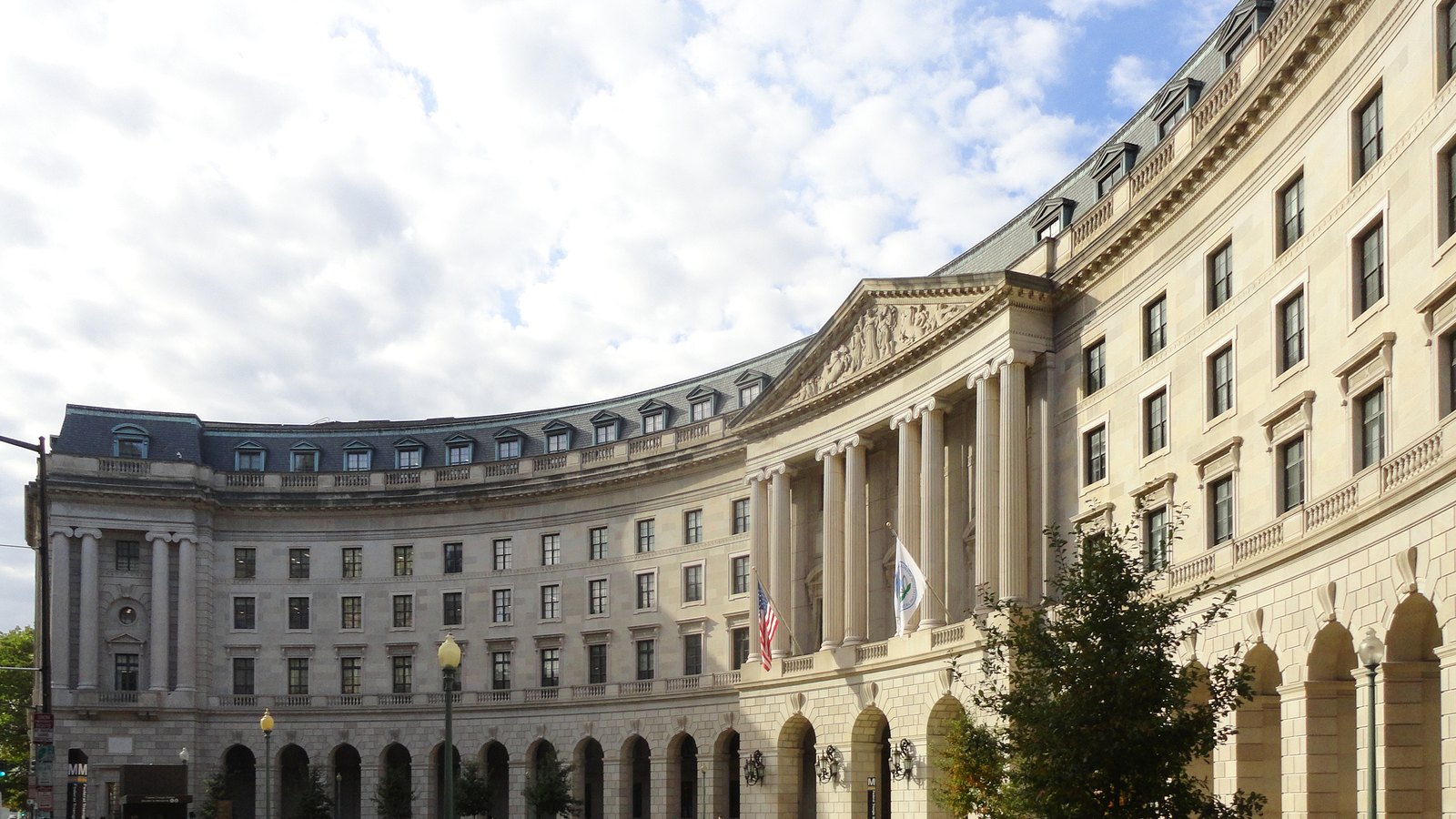
On 2026-11-27, the U.S. Environmental Protection Agency authorized technical contractor and subcontractor personnel to access sensitive industrial and emissions records under an official Federal Register notice, expanding external compliance oversight under the Clean Air Act, maritime pollution treaties, and greenhouse gas phasedown mandates. The decision impacts academic laboratories, chemical spinouts, and research institutions by transferring confidential business information into contractor-managed analytical environments.
Authorization of Contractor Access to Clean Air and AIM Act Records
The EPA Office of Enforcement and Compliance Assurance issued notice under Docket ID No. EPA-HQ-OECA-2024-0420 and document identifier FRL-12264.1-03-OECA, formalizing authorization for commercial specialists to review proprietary corporate submissions. Acting Director Meetu Kaul of the Air Enforcement Division executed the action, expanding a multi-year technical support framework established under prime contract number 68HERL26A0022. The formal action corrects an initial notice published on September 9, 2026 in volume 91 of the Federal Register at page 57337, adding Aleksandrich Compliance and Engineering Services LLC as an approved technical subcontractor and updating the operational address for prime contractor Eastern Research Group, Incorporated to Fairfax, Virginia.
Federal air quality enforcement relies extensively on engineering analyses and chemical audits conducted by commercial contractors. Under the Clean Air Act, regulated entities submit documentation regarding volatile organic compound emissions, hazardous air pollutants, continuous opacity monitoring, and pilot-scale industrial process modifications. The expanded authorization enables designated contractor personnel to examine proprietary formulations, confidential facility blueprints, and production volumes submitted under statutory reporting mandates.
Beyond stationary source air regulations, the authorization encompasses compliance filings submitted under the Act to Prevent Pollution from Ships, which implements MARPOL Annex VI maritime standards, and the American Innovation and Manufacturing Act of 2020. Under the AIM Act, chemical manufacturers, reclaimers, and research laboratories submit granular transactional data regarding the production, consumption, and destruction of hydrofluorocarbons. Because hydrofluorocarbon allowances trade as commercial commodities with substantial monetary value, submitted records contain sensitive financial figures, proprietary chemical blends, and supply chain arrangements.
Contract Scope, Technical Entities, and Compliance Provisions
Under contract 68HERL26A0022, Eastern Research Group and its subcontractors provide engineering and investigative support to EPA civil enforcement personnel. The scope of technical assistance includes conducting on-site plant inspections, analyzing continuous emission monitoring system data streams, calculating facility emissions baselines, and auditing corporate allowance tracking ledgers across complex manufacturing facilities.
The regulatory notice explicitly identifies the commercial and professional entities authorized to access confidential business records across designated secure locations at EPA Headquarters in Washington, D.C., and ERG operational facilities. To establish rigorous oversight, the agency requires every participating organization and individual specialist to execute binding non-disclosure agreements before receiving access to protected files.
| Entity Name | Role and Contract Relationship | Statutory Program Scope | Authorized Access Location |
|---|---|---|---|
| Eastern Research Group, Incorporated (ERG) | Prime Contractor (Contract 68HERL26A0022) | Clean Air Act, APPS / MARPOL Annex VI, AIM Act | EPA Headquarters and Fairfax, VA Facility |
| Aleksandrich Compliance and Engineering Services LLC | Technical Subcontractor (Added November 2026) | Emissions Engineering and Compliance Verification | Designated Secure EPA and Contractor Facilities |
| Clearstone Engineering Ltd. | Specialized Subcontractor | Fugitive Emissions and Air Dispersion Audits | Designated Secure EPA and Contractor Facilities |
| Process Profiles | Technical Subcontractor | Industrial Process Chemistry and Mass Balances | Designated Secure EPA and Contractor Facilities |
| Matrix New World Engineering | Environmental Engineering Subcontractor | Infrastructure and Facility Compliance Auditing | Designated Secure EPA and Contractor Facilities |
| James J. Carroll, CPA | Financial and Audit Subcontractor | Economic Benefit Analysis and Allowance Audits | Designated Secure EPA and Contractor Facilities |
Statutory Context and Evolution of Environmental CBI Safeguards
Federal environmental statutes establish distinct standards for trade secrecy, balancing commercial protection against public transparency. Under 42 U.S. Code Section 7414, which codifies Section 114 of the Clean Air Act, Congress granted the EPA administrator authority to demand recordkeeping, install monitoring instruments, sample emissions, and enter industrial premises. However, Section 114(c) draws an uncompromising legal boundary: while proprietary trade secrets and manufacturing formulas may qualify for confidential treatment, actual emissions data can never be withheld from the public.
Administrative procedures governing the handling, evaluation, and disclosure of protected records are codified in 40 CFR Part 2 Subpart B. Under 40 CFR 2.301, special rules govern information collected under the Clean Air Act, establishing explicit criteria under paragraph (h) for disclosing confidential business information to contractors and subcontractors. Under these regulations, contractor access is permitted only when the agency determines that disclosure is necessary for the contractor to perform required work, provided that personnel adhere to stringent physical and electronic security protocols.
Legal scholars and compliance analysts from Taft Stettinius and Hollister LLP have observed that environmental data governance has shifted toward automated electronic reporting and categorical classification. As the EPA established mandatory greenhouse gas reporting protocols under 40 CFR Part 98 and hydrofluorocarbon allocations under 40 CFR Part 84, the volume of incoming corporate records led the agency to establish predefined categories for confidentiality rather than adjudicating individual claims on a case-by-case basis. Consequently, technical contractors play a decisive role in verifying whether complex operational datasets meet regulatory classification standards.
Regulatory Oversight and Industry Stakeholder Perspectives
The authorization reflects the ongoing operational balance between regulatory enforcement capacity and corporate data security. Regulated industry groups, including specialty chemical manufacturers and refrigeration consortia, have emphasized that detailed production metrics submitted under the AIM Act contain proprietary synthetic routes, catalyst compositions, and supply chain volumes. Disclosing such records without rigorous safeguards could allow domestic or overseas competitors to reverse-engineer proprietary processes or anticipate corporate market positioning.
In response to stakeholder concerns, the Air Enforcement Division structured the contractor agreement to incorporate comprehensive information security controls. Personnel assigned to review confidential records must operate under explicit need-to-know restrictions, execute personal non-disclosure covenants, and access files through isolated digital environments. Furthermore, federal statutes impose direct criminal and civil penalties on any individual who unlawfully discloses trade secrets obtained through government service or federal contracting.
Environmental law specialists point out that third-party contractor access is vital to effective civil enforcement. The technical complexity of modern emissions testing demands specialized engineering competencies that private technical contractors routinely maintain. By deploying multidisciplinary teams composed of environmental engineers, process chemists, and certified public accountants, the EPA enhances its capacity to detect fraudulent emissions reports, unpermitted modifications, and illegal chemical imports.
Operational Implications for Academic Research Laboratories and University Compliance Offices
The expansion of contractor access directly touches university research laboratories, academic medical centers, and institutional environmental health and safety offices. Higher education facilities operate heating plants, chemical synthesis laboratories, and specialized cold-storage facilities that fall under Title V operating permits, New Source Performance Standards, and AIM Act refrigerant management rules. When university researchers scale up synthetic chemistry experiments or spin out advanced materials startups, submitted regulatory reports frequently contain proprietary intellectual property.
To maintain regulatory compliance and safeguard sensitive discoveries, academic institutions must align their operational protocols with established federal contract compliance obligations. Research offices and environmental compliance managers should review institutional submissions to ensure that trade secrets, patentable formulas, and unpublished reaction kinetics are explicitly flagged with timely confidentiality claims at the initial moment of submission, avoiding inadvertent public disclosure.
Furthermore, institutions should integrate comprehensive research data governance frameworks into laboratory operations. Managing emissions records, chemical inventory tracking, and environmental monitoring metrics requires transparent documentation controls similar to clinical data governance requirements and international data and data governance principles. Research facilities that develop alternative refrigerants, low-global-warming propellants, or carbon capture technologies must maintain clear audit trails distinguishing public emissions data from proprietary chemical synthesis methods.
Enforcement Milestones, Comment Windows, and Implementation Schedule
The procedural timeline established in the Federal Register document dictates rapid implementation across federal enforcement channels. Affected businesses, academic institutions, and regulated facility operators have an expedited opportunity to submit formal comments regarding contractor data access under Docket ID No. EPA-HQ-OECA-2024-0420. Public comments must be received on or before December 2, 2026, through the Federal eRulemaking Portal at Regulations.gov or directed to the OECA docket email address.
Contractor and subcontractor access to protected records collected under the Clean Air Act, APPS, and AIM Act officially commences on December 3, 2026. The operational period authorized under Contract Number 68HERL26A0022 extends through June 26, 2031, providing the Air Enforcement Division with sustained external technical support over a multi-year enforcement horizon. If the underlying contract is extended or additional subcontractors are engaged, the EPA must issue supplemental notifications to affected data submitters, ensuring ongoing administrative transparency.
Sources
- Federal Register: U.S. Environmental Protection Agency (EPA) Contractor and Subcontractor Access to Confidential Business Information (CBI) Submitted Under Clean Air Act (CAA), Act To Prevent Pollution From Ships (APPS), and American Innovation and Manufacturing Act (AIM); Correction, checked 2026-11-28
- Electronic Code of Federal Regulations: 40 CFR Part 2 Subpart B — Confidentiality of Business Information, checked 2026-11-28
- Legal Information Institute: 42 U.S. Code § 7414 – Recordkeeping, inspections, monitoring, and entry, checked 2026-11-28
- Taft Stettinius and Hollister LLP: New EPA Rule For Confidential Business Information Reported With Greenhouse Gas Data, checked 2026-11-28






