
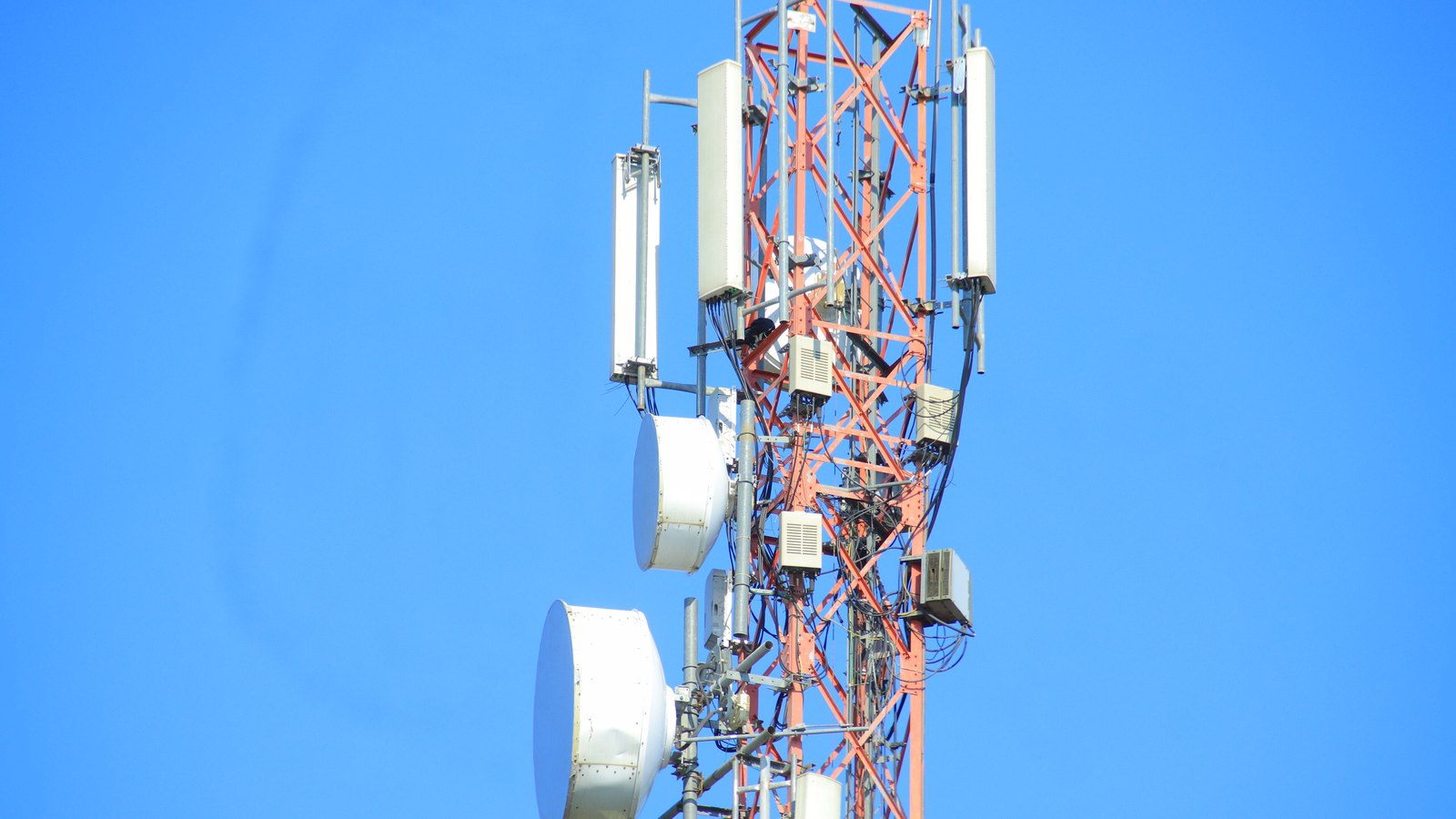
On November 23, 2026, the Federal Communications Commission published a Notice of Proposed Rulemaking in the Federal Register to establish formal applicant vetting standards for high-cost Universal Service Fund awards under the Rural Broadband Protection Act of 2025. The proceeding fundamentally reshapes eligibility and default penalties for regional research networks, university sponsored-projects offices, and community broadband consortia seeking federal connectivity support.
Rulemaking Scope and the Rural Broadband Protection Act Mandate
The Federal Communications Commission (FCC) Notice of Proposed Rulemaking (91 FR 75482, WC Docket Nos. 10-90, 26-96, 26-288; FCC 26-75) establishes objective applicant screening mechanisms for high-cost broadband deployment subsidies under 47 CFR Part 54. Enacted under the Rural Broadband Protection Act of 2025 (RBPA), the proposed rule requires applicants to substantiate technical, operational, and financial capabilities before receiving binding funding authorization.
Historically, high-cost universal service programs such as the Connect America Fund and the Rural Digital Opportunity Fund relied on high-level administrative disclosures during initial bidding, deferring technical audits until after winning bidders were selected. The FCC now proposes that any future covered funding awards—defined as competitive or direct allocations supporting both physical network deployment and ongoing telecommunications services—must satisfy comprehensive pre-award vetting standards.
Administered with the Universal Service Administrative Company (USAC), the proposed Part 54 framework will govern future competitive rounds while exempting legacy rate-of-return carriers operating under existing Eligible Telecommunications Carrier (ETC) formulas.
Technical, Financial, and Operational Vetting Dimensions
The FCC’s proposal establishes multi-layered evidentiary thresholds across engineering feasibility, fiscal liquidity, and past compliance. Rather than accepting high-level self-certifications, the Commission proposes codifying concrete engineering and financial benchmarks for all applicants.
On technical capability, providers proposing wired broadband must substantiate maximum buffer distances from aggregation points to serviceable locations, including physical drop thresholds for fiber-to-the-premises and hybrid fiber-coaxial networks. For terrestrial fixed wireless, applicants must submit base station coordinates, link budgets, receiver heights (four to seven meters), and certified coverage models. Long-form selectees must also provide network diagrams certified by a licensed Professional Engineer (PE), attesting that the infrastructure can deliver required performance metrics to at least 95 percent of assigned locations.
Financially, applicants must submit audited financial statements, multi-year operating pro formas, debt service schedules, and an irrevocable standby letter of credit (LOC) covering at least the initial year of support, accompanied by a legal bankruptcy opinion letter. These requirements parallel federal financial assistance risk evaluation standards codified under 2 CFR Part 200.
To discourage speculative bidding, the RBPA establishes statutory default forfeitures: base penalties of at least $9,000 per violation and a prohibition against setting base forfeitures below 30 percent of total support, doubling the 15 percent cap used in Auction 904.
| Vetting Dimension | Prior Framework (Auction 904 RDOF) | Proposed RBPA Part 54 Rulemaking | Uniform Guidance (2 CFR 200 Subpart C) Parallel |
|---|---|---|---|
| Technical Feasibility | Short-form technology narrative; post-auction PE engineering certification | Mandatory pre-award technical metrics, buffer distance rules, and certified link budgets | Technical capability and merit review of proposed project plans (§ 200.205(c)(1)(iv)) |
| Financial Viability | Audited financials for established entities; qualifying bank letter of credit commitment | Standardized audited statements, debt service coverage ratios, and 1-year standby LOC | Financial stability and liquidity evaluation prior to award commitment (§ 200.205(c)(1)(i)) |
| Compliance Tracking | Self-certification of ETC compliance; self-reported regulatory standing | FCC Broadband Funding Map tracking across federal and state deployment programs | Review of OMB-designated integrity systems and federal audit performance (§ 200.205(c)(1)(ii)) |
| Default Penalties | Base forfeiture capped at 15 percent of defaulted census block group support | Statutory floor of $9,000 per violation; base forfeiture floor at 30 percent of total support | Remedies for non-compliance including withholding, disallowance, or termination (§ 200.339) |
Background and Previous Auction Default Challenges
The push for statutory vetting standards follows extensive defaults in prior universal service reverse auctions. In December 2020, the FCC concluded Auction 904, allocating $9.2 billion in RDOF Phase I subsidies over ten years to deploy broadband across 5.2 million unserved locations. However, the subsequent authorization process exposed severe shortcomings in upfront screening.
Dozens of winning bidders lacked the capital, supply chain arrangements, or technical capability to build promised networks. The Commission ultimately dismissed numerous applications and assessed millions in penalties when financing collapsed, leaving rural communities unserved. Congress passed the Rural Broadband Protection Act of 2025 to replace self-certifications with enforceable, upfront vetting standards.
Stakeholder Reaction and Regulatory Debate
The rulemaking has generated debate across the telecommunications sector. Commercial carrier associations have strongly supported rigorous vetting, arguing that stringent engineering and financial screens protect Universal Service Fund integrity and prevent unqualified bidders from distorting reverse auctions.
Conversely, municipal network operators and non-profit broadband consortia caution that rigid criteria could exclude community-based providers. Smaller regional operators emphasize that securing irrevocable letters of credit and audited statements from commercial banks creates prohibitive carrying costs, urging the FCC to accept alternative performance bonds or credit union financing.
Industry stakeholders also contest penalty calculations. The FCC is seeking input on whether the 30 percent forfeiture floor should apply solely to defaulting census blocks or across an awardee’s full multi-state portfolio, with carriers warning that portfolio-wide penalties create disproportionate liability for localized construction delays.
Implications for Research Networks, Rural Campuses, and Sponsored Projects
The proposed vetting regulations directly affect universities, state Research and Education Networks (RENs), and regional optical networks (RONs). Academic institutions regularly collaborate with regional telecommunications consortia to deliver high-capacity connectivity to rural campuses, agricultural stations, and off-campus testbeds. University sponsored-projects offices (SPOs) must prepare for oversight that mirrors federal grant compliance.
In federal research administration, universities operate under the Uniform Guidance (2 CFR 200), which enforces strict internal control and risk governance standards. The FCC’s vetting rules align with 2 CFR 200 Subpart C pre-award requirements, under which federal awarding agencies evaluate applicant financial stability, management systems, and prior award performance before obligating funds.
When participating in broadband consortia, university research offices must conduct formal subrecipient risk assessment reviews of partner carriers. Consistent with subrecipient risk assessment before award procedures, institutions must verify that third-party network operators maintain compliant accounting systems, verified engineering capacity, and clean suspension and debarment records.
Additionally, the FCC’s letter of credit requirement presents institutional hurdles. Many public universities face state constitutional restrictions against issuing bank letters of credit or encumbering public funds, making alternative security options critical for academic participation in future broadband rounds.
Comment Timeline and Implementation Milestones
Public comments on Notice of Proposed Rulemaking 2026-23830 are due December 23, 2026, with reply comments due January 22, 2027. Filings must cite WC Docket Nos. 10-90, 26-96, and 26-288 through the FCC’s Electronic Comment Filing System (ECFS).
The proceeding is governed by permit-but-disclose ex parte rules under 47 CFR 1.1206, requiring oral presentations to be disclosed on the public docket within two business days. Following reply comments in early 2027, the Commission plans to issue a Report and Order finalizing Part 54 vetting standards and penalty rules prior to releasing future high-cost funding notices.
Sources
- Federal Register: Connect America Fund; A National Broadband Plan for Our Future High-Cost Universal Support, Reforming the High-Cost Program for an All-IP Future, Safeguarding Universal Service Funding Through Effective Applicant Vetting, checked 2026-11-26
- eCFR: 47 CFR Part 54 — Universal Service, checked 2026-11-26
- Universal Service Administrative Company: High Cost – Universal Service Administrative Company, checked 2026-11-26
- eCFR: 2 CFR Part 200 — Uniform Administrative Requirements, Cost Principles, and Audit Requirements for Federal Awards, checked 2026-11-26






