
On November 27, 2026, the Federal Communications Commission submitted two spectrum governance information collections to the Office of Management and Budget for review under the Paperwork Reduction Act, publishing a Federal Register notice for 600 MHz incentive auction rules alongside selection rules for the 4.9 GHz band. The submissions establish administrative requirements affecting commercial 5G deployments, nationwide public-safety spectrum sharing, and mandatory interference coordination with university radio observatories.
What happened in the FCC spectrum submissions to OMB
The Federal Communications Commission submitted two regulatory information collection packages to the Office of Management and Budget on November 27, 2026, scheduled for official publication in Volume 91 of the Federal Register on November 30, 2026. The notices open a 30-day public comment period running through December 30, 2026, under the Paperwork Reduction Act of 1995. Both submissions invite public review of administrative burdens, recordkeeping rules, and reporting utility across telecommunications licensees, public-safety authorities, and scientific research facilities.
The first action, docketed under OMB Control Number 3060-1180 and published at 91 FR 77150, requests a three-year extension of reporting and notification rules under Report and Order FCC 14-50, Expanding the Economic and Innovation Opportunities of Spectrum Through Incentive Auctions. The second action, catalogued under OMB Control Number 3060-XXXX and published at 91 FR 77152, initiates a new collection under PS Docket No. 07-100 and FCC 24-114, titled Information for 4.9 GHz Band Manager Selection Process. This filing establishes qualification criteria for entities seeking to serve as nationwide Band Manager across the 4940–4990 MHz public-safety band.
Key details and paperwork burden specifications
The collections govern contrasting regulatory workflows. The 600 MHz rules mandate ongoing compliance across commercial carriers, while the 4.9 GHz collection governs the comprehensive evaluation needed to appoint a single nationwide overlay licensee. Sourced parameters submitted to OMB are summarized below:
| Regulatory Parameter | 600 MHz Incentive Auction Rules (3060-1180) | 4.9 GHz Band Manager Selection (3060-XXXX) |
|---|---|---|
| Federal Register Citation | 91 FR 77150 (Doc. 2026-24277) | 91 FR 77152 (Doc. 2026-24240) |
| Governing Commission Order | FCC 14-50 (Docket No. 12-268) | FCC 24-114 (PS Docket No. 07-100) |
| Regulatory Review Action | Three-Year Extension of Approved Collection | New Information Collection Request |
| Governed Frequencies | 614–698 MHz (Mobile Broadband) | 4940–4990 MHz (Mid-Band Public Safety) |
| Respondent Categories | Commercial wireless, state/local government, non-profits | Prospective Band Manager entities |
| Estimated Respondents | 407 respondents | 10 respondents |
| Total Annual Responses | 2,599 responses | 10 responses |
| Burden Hours Per Response | 0.5 to 2.0 hours | 120.0 hours |
| Total Annual Burden Hours | 5,198 hours | 1,200 hours |
| Total Annual Capital Cost | $0 | $0 |
| Comment Deadline | December 30, 2026 | December 30, 2026 |
Under OMB Control Number 3060-1180, commercial 600 MHz licensees must satisfy performance requirements across Title 47 of the Code of Federal Regulations. Pursuant to 47 CFR 27.14(k), licensees must file construction notifications within 15 days of benchmark dates. License renewals under 47 CFR 27.14(t)(6) require showings detailing population coverage, service quality, outage records, and rural or tribal deployments under 47 CFR 1.2110(f)(3)(i). Under 47 CFR 27.17(c), permanent service cessation requires cancellation notices within 10 days via FCC Form 601 or 605. Furthermore, 47 CFR 74.602(h)(5) obligates carriers to provide 30-day advance certified mail notifications to incumbent television studio-transmitter links prior to initiating wireless service.
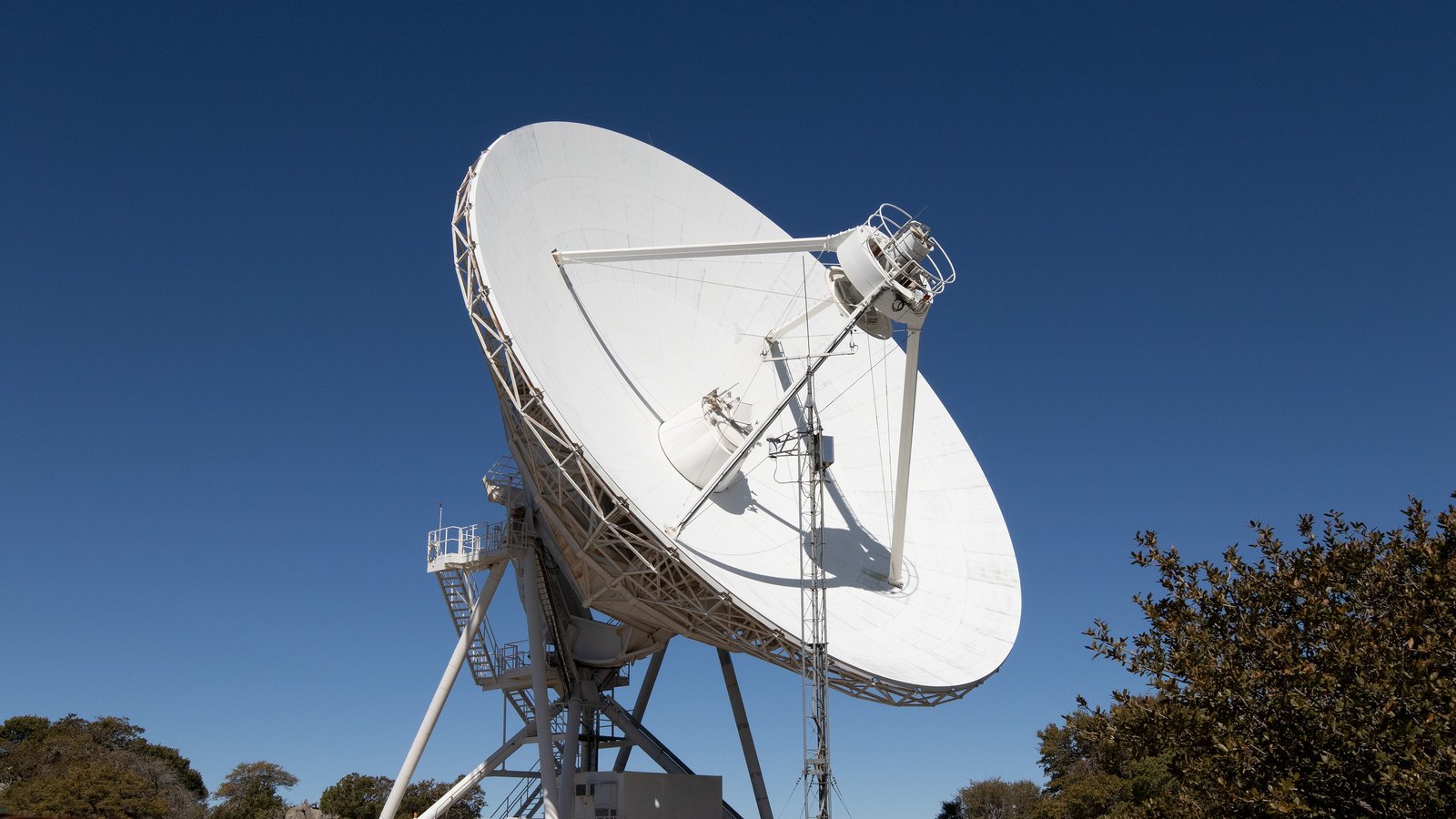
Crucially for scientific research, the 600 MHz collection preserves coordination rules that protect radio astronomy observatories from broadband interference. Under 47 CFR 27.1321(b), wireless base stations within 25 kilometers of Very Long Baseline Array observatories must coordinate operations with the National Science Foundation prior to activation. Section 27.1321(c) enforces coordination under 47 CFR 1.924 for installations near Green Bank Observatory in the National Radio Quiet Zone and Arecibo in Puerto Rico. These standards parallel federal reporting mechanisms tracked through the OMB Compliance Supplement.
In parallel, the 4.9 GHz collection under PS Docket No. 07-100 structures the selection process for the nationwide Band Manager pursuant to 47 CFR 90.1217. The FCC estimates 10 candidate entities, each requiring 120 preparation hours. Applicants must demonstrate technical systems to coordinate frequencies, protect incumbent public-safety links from interference, support 5G upgrades, and negotiate nationwide spectrum sharing.
Background and regulatory context
The two dockets reflect central milestones in federal spectrum reallocation. The 600 MHz incentive auction, authorized by the Middle Class Tax Relief and Job Creation Act of 2012, repurposed 84 megahertz of broadcast television spectrum for mobile broadband. Concluded in 2017 as Auction 1000, it cleared 70 megahertz for mobile carriers and 14 megahertz for unlicensed use. With twelve-year license terms and phased buildout benchmarks, the rules extended in Notice 2026-24277 remain essential to verify compliance and protect adjacent services.
The 4.9 GHz band has followed a more contentious path. Allocated in 2002 for public safety, the band suffered from fragmented municipal licensing, leaving fewer than 3,500 active licenses nationwide. In October 2024, the Commission adopted the Eighth Report and Order in FCC 24-114, establishing a nationwide overlay licensing model. A single Band Manager will hold the overlay license across 4940–4990 MHz and enter into a sharing arrangement with the First Responder Network Authority, which oversees The Network for public safety. This allows FirstNet to utilize unassigned capacity for public-safety broadband while ensuring local agencies maintain primary protection. This model reflects inter-agency policies led by the National Telecommunications and Information Administration regarding Spectrum Management and data transparency under the OPEN Government Data Act.
Sector reactions and policy debates
The FCC actions have elicited divergent views across industry and public sectors. The 4.9 GHz Band Manager framework sparked major regulatory debate. Public-safety groups, including the Association of Public-Safety Communications Officials-International, endorsed the nationwide framework to streamline frequency coordination and lower equipment costs. However, commercial carriers and the Coalition for Emergency Response and Critical Infrastructure challenged FCC 24-114 in federal court, contending that granting FirstNet and AT&T access to unassigned 4.9 GHz spectrum bypassed competitive auction procedures.
The legal hurdle was resolved when the U.S. Court of Appeals for the District of Columbia Circuit denied emergency stay petitions, affirming the FCC statutory authority. The Commission then directed the Public Safety and Homeland Security Bureau and Wireless Telecommunications Bureau to form the 4.9 GHz Band Manager Selection Committee to review applicant independence, technical capability, and financial viability.
Meanwhile, the radio astronomy community has highlighted the ongoing need to monitor commercial wireless emissions. High-power 600 MHz mobile signals can create intermodulation products that disrupt sensitive astronomical receivers. Scientific bodies have urged the Commission to retain strict coordination rules as commercial operators expand cellular infrastructure.
What it means for researchers, universities and research offices
For higher education institutions and scientific facilities, the FCC notices carry concrete operational and compliance implications. The extension of 47 CFR 27.1321 safeguards radio astronomy observatories funded by the federal government. The National Science Foundation supports ten stations of the Very Long Baseline Array across the country. Because each station employs cryogenic receivers, base stations within 25 kilometers must coordinate technical parameters with the NSF prior to transmission. Observatories and sponsored project offices near these stations must monitor local deployments through Research Integrity & Compliance programs.
The 4.9 GHz band manager framework also provides an operational case study for academic wireless research. University engineering faculties funded through the NSF national center SpectrumX study dynamic spectrum sharing and coexistence algorithms. Advanced testbeds funded under Platforms for Advanced Wireless Research—such as POWDER in Utah and COSMOS in New York—regularly evaluate automated coordination systems that mirror the tools the Band Manager will deploy.
Finally, universities operate campus emergency communications on 4.9 GHz channels for police dispatch, video security, and drone flights. University research offices and facilities directors must audit existing Part 90 authorizations to ensure station technical records are accurate. Once the Band Manager is appointed, campus networks must engage with the coordinator to maintain interference protection, reinforcing institutional protocols for Research Security.
What happens next
Federal Register notices 2026-24277 and 2026-24240 establish clear deadlines for public participation. Stakeholders have until December 30, 2026, to submit comments to the Office of Information and Regulatory Affairs within OMB through www.reginfo.gov, with copies emailed to FCC PRA liaisons Cathy Williams and Nicole Ongele.
After the 30-day review, OMB will decide on collection approval. Once approved, the FCC bureaus will open the application window for candidate Band Managers, allowing the Selection Committee to review filings and recommend the nationwide overlay licensee.
Sources
- Federal Register: Information Collection Being Submitted for Review and Approval to Office of Management and Budget (OMB Control No. 3060-1180), checked 2026-11-29
- Federal Register: Information Collection Being Submitted for Review and Approval to Office of Management and Budget (PS Docket No. 07-100 / FCC 24-114), checked 2026-11-29
- National Radio Astronomy Observatory: Very Long Baseline Array, checked 2026-11-29
- National Telecommunications and Information Administration: Spectrum Management, checked 2026-11-29
- First Responder Network Authority: The Network, checked 2026-11-29
- SpectrumX: About the NSF Spectrum Innovation Center, checked 2026-11-29
- Platforms for Advanced Wireless Research: About PAWR, checked 2026-11-29






