
On 25 November 2026, the United Kingdom and 43 international partners issued a joint statement at the 30th Session of the Conference of the States Parties to the OPCW in The Hague, condemning battlefield riot control agent use in Ukraine. For university chemistry facilities and research compliance offices, the multilateral action reinforces strict dual-use chemical export controls and forensic chain-of-custody verification duties.
Multilateral Joint Statement at the 30th OPCW Conference of the States Parties
During the 30th Session of the Conference of the States Parties (CSP-30) to the Organisation for the Prohibition of Chemical Weapons (OPCW) meeting at The Hague from 23 to 27 November 2026, non-proliferation directors from 44 States Parties delivered a formal diplomatic declaration. Published via the Foreign, Commonwealth & Development Office joint statement, the coalition condemned documented chemical weapons violations. Signatories include Australia, Canada, France, Germany, Italy, Japan, the Netherlands, Norway, Poland, Spain, the United Kingdom, the European Union, and Ukraine.
The declaration welcomed the 17 November 2026 publication of an extensive Ukrainian national investigative dossier on Russian battlefield deployment of riot control agents (RCAs). Conducted under the procedural supervision of the Office of the Prosecutor General of Ukraine, the investigation combined physical recoveries, victim testimonies, and laboratory analyses. The OPCW Technical Secretariat formally confirmed that the investigative methodologies and evidentiary procedures applied by Ukrainian authorities align with OPCW verification standards.
Forensic Evidence, Delivery Systems, and Frontline Chemical Munitions
Ukrainian authorities have registered over 14,000 separate incidents of munitions containing toxic chemicals and riot control agents deployed by Russian armed forces along frontline positions since February 2022. The joint statement highlights a documented chemical incident that occurred on 20 September 2024 near the village of Illinka in the Dnipropetrovsk region. Forensic analysis established that the munitions were mass-produced industrial items rather than makeshift field expedients, demonstrating an established battlefield tactic.
Explosive ordnance personnel documented factory-manufactured RG-Vo and modified K-51 riot control grenades containing 2-chlorobenzylidenemalononitrile (CS gas) combined with thermal dispersion pyrotechnics. Russian infantry units systematically mounted these aerosol canisters beneath commercial rotary-wing drones, dropping them directly into enclosed trenches to incapacitate defenders and drive personnel into exposed positions.
| Parameter | Evidentiary Finding | Treaty or Standards Authority |
|---|---|---|
| Identified Chemical Agent | 2-Chlorobenzylidenemalononitrile (CS; CAS 2698-41-1) | CWC Article II(7) Riot Control Agent definition |
| Documented Incident Total | Over 14,000 munitions deployments since 2022 | Ukraine Office of Prosecutor General Registry |
| Delivery Systems | Mass-produced RG-Vo and K-51 grenades dropped via UAVs | Factory production and lot stamp verification |
| Verification Protocol | GC-MS and LC-MS/MS confirmation across independent labs | OPCW Designated Laboratory Quality Criteria |
| Legal Status | Prohibited use as a method of warfare | CWC Article I(5) absolute prohibition |
Analytical Chemistry Verification and the OPCW Designated Laboratory Network
The scientific findings underpinning the statement stem from Technical Assistance Visit TAV/04/24, conducted by the OPCW Technical Secretariat under subparagraph 38(e) of Article VIII of the Chemical Weapons Convention. As documented in the OPCW Technical Assistance Visit report, inspectors gathered documentation, witness testimonies, and physical samples—including an exploded grenade casing and two soil samples recovered from the impacted trench line.
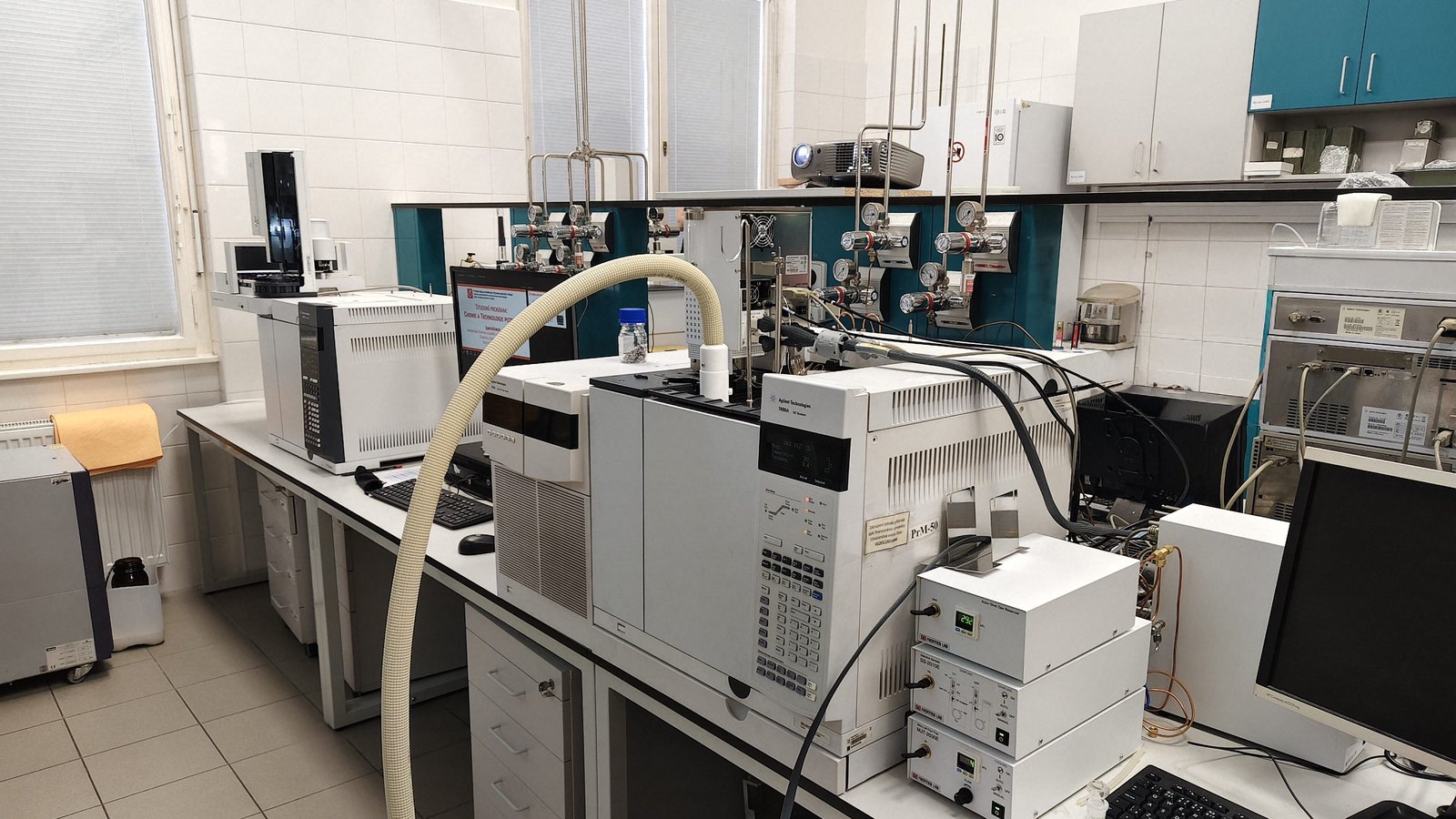
Working under strict chain-of-custody protocols with Ukrainian observers present, the Secretariat transferred the samples to two independent OPCW Designated Laboratories for double-blind verification. Employing gas chromatography-mass spectrometry (GC-MS) and liquid chromatography-tandem mass spectrometry (LC-MS/MS), both reference laboratories confirmed intact CS and degradation products such as 2-chlorobenzaldehyde and malononitrile.
The chemical confirmation established a direct violation of CWC provisions. While Article II, paragraph 7 permits riot control agents for domestic law enforcement, Article I, paragraph 5 undertakes that States Parties shall not use riot control agents as a method of warfare. Published findings in the Arms Control Association analysis confirm that using irritating chemical compounds to degrade opposing forces in combat constitutes a violation of the global chemical weapons convention.
Diplomatic Pressure, Budgetary Headwinds, and Sanctions Enforcement
At the CSP-30 plenary in The Hague, Philip Luxford, Director of Nuclear Protection at the UK Department for Energy Security and Net Zero, declared that state-level treaty violations represent the primary threat to the convention. These proceedings occur amid acute administrative pressures highlighted in National Security News reporting, which notes an OPCW budget shortfall of €20 million that strains field investigations and verification missions.
In tandem with diplomatic condemnation, enforcement bodies are applying trade and financial sanctions. The UK government enforces asset freezes and trade curbs under the Chemical Weapons (Sanctions) (EU Exit) Regulations 2019. Institutions should review the UK Chemical Weapons sanctions guidance to identify entities and research institutes designated for involvement in chemical weapons proliferation or procurement networks.
Compliance Obligations for Academic Chemistry Facilities and Dual-Use Precursors
The forensic findings from Ukraine directly impact academic chemistry departments and research facilities handling dual-use chemical compounds. Because riot control agents depend on precursors with common commercial and organic synthesis uses, export control agencies have escalated scrutiny over university procurement. Compliance offices must ensure oversight aligns with the four pillars of export control compliance: jurisdiction, classification, screening, and licensing.
European and UK research institutions must audit chemical holdings under EU dual-use export control regulations and national counterparts. Key precursors for CS synthesis—including 2-chlorobenzaldehyde, malononitrile, and related nitriles—are monitored under Australia Group common control lists. Principal investigators must maintain rigorous material balances to ensure that bulk reagents cannot be diverted into illicit channels.
Academic compliance programs must also coordinate with designated research security officers to evaluate analytical instrumentation access. Facilities housing high-performance GC-MS and LC-MS/MS instruments must maintain visitor logs and control software licenses under institutional dual-use research of concern policies, preventing unauthorized technical access to regulated chemical synthesis workflows.
Scheduled Actions and Forthcoming International Oversight
Looking forward, the 44 States Parties have called for OPCW mechanisms to identify specific perpetrators and units responsible for chemical weapon deployments in Ukraine. Formal investigative dossiers are slated for review during the next regular session of the OPCW Executive Council in spring 2027.
Meanwhile, the UK Export Control Joint Unit and the European Commission are updating dual-use catch-all guidance for academic institutions. Scheduled for early 2027, the rules will require heightened scrutiny of intangible technology transfers, collaborative international research agreements, and cloud-connected analytical chemistry equipment. Academic research offices should audit inventories and ensure robust screening protocols ahead of the compliance deadlines.
Sources
- Foreign, Commonwealth & Development Office: Joint Statement on Ukraine’s report on the use by Russia of riot control agents as a method of warfare, checked 2026-11-26
- Organisation for the Prohibition of Chemical Weapons: OPCW issues report on its Technical Assistance Visit to Ukraine following an alleged incident of use of toxic chemicals as a weapon, checked 2026-11-26
- National Security News: Russia faces mounting pressure over chemical weapons use in Ukraine, checked 2026-11-26
- Arms Control Association: OPCW Finds Toxic Chemical Use in Ukraine, checked 2026-11-26
- UK Foreign, Commonwealth & Development Office: Chemical weapons: list of designations and sanctions notices, checked 2026-11-26






