
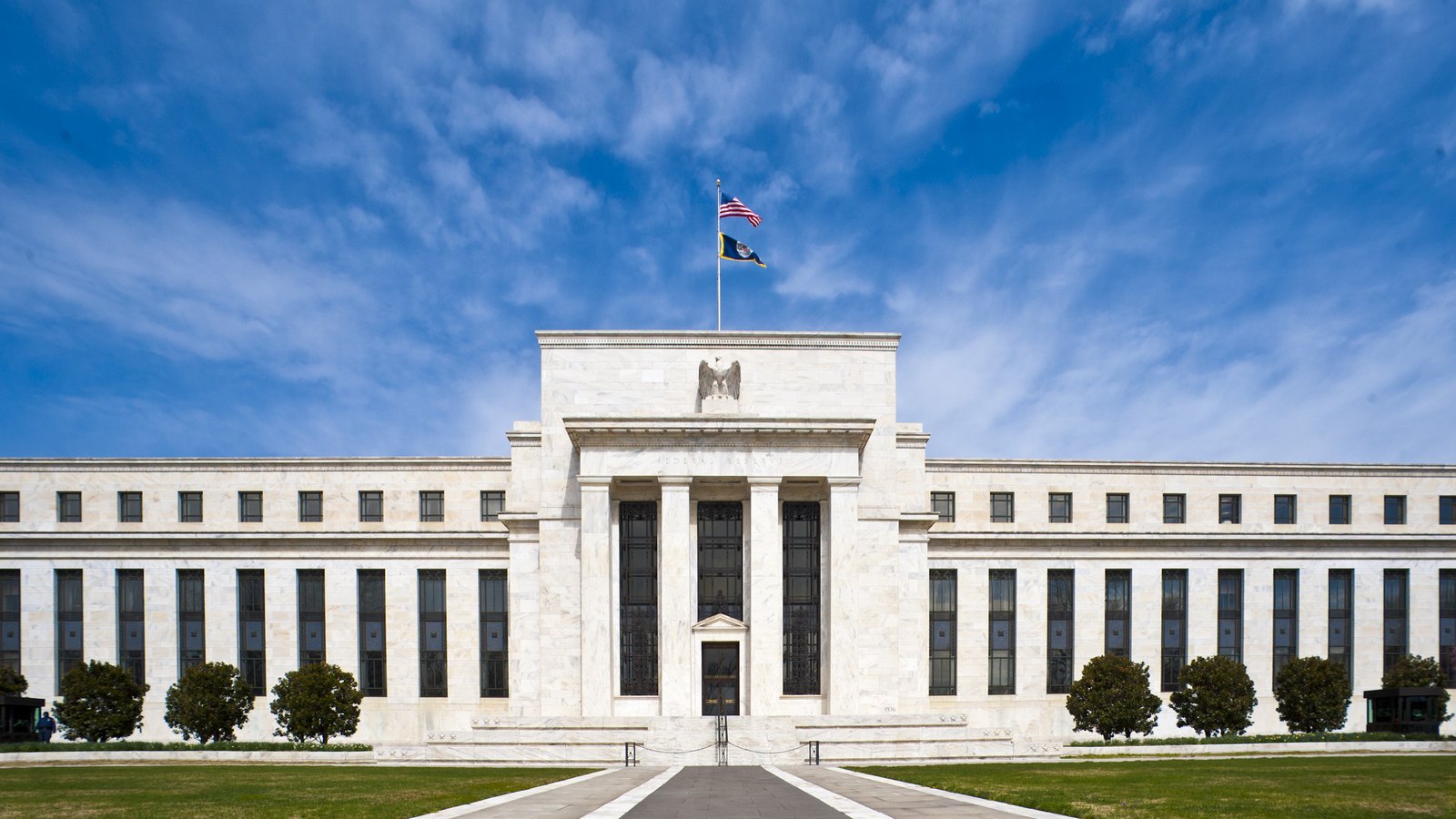
The Federal Reserve Board and the Consumer Financial Protection Bureau finalized joint regulations on November 30, 2026, raising the Truth in Lending Act exemption threshold from $73,400 to $76,300 effective January 1, 2027. The annual adjustment alters federal disclosure mandates across consumer financing while preserving mandatory compliance for university-administered private education loans regardless of dollar size.
Joint final rule adjusts consumer credit and lease exemption thresholds
The Board of Governors of the Federal Reserve System and the Consumer Financial Protection Bureau published their annual joint final rule amending the official interpretations of Regulation Z, which implements the Truth in Lending Act. Issued under Federal Reserve Docket No. R-1907 and RIN 7100-AH37 alongside Bureau interpretations for 12 CFR Part 1026, the notice formalizes a $2,900 increase in the statutory dollar threshold that exempts certain consumer credit transactions from federal lending requirements. In an interconnected action published in the same Federal Register issue, the agencies issued a companion Regulation M final rule adjusting the exemption cutoff for consumer leases under 12 CFR Parts 213 and 1013 to the identical $76,300 level.
The adjustment applies to consumer credit transactions effective from January 1, 2027, through December 31, 2027. Under the amended interpretations, transactions exceeding $76,300 generally fall outside the detailed disclosure, billing dispute, and rescission regimes imposed by federal lending statutes, unless secured by real estate or consumer dwellings. However, federal regulators underscored that statutory guardrails established by Congress preclude higher education credit from qualifying for this threshold exemption, ensuring that institutional student financing remains strictly supervised.
Regulatory parameters and annual threshold calculations
The annual adjustment mechanism is governed by statutory mandates requiring the agencies to benchmark exemption levels against changes in national living costs. The 2027 threshold reflects a 3.9 percent annual increase in the Consumer Price Index for Urban Wage Earners and Clerical Workers reported on May 12, 2026, based on April 2026 survey data. Regulators apply this percentage to the preceding threshold base and round the result to the nearest $100 increment. Calculating 3.9 percent of the 2026 threshold of $73,400 yields an increase of $2,862.60, which rounds upward to $2,900, producing the finalized $76,300 benchmark.
The calculation structure also incorporates an asymmetric indexing convention established in 2016. If the price index declines or remains unchanged in a given measurement year, the agencies do not reduce the exemption threshold. Instead, the benchmark holds steady, and subsequent inflationary gains are measured against the unrounded counterfactual baseline until accumulated increases justify an upward increment. The following table illustrates the recent trajectory of threshold benchmarks and their specific coverage rules under federal interpretations.
| Calendar Year | Exemption Threshold | Annual Adjustment Basis | Consumer Credit Over Threshold | Private Education Loans |
|---|---|---|---|---|
| 2024 | $69,500 | CPI-W annual increase | Exempt | Covered regardless of amount |
| 2025 | $71,900 | CPI-W annual increase | Exempt | Covered regardless of amount |
| 2026 | $73,400 | CPI-W annual increase | Exempt | Covered regardless of amount |
| 2027 | $76,300 | 3.9 percent CPI-W increase | Exempt | Covered regardless of amount |
To implement this change, the agencies revised Supplement I to their respective regulations by adding Comment 3(b)-3.xviii to official staff interpretations. For open-end credit agreements, an account qualifies for exemption only if the initial extension exceeds $76,300 or if the institution makes a firm initial written commitment exceeding that sum.
Statutory framework and Dodd-Frank Act indexing requirements
The modern exemption framework originated in Section 1100E of the Dodd-Frank Wall Street Reform and Consumer Protection Act of 2010. Prior to that legislation, the baseline exemption for consumer credit under the Truth in Lending Act stood at $25,000, an amount unchanged for decades that had eroded under monetary inflation. Dodd-Frank doubled the threshold to $50,000 effective July 21, 2011, and transferred administrative rulemaking authority across most consumer financial protection statutes from the Federal Reserve Board to the newly created Consumer Financial Protection Bureau.
To preserve the real economic value of consumer protections, Congress directed that the threshold be adjusted annually based on the Bureau of Labor Statistics consumer price index calculation for urban wage earners. While the Bureau exercises primary jurisdiction across commercial lending institutions and colleges, the Board retains administrative authority over specific automobile finance entities under Section 1029 of Dodd-Frank, publishing identical official interpretations in the 12 CFR Part 226 staff interpretations. Because the adjustments represent direct mathematical applications of established regulatory formulas, the agencies published the rules in final form without prior public notice, invoking the technical exemption under the Administrative Procedure Act.
Institutional lending programs and higher education finance
Within academic institutions and university systems, consumer credit regulations intersect directly with campus financial operations, student loan administration, and faculty recruitment packages. Research institutions frequently operate institutional loan programs, emergency student relief funds, tuition installment agreements, and specialized credit lines for graduate students, medical fellows, and postdoctoral scholars. Under the statutory definitions embedded in 12 CFR 1026.3 exempt transactions criteria, university finance officers must differentiate between general consumer credit and specialized educational or residential financing.
Most importantly, the $76,300 threshold does not apply to private education loans. Enacted under the Higher Education Opportunity Act and codified in Subpart F of Regulation Z, federal law dictates that any loan extended expressly for postsecondary educational expenses remains subject to mandatory disclosure and procedural requirements regardless of the borrowing amount. Medical trainees financing advanced clinical research degrees, doctoral students securing emergency institutional credit, and undergraduates taking university-backed loans cannot be treated as exempt even when their aggregate balances exceed $76,300. In addition, credit secured by real property or a consumer principal dwelling remains covered regardless of size, affecting faculty residential loan programs in a manner parallel to mortgage disclosures governed under Regulation C compliance.
Implications for university administration and campus lending compliance
The revised threshold requires university bursars, student financial aid directors, campus treasurers, and university counsel to calibrate institutional credit protocols before January 1, 2027. Institutions providing direct financing for professional school equipment, specialized laboratory tools, or computer hardware must evaluate whether credit agreements surpass $76,300. Where agreements fall below the threshold, colleges must furnish formal Truth in Lending disclosures, account-opening statements, and periodic billing schedules that satisfy federal technical requirements.
Furthermore, internal audit teams and sponsored research administrators must verify the separation between personal financing mechanisms and sponsored project accounts. When researchers or graduate assistants receive institutional loans or fellowship advances, administrative costs and loan servicing fees cannot be charged as unallowable expenses against sponsored awards. Universities must maintain rigorous cost accounting systems ensuring that student credit administration is distinct from allowable direct costs on federal research grants. Compliance oversight for university financial administration is routinely scrutinized during institutional reviews supervised by the university cognizant federal agency, as well as during annual single audits guided by the OMB Compliance Supplement. Failure to maintain compliant disclosure files for campus-administered credit can expose universities to audit findings, administrative penalties, and civil liabilities under federal consumer statutes.
Implementation timeline and institutional readiness for 2027
The joint final rule takes effect on January 1, 2027, establishing a thirteen-month operational window for financial institutions and university credit administrators to update internal systems. During 2026, campus financial systems must continue operating under the current $73,400 threshold. Software vendors providing student account management, campus billing platforms, and institutional loan servicing modules must schedule algorithmic updates to recalibrate exemption rules and disclosure triggers for transactions initiated on or after New Year Day 2027.
University compliance offices should conduct thorough reviews of institutional credit documentation throughout the upcoming fiscal cycle. Recommended operational actions include auditing campus installment payment agreements, verifying that all postsecondary educational loans continue receiving Subpart F disclosures, and reviewing university-sponsored faculty mortgage or relocation lines. By aligning campus financial policies with the 2027 threshold parameters well ahead of the effective date, academic institutions can ensure seamless administrative compliance across both federal research grants and university financial services.
Sources
- Federal Register: Truth in Lending (Regulation Z) Final Rule, checked 2026-11-29
- Federal Register: Consumer Leasing (Regulation M) Final Rule, checked 2026-11-29
- Consumer Financial Protection Bureau: 12 CFR 1026.3 Exempt Transactions, checked 2026-11-29
- Electronic Code of Federal Regulations: 12 CFR Part 226 Truth in Lending (Regulation Z), checked 2026-11-29
- U.S. Bureau of Labor Statistics: Consumer Price Index Overview and Methodology, checked 2026-11-29






