
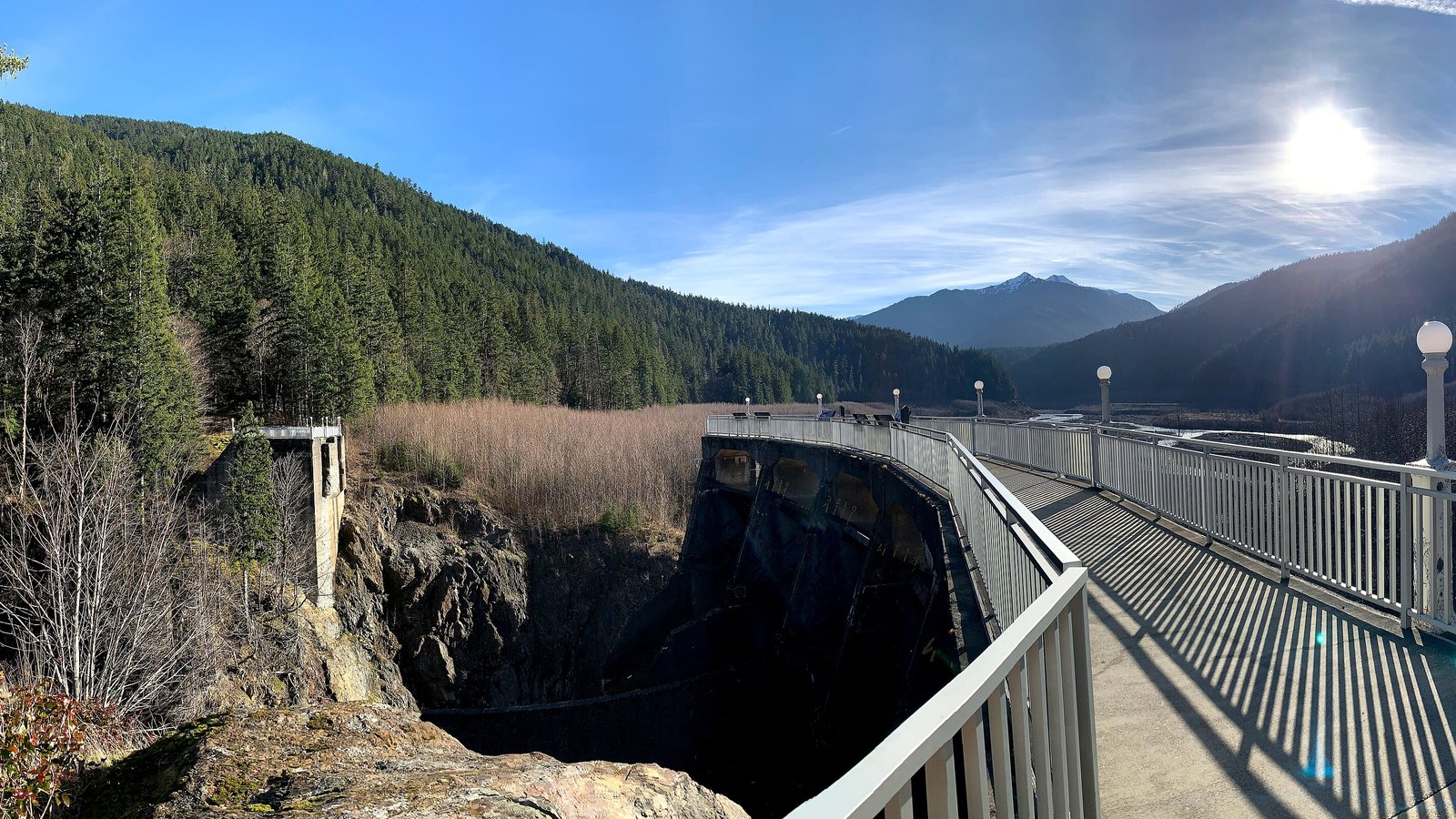
On November 24, 2026, the Federal Energy Regulatory Commission announced it will prepare an Environmental Assessment for the City of Columbus, Ohio’s application to surrender its small hydroelectric licensing exemption for the O’Shaughnessy Dam Hydroelectric Facility on the Scioto River. Published as a formal Notice of Intent in the Federal Register (91 FR 75842, Document No. 2026-23889), the proceeding details the municipal utility’s plan to permanently decommission power generation while leaving the physical dam and reservoir in place to safeguard municipal drinking water supplies. The decision provides a significant empirical case study for academic researchers examining freshwater riverine ecology, dam surrender mechanics, and federal environmental review procedures under the National Environmental Policy Act.
Decommissioning Scope and Facility Background
The O’Shaughnessy Dam Hydroelectric Facility, designated by the Federal Energy Regulatory Commission (FERC) as Project No. 2943-007, occupies non-federal lands on the Scioto River in Delaware County, Ohio. Constructed in the 1920s primarily for public water supply, the dam saw hydroelectric generation equipment installed in the mid-1980s under a small conduit and small hydroelectric project exemption authorized by FERC. Small projects operating under 10 megawatts frequently utilize regulatory exemptions under 18 CFR Part 4 Subpart K, which waive standard multi-year relicensing protocols while holding exemptees to baseline environmental and structural safety conditions.
On July 6, 2026, the City of Columbus Department of Public Utilities formally applied to surrender its exemption. Aging mechanical systems, prohibitive maintenance costs, and modest generating capacity prompted municipal officials to cease power generation operations permanently. Rather than dismantling the concrete barrier—which creates the primary water storage reservoir serving hundreds of thousands of municipal consumers—the City’s surrender application specifies an in-place decommissioning strategy. The utility will disconnect turbines from the regional power grid, abandon turbine units in place within the powerhouse, install heavy steel plates across water intake conduits, and backfill internal chambers with cementitious grout. The surrounding powerhouse structure will be backfilled with compacted fill to ensure physical stabilization.
On September 28, 2026, the Commission issued a public notice accepting the surrender application for filing and soliciting interventions, comments, and protests. Notably, no external stakeholders or resource agencies filed objections during that initial comment window, establishing an uncontested administrative record as FERC staff commenced environmental reviews.
Key Technical Specifications and Regulatory Milestones
The surrender of a federal hydroelectric exemption requires balancing physical civil works, public resource protection, and administrative decommissioning standards. Federal hydropower asset inventories such as HydroSource digital platform databases track small facilities navigating similar operational sunsets across the United States. The table below summarizes the core technical parameters, procedural dates, and regulatory citations governing the O’Shaughnessy Dam proceeding.
| Parameter or Milestone | Official Project Detail | Statutory or Regulatory Authority |
|---|---|---|
| Project Identification | O’Shaughnessy Dam Hydroelectric Facility (FERC Project No. 2943-007) | 18 CFR § 4.102 (Surrender of exemption) |
| Geographic Location | Scioto River, Delaware County, Ohio (Non-federal lands) | 91 FR 75842, Document No. 2026-23889 |
| Exemptee / Applicant | City of Columbus, Ohio (Department of Public Utilities) | 18 CFR Part 4 Subpart K |
| Surrender Application Filing | July 6, 2026 | FERC Docket P-2943-007 |
| Application Acceptance Notice | September 28, 2026 (Zero stakeholder protests or interventions filed) | FERC Office of Energy Projects |
| NEPA Notice of Intent | November 24, 2026 (Formal notice of Environmental Assessment preparation) | 42 U.S.C. § 4321 et seq. (NEPA) |
| Environmental Document Identifier | Document Tracking ID EAXX-019-20-000-1794566426 | 18 CFR Part 380 NEPA Regulations |
| Target Environmental Assessment Issuance | June 25, 2027 (Scheduled staff release date) | 18 CFR § 2.1 General Policy |
| Post-Issuance Public Comment Window | 30 calendar days following Environmental Assessment publication | 18 CFR § 380.10 |
| Physical Decommissioning Approach | Intakes sealed, turbine units grouted in place, dam structure retained | Municipal Water Supply Preservation Protocol |
Federal Power Act Exemption Framework
Hydroelectric power generation in the United States is governed under the Federal Power Act, codified at 16 U.S.C. Chapter 12 Subchapter I. While major utility-scale installations undergo extensive 30- to 50-year licensing regimes overseen by FERC, Congress enacted exemption provisions to encourage small-scale generation at existing non-federal impoundments. Unlike standard licenses, which terminate after a defined period and require formal relicense proceedings, exemptions are granted in perpetuity unless surrendered by the exemptee or revoked for safety violations.
Surrendering an exemption triggers distinct administrative mechanisms. Under federal regulations, an exemptee must demonstrate that decommissioning works will not impair water safety, exacerbate flood risks, or generate unchecked environmental contamination. For municipal water providers, retiring generation assets requires close adherence to public contracting standards and civil works compliance, comparable to equipment and materials protocols detailed in Trade Agreements Act compliance frameworks that govern public utility infrastructure procurements. By permanently encasing turbine components in cementitious grout and sealing penstocks, the City of Columbus mitigates catastrophic flooding hazards and structural failure risks without necessitating full dam demolition.
Riverine Ecology and Scioto Basin Hydrodynamics
The O’Shaughnessy Dam plays a central role in the hydrologic regime of the Upper Scioto River watershed. The Scioto River basin supports diverse warmwater fish assemblages, migratory waterfowl, and sensitive macroinvertebrate populations, including unionid freshwater mussels that are vulnerable to siltation, altered flow velocities, and dissolved oxygen depressions. When hydroelectric turbines operate, water withdrawal through penstocks creates localized intake suction, turbine blade strike hazards, and abrupt flow variations downstream that can scour riverbed substrates.
By eliminating power generation, the facility transitions from an active power generation regime to passive reservoir spillway discharge. This change eliminates mechanical fish entrainment risks and dampens artificial water level fluctuations in the tailrace reach. Environmental regulatory bodies, including the Ohio Environmental Protection Agency Division of Surface Water, monitor the Scioto River for compliance with state water quality criteria, biocriteria indices, and aquatic life use designations. Ecologists utilize specialized geospatial hydrological tools such as HydroSHEDS global hydrographic datasets to evaluate how localized run-of-river transitions affect drainage network connectivity and regional stream morphology.
However, because the concrete spillway and reservoir remain intact, the impoundment continues to act as a barrier to upstream fish passage and alters natural sediment transport regimes. Evaluating the balance between eliminating turbine impacts and retaining dam impoundment barriers is central to contemporary environmental impact assessment methodologies used across river conservation science.
Significance for Academic Researchers and Environmental Review Protocols
FERC’s decision to prepare an Environmental Assessment under National Environmental Policy Act procedures set forth in 18 CFR Part 380 carries multiple implications for academic researchers, university research offices, and environmental policy scholars. In many federal proceedings involving small projects where no stakeholders file protests, agencies may consider categorical exclusions or streamlined dismissals. FERC staff’s determination that an EA is required underscores that even partial decommissioning—where civil structures remain standing but hydraulic pathways are permanently altered—demands rigorous NEPA documentation.
For university faculty and research teams specializing in civil engineering, limnology, and public resource management, the upcoming EA offers a valuable baseline dataset. Researchers can study several distinct dimensions of the O’Shaughnessy proceeding:
- Tailrace Thermal and Dissolved Oxygen Dynamics: Eliminating subsurface penstock draws alters temperature and oxygen profiles in the immediate tailwater, providing empirical test beds for hydro-acoustic and physicochemical models.
- Sediment Deposition Patterns: Sealing intake bays redirects all outflow across the spillway crest, altering sediment settling rates behind the dam face and bed-load transport dynamics downstream.
- Administrative Jurisprudence: Legal and policy scholars can examine the jurisdictional interplay between federal energy regulators relinquishing oversight and state environmental protection agencies assuming sole ongoing regulatory authority.
- Grant and Sponsored Project Opportunities: Academic institutions in Ohio and the broader Great Lakes basin can align federal and state research grant proposals with post-decommissioning ecological monitoring along the Scioto River corridor.
Procedural Schedule and What Happens Next
The publication of the Notice of Intent establishes a defined administrative pathway for the surrender proceeding. Commission staff has scheduled the release of the Environmental Assessment for June 25, 2027. This timeline accommodates inter-agency coordination between FERC, the U.S. Fish and Wildlife Service, the Ohio Department of Natural Resources, and the Ohio Environmental Protection Agency to evaluate threatened and endangered species, cultural resources, and water quality.
Upon issuance of the staff EA on June 25, 2027, FERC will open a formal 30-day public comment period. Members of the public, academic institutions, conservation organizations, and municipal authorities may submit technical feedback, environmental monitoring data, or legal briefs into the administrative docket. Commission staff will review all submitted comments and incorporate substantive findings into recommendations submitted to the Commission.
Following the comment period and environmental review completion, the Commission will issue a final order granting the surrender of exemption, establishing binding conditions for decommissioning civil works, and officially terminating federal regulatory jurisdiction under Project No. 2943. Interested parties seeking guidance regarding public filings, interventions, or docket records may contact the FERC Office of Public Participation by phone at 202-502-6595 or via email at [email protected], or contact project manager Kimberlee Harding at 202-502-6675.
Sources
- Federal Register: The City of Columbus, Ohio; Notice of Intent To Prepare an Environmental Assessment, checked 2026-11-28
- Electronic Code of Federal Regulations: 18 CFR Part 4 Subpart K — Exemption of Small Hydroelectric Power Projects of 10 Megawatts or Less, checked 2026-11-28
- Electronic Code of Federal Regulations: 18 CFR Part 380 — Regulations Implementing the National Environmental Policy Act, checked 2026-11-28
- Cornell Law School Legal Information Institute: 16 U.S. Code Chapter 12 Subchapter I — Regulation of the Development of Water Power and Resources, checked 2026-11-28
- Ohio Environmental Protection Agency: Division of Surface Water, checked 2026-11-28






