
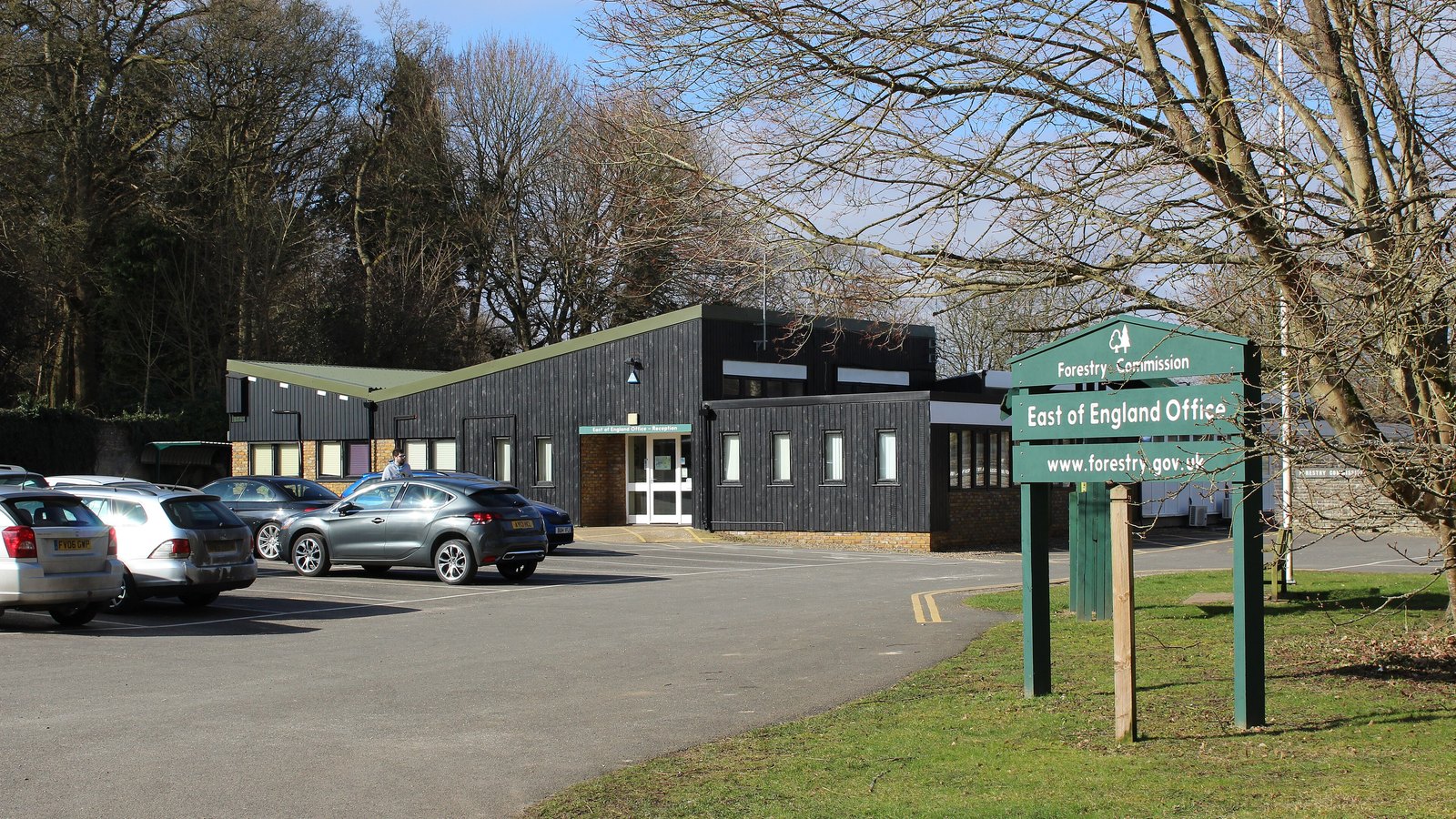
On 27 November 2026, the UK Forestry Commission updated its official Forestry Commission Key Performance Indicators corporate reporting collection on GOV.UK, releasing verified mid-year monitoring metrics and establishing revised national benchmarks for woodland creation grants, sustainable silvicultural management, plant biosecurity surveillance, and Forest Research scientific monitoring programs across England.
Woodland Creation and Sustainable Forest Management Milestones
The updated reporting suite details progress achieved during the first half of the 2026–27 reporting year spanning 1 April to 30 September 2026. According to the published statistical returns, government-supported planting initiatives established 1,846 hectares of new tree planting across England, representing approximately 2.6 million newly planted trees. Within this total, 1,758 hectares (2.5 million trees) comprised dedicated woodland creation parcels funded through the England Woodland Creation Offer (EWCO) and associated forestry grant mechanisms. A further 59,000 trees, representing an equivalent canopy area of 88 hectares, were established as trees outside woodland environments, supporting agroforestry corridors, hedgerow restoration, and urban fringe buffers.
In addition to new planting tallies, the updated dataset tracks the structural compliance of established woodlands. As of 30 September 2026, 56 percent of all woodland area in England is classified as sustainably managed under certified management plans conforming to the UK Forestry Standard (UKFS). The regulatory oversight data also confirmed high compliance in timber harvesting, with 99.90 percent of known tree felling across England executed under valid felling licences or statutory exemptions approved by the Forestry Commission.
Corporate KPI Framework and Performance Architecture
The Forestry Commission corporate performance architecture reflects the statutory commitments articulated in the overarching strategy Thriving for the Future: Forestry Commission Strategy 2023–2028. The full framework comprises three distinct reporting tiers: 10 headline indicators for the core Forestry Commission, 6 headline indicators evaluating Forestry England public forest estate operations, and 24 detailed operational indicators governed by Forest Services. These metrics systematically capture timber volume sustainability, public access recreation indices, woodland condition scores, and plant pathogen containment.
To maintain rigorous accountability across grant schemes and ecological targets, the reporting system synthesises administrative grant disbursement records, field inspector verification visits, and spatial boundary data. The table below outlines the core indicators, targets, and verified mid-year outcomes recorded across the national monitoring framework:
| Metric Area | Indicator Scope | H1 2026–27 Verified Figure | National Policy Target |
|---|---|---|---|
| Woodland Creation | New planting supported by government grants | 1,846 hectares (2.6 million trees) | Long-term trajectory toward national canopy goals |
| Afforestation Parcels | Dedicated block woodland creation projects | 1,758 hectares (2.5 million trees) | England Woodland Creation Offer baseline |
| Trees Outside Woods | Agroforestry, hedgerows, and field boundary planting | 59,000 trees (88 ha equivalent) | Landscape connectivity and riparian buffers |
| Sustainable Management | Woodland managed under active, certified plans | 56% of total England woodland area | Expansion of UKFS-compliant management |
| Felling Compliance | Harvesting carried out under formal felling licences | 99.90% of all recorded felling | Statutory regulatory compliance baseline |
These headline figures feed into wider environmental accounting models that evaluate ecological condition, carbon sequestration yields, and biodiversity retention across lowland and upland forestry estates. Researchers examining biomass accumulation routinely integrate these administrative returns with growth and yield simulation protocols to validate stand-level carbon capture models against actual grant uptake rates.
Policy Alignment With Environmental Net Gain and Biosecurity Mandates
The updated performance framework functions as an operational mechanism for delivering statutory targets legislated under the Environment Act 2021. The Act established a legally binding commitment to increase tree canopy cover in England to 16.5 percent by 2050, alongside mandatory biodiversity net gain requirements for major land-use alterations. Meeting these statutory objectives requires synchronized field monitoring between grant administrators, regional conservancy teams, and academic research stations.
A critical pillar of the corporate KPI reporting collection concerns plant health surveillance and early pest interception. Forest Services plant health officers conduct thousands of annual border and inland inspections to intercept high-consequence quarantine pests, including the eight-toothed spruce bark beetle (Ips typographus) and pathogenic oomycetes such as Phytophthora pluvialis. Field surveillance indicators align with specialized forest pathology diagnostics to trace infection vectors and establish statutory demarcated zones where sanitation felling is mandatory to protect broader commercial and ancient woodland assets.
Integration With Forest Research and Spatial Inventories
The administrative statistics published in the corporate plan KPI collection directly interface with empirical field data compiled by Forest Research, the Forestry Commission’s dedicated scientific research agency. Central to this integration is the National Forest Inventory (NFI), which maintains a permanent sample plot network across Great Britain to track tree species distribution, timber increment, standing volume, and deadwood ecology.
By correlating corporate KPI grant completions with geospatial sample plots from the NFI, forestry statisticians can evaluate whether newly established woodlands deliver anticipated ecosystem services, such as soil stabilization and flood alleviation. In particular, planting funded along sensitive river catchments supports riparian forest buffer restoration programs that mitigate agricultural nutrient runoff, attenuate peak hydrological discharge, and stabilize water temperatures for vulnerable aquatic fauna.
Reaction and Sector Perspectives
The release of the mid-year performance metrics has drawn focused scrutiny from professional forestry practitioners, conservation bodies, and university environmental departments. Land management associations welcomed the consistent delivery of woodland creation grants through the England Woodland Creation Offer, noting that financial incentives for riparian buffers, public access infrastructure, and native broadleaf species have improved landowner engagement.
However, silvicultural scientists and ecological policy specialists have pointed out that while planting hectares provide a necessary administrative metric, long-term establishment success depends heavily on active post-planting management. Sector representatives emphasize that deer browsing pressure, grey squirrel bark-stripping damage, and prolonged summer drought events pose substantial threats to newly established saplings during their first five years. Stakeholders argue that future iterations of the Forestry Commission KPI suite should incorporate remote-sensing survival indices alongside gross planting tallies to capture true canopy maturation.
Implications for Silvicultural Researchers and University Grant Offices
The updated corporate KPIs hold immediate practical implications for academic researchers in environmental science, arboriculture, and ecological economics, as well as university research administrators handling conservation grants:
- Research Grant Alignment: Major environmental funders, including the Natural Environment Research Council within UK Research and Innovation (UKRI), increasingly prioritize grant proposals that demonstrate alignment with national environmental targets. University investigators applying for terrestrial ecology funding can reference official Forestry Commission KPI data points to substantiate the national policy relevance and impact pathways of their research.
- Open Spatial and Statistical Datasets: The supporting data tables published alongside the corporate plan report provide granular, open-access statistical time series. Quantitative silviculturists can download county-level planting records, felling licence statistics, and woodland management ratios to feed into macro-ecological models without submitting individual Freedom of Information requests.
- Long-Term Field Experimentation: Academic institutions managing experimental forest plots and collaborating within long-term ecological research networks can benchmark their institutional carbon accounting, soil carbon flux data, and canopy phenology observations against authoritative national baseline indicators.
- Biosecurity Protocol Requirements: University grant offices overseeing field research involving the transport of tree saplings, soil cores, or silvicultural field equipment must ensure absolute compliance with Forestry Commission biosecurity handling regulations and movement restrictions across demarcated pest zones.
Regulatory Timelines and Forthcoming Milestones
Following this mid-year statistical release, the Forestry Commission will continue gathering quarterly administrative returns through the remainder of the 2026–27 fiscal cycle. The subsequent comprehensive annual KPI report covering all 40 headline and operational indicators is scheduled for compilation following the close of the financial year on 31 March 2027, with formal publication anticipated in early summer 2027.
Concurrently, the Forestry Commission and the Department for Environment, Food and Rural Affairs (Defra) are preparing the mid-term evaluation of the Thriving for the Future strategic plan. Silvicultural research institutions, commercial forestry operators, and environmental non-governmental organizations will have structured opportunities during late 2026 and 2027 to submit technical feedback on indicator definitions, particularly regarding remote-sensing integration, biodiversity net-gain metrics, and resilient species diversification criteria.
Sources
- Forestry Commission: Forestry Commission Key Performance Indicators, checked 2026-11-28
- Forestry Commission: About the Forestry Commission, checked 2026-11-28
- Forest Research: National Forest Inventory (NFI), checked 2026-11-28
- UK Parliament: Environment Act 2021, checked 2026-11-28
- UK Research and Innovation: Natural Environment Research Council (NERC), checked 2026-11-28






