
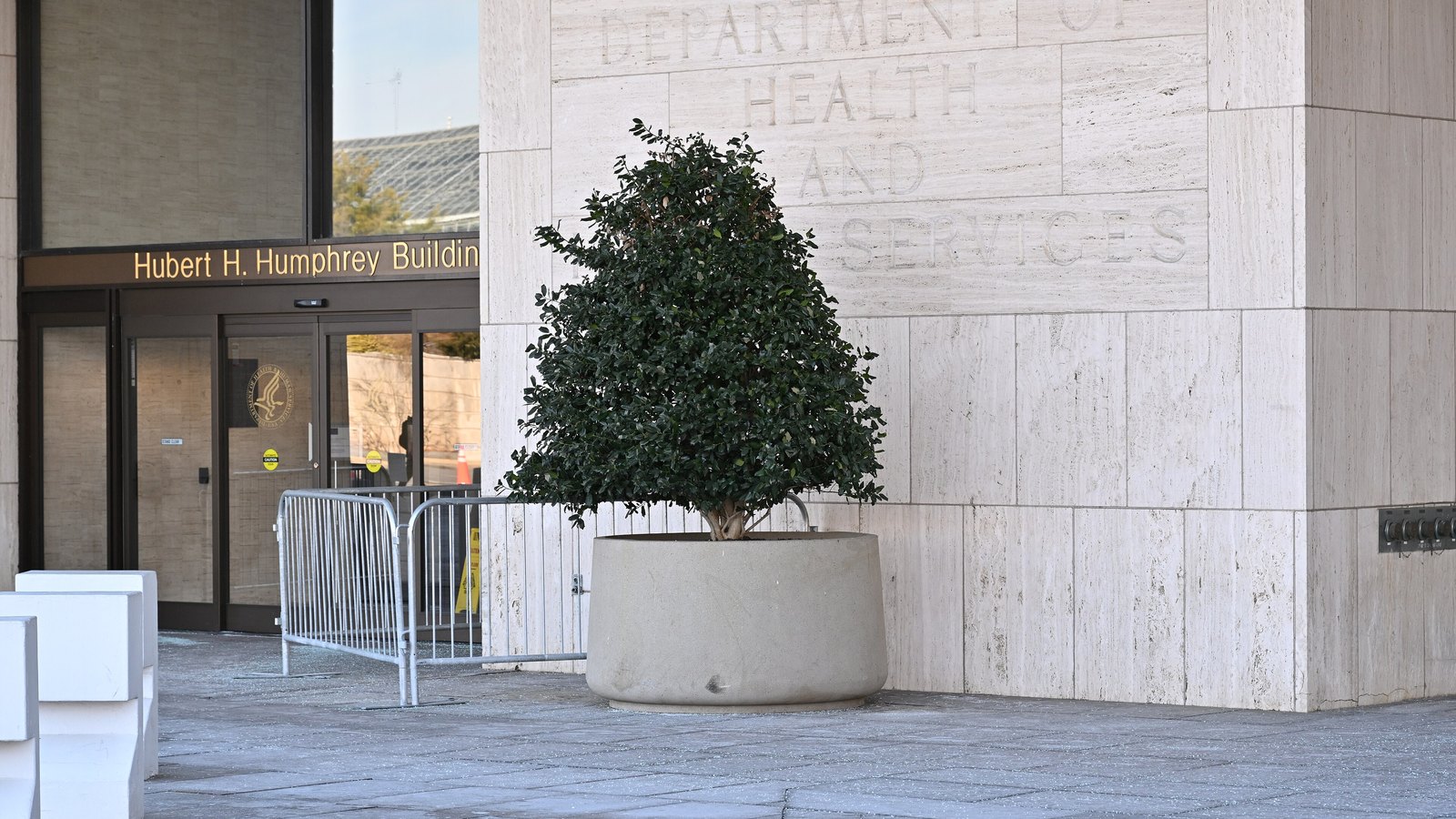
On November 25, 2026, the Department of Health and Human Services Administration for Children and Families issued a notice in the Federal Register opening public comment on extending the Temporary Assistance for Needy Families Expenditure Report, Form ACF-196R. The information collection governs quarterly block grant and state maintenance-of-effort accounting, directly impacting university policy labs, evaluation subrecipients, and research offices monitoring public welfare awards.
What happened
The Administration for Children and Families (ACF), an operating division of the Department of Health and Human Services (HHS), officially published Federal Register Document 2026-23967 (91 FR 76253) on November 25, 2026. Through its Office of Family Assistance (OFA), the agency announced a formal request under the Paperwork Reduction Act of 1995 for a three-year extension of Form ACF-196R. The collection operates under Office of Management and Budget (OMB) Control Number 0970-0446, which is currently scheduled to expire on January 31, 2027.
Form ACF-196R serves as the primary accounting instrument through which state agencies report quarterly financial data on their use of federal Temporary Assistance for Needy Families (TANF) block grants and state maintenance-of-effort (MOE) funds. In addition to monitoring quarterly expenditures, state agencies utilize the form to submit official requests for quarterly grant award advances. Notice certifying officer Samantha L. Illangasekare, representing ACF’s Office of Planning, Research, and Evaluation (OPRE), noted that the agency has introduced targeted structural revisions to improve document flow, clarify reporting expectations, and eliminate obsolete fields without altering underlying statutory mandates.
Key details and reporting requirements
The proposed information collection applies to 51 respondents, encompassing human services agencies across all 50 U.S. states and the District of Columbia. Under federal regulations codified at 45 CFR § 265.3 – What reports must the State file on a quarterly basis?, each state administering a TANF program must collect financial data continuously and submit expenditure reports within 45 days after the end of each fiscal quarter.
ACF estimates that each quarterly submission requires an average of 9 burden hours per respondent. With 51 state jurisdictions filing four quarterly reports each year, the total national reporting volume comprises 204 discrete filings annually, resulting in an aggregate burden estimate of 1,836 hours per year. To reduce compliance friction, ACF has modernized the reporting instructions by incorporating plain-language guidance, updating statutory and temporal references, embedding a structured table of contents, and graying out legacy form cells that are no longer required for federal grant tracking.
The following table outlines the foundational reporting metrics, statutory authorities, and administrative parameters established under the Form ACF-196R renewal:
| Regulatory Parameter | Current Administrative Standard | Proposed ACF-196R Renewal Detail |
|---|---|---|
| Statutory Authority | 42 U.S.C. 609 and 45 CFR 265.3 | Continued statutory enforcement of quarterly state expenditure tracking |
| Covered Jurisdictions | 50 states and District of Columbia (51 respondents) | 51 state and territorial-level welfare agencies filing quarterly |
| Annual Reporting Frequency | 4 quarterly filings per fiscal year | 4 quarterly filings per state (204 total annual responses) |
| Estimated Burden per Response | 9 hours per quarterly filing | 9 hours per quarterly filing (1,836 aggregate annual hours) |
| OMB Control Identification | Control No. 0970-0446 (expires January 31, 2027) | Three-year extension requested through January 31, 2030 |
| Instructional Format | Standard federal compliance narrative | Reorganized plain-language text, table of contents, grayed-out obsolete cells |
| Public Comment Period | Previous three-year cycle established in 2023 | 60-day notice window concluding on January 25, 2027 |
Background and statutory context
The TANF block grant was established under the Personal Responsibility and Work Opportunity Reconciliation Act of 1996 (PRWORA), replacing the previous entitlement program known as Aid to Families with Dependent Children (AFDC). Under the permanent funding framework described in the Congressional Research Service report available through EveryCRSReport: The Temporary Assistance for Needy Families (TANF) Block Grant: A Primer on TANF Financing and Federal Requirements, the federal government provides a fixed annual block grant of roughly 16.5 billion dollars distributed among states based on historic 1990s expenditure levels.
To receive full federal grant funding, states are legally obligated to satisfy annual Maintenance-of-Effort (MOE) spending benchmarks, which require jurisdictions to expend at least 75 percent or 80 percent of historic state-funded welfare amounts. Prior to fiscal year 2015, states submitted expenditure data using the legacy Form ACF-196, which tracked expenditures on a single cumulative worksheet. ACF subsequently transitioned grantees to Form ACF-196R, which created an accounting methodology that tracks expenditures by distinct federal grant year, preventing fiscal overlap and improving audit traceability.
Quarterly data compiled through Form ACF-196R feeds directly into the agency’s annual public disclosures hosted on the official Administration for Children and Families: TANF Data and Reports repository. These datasets allow academic researchers, economists, and state budget offices to examine multi-year shifts in how block grant resources are allocated across direct cash benefits, subsidized childcare, education, job training, and child protection services.
Reaction and policy analysis
In its notice, the Office of Family Assistance underscored that timely collection of Form ACF-196R data is indispensable to the federal agency’s oversight mission. ACF officials emphasized that failure to collect these quarterly submissions would fundamentally compromise the federal government’s capacity to monitor statutory compliance, estimate national outlays, and provide accurate budgetary submissions to Congress. Agency leadership noted that without standardized accounting, federal program officers could not detect improper grant drawdowns or ensure that state MOE expenditures meet statutory criteria.
Independent social policy scholars and fiscal analysts have welcomed ACF’s ongoing efforts to clarify reporting categories. Over the past two decades, states have increasingly redirected TANF funds away from core cash assistance toward diverse social services, including university-led early childhood development initiatives, community college workforce development programs, and family stability interventions. Analysts note that clear field definitions and plain-language guidance reduce ambiguous accounting classifications at the state level, ensuring that empirical researchers studying anti-poverty policies have access to robust, comparable fiscal data across state boundaries.
What it means for researchers, universities and research offices
The proposed renewal of Form ACF-196R carries direct operational implications for higher education institutions, academic policy centers, and sponsored project offices managing federal and state-flow-through funding:
- Subaward accounting and cost compliance: Many university research teams operate as contracted evaluators or programmatic subrecipients under state TANF agreements. Sponsored research offices must ensure that institutional accounting structures align with the financial compliance framework of the Uniform Guidance 2 CFR 200, verifying that personnel costs, indirect rates, and direct operational expenditures map transparently to state agency quarterly reporting categories.
- Subrecipient oversight and risk profiling: Because states face strict financial penalties for misallocated funds, state pass-through entities frequently subject higher education partners to detailed fiscal scrutiny. Research offices should proactively review their institutional procedures against standard subrecipient risk assessment practices to document internal controls and streamline quarterly expense certification.
- Single Audit documentation: TANF is frequently identified as a major federal program during institutional single audits. University compliance managers must adhere to Single Audit 2 CFR 200 Subpart F requirements and thresholds, ensuring that all subaward expenditures are supported by contemporaneously certified payroll records, allowable procurement contracts, and verified cost allocations.
- Fiscal year closeout protocols: Because Form ACF-196R separates expenditures according to specific federal award years, university principal investigators and post-award specialists must adhere strictly to established award periods. Research teams must manage closeout costs under 2 CFR 200.344 within required liquidation windows to prevent state pass-through agencies from deobligating unexpended balances.
- Empirical policy research resources: Academic investigators evaluating safety-net policy depend on the public datasets generated by ACF-196R filings. Revisions that clarify reporting fields will enhance the consistency of longitudinal data available for econometric modeling, state-by-state comparative analyses, and child wellbeing research.
What happens next
The publication of the notice initiates a 60-day public comment window that concludes on January 25, 2027. State welfare administrators, university policy researchers, sponsored project specialists, and members of the public may submit formal written feedback regarding the practical utility of the collection, the precision of ACF’s burden hour estimates, and methods to minimize compliance overhead through automated data technology.
Comments and requests for copies of the proposed reporting form and updated instruction manual must be submitted by email to [email protected], identifying the inquiry with the collection title or OMB Control Number 0970-0446. Following the close of the 60-day comment period, ACF will review public submissions, prepare necessary modifications, and forward the information collection request to OMB for a subsequent 30-day review before finalizing the renewal prior to the January 31, 2027 expiration deadline.
Sources
- Federal Register: Proposed Information Collection Activity; Temporary Assistance for Needy Families Expenditure Report, Form ACF-196R, checked 2026-11-26
- Administration for Children and Families: TANF Data and Reports, checked 2026-11-26
- Legal Information Institute: 45 CFR § 265.3 – What reports must the State file on a quarterly basis?, checked 2026-11-26
- EveryCRSReport: The Temporary Assistance for Needy Families (TANF) Block Grant: A Primer on TANF Financing and Federal Requirements, checked 2026-11-26






