
On November 23, 2026, the Maritime Administration (MARAD) published two companion Federal Register notices opening public comment periods on the renewal of emergency sealift information collections that govern commercial petroleum vessel mobilization and statutory reemployment protections for civilian merchant mariners. The procedural renewals directly affect university-operated oceanographic research vessel operators, state maritime academy training pipelines, and academic research security programs monitoring national sealift readiness.
What Happened: MARAD Solicits Public Input on Emergency Sealift Information Collections
The Maritime Administration, an operating administration within the United States Department of Transportation, announced on November 23, 2026, that it is seeking Office of Management and Budget approval to extend two national security paperwork collections. In the primary notice, MARAD requested OMB approval to extend with modification its collection for the Voluntary Tanker Agreement (OMB Control Number 2133-0505, Docket Number MARAD-2026-1915). Simultaneously, MARAD requested OMB renewal without change for its collection governing civilian merchant seamen reemployment rights during national emergencies (OMB Control Number 2133-0526, Docket Number MARAD-2026-1948).
Both publications invite public comments for a 30-day review period following earlier 60-day agency notices published in September 2026. The programs form interlocking components of federal sealift readiness. The Voluntary Tanker Agreement establishes contractual mechanisms for the Department of Defense to access commercial tanker capacity during defense mobilizations, while the seamen reemployment collection establishes procedural certification required to reinstate civilian mariners into their shore-side careers following emergency sealift service.
Key Details of the VTA and Seamen Reemployment Collections
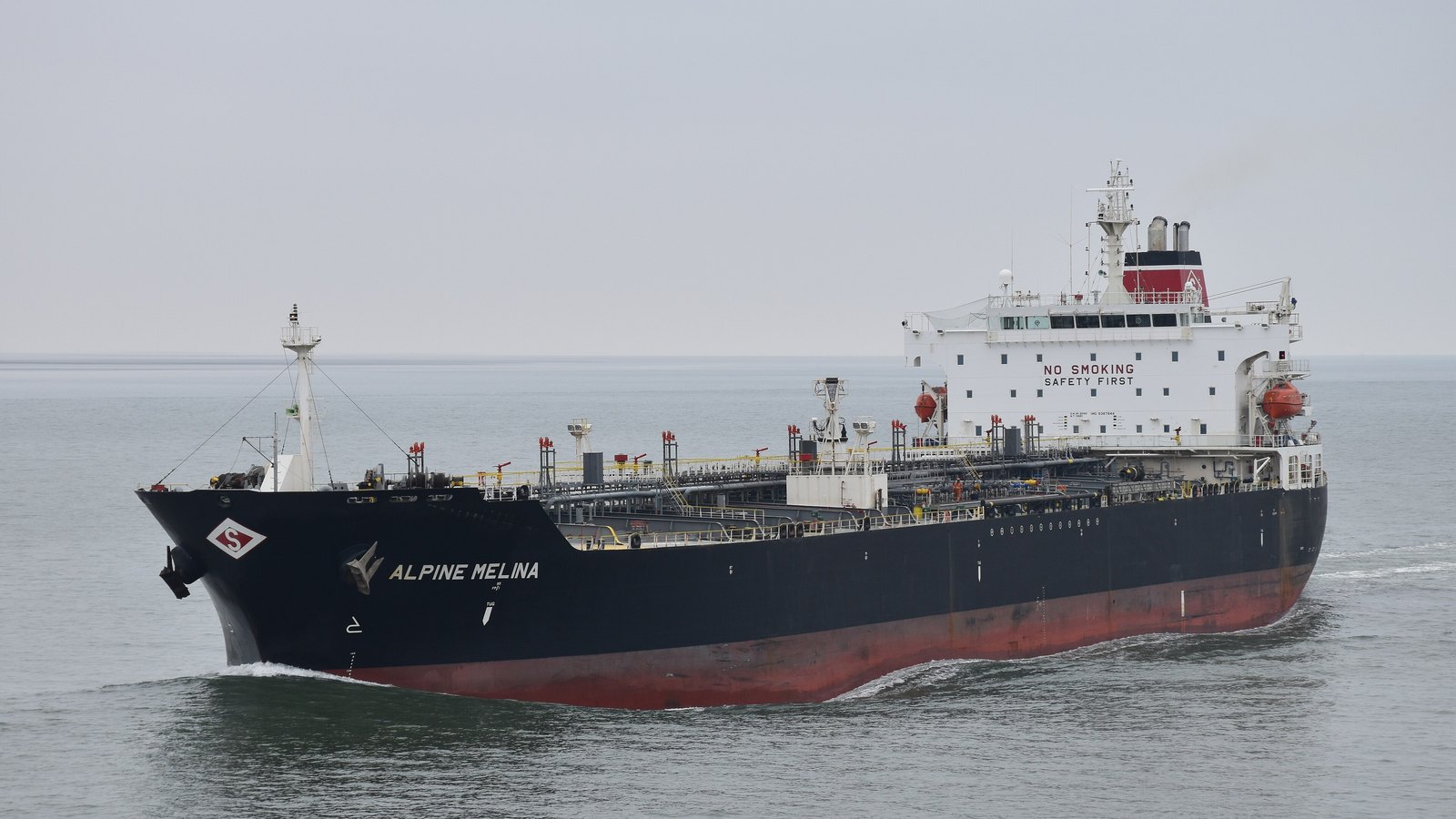
The Voluntary Tanker Agreement (VTA) collection enables MARAD to evaluate operational capacity from commercial tanker operators. Tanker companies voluntarily commit clean product tankers, crude carriers, and chemical parcel tankers to support United States military forces during contingency operations. According to MARAD notice 2026-23769, tanker capacity data collected through this mechanism are considered classified national security information and withheld from public disclosure. MARAD coordinates these commitments with United States Transportation Command (USTRANSCOM) to model military fuel distribution.
The companion collection under OMB Control Number 2133-0526 implements procedural certification under federal maritime regulations. Eligible mariners submit discharge certificates and shipping articles to obtain MARAD certification that their emergency service qualifies for statutory job protections. The certificate is presented to former civilian employers to enforce reemployment rights, pension accruals, and seniority restoration.
The administrative burden and technical specifications of both collections are summarized below based on the official Federal Register filings:
| Collection Parameter | Voluntary Tanker Agreement (VTA) | Seamen Reemployment Rights |
|---|---|---|
| Federal Register Notice | 91 FR 75637 (Notice 2026-23769) | 91 FR 75637–75638 (Notice 2026-23770) |
| Docket Identifier | Docket No. MARAD-2026-1915 | Docket No. MARAD-2026-1948 |
| OMB Control Number | 2133-0505 | 2133-0526 |
| Collection Action | Extension with modification | Extension without change |
| Statutory Authority | Defense Production Act § 708; 49 CFR 1.49 | Maritime Security Act of 1996; 49 CFR 1.49 |
| Implementing Regulation | 44 U.S.C. Chapter 35; DPA VTA Agreement | 46 CFR Part 349; 46 U.S.C. Chapter 521 |
| Target Respondent Pool | US-flag commercial tanker owners and operators | Civilian merchant mariners serving in emergency sealift |
| Estimated Annual Respondents | 15 corporate respondents | 10 individual mariners |
| Annual Response Frequency | Once annually | Once per emergency deployment |
| Estimated Hours per Response | 1.0 burden hour | 1.0 burden hour |
| Total Annual Burden Hours | 15 national burden hours | 10 national burden hours |
| Agency Program Office | Office of Sealift Support | Office of Workforce Development and Education |
Background and Statutory Authorities Governing Federal Sealift
The legal foundation of the Voluntary Tanker Agreement derives from Section 708 of the Defense Production Act of 1950, as amended and codified at 50 U.S. Code § 4558. Section 708 authorizes the President and designated officers to sponsor voluntary agreements with private industry to enhance defense preparedness. A central element of Section 708 is that approved voluntary agreements confer a statutory antitrust defense, allowing commercial shipping carriers to coordinate fleet movements and capacity allocations during emergencies without violating antitrust laws.
While dry cargo logistics and container vessels are organized under the Voluntary Intermodal Sealift Agreement (VISA) and Maritime Security Program (MSP), bulk petroleum transport requires dedicated tanker arrangements. Participating carriers receive priority status for carriage of Department of Defense peacetime fuel cargoes. Contracts associated with these agreements incorporate federal defense acquisition clauses, aligning with federal FAR and DFARS requirements that govern military logistics and cargo preference allocations.
The statutory basis for civilian mariner reemployment rights is rooted in Section 10 of the Maritime Security Act of 1996, codified at 46 U.S.C. Chapter 521 and implemented at 46 CFR Part 349. Congress structured the statute to ensure that civilian mariners crewed aboard National Defense Reserve Fleet (NDRF) or Ready Reserve Force (RRF) vessels receive job protections substantially equivalent to military reservists protected under the Uniformed Services Employment and Reemployment Rights Act (USERRA). Mariners must submit an application for certification to MARAD no later than 45 days after completing qualifying emergency service.
Strategic Context and Mariner Workforce Shortages
The renewal of these information collections arrives amid national concerns regarding American strategic sealift capacity and mariner retention. Maritime analysts have noted persistent vulnerabilities in naval auxiliary crewing. In a protracted maritime contingency, military operations consume substantial volumes of liquid fuel, requiring an assured fleet of product tankers capable of underway replenishment and coastal delivery.
However, the United States flag commercial tanker fleet remains limited in size. Furthermore, crewing reserve vessels during an emergency requires thousands of qualified merchant marine officers and unlicensed mariners. MARAD estimates in information collection 2026-23770 that only 10 mariners per year currently file for emergency reemployment certifications, reflecting baseline non-mobilization conditions. In an activated mobilization where reserve ships are crewed simultaneously, hundreds of mariners would rely on 46 CFR Part 349 protections to return to civilian careers without career penalty.
What It Means for Universities, Oceanographic Fleets, and Research Offices
Federal sealift mobilization frameworks carry direct operational implications for higher education institutions, academic research fleets, and institutional compliance officials:
First, academic oceanographic research vessels participating in the University-National Oceanographic Laboratory System (UNOLS) fleet rely on licensed civilian mariners holding Coast Guard credentials. Prominent research institutions—including Scripps Institution of Oceanography, Woods Hole Oceanographic Institution, University of Washington, Oregon State University, and Columbia University Lamont-Doherty Earth Observatory—employ captains, chief engineers, and marine technicians who are registered merchant mariners. In a national emergency, qualified mariners from academic research vessels may volunteer or be recalled to strategic sealift service. Research offices and vessel managers must maintain continuity procedures and understand 46 CFR Part 349 certification rules to guarantee returning crew members their seniority, compensation tiers, and reemployment.
Second, State Maritime Academies (SMAs)—including Maine, Massachusetts, SUNY, Texas A&M, California, and Great Lakes maritime academies—alongside the federal US Merchant Marine Academy, educate civilian officers who fulfill sealift obligations. University administrators operating state academies manage dual-curriculum programs that pair academic engineering and navigation degrees with federal service commitments. MARAD policies governing Voluntary Tanker Agreement participants directly affect cadet sea-term berths and commercial tanker training billets.
Third, university sponsored programs and institutional compliance teams overseeing maritime research face stringent research security requirements. Oceanographic instrumentation, autonomous underwater vehicles, sonar mapping payloads, and maritime logistics research intersect with dual-use controls governed by the Export Control Reform Act. Research security officers (RSOs) must ensure that university operational data, vessel tracking protocols, and marine logistics research remain protected, especially when academic personnel support defense sealift exercises or maritime supply chain resilience studies.
Regulatory Timeline and Next Steps
Following publication in the Federal Register on November 23, 2026, both information collection renewals are open for a 30-day public comment window under Paperwork Reduction Act procedures. Members of the public, commercial maritime operators, maritime labor organizations, university research fleet managers, and state maritime academies have until December 23, 2026, to submit comments directly to the Office of Management and Budget.
Comments should be filed electronically via the Office of Information and Regulatory Affairs (OIRA) paperwork portal at www.reginfo.gov/public/do/PRAMain, searching for OMB Control Numbers 2133-0505 and 2133-0526. Comments may address whether the collections have practical utility, the accuracy of MARAD burden estimates, and methods to minimize paperwork burdens through digital data submission.
Following the comment period close, OMB will evaluate public feedback before issuing three-year clearance extensions. Concurrently, MARAD and USTRANSCOM will continue conducting annual sealift capability assessments and tanker allocation planning to support national security contingency operations through 2027.
Sources
- Federal Register: Request for Comments on the Renewal of a Previously Approved Information Collection: Application To Participate; Voluntary Tanker Agreement (91 FR 75637), checked 2026-11-29
- Federal Register: Request for Comments on the Renewal of a Previously Approved Information Collection: Information To Determine Seamen’s Reemployment Rights—National Emergency (91 FR 75637), checked 2026-11-29
- Electronic Code of Federal Regulations: Title 46, Part 349 — Reemployment Rights of Certain Merchant Seamen, checked 2026-11-29
- Cornell Law School Legal Information Institute: 50 U.S. Code Section 4558 — Voluntary Agreements and Plans of Action for Preparedness Programs, checked 2026-11-29
- University-National Oceanographic Laboratory System: What Is UNOLS?, checked 2026-11-29






