
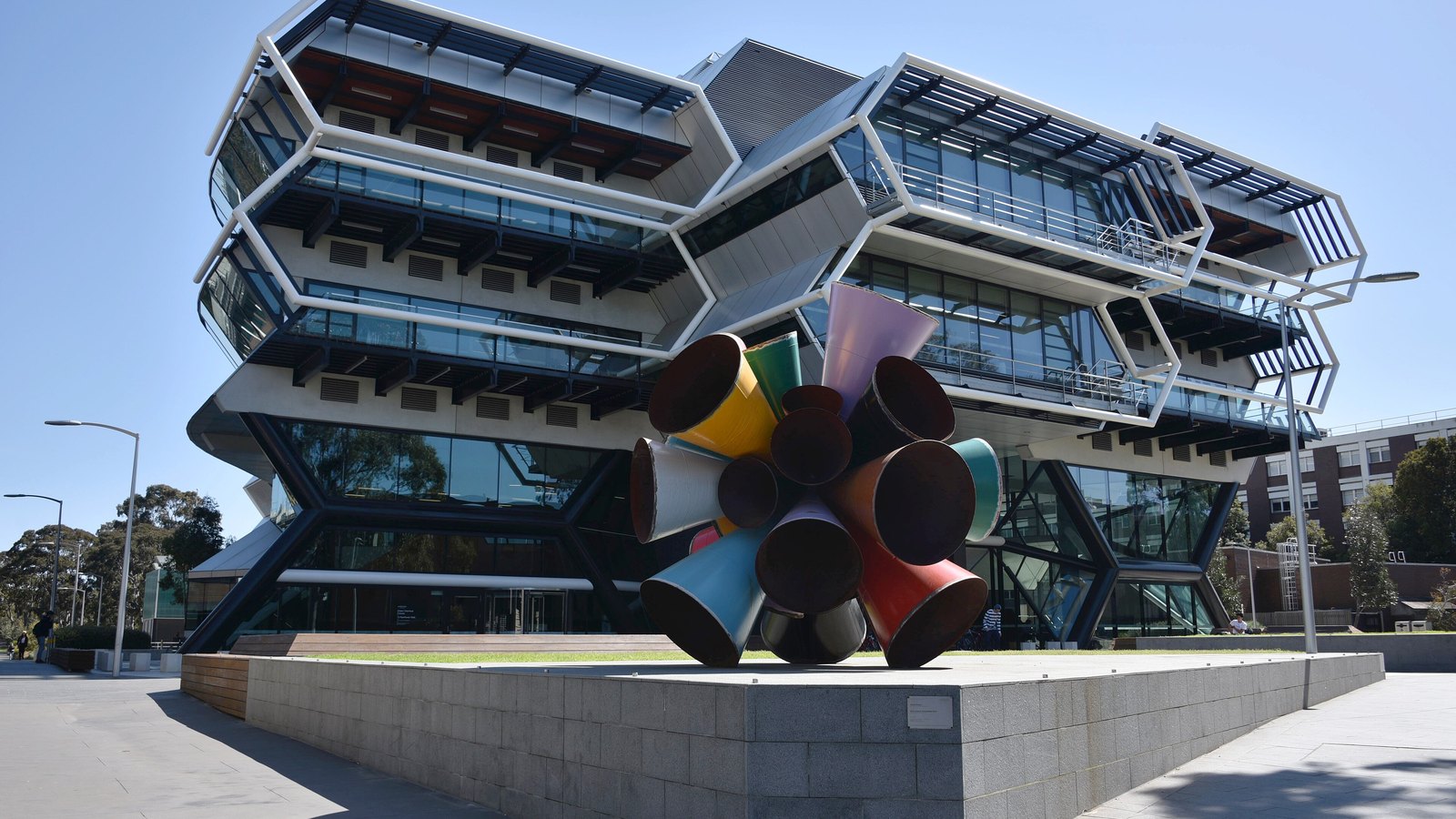
On November 23, 2026, Monash University and the Australian Research Council launched the CREST Hub and the Monash–CSIRO Membrane Pilot Facility in Clayton, Melbourne. Supported by 8 million Australian dollars across five universities and six commercial partners, the hub advances low-emission mineral extraction and battery recycling. For research offices and materials scientists, it establishes a shared pilot infrastructure that bridges laboratory discovery and commercial scale-up.
Official Launch of the CREST Research Hub and Pilot Facility
Monash University has officially inaugurated the Australian Research Council (ARC) Research Hub for Critical Energy Separation Materials (CREST Hub). Formally awarded under the ARC Industrial Transformation Research Hubs scheme as grant IH250100005, the national initiative unites five Australian universities and six industry partners. Operating from June 9, 2026, through June 8, 2031, the hub is backed by 4,067,478 Australian dollars in indexed ARC funding alongside matching industry and institutional co-contributions, creating an 8 million Australian dollar translational program.
The physical hub is based at the Monash Centre for Membrane Innovation within the New Horizons Building at Monash University’s Clayton campus in Melbourne. The launch integrates the joint Monash–CSIRO Membrane Pilot Facility, developed with the Commonwealth Scientific and Industrial Research Organisation. According to the official Monash University launch announcement, the facility houses roll-to-roll membrane casting, high-throughput coating, and continuous electrochemical testing systems designed to validate academic materials under operating industrial conditions.
Administered under institutional grants management frameworks, the hub is directed by Monash Professor Matthew Hill alongside chief investigators from the University of Technology Sydney, The University of New South Wales, Edith Cowan University, and Victoria University. Unlike basic discovery programs or ARC Centres of Excellence, the hub focuses directly on mid-TRL pilot scaling and sovereign mineral processing.
Core Research Themes and Industrial Consortium Structure
The CREST Hub program spans four themes: Energy Storage Materials, Energy Transport Materials, Energy Utilisation Materials, and Impact and Integration. Projects prioritize selective molecular membranes to recover critical elements from complex ores and waste streams, direct lithium extraction (DLE), and materials for transporting hydrogen via green ammonia. The consortium partners and their technical targets are summarized below:
| Partner Organisation | Sector Role | Primary Technical Focus | Translational Target |
|---|---|---|---|
| Monash University | Administering University | Nanoporous frameworks and selective membranes | Hub headquarters and pilot plant hosting |
| Element Zero Pty Ltd | Industry Partner | Non-aqueous electrochemical iron ore reduction | Scale from 100 kg/day to 1 tonne/day by mid-2027 |
| ElectraLith Pty Ltd | Industry Partner | Direct lithium extraction electro-filtration | Chemical-free lithium salt recovery from brines |
| EcoMag Limited | Industry Partner | Magnesium and trace mineral recovery | Valorisation of ocean bitterns and mining effluents |
| Envirostream Australia Pty Ltd | Industry Partner | Battery recycling and hydrometallurgy | Cathode precursor recovery from spent cells |
| Opal Australia and New Zealand | Industry Partner | Circular materials and byproduct streams | Closed-loop resource efficiency in manufacturing |
| EPE Innovation Pty Ltd | Industry Partner | Separation process engineering | Commercial membrane contactor deployment |
| UTS, UNSW, ECU, Victoria Univ. | Participating Universities | Molten salts, modelling, and specialised separations | Collaborative doctoral research and testing |
Reporting in Australian Mining highlighted partner company Element Zero, which produces iron directly from ore via non-aqueous electrochemistry without blast furnaces. The company produces approximately 100 kilograms of iron sheets daily and is leveraging the hub’s pilot facility to target a one-tonne-per-day operation by mid-2027.
National Strategy and Critical Minerals Policy Alignment
The hub aligns directly with the Australian Government’s Future Made in Australia agenda and national critical minerals priorities. Historically, Australia has primarily exported unprocessed spodumene concentrate and unrefined ores, relying on overseas facilities for chemical refining. Developing sovereign membrane and electrowinning capabilities enables domestic high-value refining.
The initiative complements shared national facilities funded via the National Collaborative Research Infrastructure Strategy (NCRIS) and equipment supported by ARC LIEF (Linkage Infrastructure, Equipment and Facilities). It also interfaces with the Critical Metals for Critical Industries program under the federal Cooperative Research Centres (CRC) Program, creating an integrated pathway from fundamental research through commercial validation.
Stakeholder Perspectives on Commercial Translation
Hub leadership stressed that overcoming scaling bottlenecks is essential for clean energy manufacturing. In coverage by Mining Magazine Australia, CREST Hub director Professor Matthew Hill underscored the need for enhanced separation efficiency:
“Many of the materials needed for the clean energy transition are found in complex mixtures, industrial waste and resources that are currently difficult or costly to process,” Hill said. “Developing better separation technologies is critical to making these resources more accessible and valuable. By bringing together expertise across universities and industry, we aim to develop practical technologies that can move from the laboratory towards industrial application, helping Australia build the capability to process, recover and add value to its own resources rather than simply supplying raw materials.”
From the industrial perspective, Dr Bart Kolodziejczyk, founder and chief technology officer of Element Zero, identified continuous operation as the core engineering barrier: “One of the biggest challenges is taking an electrochemical process from the laboratory and engineering it to operate continuously and reliably at an industrial scale. That’s where the next stage of development is critical.”
The partnership expands longstanding national capabilities. In a joint briefing detailing the pilot facility, CSIRO leadership noted that combining university and national agency capabilities provides an end-to-end pipeline from molecular design through to scalable prototype manufacturing.
Implications for University Research Offices and Translational Teams
For university research offices and commercialisation teams, the CREST Hub illustrates effective consortium management across diverse commercial stakeholders. Coordinating six commercial partners requires flexible intellectual property frameworks that balance academic open-dissemination mandates with industry background IP and commercial confidentiality.
The hub also resolves a critical pilot-scale gap. Academic engineering teams often struggle to validate laboratory breakthroughs because standard university labs lack continuous roll-to-roll casting and industrial validation systems. The shared Clayton facility enables partner institutions to generate robust demonstration data necessary for venture funding and commercial licensing.
Additionally, the hub embeds industry training into postgraduate education. According to the ARC CREST Hub overview, doctoral candidates receive direct industry co-supervision and commercial placements, producing researchers skilled in both scientific research and industrial deployment.
Implementation Milestones and Research Rollout
Following the formal launch, the hub has initiated work across four baseline projects and enrolled its first four doctoral researchers. A key immediate priority is filling nine additional PhD scholarships closing November 30, 2026, offering candidates a tax-free stipend of 37,145 Australian dollars per annum to commence work in early 2027.
Industrial translation milestones include Element Zero’s planned expansion to a continuous one-tonne-per-day electrochemical iron line by mid-2027, alongside field demonstrations of ElectraLith and EcoMag extraction systems. The ARC will conduct mid-term reviews in 2028, evaluating domestic patent filings, pilot operational metrics, and industry co-investment progress through 2031.
Sources
- Australian Research Council: ARC Research Hub for Critical Energy Separation Materials (IH250100005), checked 2026-11-23
- Monash University: Monash-led National Research Hub to Advance Australia’s Critical Materials Technologies, checked 2026-11-23
- Australian Mining: New Research Hub Targets Australia’s Critical Minerals Future, checked 2026-11-23
- Mining Magazine Australia: New National Critical Minerals Research Hub Launched, checked 2026-11-23
- CSIRO: Monash and CSIRO Open New Pilot Facility to Fast-Track Membrane Innovation, checked 2026-11-23
- ARC CREST Hub: About the Research Hub for Critical Energy Separation Materials, checked 2026-11-23






