

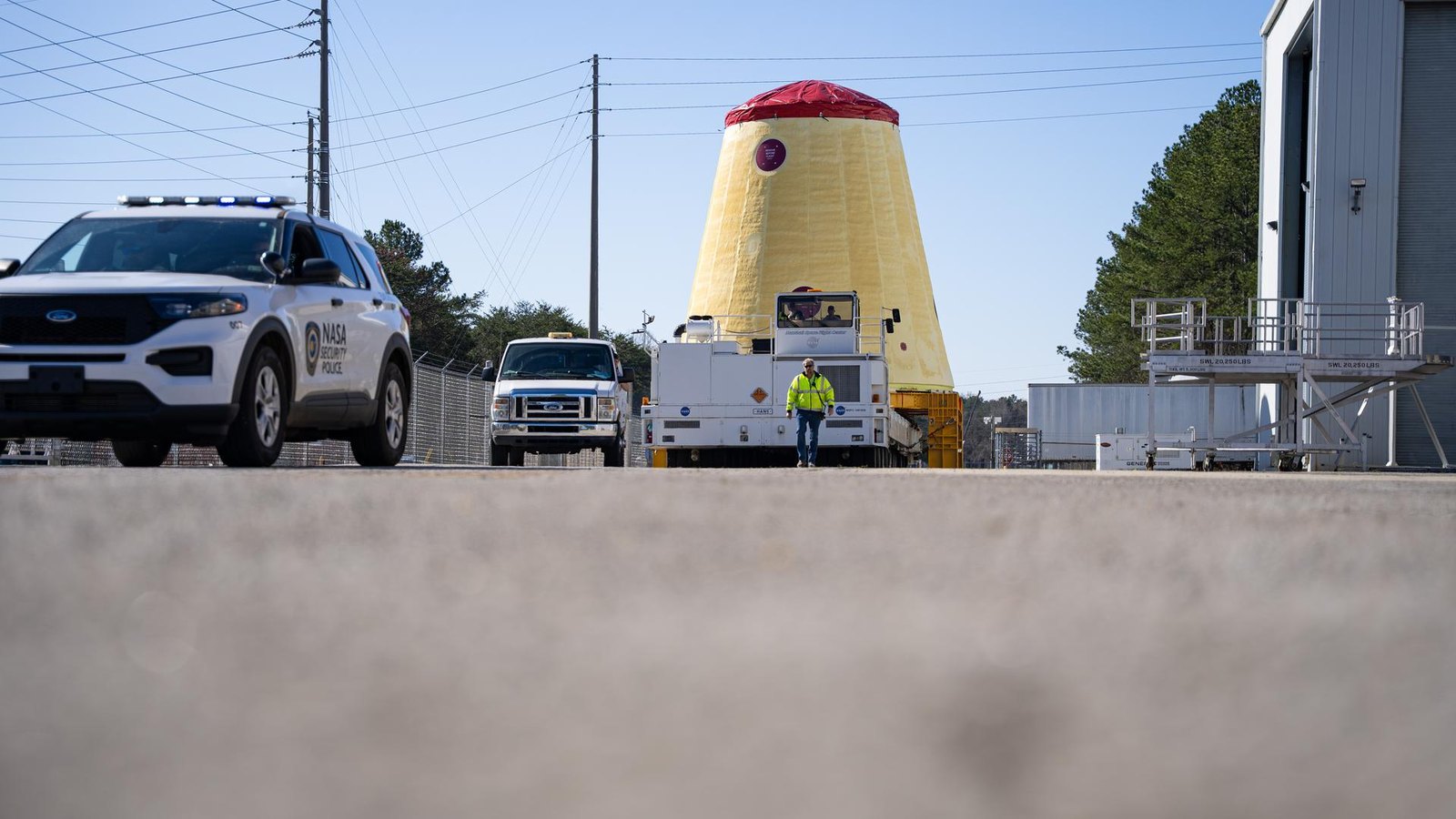
On November 25, 2026, NASA’s Office of Small Business Programs overhauled its Mentor-Protégé framework into the Small Business Supplier Development Program and approved a new agreement between The Boeing Company and woman-owned GRACE Aerospace in Huntsville, Alabama. The updated program introduces streamlined 30-day reviews and a 10x subcontracting credit multiplier to fortify domestic supply chains across Artemis and deep-space research missions.
Structural Overhaul of NASA Supplier Development
The formal transition from the legacy NASA Mentor-Protégé Program to the Small Business Supplier Development Program reflects a strategic pivot by the agency toward mission-focused industrial base resilience. According to the official agency announcement released by the NASA Office of Small Business Programs, the modernized structure is designed to dismantle administrative friction that previously discouraged participation among both large prime contractors and specialized emerging suppliers. The initiative operates under executive leadership across NASA Headquarters and regional space flight centres, uniting acquisition officials, program managers, and technical specialists to ensure that critical mission architectures remain supported by a robust, diversified manufacturing base.
Dwight Deneal, assistant administrator of the Office of Small Business Programs at NASA Headquarters in Washington, emphasized that the redesign serves as an operational mechanism for mission assurance rather than a routine compliance exercise. Deneal stated that by simplifying participation and focusing developmental assistance on the precise technical capabilities the agency requires, NASA is establishing a more resilient supplier ecosystem capable of supporting highest-priority exploration missions. The ceremonial signing in Huntsville brought together key agency leadership, including Bradley Niese, NASA senior procurement executive, deputy chief acquisition officer, and assistant administrator for the Office of Procurement; Kristina Parmenter, procurement officer at NASA Marshall Space Flight Center; Christen Edwards, lead of the Space Launch System (SLS) stages team; and Danielle Barnes, small business specialist within the OSBP.
Key Program Provisions, Timelines, and Subcontracting Multipliers
Effective for all formal agreements initiated on or after October 1, 2026, the updated NASA Small Business Supplier Development Program establishes streamlined procedural benchmarks and unprecedented financial credit mechanisms. Central to the operational changes is a unified single-step application package that consolidates previously fragmented submission forms into a single digital intake. NASA has established an agency-wide performance target requiring complete agreement review and formal approval within 30 days of submission, dramatically compressing multi-month approval cycles that historically delayed collaborative development schedules.
To motivate large prime contractors to invest capital, engineering time, and proprietary toolsets into small businesses, NASA inaugurated the 10X Credit Pilot Program. Under this pilot mechanism, prime contractors acting as mentors can claim federal small business subcontracting plan credit equal to ten times (10x) the direct value of approved developmental assistance provided to a protégé. If a prime contractor provides $50,000 in qualifying technical or managerial assistance, it may report $500,000 in subcontracting credit on its Individual Subcontracting Reports (ISRs). This credit directly offsets subcontracting obligations across diverse socio-economic categories, including supplier diversity certifications such as Women-Owned Small Businesses (WOSBs), Small Disadvantaged Businesses (SDBs), and Historically Underutilized Business Zones (HUBZones).
| Feature / Policy Metric | Legacy Mentor-Protégé Program | Enhanced Supplier Development Program (2026) | Impact on Aerospace Supply Base |
|---|---|---|---|
| Application Mechanism | Multi-step submission with disparate forms | Unified single-step digital package | Reduces administrative friction and application overhead |
| Agency Review Target | Multi-month unstructured review | Under 30 calendar days to execution | Accelerates technical capability transfer to flight hardware |
| Subcontracting Credit Multiplier | 1:1 dollar-for-dollar credit | 10x multiplier on developmental assistance costs | Substantially boosts prime contractor incentive to mentor |
| Eligible Protégé Scope | Certified small businesses | Small businesses, HBCUs, MSIs, SBIR/STTR Phase II awardees | Broadens academic and advanced research integration into flight lines |
The Boeing-GRACE Aerospace Agreement in Huntsville
The operational potential of the revamped program was demonstrated during a formal signing ceremony at the Space Camp Operations Center within the U.S. Space and Rocket Center in Huntsville, Alabama, held in conjunction with NASA Marshall Space Flight Center’s Launchpad supplier forum. Under the bilateral agreement, The Boeing Company will provide developmental assistance valued at nearly $500,000 to GRACE Aerospace, a certified Women-Owned Small Business based in Jacksonville, Florida.
Founded in 2001 and led by president and owner Pauline Sevigny, GRACE Aerospace brings over two decades of experience manufacturing structural components, wire harnesses, and precision avionics assemblies for defense and commercial platforms. As an approved Boeing supplier, GRACE will leverage the structured developmental assistance to expand its cleanroom assembly, digital product definition capabilities, and qualification testing for flight-critical space hardware. Sevigny highlighted that participating in the program allows the firm to enhance technical capabilities alongside industry leaders, advancing national space superiority and manufacturing resilience.
Representing The Boeing Company, Mentor-Protégé Program manager and small business liaison officer Christian Diamond pointed out that the agreement deepens Boeing’s decades-long collaboration with NASA while systematically upgrading the technical maturity of specialized Tier 2 and Tier 3 suppliers. In collaboration with contracting officers from NASA Marshall’s Space Launch System stages team—including Grant Crawford, Logan Ojermark, Nikki Howard, and Sabrina Pearson—the partnership focuses on scaling hardware fabrication required for deep-space exploration vehicles.
Regulatory Framework and Procurement Guidelines
Federal procurement regulations governing mentor-protégé arrangements within civil space operations are codified under the NASA FAR Supplement (NFS). As outlined in NFS Part 1819, NASA maintains specific contracting authorities that allow prime contractors with approved commercial or individual subcontracting plans to formalize developmental assistance agreements. These regulatory provisions ensure that developmental expenditures, including employee training, technical tooling, quality system implementation, and facilities upgrades, are accounted for in compliance with standard cost principles.
Legal analyses published by The Legal 500 highlight that mentor-protégé frameworks across federal agencies serve as vital competitive instruments. Prime contractors facing rigorous subcontracting goals under large-scale defense and space acquisition programs benefit from predictable credit mechanisms, award-fee evaluations, and potential cost-reimbursement provisions. Crucially, agreements structured under the enhanced NASA program must address intellectual property rights and data protection. Prime contractors and protégé entities must establish clear licensing boundaries under FAR 52.227-11 patent rights clauses and ensure that proprietary manufacturing processes developed during developmental assistance remain protected under appropriate SBIR data rights and commercial technical data safeguards.
Implications for Universities, Research Offices, and Tech Transfer
A pivotal dimension of NASA’s modernized supplier development strategy is the direct integration of academic institutions and research spinouts. By extending protégé eligibility beyond conventional small businesses to include Historically Black Colleges and Universities (HBCUs) and Minority-Serving Institutions (MSIs), NASA has created a direct bridge between higher education research laboratories and major aerospace primes. Academic laboratories conducting research in materials science, autonomous robotics, optical communications, and nuclear propulsion can enter formal development agreements with prime contractors, receiving direct technical and managerial guidance to mature laboratory prototypes into flight-qualified components.
For university technology transfer offices (TTOs) and sponsored research administrators, the program offers a clear mechanism for technology transition. Startups founded on university-licensed IP that have secured federal Phase II awards under the Small Business Innovation Research or STTR programs are explicitly eligible to participate as protégés. This structure allows university-affiliated ventures to bypass the notorious commercialization valley of death by securing structured assistance from prime systems integrators. Prime contractors provide access to flight hardware testing benches, quality management protocols (such as AS9100 certification), and mission assurance standards that academic startups rarely possess the capital to establish independently.
What Happens Next
The operational implementation of the Boeing-GRACE Aerospace agreement will proceed across scheduled milestones at GRACE’s Jacksonville facilities and Boeing’s space flight manufacturing centres throughout 2027. NASA Marshall Space Flight Center contracting personnel will conduct periodic performance reviews to track technical assistance outcomes and verify flight hardware delivery schedules for the Space Launch System.
Concurrently, the NASA Office of Small Business Programs will monitor the 10X Credit Pilot Program across fiscal year 2027. The agency plans to assess the multiplier’s effectiveness in increasing prime contractor participation and diversifying tier-level procurement across the Moon to Mars architecture, nuclear thermal propulsion initiatives, and commercial low Earth orbit habitats. Acquisition officials anticipate that additional prime contractors supporting Artemis exploration contracts will submit bilateral supplier development packages under the streamlined 30-day review framework in the coming quarters.
Sources
- NASA Office of Small Business Programs: NASA Enhances Supplier Program, Announces Mentor-Protégé Agreement, checked 2026-11-26
- National Aeronautics and Space Administration: NASA Small Business Supplier Development Program, checked 2026-11-26
- The Boeing Company: Supplier Development and Strategic Sourcing & Partnership, checked 2026-11-26
- GRACE Aerospace: About Us, checked 2026-11-26
- Acquisition.GOV: PART 1819—SMALL BUSINESS PROGRAMS, checked 2026-11-26
- The Legal 500: NASA Revives Mentor-Protégé Program For Contractors, checked 2026-11-26





