
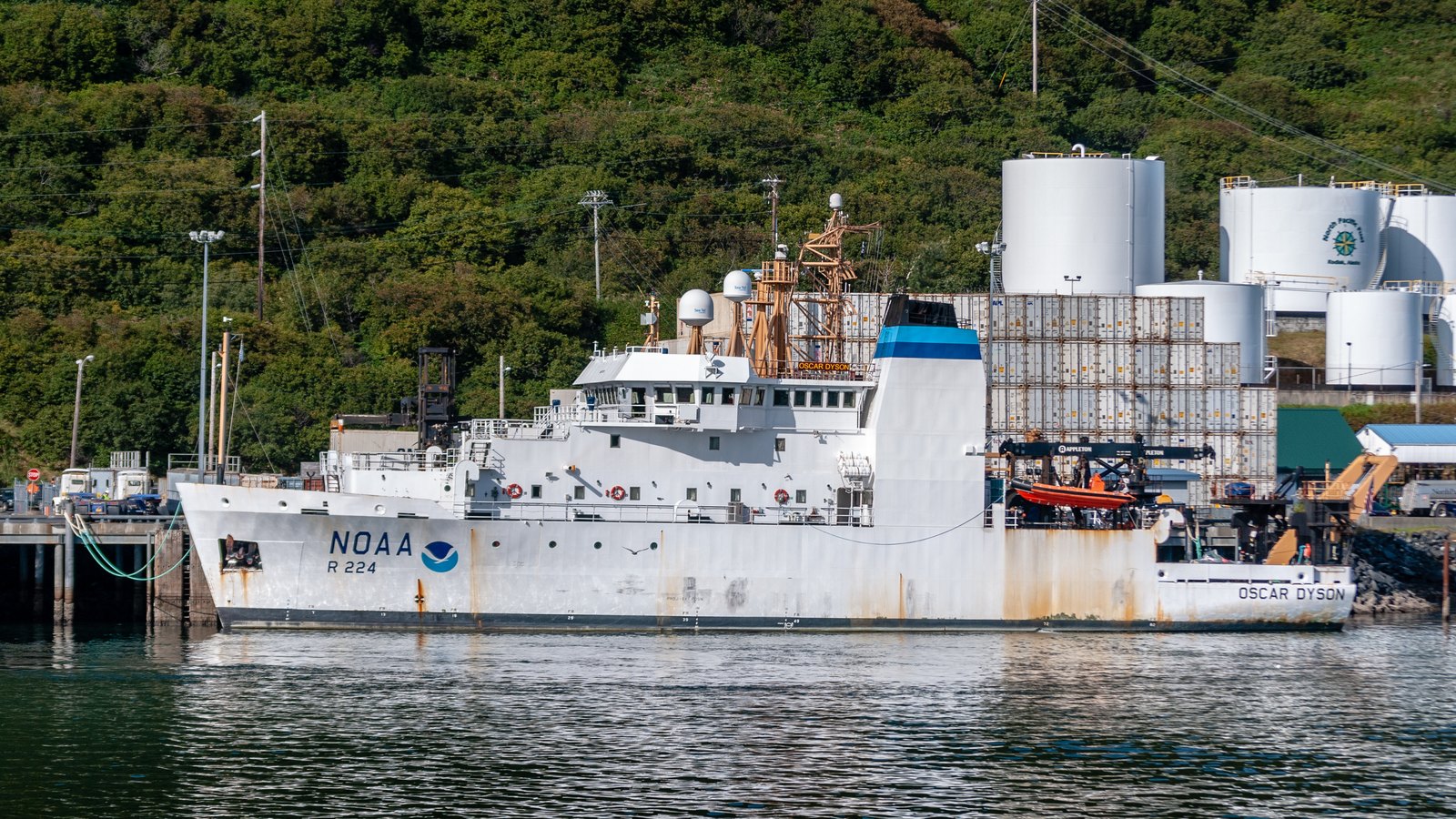
On 27 November 2026, NOAA Fisheries filed a comprehensive proposed rule with the Federal Register establishing 2027 and 2028 groundfish harvest specifications for the Gulf of Alaska Exclusive Economic Zone. Setting a combined annual Total Allowable Catch of 465,714 metric tons, the regulatory action directly shapes marine ecological modeling, academic survey vessel charters, and institutional compliance across North Pacific oceanographic research programs.
NOAA Sets Multi-Year Harvest Specifications and Biological Benchmarks
The proposed specifications, administered by the National Marine Fisheries Service (NMFS) under the Magnuson-Stevens Fishery Conservation and Management Act, establish annual harvest baselines for groundfish species across the Western, Central, and Eastern Gulf of Alaska (GOA) management districts. Operating within the statutory Optimum Yield range of 116,000 to 800,000 metric tons (mt), the proposed package specifies a total overfishing level (OFL) of 651,257 mt and an acceptable biological catch (ABC) of 541,176 mt across all targeted stocks for both the 2027 and 2028 calendar years.
Harvest limits are governed by the Fishery Management Plan for Groundfish of the Gulf of Alaska, which mandates formal consultation between federal regulators and regional management authorities. Detailed under the NOAA Fisheries groundfish harvest specifications framework, these rules define allowable commercial extraction while preserving spawning biomass reserves for key commercial and ecologically sensitive species across northern subarctic waters.
Key Groundfish Specifications, Spatial Allocations, and Sablefish Gear Rules
Under the proposed allocation tables, Walleye pollock and Pacific cod constitute primary targets of harvest controls, reflecting both commercial value and trophodynamic importance in North Pacific food webs. For pollock, the Western, Central, and West Yakutat (W/C/WYK) stock area receives an ABC of 133,075 mt; following a mandatory deduction of 2.5 percent (3,326 mt) for the State of Alaska guideline harvest level (GHL) fishery, the net federal Total Allowable Catch (TAC) stands at 129,749 mt. Pacific cod allocations are established with a Gulf-wide OFL of 38,812 mt, an ABC of 32,209 mt, and a net TAC of 23,359 mt apportioned across Western, Central, and Eastern districts.
A major regulatory refinement codified in this rule is the adoption of Biologically-informed Recommended Distribution (BRD) terminology. Recommended by the North Pacific Fishery Management Council, the BRD designation replaces earlier ambiguous subarea ABC labels, establishing a formal separation between stock-wide biological thresholds and regional spatial harvest apportionments derived solely from biological distribution surveys rather than socio-economic adjustments.
Additionally, the rule details preparatory steps for Amendment 128 to the GOA Groundfish FMP regarding small sablefish discard management. In the sablefish Individual Fishing Quota (IFQ) fixed gear fishery, vessels will be permitted to carefully release sablefish measuring under 22 inches (55.88 cm) in fork length. The release program rolls out in two distinct phases: voluntary release without penalty deductions in 2027, followed by formal sablefish discard allowances (SDAs) and discard mortality accounting beginning in 2028 under regulatory standards maintained at Title 50 CFR Part 679.
| Groundfish Stock Complex | Proposed OFL (mt) | Proposed ABC (mt) | Proposed TAC (mt) |
|---|---|---|---|
| Walleye Pollock (W/C/WYK and SEO) | 166,969 | 142,824 | 139,498 |
| Pacific Cod | 38,812 | 32,209 | 23,359 |
| Sablefish (GOA Portion) | 57,797 | 47,008 | 22,550 |
| Arrowtooth Flounder | 143,347 | 119,985 | 100,769 |
| Flathead Sole | 51,176 | 41,980 | 36,873 |
| Shallow-Water Flatfish | 69,610 | 56,910 | 46,258 |
| Pacific Ocean Perch | 44,826 | 37,509 | 37,509 |
| Pelagic and Demersal Rockfish Complexes | 22,343 | 18,043 | 15,922 |
| Skates, Sharks, and Octopuses | 18,495 | 14,072 | 13,675 |
| Total Gulf of Alaska Specifications | 651,257 | 541,176 | 465,714 |
Stock Assessment Modeling and Environmental Indicator Integration
The numerical foundations of the 2027 and 2028 specifications derive from scientific stock assessments conducted by the Alaska Fisheries Science Center (AFSC). AFSC scientists employ age-structured statistical catch-at-age models, bottom trawl survey time series, and acoustic monitoring data to establish recruitment trajectories and sustainable fishing mortality reference points.
Development of the proposed rule followed unique assessment conditions resulting from logistical disruptions during the 2025 assessment cycle, which prevented the Groundfish Plan Team from finalizing complete updates for several minor stocks. Regulators bridged data intervals by projecting forward verified baseline assessments from the final 2026–2027 harvest specifications, coupled with specialized stock evaluations for Pacific cod and harvest projections for deep-water flatfish completed in early 2026. This modeling structure mirrors standard principles of wildlife population estimation dynamics, ensuring biological safeguards remain intact during multi-year survey transitions.
Furthermore, stock-specific risk tables integrate physical and biological indicators from the Gulf of Alaska Ecosystem Status Report (ESR). These risk tables evaluate sea surface temperature anomalies, zooplankton biomass, and marine heatwave trends, enabling the scientific committee to recommend precautionary reductions below maximum permissible ABC levels whenever environmental conditions compromise juvenile survival.
Scientific Advisory Deliberations and Regional Council Review
The North Pacific Fishery Management Council and its Scientific and Statistical Committee (SSC) conducted extensive scientific review of the draft specifications during their autumn meeting cycle. Documented through NPFMC groundfish management resources, the SSC examined inter-annual biomass shifts and survey catchability coefficients across key commercial strata.
Advisory bodies emphasized the necessity of balancing fishing fleet operational stability against ecosystem-based precautionary buffers. Industry participants noted that the small sablefish release allowance under Amendment 128 will substantially improve economic efficiency by allowing juvenile fish to attain reproductive maturity. Concurrently, academic and federal analysts evaluated prohibited species catch (PSC) limits for Pacific halibut, reaffirming strict gear apportionments designed to protect non-target benthic organisms. Many of these spatial catch calculations rely directly on open-source statistical modeling in R scripts maintained across collaborative fisheries working groups.
Implications for University Researchers and Marine Science Facilities
For oceanographic faculties, university marine laboratories, and fisheries institutes, the publication of the 2027–2028 specifications carries operational and regulatory consequences. Academic research groups operating chartered vessels or collecting biological specimens in federal EEZ waters must align cruise protocols with federal catch restrictions and prohibited species encounter caps.
Field research projects interacting with demersal fish stocks must ensure appropriate scientific documentation, including Scientific Research Permits (SRPs) or Exempted Fishing Permits (EFPs) issued by the NMFS Alaska Regional Office. Furthermore, sampling protocols involving protected non-target species or marine mammals are subject to stringent oversight under federal marine protected species research frameworks, requiring institutional animal care committees and vessel operators to maintain rigorous interaction logs.
The biological data generated under these harvest specifications also informs university geneticists tracking sub-population structure across the North Pacific. Fisheries scientists utilize tissue archives collected during NOAA survey cruises to conduct fine-scale genomic sequencing, applying advanced population genomics protocols to identify natal river origins and localized adaptive variation in species like Pacific cod and rockfish.
Public Comment Period, Final Council Review, and Regulatory Timeline
The proposed rule is scheduled for official publication in the Federal Register on 30 November 2026 under Document Number 2026-24248. The notice establishes a 30-day public comment period closing in late December 2026. Public submissions can be lodged electronically through the Federal e-Rulemaking Portal under Docket Number NOAA-NMFS-2026-3301 or mailed to NMFS Alaska Region headquarters in Juneau.
Following the public comment period, NMFS will consult with the North Pacific Fishery Management Council at its December 2026 meeting. Final specifications will incorporate the finalized 2026 SAFE report, updated Ecosystem Status Reports, and the 2027 Supplementary Information Report assessing environmental impact statement adequacy. The final rule is scheduled for publication in March 2027, superseding existing interim specifications and remaining effective for a one-year regulatory term.
Sources
- Federal Register: Fisheries of the Exclusive Economic Zone off Alaska: Gulf of Alaska; 2027 and 2028 Harvest Specifications for Groundfish, checked 2026-11-27
- NOAA Fisheries: Alaska Groundfish Harvest Specifications, checked 2026-11-27
- NOAA Fisheries: Alaska Fisheries Science Center, checked 2026-11-27
- eCFR: Title 50 CFR Part 679 — Fisheries of the Exclusive Economic Zone off Alaska, checked 2026-11-27
- North Pacific Fishery Management Council: Groundfish Management Off Alaska, checked 2026-11-27






