
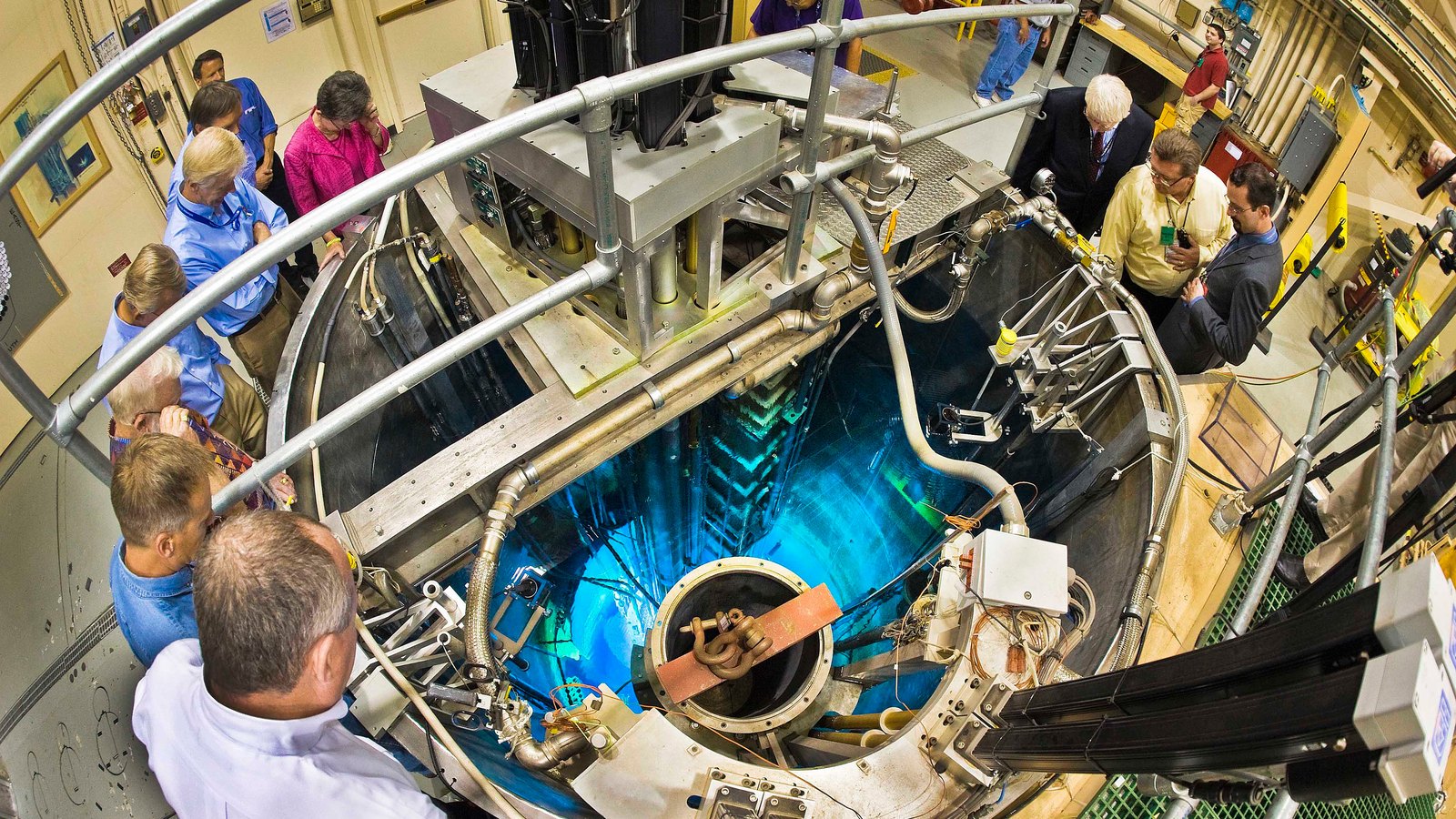
On November 27, 2026, the U.S. Nuclear Regulatory Commission issued an Environmental Assessment and Finding of No Significant Impact for the subsequent license renewal of Nine Mile Point Nuclear Station Unit 1 in Oswego County, New York. The determination clears a critical regulatory hurdle for operator Constellation Energy Generation to extend the 613-megawatt boiling-water reactor’s operational lifetime to 80 years through August 2049, establishing key precedents for nuclear materials aging research, environmental surveillance, and academic regulatory compliance across university and national laboratory consortia.
NRC Environmental Review and Finding of No Significant Impact
The U.S. Nuclear Regulatory Commission (NRC) formalised its environmental findings under Docket No. 50-220 and NRC-2021-0082, signed by Stephen Koenick, Chief of the License Renewal Environmental Branch in the Office of Nuclear Reactor Regulation. Constellation Energy Generation, LLC (CEG) submitted its formal application for the subsequent license renewal (SLR) of Renewed Facility Operating License No. DPR-63 on March 25, 2026. The reactor, located on the southeastern shore of Lake Ontario approximately five miles northeast of Oswego, New York, is a General Electric boiling-water reactor rated at 1,850 megawatts-thermal. Operating commercially since December 1969, Nine Mile Point Unit 1 is the oldest operating commercial nuclear reactor in the United States. Its initial renewed 20-year license is scheduled to expire at midnight on August 8, 2029.
In its comprehensive evaluation, the NRC staff reviewed site-specific environmental data alongside NUREG-1437, Revision 2 (“Generic Environmental Impact Statement for License Renewal of Nuclear Plants”), published in August 2024. The staff evaluated 80 distinct environmental issues categorized across 59 generic Category 1 issues, 20 plant-specific Category 2 issues, and one uncategorized item. For all applicable Category 1 issues, the NRC concluded that no new and significant information altered the generic determinations. For the Category 2 plant-specific reviews, encompassing aquatic ecology, surface water hydrology, and radiological effluent controls, the NRC confirmed that environmental effects would remain minor. Detailed review schedules and documentation are maintained on the official NRC Nine Mile Point Unit 1 Subsequent License Renewal portal.
Regulatory Exemptions and Expedited Review Framework
A decisive element of the decision is the NRC’s granting of site-specific exemptions from standard environmental review regulations under 10 CFR 51.20(b)(2), 10 CFR 51.25, and 10 CFR 51.95(c). Under ordinary licensing procedures, reactor operating license renewals mandate the preparation of a comprehensive supplemental Environmental Impact Statement (EIS) in the first instance. However, invoking regulatory authority under 10 CFR 51.6 (“Specific exemptions”) and amended National Environmental Policy Act (NEPA) procedures codified by the Fiscal Responsibility Act of 2023, the NRC staff determined that an Environmental Assessment (EA) and Finding of No Significant Impact (FONSI) were legally authorized and in the public interest.
The Commission’s action responds directly to Executive Order 14300, “Ordering the Reform of the Nuclear Regulatory Commission,” issued on May 23, 2025. Section 5(a) of EO 14300 directs the agency to establish fixed review deadlines not exceeding one year for decisions on existing nuclear reactor license renewal applications. The NRC staff calculated that preparing an EA and FONSI rather than a supplemental EIS reduced the duration of the environmental review by up to three months. This expedited approach freed agency technical staff for concurrent reviews while fully satisfying statutory environmental mandates on previously disturbed, industrial utility parcels.
| Licensing Parameter | Initial Operating License | Initial License Renewal (PIR) | Subsequent License Renewal (SLR) |
|---|---|---|---|
| Authorization Period | 40 Years (1969–2009) | 20 Additional Years (2009–2029) | 20 Additional Years (2029–2049) |
| Cumulative Plant Service | 40 Years | 60 Years | 80 Years |
| Governing NEPA Document | Full Facility EIS (1960s/1970s) | Supplemental EIS (NUREG-1437 Supp. 24) | Site-Specific EA and FONSI (ML26306A164) |
| Regulatory Framework | 10 CFR Part 50 Domestic Licensing | 10 CFR Part 54 License Renewal | 10 CFR Part 54 and EO 14300 Efficiency Exemptions |
| Primary Environmental Finding | Acceptable Construction and Operation | Small Generic Impacts Preserved | Finding of No Significant Impact (FONSI) |
| Thermal Output Rating | 1,850 MW-thermal | 1,850 MW-thermal | 1,850 MW-thermal (Net ~613 MWe) |
Reactor Materials Aging Research and Technical Specifications
Operating a light-water boiling-water reactor across an 80-year operating horizon demands rigorous surveillance of passive, long-lived structures and components. The primary technical constraints in second-round license renewal involve neutron radiation embrittlement of the reactor pressure vessel beltline welds, fatigue degradation of primary coolant piping, stress corrosion cracking of internal stainless steel components, and thermal aging of electrical cable insulation. To substantiate operation from 60 to 80 years, Constellation developed specialized aging management programs in conformance with federal regulatory rules codified under 10 CFR Part 54.
These commercial aging strategies build directly upon extensive experimental datasets produced by the U.S. Department of Energy’s Light Water Reactor Sustainability Program, headquartered at Idaho National Laboratory in collaboration with Oak Ridge National Laboratory and university nuclear engineering consortia. The LWRS materials research pathway investigates harvesting irradiated steel samples from decommissioned facilities, testing extended concrete durability under elevated temperatures, and evaluating advanced non-destructive examination sensors. Nuclear operators implementing these surveillance routines rely on validated Standard Operating Procedure (SOP) documentation and curated Data Management Plan (DMP) protocols to maintain auditable quality records spanning multiple decades of operational surveillance.
Stakeholder Responses and Public Docket Submissions
The issuance of the EA and FONSI reflects extensive interagency coordination and public stakeholder input collected under the federal docket on Regulations.gov Docket NRC-2021-0082. Consultations were conducted with the New York State Department of Environmental Conservation, the U.S. Fish and Wildlife Service, and regional Tribal Nations regarding ecological stewardship of the Lake Ontario basin. Constellation emphasized that extending Nine Mile Point Unit 1’s operating horizon delivers firm, carbon-free baseload electricity supporting New York State clean energy mandates and regional grid reliability.
In contrast, environmental organizations and local community groups have raised concerns regarding long-term thermal plume discharges into Lake Ontario and the indefinite on-site dry cask storage of spent nuclear fuel. In its evaluation of alternatives, the NRC staff analyzed a “no-action alternative”—which would compel the shutdown of Unit 1 by August 2029—and evaluated replacement energy portfolios including combined-cycle natural gas, solar photovoltaic arrays, and advanced terrestrial wind. The NRC’s comparative analysis determined that constructing replacement generation infrastructure would generate substantially greater localized land-use, air-quality, and ecological disturbances than allowing continued operation of the disturbed, existing industrial facility.
Implications for Nuclear Engineering Research and University Laboratories
The NRC’s accelerated environmental approval path carries substantial operational and funding implications for academic nuclear engineering departments and university research reactors. As subsequent license renewals become standardized for the commercial nuclear fleet, research universities are securing competitive federal awards through the DOE Office of Nuclear Energy and the Nuclear Energy University Program. Academic researchers are heavily engaged in testing irradiation-assisted stress corrosion cracking, developing digital twin simulations of thermal hydraulics, and verifying predictive modeling for structural materials subjected to sustained gamma and neutron flux.
University laboratories handling radioactive materials, conducting nuclear materials analysis, or partnering on federally funded aging studies must align their laboratory protocols with rigorous oversight mechanisms. Implementing the Seven Elements of an Effective Compliance Program ensures that academic research facilities maintain formal risk assessments, transparent reporting lines, and independent audit mechanisms. Furthermore, university research administrators managing multi-investigator federal nuclear awards must establish robust institutional internal controls to oversee cost accounting, specialized laboratory procurement, and subrecipient monitoring across interdisciplinary consortia.
Next Steps in the Licensing Decision and Public Record
Following the publication of the final Environmental Assessment and FONSI in the Federal Register, the NRC’s technical evaluation proceeds toward completing the Safety Evaluation Report (SER). The Division of New and Renewed Licenses is finalizing safety audits regarding reactor vessel integrity, containment liner margins, and electrical cable qualification. Under the timeline established in accordance with Executive Order 14300, the NRC targets a final decision on the Subsequent License Renewal for Nine Mile Point Unit 1 by April 2027.
Publicly available records associated with the environmental review can be accessed via the NRC’s Agencywide Documents Access and Management System (ADAMS). Key docket records include the Final Environmental Assessment (ADAMS Accession No. ML26306A164), Constellation’s Subsequent License Renewal Application package (ML26084A179), the Applicant’s Environmental Report (ML26084A185), and NUREG-1437 Revision 2 (ML24087A133). Interested parties and research institutions may submit written inquiries regarding the docket to the NRC Office of Nuclear Material Safety and Safeguards.
Sources
- Federal Register: Constellation Energy Generation, LLC; Nine Mile Point Nuclear Station Unit 1; Environmental Assessment and Finding of No Significant Impact, checked 2026-11-27
- U.S. Nuclear Regulatory Commission: Nine Mile Point Unit 1 – Subsequent License Renewal Application, checked 2026-11-27
- Regulations.gov: NRC Docket NRC-2021-0082 – Constellation Energy Generation, LLC Nine Mile Point Nuclear Station Unit 1, checked 2026-11-27
- Electronic Code of Federal Regulations: 10 CFR Part 54 – Requirements for Renewal of Operating Licenses for Nuclear Power Plants, checked 2026-11-27
- Idaho National Laboratory: Light Water Reactor Sustainability Program, checked 2026-11-27






