
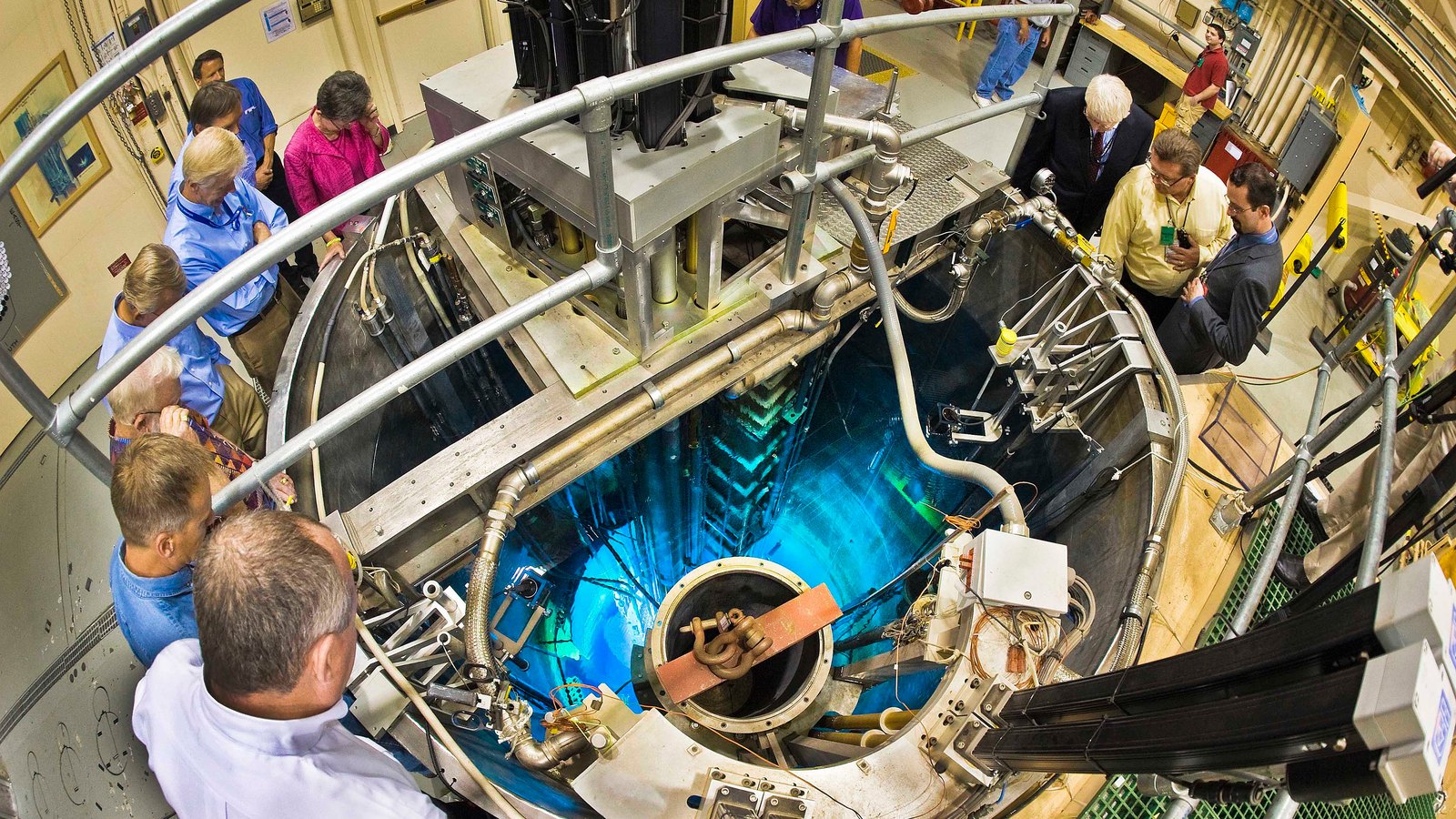
On November 20, 2026, the Nuclear Regulatory Commission renewed the Advisory Committee on Reactor Safeguards charter through December 2, 2028, and issued a draft environmental assessment with a finding of no significant impact for New Mexico’s Crownpoint uranium project. The actions sustain statutory independent peer review for advanced reactors while advancing domestic uranium licensing, directly impacting university nuclear engineering programs, campus radiation safety oversight, and research compliance offices.
What happened
In regulatory notices filed for public inspection on November 20, 2026, the Nuclear Regulatory Commission acted on two core pillars of federal nuclear oversight. Under Document 2026-23761 (scheduled for Federal Register publication on November 23, 2026, at 91 FR 75572), the Commission renewed the charter of the Advisory Committee on Reactor Safeguards (ACRS Charter Renewal notice). Signed by Federal Advisory Committee Management Officer Russell E. Chazell from the NRC Office of the Secretary in Rockville, Maryland, the renewal extends the statutory advisory committee through December 2, 2028, under Section 29 of the Atomic Energy Act of 1954 and the Federal Advisory Committee Act.
Concurrently on November 20, 2026, the NRC published in the Federal Register (91 FR 75356, Docket ID NRC-2026-1882) its Draft Environmental Assessment (EA), draft Finding of No Significant Impact (FONSI), and draft Programmatic Agreement for Source and Byproduct Materials License SUA-1580. The proceeding evaluates an application from NuFuels, Inc., a subsidiary of resource developer Laramide Resources Ltd., requesting a 20-year license renewal to construct and operate an in-situ recovery (ISR) uranium extraction project across McKinley County, New Mexico.
Key details
The two actions address separate phases of the nuclear fuel and power lifecycle, establishing binding regulatory baselines from fuel extraction through reactor safety evaluation. The renewed ACRS charter maintains statutory advisory oversight by up to 15 independent technical specialists appointed directly by the Commission under formal NRC advisory committee governance rules. Committee members provide peer review on reactor operations, probabilistic risk assessment, thermal-hydraulic phenomena, materials degradation, and structural mechanics.
The table below summarizes the key legal authorities, regulatory dockets, operative timelines, and technical responsibilities established by the November 2026 notices:
| Regulatory Dimension | ACRS Charter Renewal | NuFuels Crownpoint Environmental Assessment |
|---|---|---|
| Primary Federal Authority | Atomic Energy Act § 29; Federal Advisory Committee Act | Atomic Energy Act Part 40; National Environmental Policy Act |
| Federal Register Notice | 91 FR 75572 (Doc. 2026-23761) | 91 FR 75356 (Doc. 2026-23630) |
| Docket Identifier | Advisory Committee Management Charter | Docket No. 040-08968; Docket ID NRC-2026-1882 |
| Action Type | Two-year statutory charter renewal | Draft EA, draft FONSI, and draft Programmatic Agreement |
| Operative Horizon | Effective through December 2, 2028 | Proposed 20-year license renewal for construction and operation |
| Public Comment Window | Continuous via scheduled public meetings | 30-day public comment period ending December 21, 2026 |
| Geographic Focus | National advisory jurisdiction; civilian and research facilities | Church Rock Sections 8 and 17, Unit 1, and Crownpoint, NM |
| Core Technical Mandate | Independent peer review of reactor hazards and design rules | Aquifer restoration baseline (10 CFR Part 40) and cultural review |
For the Crownpoint project, NuFuels proposes in-situ recovery of uranium from deep sandstone aquifers within the Westwater Canyon Member of the Morrison Formation. Oxygenated alkaline lixiviant will circulate through injection wells to dissolve uranium minerals, which are then pumped to the surface for ion-exchange recovery. Under NRC regulations in 10 CFR Part 40, Appendix A, Criterion 5B(5), NuFuels is legally required to restore affected groundwater to pre-operational background quality or approved secondary standards prior to facility decommissioning.
Background and context
Congress established the ACRS in 1953 and codified it as an independent statutory body under Section 29 of the Atomic Energy Act in 1957. Under Section 182b of the Act, the committee is mandated to conduct independent reviews of construction permits and operating licenses for commercial power reactors and major testing facilities. In recent years, the ACRS has expanded its scope to evaluate small modular reactors, advanced non-light water designs, and the NRC’s technology-neutral Part 53 licensing rule. This regulatory review parallels the academic peer-reviewed process, pairing rigorous engineering audits with established reliability engineering and system safety models to assess complex failure modes and passive safety systems.
By contrast, the Crownpoint Uranium Project reflects decades of regulatory and regional controversy. The NRC initially approved License SUA-1580 in 1998, but commercial construction never began due to market shifts and sustained litigation. The project area in northwestern New Mexico carries profound environmental history, including the 1979 Church Rock tailings spill that contaminated the Puerco River. In 2005, the Navajo Nation enacted the Diné Natural Resources Protection Act, prohibiting all uranium mining and processing within Navajo Indian Country.
Reaction
The publication of the draft environmental assessment generated significant reaction from state officials, Indigenous organizations, and industry stakeholders. The State of New Mexico, acting through the New Mexico Environment Department (NMED) and the New Mexico Department of Justice, intervened to challenge the renewal. NMED Cabinet Secretary James C. Kenney emphasized that the state must protect regional drinking water supplies, raising technical concerns regarding potential communication between the uranium ore zone and public water aquifers serving the City of Gallup.
Diné community members and advocates represented by the New Mexico Environmental Law Center expressed steadfast opposition during public meetings, demanding complete cleanup of legacy uranium tailings before any new in-situ mining is permitted (NMELC community meeting report). In contrast, NRC staff concluded in the draft environmental assessment that NuFuels’ proposed monitoring wells, excursion recovery plans, and surety bonding satisfy safety regulations, justifying a draft finding of no significant impact. Laramide Resources commended the draft FONSI, stating that in-situ recovery produces minimal surface disturbance while providing essential domestic uranium feedstock.
What it means for researchers, universities, and research offices
The dual regulatory decisions carry direct compliance, research, and governance implications for academic institutions, nuclear engineering departments, and campus safety leadership:
- Research Reactor Licensing Oversight: University research and test reactors (such as campus TRIGA and pool-type facilities) fall under ACRS review for major license renewals, power uprates, and digital instrumentation upgrades. University facility directors must ensure that safety analysis reports align with ACRS technical findings on thermal-hydraulics and containment integrity.
- Institutional Radiation Safety Governance: Campus compliance officers overseeing radioactive materials licenses must coordinate with their institutional radiation safety committee to integrate NRC baseline standards for byproduct material handling and groundwater protection into campus protocols.
- Advisory Panel Ethics and Conflict of Interest: University faculty nominated to NRC advisory bodies or peer review panels are subject to strict conflict rules under the Federal Advisory Committee Act. Researchers must complete rigorous conflict of interest reviews regarding industry consulting agreements, commercial equity, and federally sponsored research grants.
- Hydrogeological and Remediation Research: The Crownpoint in-situ recovery proceeding offers empirical data for environmental geochemists and hydrogeologists studying groundwater transport, reactive barrier kinetics, and aquifer restoration timelines under federal research programs.
What happens next
The regulatory notices initiate concrete procedural timelines across federal and state forums:
- December 2, 2026: The renewed ACRS charter formally takes effect, authorizing committee meetings and advanced reactor reviews through December 2, 2028.
- December 21, 2026: Public comments close on the NuFuels Crownpoint Draft Environmental Assessment and Draft Programmatic Agreement under Docket ID NRC-2026-1882.
- Early 2027: The Atomic Safety and Licensing Board will hear legal arguments on petitions to intervene filed by the State of New Mexico, NMED, and tribal community groups.
- Mid-2027: NRC staff will evaluate public comments and determine whether to finalize the FONSI or conduct a full Environmental Impact Statement before issuing a final licensing decision.
- 2027 to 2028: The ACRS will conduct monthly full-committee meetings on small modular reactor licensing, fuel qualification, and proposed Part 53 regulatory frameworks.
Sources
- Office of the Federal Register: Advisory Committee on Reactor Safeguards; Charter Renewal (Document 2026-23761), checked 2026-11-21
- Office of the Federal Register: NuFuels, Inc.; Crownpoint Uranium Recovery Project; Draft Environmental Assessment and Draft Programmatic Agreement (Document 2026-23630), checked 2026-11-21
- Nuclear Regulatory Commission: Advisory Committee on Reactor Safeguards, checked 2026-11-21
- New Mexico Environmental Law Center: Diné Community Members Take Over Public Meeting in Opposition to New Uranium Mining Proposal, checked 2026-11-21
- Laramide Resources Ltd.: Crownpoint-Churchrock Uranium Project Overview, checked 2026-11-21


