
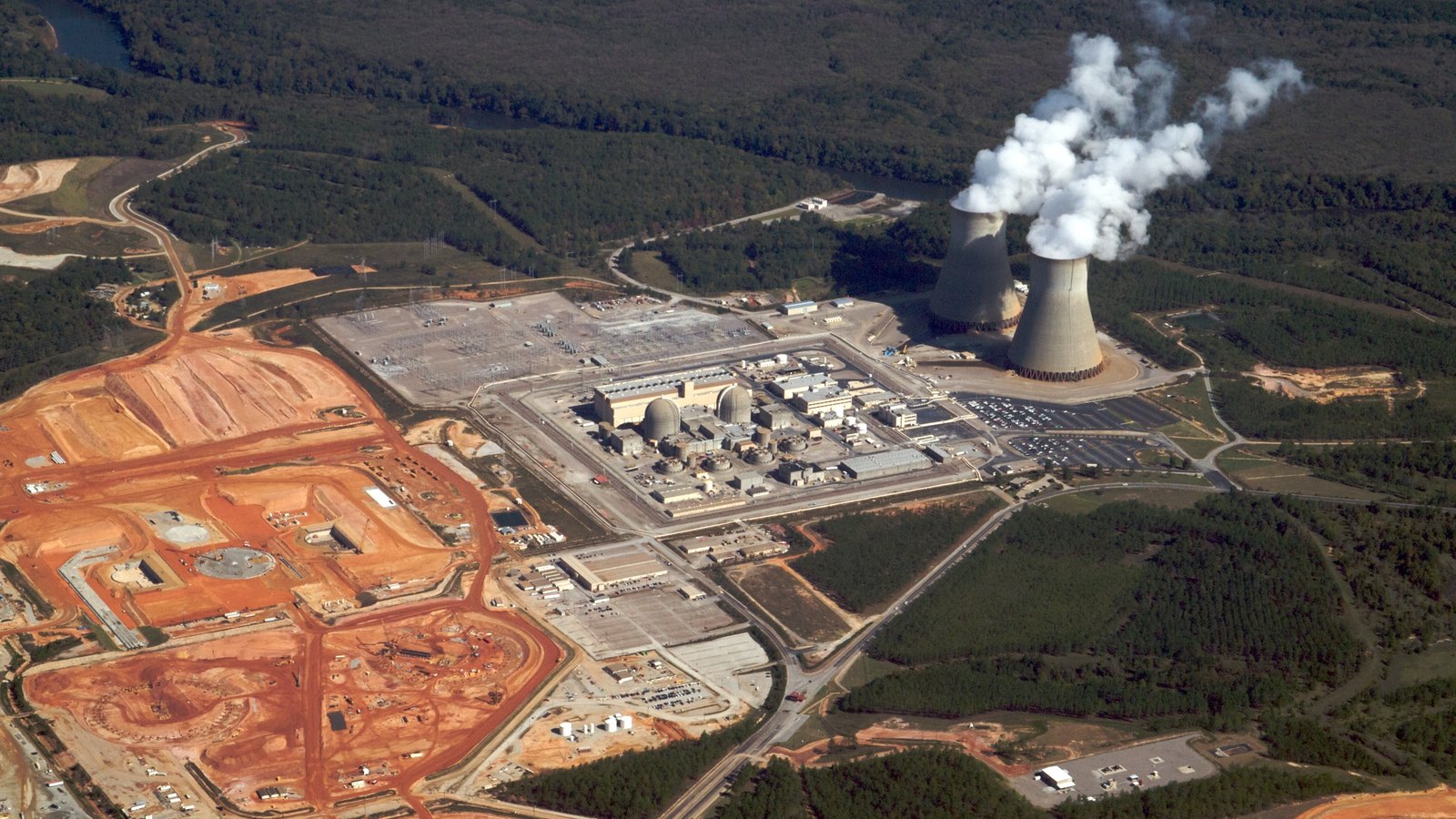
On November 23, 2026, the U.S. Nuclear Regulatory Commission approved regulatory exemptions for Southern Nuclear Operating Company at Vogtle Electric Generating Plant Units 3 and 4 in Waynesboro, Georgia. The decision authorizes the nation’s commercial AP1000 reactors to extend their initial inservice inspection intervals from 10 to 12 years under ASME Code Case N-921, setting critical precedents for nuclear engineering researchers tracking advanced reactor component integrity.
Regulatory Exemptions Issued for Vogtle AP1000 Units 3 and 4
Under Federal Register Public Inspection Document 2026-23887, scheduled for publication on November 24, 2026, the Nuclear Regulatory Commission (NRC) granted Southern Nuclear Operating Company (SNC) exemptions from the procedural timing requirements of 10 CFR 50.55a(a)(3)(ii) and 10 CFR 50.55a(y). The decision, docketed under Docket Nos. 52-025 and 52-026 (NRC-2026-4621), applies to the two Westinghouse AP1000 pressurized-water reactors at the plant in Burke County, Georgia. The exemptions were formally issued on November 17, 2026, by Mahmoud Jardaneh, Director of the Division of Licensing Projects I in the NRC Office of Nuclear Reactor Regulation.
The exemptions address a regulatory timing barrier created when the NRC incorporated Revision 21 of Regulatory Guide 1.147 into federal rules in July 2024. Although that rule approved American Society of Mechanical Engineers (ASME) Code Case N-921, Condition 2 required utilities to adopt the 12-year inservice inspection (ISI) interval only at the start of an interval during a routine update. Because commercial operation for Vogtle Units 3 and 4 began on July 31, 2023, and April 29, 2024, respectively, their initial 10-year intervals had already commenced. SNC could not implement the code case mid-cycle without specific relief under 10 CFR 50.12.
NRC staff confirmed that SNC’s application, dated April 27, 2026, satisfied statutory safety standards. The technical evaluation determined that extending the initial inspection interval by two years involves no physical plant changes and leaves safety margins intact. Supporting documentation is preserved in the NRC ADAMS repository under Accession No. ML26275A111, following SNC’s application under Accession No. ML26117A373.
Inspection Interval Timelines and Technical Parameters
Inservice inspection programs evaluate the integrity of pressure-retaining components, welds, and containment structures in nuclear power plants. Standard ASME Section XI rules mandate 10-year intervals subdivided into three inspection periods. Code Case N-921 replaces this baseline with a 12-year interval structured into three 4-year periods, enabling utilities to align major nondestructive examinations with modern 24-month refueling cycles.
The approved exemptions adjust inspection schedules for both AP1000 units while preserving strict examination standards. The table below compares the operative milestones and licensing baselines governing both units.
| Parameter | Vogtle Unit 3 | Vogtle Unit 4 | Regulatory Baseline |
|---|---|---|---|
| Combined License Number | NPF-91 | NPF-92 | 10 CFR Part 52 Combined License |
| Reactor Design and Model | Westinghouse AP1000 PWR | Westinghouse AP1000 PWR | Passive Safety Gen III+ System |
| Commercial Operation Start | July 31, 2023 | April 29, 2024 | Commercial Grid Synchronization |
| First ISI Interval Commencement | July 31, 2023 | April 29, 2024 | 10 CFR 50.55a(y) Definition |
| Original 10-Year Interval Expiration | July 30, 2033 | April 28, 2034 | ASME BPV Code Section XI, IWA-2431 |
| Approved 12-Year Extended Expiration | July 30, 2035 | April 28, 2036 | ASME Code Case N-921 Exemption |
| Code of Record Edition | 2019 Edition | 2019 Edition | ASME BPV Code Section XI Division 1 |
| Augmented Examination Schedules | Unchanged | Unchanged | Mandatory NRC Augmented Programs |
As documented in the NRC Vogtle Unit 3 project record, SNC confirmed that the ASME Section XI Code of Record for both units remains the 2019 Edition. SNC will apply the examination exceptions in paragraphs IWB-2411(a), IWC-2411(a), and IWD-2411(a) to Table 1 of Code Case N-921. Augmented inspection schedules—including examinations for flow-accelerated corrosion and reactor vessel head penetrations—remain unchanged.
Regulatory Framework and ASME Code Case Evolution
Nuclear reactor safety governance relies on federal regulations that mandate periodic surveillance of safety-related components. Under 10 CFR 50.55a Codes and standards, the Commission incorporates by reference consensus codes developed by the ASME Boiler and Pressure Vessel Code Section XI, which dictates inservice testing for light-water nuclear power plants.
Historically, Section XI Article IWA-2431 required a 10-year inspection interval. Decades of operating data and fracture mechanics analyses demonstrated that modern materials and water chemistry controls maintain extensive structural margins. ASME subsequently created Code Case N-921 to authorize alternative 12-year durations across three 4-year periods.
On July 17, 2024, the NRC published a final rule (89 FR 58039) incorporating Regulatory Guide 1.147, Revision 21, into 10 CFR 50.55a(a)(3)(ii). This rulemaking approved Code Case N-921 with four conditions, including Condition 2’s restriction to interval commencement. Concurrently, 10 CFR 50.55a(y) codified the formal definition of an inspection interval. Because Vogtle Units 3 and 4 were operating mid-interval, an exemption under 10 CFR 50.12 was required to implement the new provisions.
Safety Evaluation Findings and Environmental Review
Under 10 CFR 50.12(a), the NRC may grant exemptions that are authorized by law, present no undue risk to public health and safety, and are consistent with common defense and security, provided special circumstances exist. The NRC safety evaluation affirmed that shifting to a 12-year interval is an administrative change. Previously authorized alternatives under 10 CFR 50.55a remain technically valid across the revised inspection periods.
Under 10 CFR 50.12(a)(2)(ii), special circumstances exist when applying a rule is not necessary to achieve its underlying purpose. The NRC concluded that the purpose of 10 CFR 50.55a is maintaining structural integrity. Because Code Case N-921 satisfies this objective, requiring SNC to maintain the 10-year schedule during its first interval was unnecessary.
The Commission also evaluated environmental criteria under 10 CFR 51.22. Staff determined the exemption alters only inspection scheduling, producing no land disturbance, no change in radiological effluents, and no increase in occupational radiation exposure. The action qualified for categorical exclusion under 10 CFR 51.22(d)(1), requiring no environmental impact statement.
Implications for Nuclear Engineering and University Research
The regulatory relief granted to Vogtle Units 3 and 4 provides meaningful precedent for academic engineering departments and university reactor facilities. As the only operating commercial AP1000 units in the United States, Vogtle Units 3 and 4 serve as primary reference facilities for researchers in nuclear engineering. Academic teams studying passive safety system performance and material degradation rely on commercial inspection data to validate structural mechanics models.
For institutions operating research reactors, the shift toward 12-year inspection intervals highlights broader adoption of risk-informed surveillance. Academic facilities overseen by an institutional Radiation Safety Committee often model quality assurance protocols on commercial benchmarks. Documented reliability in commercial passive systems aids academic researchers in establishing safety cases for experimental test loops.
Additionally, the administrative resolution of Code Case N-921 offers an operational case study for research compliance offices. It demonstrates how facility managers adjust internal standard operating procedures when federal rules incorporate new consensus standards mid-cycle. Academic institutions participating in advanced reactor initiatives can apply these regulatory precedents to design efficient compliance programs.
Implementation Timeline and Subsequent Regulatory Steps
The exemptions took effect immediately upon signature on November 17, 2026. Southern Nuclear Operating Company will update the Vogtle Units 3 and 4 Inservice Inspection Program plans to implement the 12-year interval baseline. The initial inspection interval will conclude on July 30, 2035, for Unit 3 and April 28, 2036, for Unit 4.
Following publication in the Federal Register on November 24, 2026, the complete licensing record remains accessible under Docket ID NRC-2026-4621. NRC Region II inspectors will monitor examination activities during upcoming refueling outages, verifying compliance with Regulatory Guide 1.147, Revision 21.
Sources
- Office of the Federal Register: Southern Nuclear Operating Co., Vogtle Electric Generating Plant, Units 3 and 4; Exemptions (Docket Nos. 52-025 and 52-026; NRC-2026-4621), checked 2026-11-23
- Legal Information Institute: 10 CFR § 50.55a — Codes and standards, checked 2026-11-23
- U.S. Nuclear Regulatory Commission: Vogtle Electric Generating Plant, Unit 3 Combined License, checked 2026-11-23
- American Society of Mechanical Engineers: Boiler and Pressure Vessel Code (BPVC) Standards, checked 2026-11-23






