
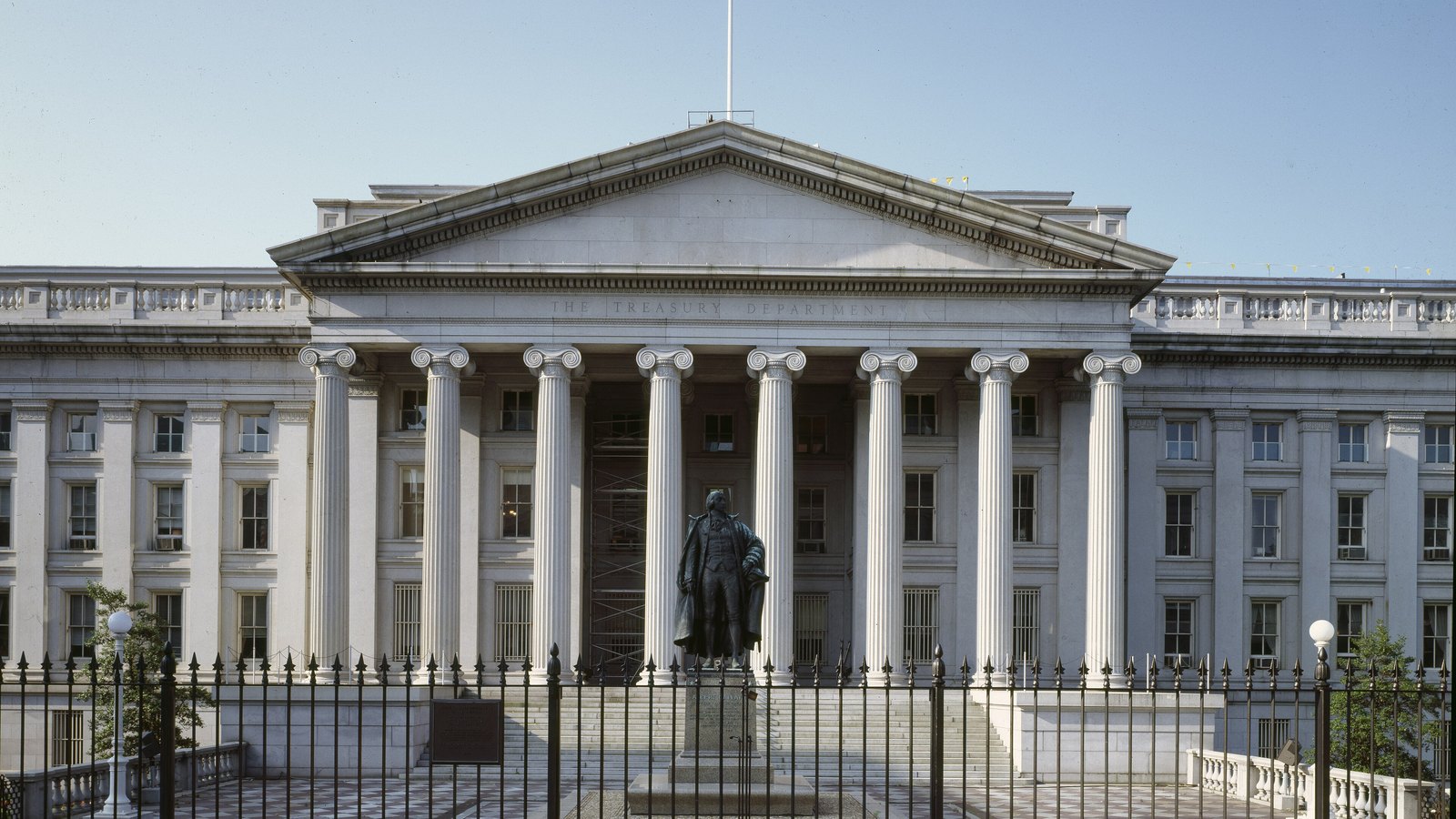
On November 25, 2026, the Office of the Comptroller of the Currency issued a Federal Register notice revising its annual stress test reporting templates for national banks with 250 billion dollars or more in assets under the Dodd-Frank Wall Street Reform and Consumer Protection Act, establishing an April 30 reporting deadline and updating quantitative risk disclosures that inform university treasury risk governance and academic financial stability research.
What happened
The Office of the Comptroller of the Currency (OCC), an independent bureau of the U.S. Department of the Treasury, published Federal Register notice Document 2026-23988 (91 FR 76307) proposing revisions to its information collection titled “Company-Run Annual Stress Test Reporting Template and Documentation for Covered Institutions with Total Consolidated Assets of $250 Billion or More under the Dodd-Frank Wall Street Reform and Consumer Protection Act” (OMB Control No. 1557-0319). The notice opens a 60-day public comment window under the Paperwork Reduction Act of 1995 (44 U.S.C. 3501 et seq.) that runs through January 25, 2027.
Under Section 165(i)(2) of the Dodd-Frank Act (12 U.S.C. 5365(i)(2)) and OCC implementing regulations codified at 12 CFR part 46, covered national banks and federal savings associations must conduct periodic stress tests assessing capital adequacy under severely adverse economic conditions. Detailed reporting templates and instructions are accessible via the OCC stress testing portal. Clearance officer Shaquita Merritt and Assistant Director Carl Kaminski stated that the collection affects four annual and five biennial respondents, with an estimated total annual burden of 2,974 hours.
Key technical revisions and reporting requirements
The proposed revisions align OCC reporting schedules with recent Federal Reserve modifications to Form FR Y-14A published on October 2, 2026 (91 FR 62870). A core operational update shifts the mandatory submission deadline to April 30, synchronizing bank reporting cycles with parallel Federal Reserve supervisory timelines.
The revised templates establish an important distinction regarding the global market shock (GMS) component of the severely adverse scenario. While the amended Federal Reserve Board stress testing framework requires bank holding companies to evaluate two distinct GMS scenarios and uses combined trading and counterparty losses across both to set stress capital buffers, the OCC proposal does not require national banks to submit estimates for both scenarios. Instead, covered banks must evaluate both internally and submit entries based solely on the GMS scenario producing the largest reduction in Common Equity Tier 1 (CET1) capital for the bank legal entity.
The OCC also updated schedules to reflect recent Call Report changes, retired obsolete line items, and introduced granular pre-provision net revenue (PPNR) items detailing revenue-sharing agreements and credit card income streams. To limit regulatory burden, the OCC designated these PPNR line items as optional submissions. Revisions to Appendix A clarify supporting documentation standards for quantitative methodologies, econometric assumptions, and capital planning processes.
| Regulatory Dimension | Previous Framework | 2026 Proposed Revision | Compliance Impact |
|---|---|---|---|
| Submission Deadline | Early April filing window | April 30 annual deadline | Harmonizes bank schedules with Federal Reserve FR Y-14A submissions |
| Global Market Shock (GMS) | Single scenario submission | Evaluate dual GMS; submit worst CET1 outcome | Captures legal-entity bank capital risks rather than consolidated holding company blend |
| PPNR Reporting Schedules | Standard net revenue fields | Granular revenue and loss sharing items | Designated as optional reporting to mitigate compliance overhead |
| Covered Asset Threshold | $250 billion total consolidated assets | $250 billion total consolidated assets (maintained) | Preserves statutory Tier 1 banking scope under 12 CFR part 46 |
| Annual Respondent Burden | Historical baseline hours | 2,974 total annual burden hours | Encompasses 4 annual and 5 biennial national banking respondents |
| Comment Period Window | Standard PRA notice | 60-day notice ending January 25, 2027 | Precedes formal OMB clearance review under 44 U.S.C. 3507 |
Background and regulatory context
Congress enacted the Dodd-Frank Act in July 2010 (Public Law 111-203, 124 Stat. 1376) to strengthen financial stability following the 2008 financial crisis. The OCC published its implementing stress testing regulations on October 9, 2012 (77 FR 61238, codified at 12 CFR part 46) and established reporting templates under OMB Control No. 1557-0319. In 2018, the Economic Growth, Regulatory Relief, and Consumer Protection Act raised the mandatory stress testing threshold from 10 billion dollars to 250 billion dollars and streamlined supervisory scenarios from three to two: baseline and severely adverse.
Supervisory stress tests rely on advanced quantitative models, including loan loss forecasting and value at risk algorithms across trading portfolios. To ensure regulatory auditability, institutions maintain data pipelines meeting strict ALCOA+ data integrity standards for traceable and contemporaneous records.
Reaction and regulatory stakeholder analysis
Regulatory compliance officers and risk executives welcomed the shift to an April 30 submission deadline, noting that additional preparation time facilitates thorough model governance. Analysts observed that making granular PPNR breakouts optional significantly reduces operational friction for institutions with complex credit card partnerships.
Risk management teams noted that the dual GMS assessment requires careful internal documentation. Banks must substantiate why a chosen scenario yielded the most severe impact on bank-level CET1 capital, particularly when subsidiary balance sheet exposures diverge from the parent holding company consolidated position.
What it means for researchers, universities, and research offices
The revised reporting framework carries direct implications for university finance offices, research administration, and academic economists. First, public stress test disclosures provide essential empirical data for computational finance researchers tracking systemic resilience. Tools such as the Bank Systemic Risk Monitor published by the Office of Financial Research rely on standardized regulatory metrics to monitor macroprudential stability.
Second, university treasurers managing large institutional cash deposits, endowment reserves, and sponsored research revenues utilize CET1 ratios from stress disclosures to assess counterparty risk. When research offices conduct institutional subrecipient risk assessment or financial due diligence, stress test compliance records provide verified benchmarks of institutional solvency.
Third, research administration offices conducting joint research initiatives with banking partners must maintain rigorous data governance. Appointing a formal data steward role in DMP execution ensures that proprietary financial modeling assets adhere to institutional data protection agreements and secure computing standards.
What happens next
Public comments on Federal Register Document 2026-23988 must be received by January 25, 2027. Comments may be submitted by email to [email protected] referencing agency name OCC and OMB Control No. 1557-0319, or mailed to the Chief Counsel Office, Office of the Comptroller of the Currency, 400 7th Street SW, Suite 1E-216, Washington, DC 20219.
Following the comment period, the OCC will submit a finalized collection request to OMB under 44 U.S.C. 3507. Regulators will issue annual macroeconomic scenarios in mid-February 2027, institutions will submit stress test reports by April 30, 2027, and covered banks will disclose summary results between June 15 and July 15, 2027.
Sources
- Federal Register: Agency Information Collection Activities: Revision of an Approved Information Collection; Comment Request; Company-Run Annual Stress Test Reporting Template and Documentation for Covered Institutions With Total Consolidated Assets of $250 Billion or More Under the Dodd-Frank Wall Street Reform and Consumer Protection Act, checked 2026-11-26
- Office of the Comptroller of the Currency: Dodd-Frank Act Stress Test (Company Run) | OCC, checked 2026-11-26
- Federal Reserve Board: Federal Reserve Board – Stress Tests, checked 2026-11-26
- Office of Financial Research: Bank Systemic Risk Monitor | Office of Financial Research, checked 2026-11-26






