
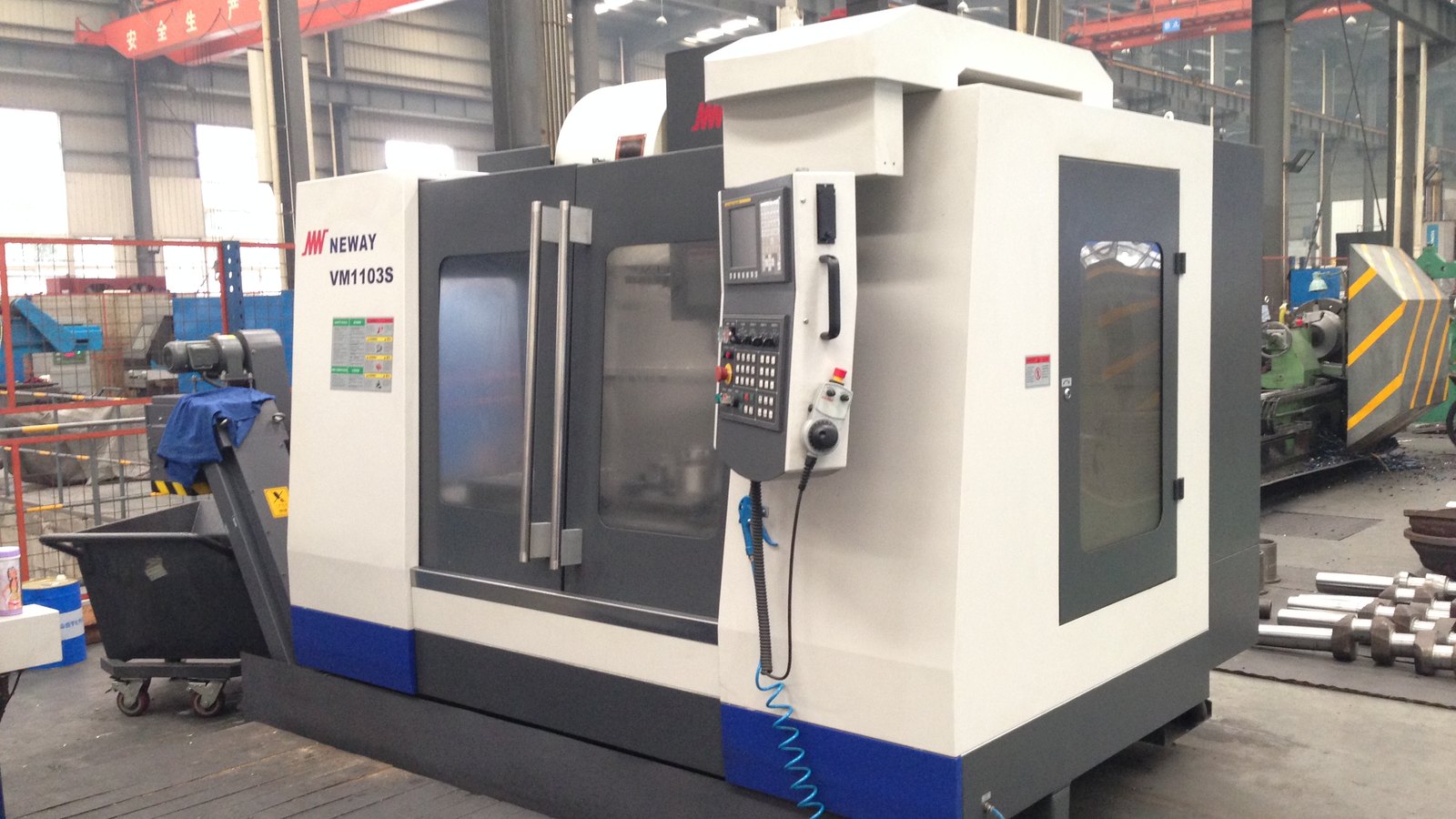
On 26 November 2026, the UK Office for Product Safety and Standards published updated designated standards for machinery and pressure equipment, establishing revised technical benchmarks that govern presumption of conformity in Great Britain and requiring university engineering workshops, research facilities, and procurement offices to align equipment specifications, custom rig fabrication, and safety assessments with updated rules.
Official publication of Notices 0155/26 and 0156/26
The Department for Business and Trade, acting through the Office for Product Safety and Standards (OPSS), issued two statutory notices on 26 November 2026 updating designated standards in Great Britain. Notice 0155/26 updates designated standards supporting The Supply of Machinery (Safety) Regulations 2008 (S.I. 2008/1597, as amended), while Notice 0156/26 updates references under the Pressure Equipment (Safety) Regulations 2016 (S.I. 2016/1105). Both notices were published pursuant to Regulation 2A of their respective frameworks for England, Wales, and Scotland.
The updated publication for designated standards for machinery amends Notice 0139/26, updating the consolidated list of active standards in Annex I and moving superseded references to Annex II with defined cessation dates. Concurrently, Notice 0156/26 amends Notice 0134/26, restructuring designated specifications across experimental and industrial pressure assemblies.
Key technical revisions across machinery and pressure equipment
Notice 0155/26 introduces critical updates to generic Type-B safety standards and machine-specific Type-C standards. A major revision is the formal designation of EN ISO 10218-1:2025 and EN ISO 10218-2:2025 for industrial robots and integrated robot cells, replacing the 2011 editions that have guided robotics integration for over a decade. The notice also updates EN ISO 14119:2025 (plus amendment A11:2026) for guard interlocking devices and EN IEC 62061:2021/A1:2024 for functional safety of electrical control systems.
For pressure apparatus, the revised notice for designated standards for pressure equipment updates specifications under The Pressure Equipment (Safety) Regulations 2016. The notice designates the updated EN 12953 series for shell boilers, with a specific restriction: compliance with paragraph 5.6.1.1 of EN 12953-6:2024 does not confer presumption of conformity with essential safety requirements in paragraphs 14, 15, and 33(2)(a) of Schedule 2. Additional designations include EN ISO 24664:2024 for refrigeration pressure relief calculations and EN ISO 13585:2024 for brazer qualification.
The table below details key designated standards updated in November 2026 and their formal cessation dates:
| Standard Reference | Scope | Superseded Version | Cessation Date |
|---|---|---|---|
| EN ISO 10218-1:2025 / Part 2:2025 | Industrial robotics and integrated cells | EN ISO 10218-1:2011 / Part 2:2011 | 20 January 2027 |
| EN ISO 14119:2025 + A11:2026 | Guard interlocking devices | EN ISO 14119:2013 | 20 January 2027 |
| EN IEC 62061:2021 + A1:2024 | Functional safety of control systems | EN IEC 62061:2021 (un-amended) | 20 January 2027 |
| EN 12953-2/-6/-9:2024 | Shell boilers and limiting devices | EN 12953-2:2012 / -6:2011 / -9:2007 | 2 April 2028 |
| EN ISO 24664:2024 | Pressure relief devices in refrigeration | Previous calculation methods | 2 April 2028 |
| EN ISO 13585:2024 / EN ISO 17779:2025 | Brazer and brazing procedure qualification | EN ISO 13585:2012 | 2 April 2028 |
Regulatory background and the post-Brexit designated standards framework
Following the UK exit from the European Union single market, Great Britain replaced EU harmonised standards with domestic designated standards published by the Secretary of State. Designated standards provide duty holders with a legal presumption of conformity with statutory Essential Health and Safety Requirements. Conformance remains voluntary, but designing without designated standards requires generating complex technical dossiers to prove equivalent safety.
The British Standards Institution (BSI) serves as the UK national standards body and acts as an Approved Body UKCA Marking Testing and Certification provider, conducting mandatory conformity assessments for higher-risk machinery and Category III/IV pressure vessels. For university procurement officers acquiring high-value apparatus, institutional rules governing capital equipment must incorporate designated standard requirements into contract specifications. Integrating these standards also aligns with institutional sustainable procurement research policies, preventing premature asset obsolescence and ensuring equipment longevity.
Regulatory enforcement and institutional safety oversight
Enforcement of product safety standards is divided between the OPSS, which oversees national market surveillance, and the Health and Safety Executive (HSE), which enforces workplace safety. In guidance on products and market surveillance, the HSE emphasizes that entities modifying machinery or fabricating bespoke equipment for internal use incur full legal responsibilities as manufacturers. Equipment must also satisfy the Provision and Use of Work Equipment Regulations 1998 (PUWER) and the Pressure Systems Safety Regulations 2000 (PSSR).
In research environments, duty holders must align mechanical compliance with specialized protocols. Facilities operating controlled spaces must integrate mechanical safeguards with cleanroom maintenance procedures to maintain air handling safety alongside machinery rules. Similarly, benchtop thermal equipment must comply with recognized hot plate safety standards to ensure temperature limiters and control circuits satisfy functional reliability requirements.
Implications for university laboratories, workshops, and research offices
The November 2026 notices carry direct operational consequences for academic institutions and research facilities:
- Tender and Procurement Mandates: Procurement offices must update scientific equipment tender templates. Suppliers of robotic workstations, automated machine tools, and autoclaves must provide Declarations of Conformity that reference current designated standards rather than superseded editions.
- Custom Experimental Apparatus: University workshops fabricating bespoke experimental rigs from commercial sub-assemblies assume the legal role of machinery manufacturers. Technical files must document compliance with updated standards, including EN ISO 14119 for interlocking guards and EN IEC 62061 for safety control circuits.
- Pressure Vessel Written Schemes: Laboratories operating autoclaves, reactors, and cryogenic systems must verify relief systems against EN ISO 24664:2024. Competent persons certifying Written Schemes of Examination under PSSR 2000 will evaluate relief piping according to the revised methodology.
- Departmental Equipment Audits: Substantially modified equipment requires re-evaluation against active designated standards. Safety officers should inspect machinery undergoing safety-critical modifications before the January 2027 cessation date to confirm adherence to updated functional safety criteria.
Timeline, sunset dates, and next steps for duty holders
Duty holders must manage separate transition schedules across the two notices. Under Notice 0155/26 for machinery, superseded standards listed in Annex II will cease to confer presumption of conformity on 20 January 2027. Manufacturers and institutional fabricators have until this date to update technical files to EN ISO 10218:2025, EN ISO 13855:2024, and EN ISO 14119:2025.
Under Notice 0156/26 for pressure equipment, an extended transition period applies to most superseded standards, setting a removal date of 2 April 2028 for legacy shell boiler specifications (EN 12953 series), brazing qualification rules (EN ISO 13585:2012), and metallic hose standards (EN 14585-1:2006). Earlier tranches reached their removal dates on 31 July 2026, including legacy versions of EN 13445 unfired pressure vessel standards.
The OPSS and DBT conduct regular reviews of designated standards to track international standardization developments. Research institutions should initiate internal audits of machinery technical files and pressure system registers early in 2027 to maintain regulatory compliance.
Sources
- GOV.UK: Designated standards: machinery, checked 2026-11-26
- GOV.UK: Designated standards: pressure equipment, checked 2026-11-26
- The National Archives: The Supply of Machinery (Safety) Regulations 2008, checked 2026-11-26
- The National Archives: The Pressure Equipment (Safety) Regulations 2016, checked 2026-11-26
- Health and Safety Executive: Products and market surveillance, checked 2026-11-26
- British Standards Institution: Approved Body UKCA Marking Testing and Certification, checked 2026-11-26






