
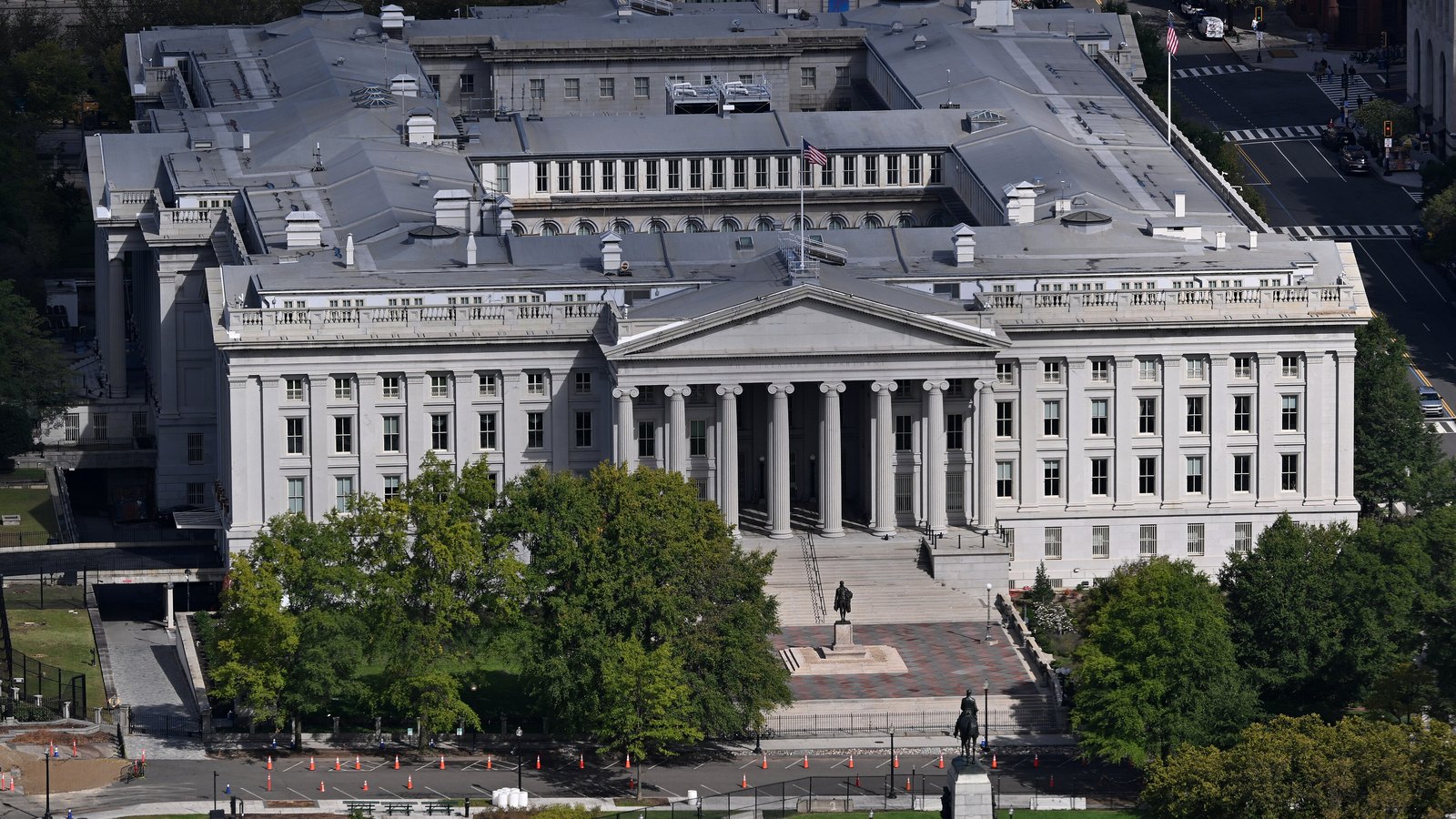
On 27 November 2026, the U.S. Department of the Treasury submitted an Information Collection Request to the Office of Management and Budget to renew the Uses of Award Report Form under OMB Control Number 1559-0032. The annual collection tracks how financial assistance recipients allocate federal funds, administrative costs, and programmatic expenditures across multi-year award programs, establishing binding accountability for academic research offices, non-profit institutions, and community development intermediaries managing federal grant compliance.
Treasury Submits Uses of Award Report Form to OMB for Three-Year Renewal
The Departmental Offices of the U.S. Department of the Treasury, operating through the Community Development Financial Institutions Fund (CDFI Fund), officially published notice of its submission for OMB review under the Paperwork Reduction Act of 1995. The notice, documented under Agency Docket 4810-01-P and designated as Document 2026-24271, was placed on public inspection on Friday, 27 November 2026 at 8:45 a.m. Eastern Time, with formal appearance in the Federal Register scheduled for Monday, 30 November 2026.
According to the official Public Inspection PDF Document 2026-24271 released by the National Archives and Records Administration, the Treasury is seeking an extension without change of the currently approved collection. Spencer W. Clark, Treasury Paperwork Reduction Act Clearance Officer, issued the filing to maintain regulatory authority over financial assistance monitoring across four major award programs administered by the CDFI Fund.
The form serves as the primary post-award compliance instrument through which recipients demonstrate that disbursements align with performance goals, statutory terms, and Assistance Agreements. By capturing transaction-level allocations across capital investments and capacity building, the collection provides verified audit trails satisfying federal stewardship mandates.
Key Reporting Details, Annual Burden Metrics, and CDFI Programs Covered
The reporting mandate governs four funding initiatives under the statutory umbrella of the CDFI Fund financial assistance programs: the Bank Enterprise Award Program (BEA Program), the Community Development Financial Institutions Program (CDFI Program), the Native American CDFI Assistance Program (NACA Program), and the Small Dollar Loan Program (SDL Program). Awardees submit completed reports electronically through the Awards Management Information System (AMIS).
Filing schedules differ across funding mechanisms. BEA Program recipients report annually three months after their Period of Performance end date, whereas CDFI, NACA, and SDL recipients report within three months following their institutional fiscal year end. Responses combine numerical financial entries, binary compliance confirmations, and qualitative narratives.
The operational parameters and burden estimates established in Treasury Document 2026-24271 are summarized below:
| Program Name | Eligible Recipient Entities | Filing Trigger and Frequency | Reporting Platform | Estimated Annual Burden |
|---|---|---|---|---|
| Bank Enterprise Award Program (BEA) | FDIC-insured depository institutions investing in distressed communities | Annually, 3 months post-Period of Performance | CDFI Fund AMIS Portal | 0.75 hours (45 min) per response |
| CDFI Program (Financial and Technical Assistance) | Certified CDFIs, non-profit loan funds, university community funds | Annually, 3 months post-fiscal year end | CDFI Fund AMIS Portal | 0.75 hours (45 min) per response |
| Native American CDFI Assistance Program (NACA) | Tribal entities and Native-serving community lenders | Annually, 3 months post-fiscal year end | CDFI Fund AMIS Portal | 0.75 hours (45 min) per response |
| Small Dollar Loan Program (SDL) | Certified CDFIs and depositories addressing predatory lending | Annually, 3 months post-fiscal year end | CDFI Fund AMIS Portal | 0.75 hours (45 min) per response |
Across all four programs, the Treasury calculates an affected pool of 2,288 respondents, generating 2,288 annual submissions. At 0.75 hours (45 minutes) per response, annual compliance requires 1,716 burden hours. Recipient organizations must incorporate these deadlines into their institutional schedules for federal grant reporting requirements to prevent award compliance exceptions.
Regulatory Background: Paperwork Reduction Act and Uniform Guidance Alignment
The collection operates under the statutory authority of 44 U.S.C. 3501 et seq. and aligns with post-award expenditure governance codified in 2 CFR Part 200 (Uniform Guidance). The Paperwork Reduction Act requires agencies to renew information collections every three years by verifying practical utility, data integrity, and burden minimization before OMB Office of Information and Regulatory Affairs.
While research agencies track award expenditures primarily through standardized instruments like the Federal Financial Report (SF-425 financial reporting), Treasury assistance requires specialized metrics capturing capital deployment, technical capacity, and financing benchmarks. The form ensures financial transparency by detailing how federal awards are expended alongside non-federal leverage and operating costs.
The collection reinforces financial standards under Uniform Guidance governance, including 2 CFR 200.302 (Financial Management) and 2 CFR 200.329 (Monitoring and Reporting Program Performance), keeping multi-year community assistance funds segregated and auditable.
Institutional Compliance and Sector Reaction to Post-Award Reporting Demands
Research administrators, non-profit financial officers, and compliance specialists monitor federal ICR notices to assess cumulative administrative demands. The Council on Governmental Relations (COGR) and allied associations have consistently advocated for standardized data elements across federal agencies, noting that agency-specific platforms and tailored reports add administrative complexity for institutions managing multi-agency awards.
Universities engage with CDFI Fund programs through collaborative community economic initiatives, business incubators, and regional development projects. In these partnerships, academic research offices or foundation auxiliaries manage direct awards or provide technical assistance. Compliance teams highlight that rigorous internal controls for federal grant compliance are critical when reconciling AMIS data entries against central institutional ledgers.
Financial officers note that while the estimated 45-minute submission figure reflects AMIS data entry, thorough preparation demands extensive pre-filing validation across general ledgers, subrecipient logs, and performance milestones.
Implications for University Research Offices, Intermediaries, and Financial Administrators
Renewal of OMB Control Number 1559-0032 preserves procedural continuity for recipients. Because the Treasury proposes no substantive alterations, organizations holding active awards can maintain current AMIS filing procedures without restructuring accounting codes.
Institutions managing CDFI Fund awards or collaborating with certified lenders should execute key steps within their broader research grants management workflows:
- Ledger Reconciliation: Map direct award expenditures, administrative allocations, and subaward disbursements directly to AMIS performance categories.
- Filing Triggers: Implement 60-day calendar alerts prior to the three-month post-fiscal-year deadline for CDFI, NACA, and SDL awards to complete financial reconciliations.
- Audit Documentation: Maintain central repositories for transaction logs, procurement files, subrecipient checklists, and narrative deliverables supporting all submitted figures.
- Credential Maintenance: Audit institutional user roles in the AMIS portal to ensure authorized representatives hold active submission access ahead of deadlines.
Next Steps, Comment Deadlines, and AMIS Submission Timelines
Federal Register Document 2026-24271 officially publishes on 30 November 2026, opening a 30-day public comment period concluding on 30 December 2026. Interested organizations and research administrators may submit comments regarding burden estimates, form clarity, and collection utility.
Comments must be directed to OMB via Reginfo.gov Information Collection Review under OMB Control Number 1559-0032. Submissions copies are also available from Spencer W. Clark at [email protected] or (202) 927-5331.
Recipients approaching filing dates must continue submitting annual reports through AMIS under existing instructions, as the current clearance remains effective during OMB review.
Sources
- Federal Register: Agency Information Collection Activities; Proposals, Submissions, and Approvals: Uses of Award Report Form, checked 2026-11-27
- National Archives and Records Administration: Public Inspection: Uses of Award Report Form (Document 2026-24271), checked 2026-11-27
- Electronic Code of Federal Regulations: 2 CFR Part 200 — Uniform Administrative Requirements, Cost Principles, and Audit Requirements for Federal Awards, checked 2026-11-27
- Community Development Financial Institutions Fund: Programs, checked 2026-11-27
- Council on Governmental Relations: Financial Management and Compliance, checked 2026-11-27
- Office of Information and Regulatory Affairs: Information Collection Review, checked 2026-11-27






