
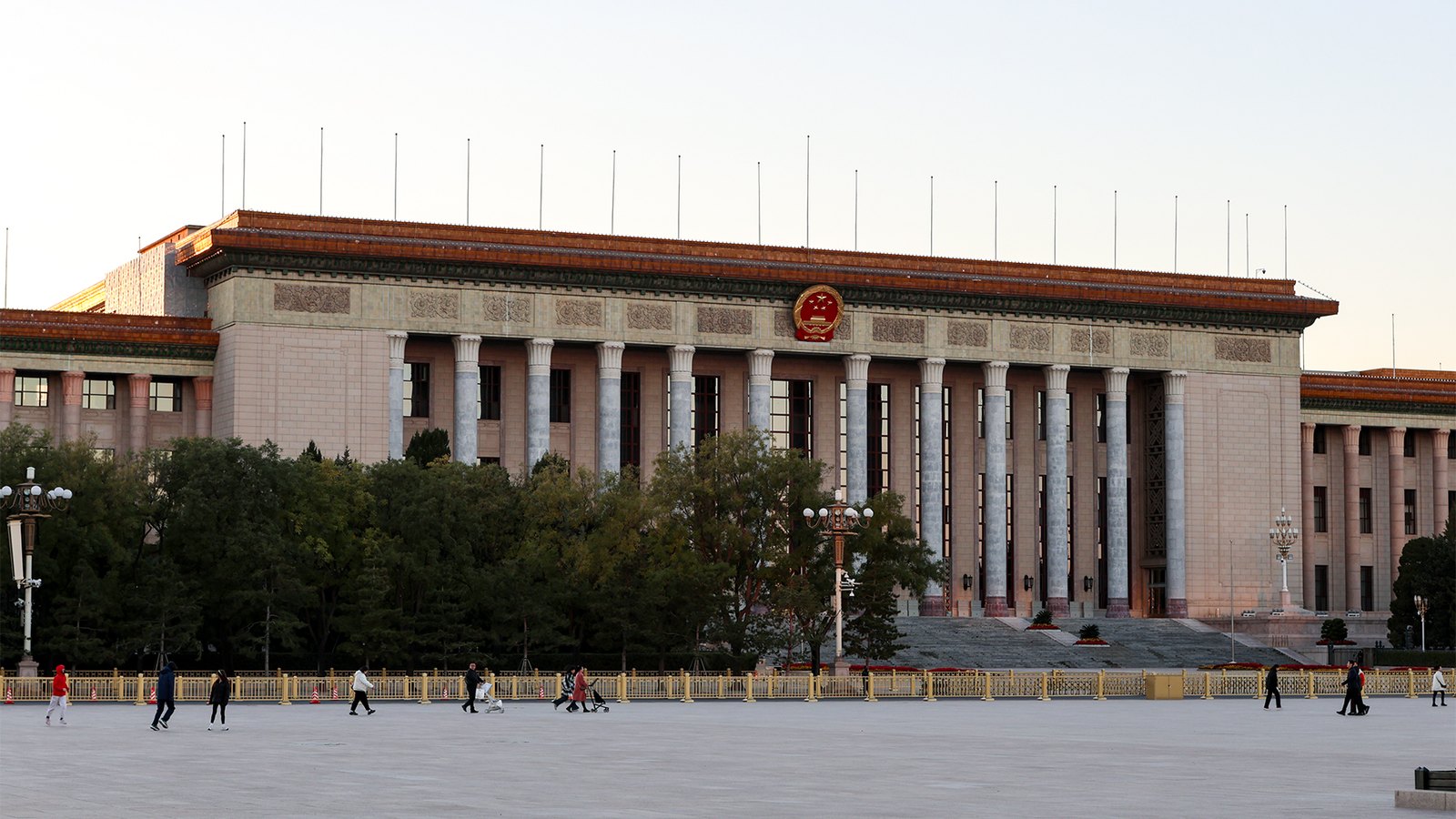
UK Education Secretary Lucy Powell is in Beijing for the UK-China Education Summit on 24 and 25 November 2026, the first such summit in nine years, according to the Department for Education announcement of 23 November. She is leading a delegation of about 50 sector leaders, 18 of them university leaders, while opposition politicians and a China-focused parliamentary alliance say the trip ignores security risks to research.
What happened
The Department for Education (DfE) said on 23 November that Powell would attend the summit in Beijing alongside Chinese ministers. The release names 49 delegates from the education sector: 18 university leaders and 3 further education leaders, plus representatives of awarding bodies, schools, edtech and curriculum providers, English language and assessment, and early years. The summit agenda covers higher education, technical and vocational education and training, schools, English language teaching, and digital education and edtech, with the stated aim of opening opportunities for UK providers and shaping the future direction of the UK-China education relationship.
The same day, the German news agency DPA reported, in an article carried by Yahoo News, that Powell was facing criticism over the decision to attend. DPA gave the summit dates as Tuesday and Wednesday, matching the government’s 24 and 25 November.
Key details
| Item | What the sources say |
|---|---|
| Event | UK-China Education Summit, Beijing, 24–25 November 2026; first in nine years |
| UK lead | Lucy Powell MP, Education Secretary |
| Delegation | 49 delegates, including 18 university leaders and 3 further education leaders |
| Chinese students in UK universities | About 150,000, contributing £7 billion a year to the UK economy (DfE) |
| Alumni | More than one million UK university alumni are from China (DfE) |
| Export target | Education exports of £40 billion a year by 2030 (DfE) |
The government framed the trip commercially and diplomatically. Powell said in the DfE release that “British education is one of our country’s greatest strengths.” The release also says she will pursue cooperation that benefits Britain while raising concerns on freedom of speech, academic freedom and national security, and that “we will not accept collaborations which compromise our national security.” It adds that the government will not accept attempts to covertly benefit from research done with UK universities.
Background and context
The summit follows a security warning aimed squarely at universities. On 30 September 2026 MI5 issued a rare public espionage alert about the China General Technology Research Institute (CGTRI). Times Higher Education reported that MI5 described the institute’s main purpose as funding research that directly improves the technical capability of China’s Ministry of State Security for espionage, and that more than 100 academics linked to UK institutions had unknowingly contributed to CGTRI-funded projects in areas including artificial intelligence, cybersecurity, covert communications and steganography.
MI5’s guidance, as reported by Times Higher Education, was that institutions should urgently review any current or planned work with CGTRI and that researchers should identify the ultimate funding source before entering future collaborations. It also cited the possible criminal consequences under the National Security Act 2023 of assisting a foreign intelligence service. Al Jazeera reported that MI5 said many academics had engaged in good faith, but that those who keep taking CGTRI grants or working with it risk prosecution under the Act.
Security Minister Dan Jarvis wrote to all university vice-chancellors asking them to end arrangements with CGTRI and to support staff who do so. Science and innovation minister Chris McDonald was quoted by Times Higher Education as saying “We can’t ignore the risks” while affirming that international collaboration remains crucial. Al Jazeera reported that the Chinese embassy in London had called a separate June warning from Five Eyes agencies “entirely fabricated”; DPA’s report on the summit also names the institute under its alternative English title, the China Academy of General Technology.
Reaction
According to DPA, Laura Trott, the shadow education secretary, said Powell was getting her priorities “all wrong”. Luke de Pulford, executive director of the Inter-Parliamentary Alliance on China (IPAC), called the summit “mind-blowingly short-sighted” and warned that it could be signing the UK higher education sector’s “death warrant”. He also warned that universities could “cease to operate freely” if their dependence on China grows too far.
The DfE response quoted by DPA said that engagement provides a channel for “direct and frank conversations”.
What it means for researchers, universities and research offices
Partnership due diligence. The MI5 alert and the DfE release point the same way on one practical point: the source of funding behind a collaboration matters. Research offices reviewing China-linked agreements are being told, in effect, to trace funding to its ultimate origin, not to stop at the named partner institution. Teams that already screen foreign travel and visiting-scholar arrangements can extend the same discipline to inbound funding; see our guide on foreign travel security policy for research institutions.
Legal exposure. Because MI5 tied continued work with CGTRI to possible prosecution under the National Security Act 2023, institutions with any CGTRI link face a compliance decision, not only a reputational one. Jarvis’s letter asks vice-chancellors to support staff who end such arrangements.
Recruitment dependence. About 150,000 Chinese students and £7 billion a year in economic contribution explain why the government is engaging at ministerial level, and why critics warn about dependence. Universities weighing recruitment strategy are doing so under two simultaneous government messages: grow education exports, and protect research from covert exploitation.
Training and culture. Staff who join international projects need to recognise funding-source and end-use risk. Our guides on research security training and on talent-programme research security describe how comparable concerns have been handled in the United States, and may be a useful point of comparison for UK research offices.
What happens next
The summit continues on 25 November. Any agreements or statements from the two days will define the practical outcome. Research offices will be watching for any announcements on transnational education, student mobility or research cooperation, and for how those sit alongside the MI5 guidance on CGTRI and ministers’ stated position that collaborations compromising national security will not be accepted.
Sources
- Education Secretary champions UK education in China, Department for Education, GOV.UK, 23 November 2026
- UK minister faces criticism over decision to attend UK-China summit, DPA via Yahoo News, 23 November 2026
- MI5 issues China espionage warning to UK universities, Times Higher Education, 30 September 2026
- MI5 warns UK academics to cut ties with Chinese group over alleged spying, Al Jazeera, 30 September 2026






