
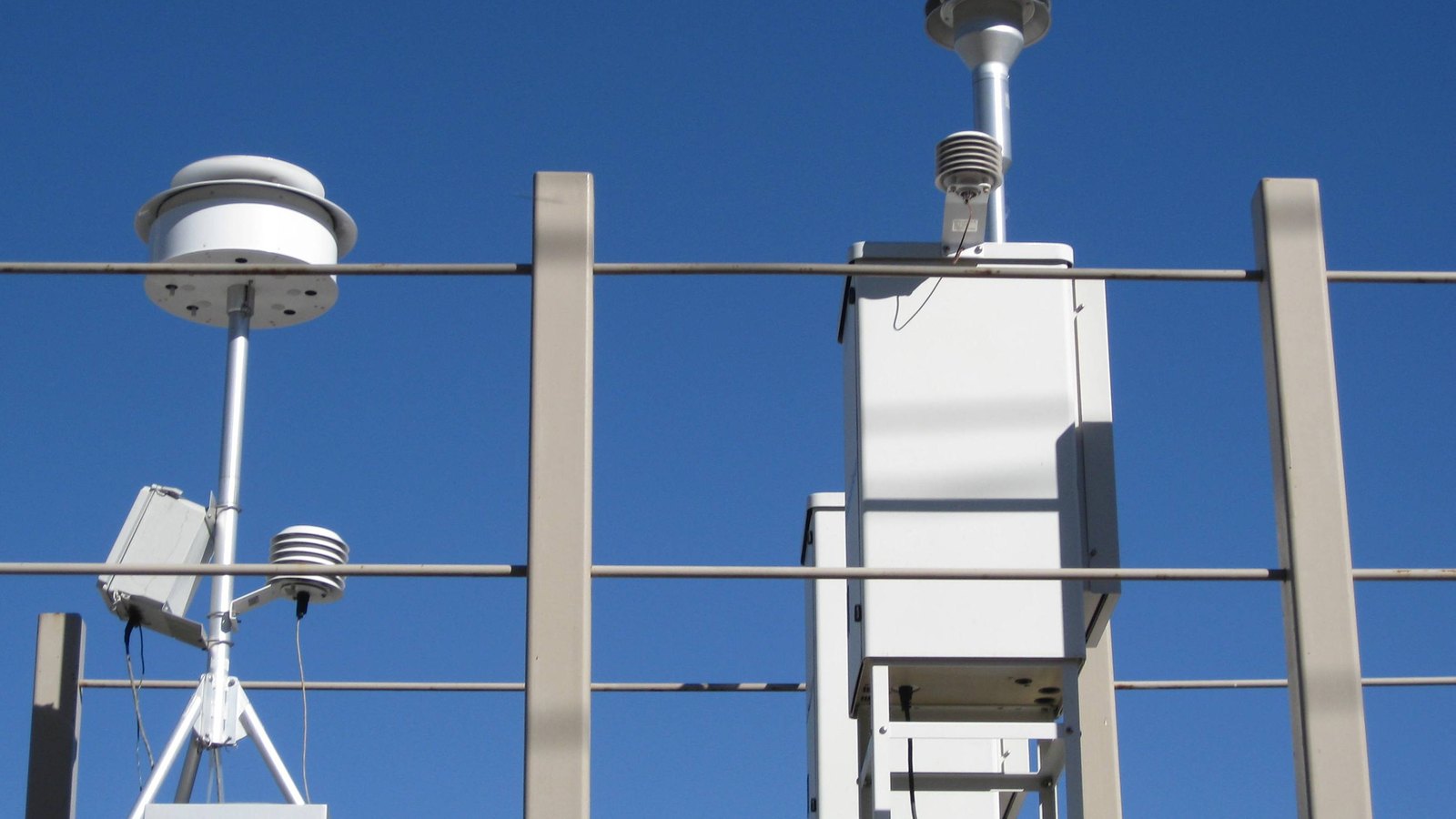
On November 26, 2026, the UK Health Security Agency (UKHSA) published an updated technical assessment synthesis on environmental monitoring following the Grenfell Tower fire, detailing continuous multi-agency air quality observations and ground contaminant measurements across North Kensington. The release provides critical empirical benchmarks for university environmental toxicologists, urban aerosol researchers, and public health laboratories tracking long-term pyrogenic particulate deposits in urban communities.
What happened
The UK Health Security Agency (UKHSA) released its November 26, 2026, environmental monitoring synthesis, continuing long-term scientific surveillance surrounding the Grenfell Tower site in North Kensington, West London. The 31-page technical evaluation reports on weekly atmospheric observations and longitudinal deposition trends gathered by a multi-agency consortium comprising UKHSA, the Environment Agency, the Royal Borough of Kensington and Chelsea (RBKC), and independent scientific contractors.
The investigation assesses whether pyrogenic contaminants from the June 2017 high-rise disaster remain elevated or present ongoing exposure risks to nearby residents. Monitoring parameters include continuous measurements of fine particulate matter (PM10 and PM2.5), nitrogen dioxide (NO2), volatile organic compounds (VOCs), polycyclic aromatic hydrocarbons (PAHs), polychlorinated dibenzo-p-dioxins and polychlorinated dibenzofurans (PCDD/Fs), dioxin-like polychlorinated biphenyls (PCBs), heavy metals, and respirable asbestos fibres.
UKHSA confirmed that airborne particulate and gaseous concentrations at neighborhood monitoring stations remain consistent with standard urban background variations typical of Greater London. The agency reported that asbestos fibres remained below analytical detection limits across all operational filtration samplers, with trace pyrogenic hydrocarbons and metals adhering to established ambient air health criteria.
Key details and analytical toxicology thresholds
The multi-agency surveillance program applies a tiered analytical chemistry framework to separate incident-related pyrogenic deposits from London’s historical industrial background. Soil and dust evaluations follow statutory guidance under Part IIA of the Environmental Protection Act 1990, which governs contaminated land determinations and public health exposure thresholds.
Toxicological risk characterization utilizes Category 4 Screening Levels (C4SLs) and Soil Guideline Values (SGVs) across key exposure pathways, including incidental soil ingestion, dermal absorption, and domestic dust inhalation. For complex halogenated organics, analyses apply the International Toxic Equivalency Factor (TEF) scheme developed by the World Health Organization, quantifying toxic equivalents (TEQ) relative to 2,3,7,8-tetrachlorodibenzo-p-dioxin.
Analytical methodologies incorporate high-resolution gas chromatography coupled with high-resolution mass spectrometry (HRGC-HRMS) for trace PCDD/Fs and PCBs, inductively coupled plasma mass spectrometry (ICP-MS) for heavy metals, and transmission electron microscopy (TEM) for mineral fibre identification.
The table below summarizes primary monitoring matrices, target chemical classes, analytical instrumentation, and observed status against regulatory benchmarks:
| Environmental Matrix | Target Analytes | Analytical Method | Regulatory Benchmark | Monitoring Assessment |
|---|---|---|---|---|
| Ambient Air (Continuous) | PM10 and PM2.5 particulates | Optical particle counters and beta attenuation | UK Air Quality Strategy objectives | Consistent with Greater London urban background |
| Atmospheric Filters | Respirable asbestos fibres | Phase contrast microscopy and TEM | Health and Safety Executive clearance limits | Consistently below analytical detection limits |
| Combustion Plume Residues | PCDD/Fs and dioxin-like PCBs | HRGC-HRMS isotope dilution | WHO 2005 TEF / TEQ toxicological thresholds | Low atmospheric deposition rates; trace urban levels |
| Surface Soil and Dust | Polycyclic aromatic hydrocarbons (PAHs) | GC-MS selective ion monitoring | EPA 1990 Part IIA Category 4 Screening Levels | Localized historical hotspots; controlled surface risks |
| Urban Sediments and Char | Heavy metals (lead, antimony, cadmium) | ICP-MS acid digestion | UK Soil Guideline Values (residential/allotment) | Within regional urban baseline ranges across residential zones |
Background and environmental health context
The Grenfell Tower fire on June 14, 2017, resulted in the loss of 72 lives and involved the rapid combustion of architectural cladding (aluminium composite material with polyethylene core) alongside polyisocyanurate (PIR) and phenolic insulation. The combustion generated a dense pyrogenic plume containing carbon monoxide, hydrogen cyanide, halogenated organic compounds, flame retardants, and complex soot particles.
Initial dispersion modeling indicated that high thermal buoyancy carried the smoke plume northward across London, minimizing immediate ground-level particulate stagnation. However, community concern regarding secondary deposition prompted independent academic evaluations of surrounding soil, char, and indoor dust. Toxicological investigations, applying assessment frameworks aligned with principles in food and chemical toxicology, identified localized concentrations of benzene, carcinogenic PAHs, and phosphorus flame retardants in proximity samples.
These findings catalyzed multi-stage environmental investigations overseen by an independent Science Advisory Group (SAG) and environmental consultancy AECOM. Stage 1 exploratory testing and Stage 2 quantitative risk assessments evaluated soil conditions across a 1-kilometer investigation zone, utilizing advanced spectral cross-referencing against chemical reference libraries similar to querying a dedicated chemical database.
Atmospheric monitoring has run in parallel with university-led initiatives. The Imperial College London Environmental Research Group, which operates the London Air Quality Network, tracks regional aerosol transport dynamics while academic researchers simultaneously manage longitudinal health tracking for exposed emergency responders.
Reaction and community health perspectives
Public health officials emphasize that longitudinal surveillance provides empirical evidence that ambient air around Grenfell Tower poses no elevated inhalation hazard compared to surrounding urban areas. UKHSA scientists reported that containment systems installed around the building envelope have effectively mitigated particulate release during ongoing site management.
Community advocacy organizations and bereaved family groups have expressed cautious acceptance of the air monitoring findings while reiterating the need for sustained ground-level oversight. Community representatives emphasize that persistent respiratory complaints among survivors require ongoing clinical attention. Local stakeholders continue calling for comprehensive biomonitoring registers to track potential delayed health outcomes.
Environmental toxicologists observe that post-disaster urban evaluations face methodological challenges in separating acute combustion deposits from diffuse historical contamination. Researchers stress that sustained, publicly accessible environmental reporting remains essential to maintain community trust throughout future decommissioning stages.
What it means for researchers, universities and research offices
The UKHSA synthesis and its multi-agency analytical framework carry direct operational implications for university research departments and environmental laboratories:
- Environmental Chemistry and Data Management: Academic laboratories handling multi-matrix environmental datasets combining sensor feeds and chromatographic spectra must implement robust data pipelines. Utilizing a scientific data management system (SDMS) ensures ISO 17025 compliance, analytical audit trails, and reproducible quantification of trace pyrogenic contaminants across multi-year studies.
- Laboratory Chemical Safety and Hygiene: Research groups analyzing trace environmental toxicants, such as halogenated dioxins and polycyclic aromatics, require strict containment, specialized ventilation, and verified inventory controls. Departments should implement dedicated chemical safety software to manage hazardous substance tracking, threshold limits, and disposal documentation.
- Interdisciplinary Disaster Research Grant Architectures: Research funding bodies, including UK Research and Innovation (UKRI) and the National Institute for Health and Care Research (NIHR), increasingly prioritize disaster-response programs integrating atmospheric chemistry, toxicology, and exposure science. Research offices can structure competitive proposals around multi-institutional consortia evaluating chemical persistence in built environments.
- Human Cohort Governance and Biorepositories: Universities establishing health tracking registries for civilian or responder populations must navigate complex research governance requirements. Institutional review boards (IRBs) and ethics committees need comprehensive data stewardship frameworks capable of supporting longitudinal epidemiological investigations.
What happens next
UKHSA will maintain continuous automated air quality monitoring around Grenfell Tower throughout 2026 and 2027, issuing regular technical updates to document atmospheric particulate concentrations. Fixed monitoring installations will continue tracking ambient indicators during ongoing structural stabilization and site maintenance.
Regulatory bodies will use the cumulative monitoring findings to guide environmental mitigation protocols during future site works, including the eventual dismantling of the tower and the development of a permanent memorial. The Environment Agency and local environmental health officers will enforce perimeter dust suppression and sediment controls during all ground-disturbing activities.
Concurrently, NHS North Kensington services will continue delivering specialized respiratory care, health screenings, and psychological support for local residents, while university research teams at Imperial College London advance longitudinal health studies tracking emergency personnel.
Sources
- UK Health Security Agency: Environmental monitoring following the Grenfell Tower fire, checked 2026-11-26
- Imperial College London: Environmental Research Group | Faculty of Medicine | Imperial College London, checked 2026-11-26
- UK Legislation: Environmental Protection Act 1990 Part IIA (Contaminated Land), checked 2026-11-26
- World Health Organization: Air quality, energy and health — Types of pollutants, checked 2026-11-26






