
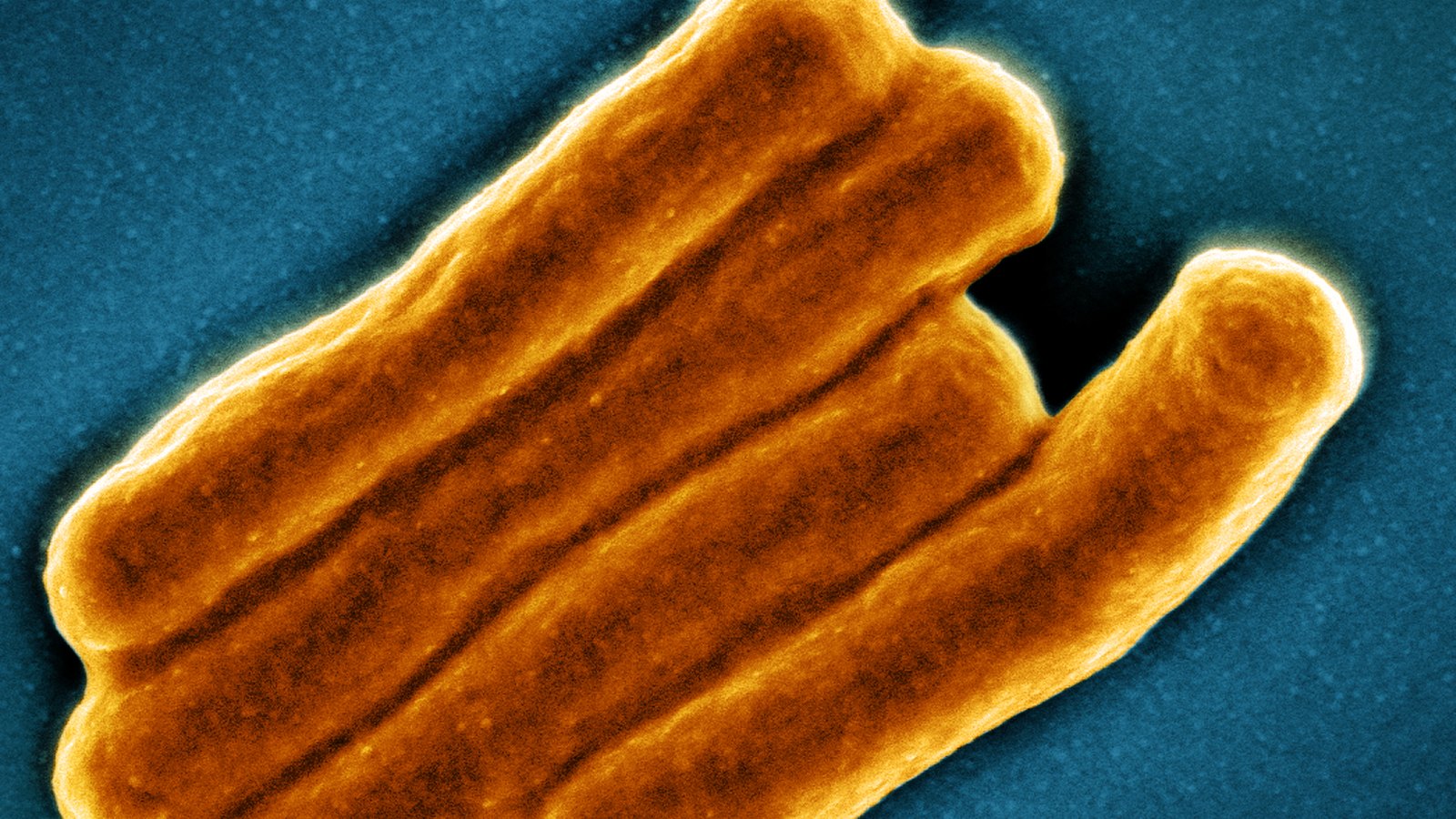
On November 19, 2026, the international UNITE4TB consortium published initial Phase 2b results from its flagship PARADIGM4TB clinical trial in The New England Journal of Medicine, identifying two promising 16-week combination regimens to shorten treatment for pulmonary tuberculosis. The findings validate multi-arm platform trial designs that enable academic trial units and university medical centers to screen multiple novel antimicrobial combinations simultaneously under a unified protocol.
Trial Findings and Regimen Selection
In a peer-reviewed report published in The New England Journal of Medicine, investigators detailed outcomes from Stage 1 of the PARADIGM4TB trial, an adaptive platform study evaluating experimental regimens against standard therapy. Out of ten experimental 16-week combinations tested across 401 enrolled adult participants, two distinct regimens met pre-specified microbiologic and clinical clearance criteria to advance to subsequent clinical duration-finding testing.
The first selected combination pairs the investigational compound ganfeborole with bedaquiline, pretomanid, and moxifloxacin. Ganfeborole is an oral antimicrobial developed by GSK that inhibits leucyl-tRNA synthetase, blocking bacterial protein synthesis in Mycobacterium tuberculosis. The second advancing regimen pairs the investigational compound BTZ-043 with bedaquiline, delamanid, and moxifloxacin. BTZ-043, discovered at the Leibniz Institute for Natural Product Research and Infection Biology (Leibniz-HKI) and co-developed with the German Center for Infection Research (DZIF) and the Tropical Institute at LMU University Hospital Munich, targets the enzyme DprE1 required for bacterial cell wall assembly.
According to the official UNITE4TB consortium announcement, both regimens demonstrated rapid sputum culture conversion across the initial 12 weeks of therapy and maintained favourable clinical outcomes, defined as the absence of bacteriologic failure or relapse, through week 48 of follow-up. Conversely, a combination arm evaluating BTZ-043 alongside bedaquiline, pyrazinamide, and moxifloxacin was discontinued after safety monitoring identified an elevated incidence of hepatotoxicity, demonstrating the capacity of adaptive multi-arm designs to drop poorly tolerated combinations early without interrupting ongoing trial operations.
Key Trial Parameters and Comparative Regimen Data
The PARADIGM4TB protocol was sponsored by University College London and scientifically coordinated by Radboud University Medical Center and LMU University Hospital Munich. Across 14 clinical trial sites located in five high-burden countries, investigators recruited participants aged 18 to 65 years with newly diagnosed, drug-susceptible pulmonary tuberculosis confirmed by molecular testing or sputum microscopy.
Trial arms were evaluated under structured milestones governed by an independent data monitoring committee. The table below summarizes the architectural comparison between the standard-of-care control arm and the experimental treatment regimens evaluated during Stage 1.
| Regimen Arm | Investigational Compound | Companion Drugs | Assigned Duration | Stage 1 Outcome Status |
|---|---|---|---|---|
| Standard Control | None (Standard-of-Care) | Rifampicin, isoniazid, pyrazinamide, ethambutol | 24 weeks | Reference comparator benchmark |
| Ganfeborole Arm | Ganfeborole (GSK3036656) | Bedaquiline, pretomanid, moxifloxacin | 16 weeks | Selected for Stage 2 duration-finding |
| BTZ-043 Arm A | BTZ-043 (DprE1 inhibitor) | Bedaquiline, delamanid, moxifloxacin | 16 weeks | Selected for Stage 2 duration-finding |
| BTZ-043 Arm B | BTZ-043 (DprE1 inhibitor) | Bedaquiline, pyrazinamide, moxifloxacin | 16 weeks | Discontinued due to hepatic safety signal |
| Comparator Arms | Variable combinations | Pretomanid or standard backbone agents | 16 weeks | Completed Stage 1 evaluation |
As detailed in reporting from the German Center for Infection Research, safety oversight required continuous pharmacokinetic sampling and liver enzyme surveillance. Participants received daily therapy under direct observation or verified digital adherence monitoring, establishing rigorous evidence for navigating subsequent regulatory interactions across international jurisdictions.
Background and Evolution of Platform Trial Methodologies
Standard antimicrobial therapy for drug-susceptible tuberculosis has remained largely anchored to a six-month, four-drug course developed four decades ago. While effective when completed, the prolonged duration imposes severe adherence challenges on patients and substantial logistic burdens on healthcare systems. According to surveillance metrics from the World Health Organization, tuberculosis continues to claim over one million lives annually, with treatment interruptions driving the emergence of drug-resistant strains.
Historically, evaluating novel antitubercular candidates required sequential two-arm Phase 2 trials that evaluated one candidate at a time over several years. To overcome these developmental bottlenecks, academic consortia turned toward master protocol architectures. In registered documentation on ClinicalTrials.gov under identifier NCT06114628, PARADIGM4TB implemented a multi-arm, multi-stage adaptive design allowing concurrent evaluation of diverse antimicrobial classes against a shared control cohort. Understanding candidate progression through formal clinical stages is essential for academic research teams, as outlined in CASRAI guidance on clinical trial phases and master protocol operations.
Public-private support proved decisive in establishing this infrastructure. UNITE4TB was formed through the Innovative Medicines Initiative 2 Joint Undertaking, receiving joint funding from the European Union Horizon 2020 framework, the European Federation of Pharmaceutical Industries and Associations, and the German Federal Ministry of Education and Research. Uniting 30 academic research institutions, clinical trial networks, and pharmaceutical manufacturers across 13 nations, the consortium created a reusable network equipped to run complex trials across Africa, Europe, and South America.
Consortium and Clinical Stakeholder Reactions
Consortium leaders emphasized that the primary contribution of the trial extends beyond specific chemical entities to the proof of concept for collaborative platform trials. Professor Hanif Esmail, Professor of Infectious Diseases at University College London and clinical lead for PARADIGM4TB, highlighted the trial efficiency: by testing multiple regimens simultaneously within a single trial platform, researchers were able to evaluate more treatment options in less time than traditional approaches allow, demonstrating the operational agility required to accelerate global tuberculosis therapy development.
From the trial coordination team, Jodie Schildkraut of Radboud University Medical Center noted that testing multiple candidate combinations against a single control arm allowed investigators to weigh 48-week follow-up outcomes directly alongside microbiology and safety data, providing high confidence in selecting regimens for further advancement. Professor Michael Hoelscher, Scientific Coordinator of UNITE4TB and Director of the Institute of Infectious Diseases and Tropical Medicine at LMU University Hospital Munich, pointed out that the advancement of the BTZ-043 regimen represents a landmark for academic drug discovery, demonstrating how university-led compounds can progress from early discovery into advanced international trials when supported by shared public infrastructures.
Industry partners also reinforced the value of pre-competitive collaboration. Dr. David Barros-Aguirre, Head of Global Health Medicines R&D at GSK, stated that the results provide tangible momentum for ganfeborole and reflect the collective ambition of industry and academic partners to deliver shorter, simpler treatment courses for vulnerable populations.
Implications for Academic Institutions and Research Offices
The execution of PARADIGM4TB delivers critical operational and administrative lessons for universities, academic medical centers, and sponsored research offices managing complex international clinical trials.
First, adaptive master protocols demand sophisticated data governance and cross-border regulatory harmonization. Clinical research offices must establish responsive data pipelines capable of supporting interim analyses, safety triggers, and arm-dropping decisions without compromising trial integrity. Meeting these expectations requires rigorous data management infrastructures aligned with institutional standards for clinical trial registration and reporting compliance, particularly when reporting interim protocol amendments across multiple national competent authorities.
Second, the trial underscores the necessity of proactive pharmacovigilance mechanisms. The swift detection and management of the hepatic safety signal in the pyrazinamide-containing arm demonstrate how protocol-specified stopping rules protect participant welfare. Academic institutions managing investigator-initiated or consortium trials should benchmark their internal procedures against established standards for pharmacovigilance in clinical research to ensure adverse events trigger immediate committee reviews.
Third, statistical frameworks in multi-arm studies require specialized expertise in multiplicity adjustment and shared control arm economics. Biostatistics cores supporting clinical faculties should reference international standards such as ICH E9 statistical principles for clinical trials to design adaptive sample allocations that preserve type I error control across evolving treatment arms.
Next Steps in Clinical Duration-Finding and Phase 2c Evaluation
With the conclusion of Stage 1, UNITE4TB will transition the two selected regimens into the next phase of the PARADIGM4TB protocol, focused on duration finding. Investigators plan to evaluate whether treatment lengths can be safely reduced below 16 weeks without increasing rates of bacteriological relapse during extended follow-up.
The upcoming trial stage will incorporate novel response-guided design features, using early molecular and microbiological biomarkers to stratify participant therapy. Consortium scientists presented secondary analyses—including pharmacokinetic modeling, drug-resistance surveillance, and host biomarker responses—at the Union World Conference on Lung Health in Rio de Janeiro, Brazil. Data gathered from these evaluations will inform definitive Phase 3 trial designs required for potential regulatory submissions to the European Medicines Agency, the U.S. Food and Drug Administration, and the World Health Organization.
Sources
- The New England Journal of Medicine: Assessing Multiple Treatment Regimens for Tuberculosis, published 2026-11-19
- UNITE4TB Consortium: First PARADIGM4TB results published, published 2026-11-19
- German Center for Infection Research: First results from PARADIGM4TB, UNITE4TB’s flagship trial, published in The New England Journal of Medicine, published 2026-11-20
- ClinicalTrials.gov: PARADIGM4TB Platform Trial for Tuberculosis (UNITE4TB-01), checked 2026-11-22
- World Health Organization: Tuberculosis Fact Sheet, checked 2026-11-22


