
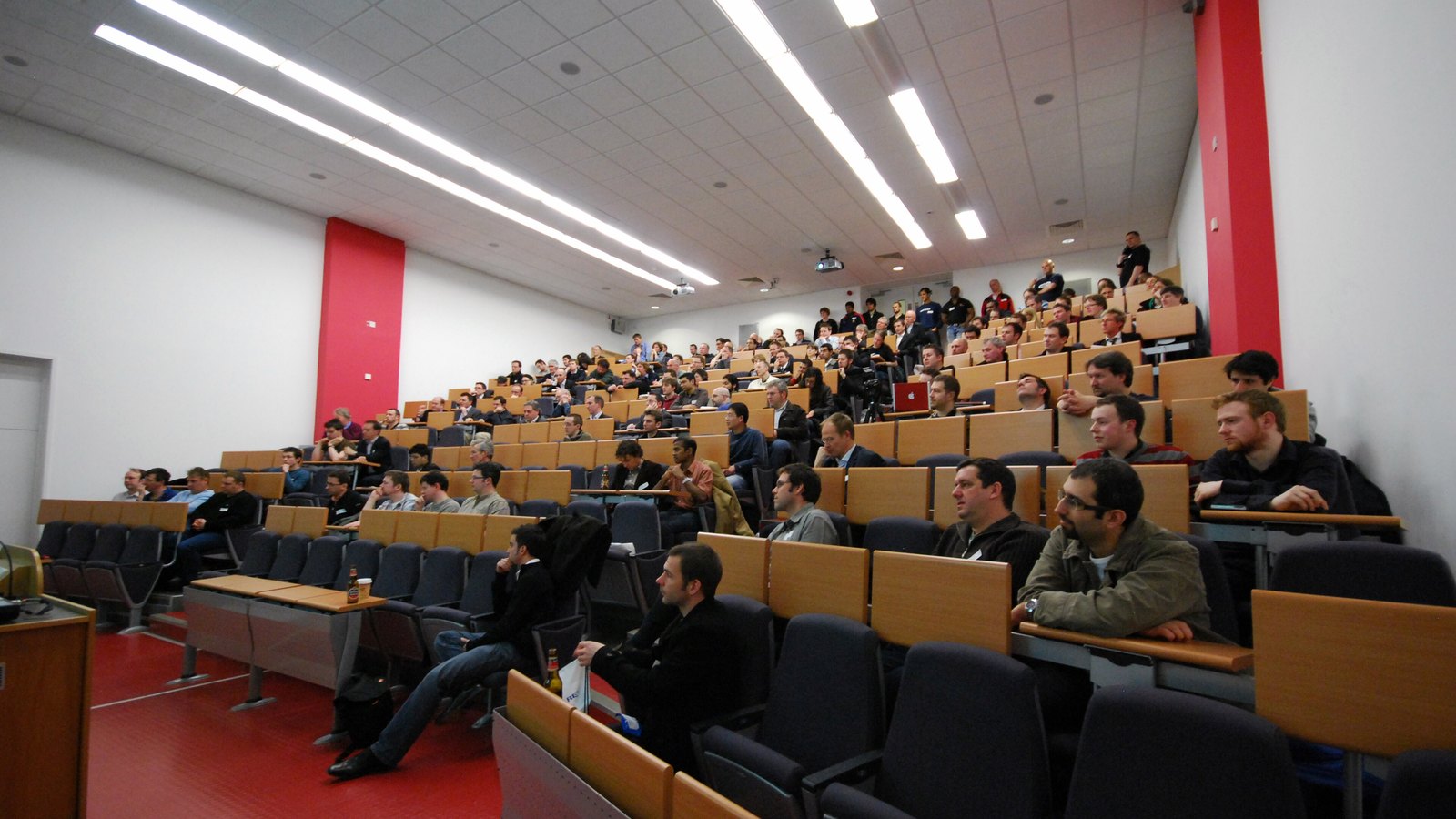
As reported on November 25, 2026, higher education institutions across Australia and the United Kingdom are expanding mandatory spoken thesis defenses and interactive viva voce examinations for undergraduate honours and master’s students—aligning with assessment reform guidelines from the Tertiary Education Quality and Standards Agency on generative artificial intelligence—to authenticate student authorship as text-generation models render written dissertations difficult to verify through automated software alone.
Mandatory Spoken Defenses Introduced for Honours Dissertations
Leading universities are overhauling evaluation practices for extended written research, marking a historic departure from purely written thesis submissions. Traditionally, oral defenses (or viva voce examinations) were reserved almost exclusively for doctoral candidates defending dissertations before academic committees. Under new regulations enacted for the 2026 academic cycle, institutions are establishing mandatory conversational examinations to verify that students personally authored and understand the substantive arguments in their papers.
The policy transformation was brought to national attention by The Guardian on November 25, 2026, profiling honours students navigating unexpected spoken evaluation requirements. At the University of Sydney, which became the first prominent Australian university to mandate oral assessments across all of its one-year honours programs, students completing 20,000-word research dissertations must now appear before faculty panels for formal question-and-answer defenses. Students are questioned closely on their historiography, data analysis, methodology, and theoretical frameworks to confirm individual mastery.
Faculty leadership confirmed that the intervention became necessary as advanced generative models eroded confidence in unsupervised take-home writing. Academic leaders emphasized that large language models can produce convincing literature reviews, synthesis essays, and code, leaving universities unable to guarantee academic honesty without a direct conversational checkpoint. Spoken assessment is now treated as an indispensable safeguard against modern misconduct.
Key Provisions and Institutional Frameworks
The rollout of spoken defenses reflects distinct institutional models designed to balance academic rigour against faculty workload and student accommodation. While the University of Sydney has implemented comprehensive viva requirements across all honours degrees, other institutions such as Adelaide University have pioneered scenario-based interactive oral assessments (IOAs), where students engage in unscripted professional dialogues rather than static presentations.
Regulatory bodies and higher education consortia have established formal benchmarks to guide universities transitioning toward dialogic testing. The following table compares the assessment mechanisms, operational structures, and integrity objectives adopted across leading institutions and regulatory jurisdictions:
| Institution / Regulatory Body | Assessment Mechanism | Target Program Level | Integrity Focus / AI Countermeasure | Examination Format & Duration |
|---|---|---|---|---|
| University of Sydney | Mandatory Viva Voce Defense | 1-Year Honours Programs | Authorship verification for 20,000-word theses | Individual panel defense (15–20 minutes) |
| Adelaide University | Interactive Oral Assessment (IOA) | Undergraduate & Postgraduate | Authentic scenario reasoning & unscripted defense | Role-play and academic dialogue (10–15 minutes) |
| TEQSA (Australia) | Programmatic Assessment Framework | Sector-Wide Higher Education | Multi-point learning verification beyond detection | Two-stage assessment combining text & spoken viva |
| QAA (United Kingdom) | Mini-Viva and Process Defense | Honours & Taught Master’s Degrees | Authentication of student reasoning & process trail | Structured interview on submitted portfolios (10–15 minutes) |
Under these frameworks, spoken defenses carry substantial grading weight, ranging from 10 percent to 30 percent of the final thesis module mark. In several faculties, satisfactory performance in the oral component functions as an absolute prerequisite: failure to demonstrate baseline familiarity with the submitted text can trigger an academic misconduct inquiry or withhold honours degree conferral.
Regulatory Context and the Failure of Automated AI Detection
The widespread turn to viva voce examinations stems directly from the collapse of commercial AI detection software. In 2023 and 2024, many higher education institutions initially responded to generative tools by deploying automated text-matching filters. However, regulatory authorities and academic researchers quickly established that automated detectors generate high rates of false positives—frequently flagging original prose written by non-native English speakers—while remaining vulnerable to simple prompting variations, paraphrasing tools, and recursive editing.
Guidance from the UK Quality Assurance Agency for Higher Education (QAA) warned institutions against relying on algorithmic detection tools, advising university senates instead to redesign assessment architectures. The QAA emphasized that authentic evaluation must capture student metacognition and real-time reasoning. This perspective was reinforced by the UK educational technology consortium Jisc, whose tertiary education reporting documented that university integrity policies had shifted decisively away from punitive surveillance software toward process-oriented evaluation.
In Australia, the national regulator TEQSA commissioned assessment experts to author a national framework on assessment reform. The resulting guidance urged institutions to accept that unsupervised text generation cannot be prevented or accurately measured after submission. Instead, institutions were directed to implement two-stage evaluation strategies: students complete written scholarship, but award conferral requires live verification where candidates explain conceptual choices and justify analytical conclusions.
Stakeholder Reactions: Faculty Security Versus Student Frustration
The expansion of oral defenses has sparked debate across campus communities, exposing tensions between integrity mandates and student well-being. Academic administrators have strongly defended the policy. Adam Bridgeman, Pro Vice-Chancellor (Teaching and Learning) and Acting Deputy Vice-Chancellor for Education at the University of Sydney, explained that universities must necessarily treat honours theses as open assessments because institutions cannot reliably restrict AI use during independent study. Bridgeman noted that conversational assessments ensure that students who earn research qualifications truly possess the knowledge and skills represented by their degrees.
Conversely, honours candidates have voiced frustration with the sudden imposition of spoken exams. Aidan Elwig Pollock, a history honours student at the University of Sydney who completed a 20,000-word thesis examining the evolving commemoration of Captain Cook, publicly criticized the oral defense mandate as an insulting hurdle. Elwig Pollock argued that honest students who spend nine months in close consultation with research supervisors are effectively treated with blanket suspicion under mandatory viva rules.
Student advocates have also raised equity concerns regarding examination environments. Reports noted instances where oral examinations were conducted in crowded, partitioned rooms with auditory distractions. Student unions have stressed that oral vivas disproportionately elevate anxiety for neurodivergent scholars and students for whom English is an additional language, urging faculties to provide clear rubrics, practice sessions, and reasonable adjustments.
Operational Implications for Academic Integrity and Research Offices
The institutionalization of spoken thesis assessments carries extensive operational ramifications for academic departments, faculty boards, and research governance bodies. First, university administrations must address significant workload burdens. While grading a written manuscript is performed asynchronously by a single examiner, scheduling two-examiner oral defense panels for hundreds of graduating honours and master’s students requires substantial academic time at the busiest period of the academic calendar.
Second, institutions must revise policies on textual plagiarism to delineate the boundary between acceptable AI assistance and impermissible ghostwriting. In tandem, universities must harmonize student assessment procedures with national integrity frameworks, such as the UK Concordat to Support Research Integrity and the European Code of Conduct for Research Integrity, ensuring supervisory responsibilities explicitly cover conversational defense preparation.
Third, research offices and ethics committees must establish clear governance protocols for students transitioning into research-active roles. Many master’s and honours dissertations serve as preliminary studies for journal publication or grant-funded projects. Aligning student thesis disclosures with international standards—such as the ICMJE generative AI policy for scientific manuscripts—ensures that emerging researchers understand ethical transparency expectations before submitting manuscripts to peer-reviewed outlets.
What Happens Next
Higher education institutions across Australia and the UK are currently reviewing pilot oral assessment outcomes from the late 2026 examination season to refine guidelines for 2027 curricula. Faculty assessment committees are scheduled to publish updated viva voce rubrics and examiner training manuals in early 2027. These revisions will establish standardized question banks, formal grading scales for oral articulation, and clearer pathways for neurodivergent student accommodations.
At the regulatory level, TEQSA and the QAA are conducting cross-institutional audits to evaluate how universities are embedding authentic assessment into course accreditation standards. Institutional reviews of generative AI action plans will continue through mid-2027, with regulators focusing on whether universities have successfully moved beyond pilot projects into sustainable, sector-wide assessment models that safeguard academic qualifications without overburdening academic staff.
Sources
- Tertiary Education Quality and Standards Agency: Artificial intelligence, checked 2026-11-26
- The Guardian: Aidan didn’t expect a spoken-word component in his thesis – but universities hope it will help tackle AI, checked 2026-11-26
- Quality Assurance Agency for Higher Education: Assuring Academic Standards in the Age of AI, checked 2026-11-26
- Jisc: Artificial intelligence (AI) in tertiary education, checked 2026-11-26






