
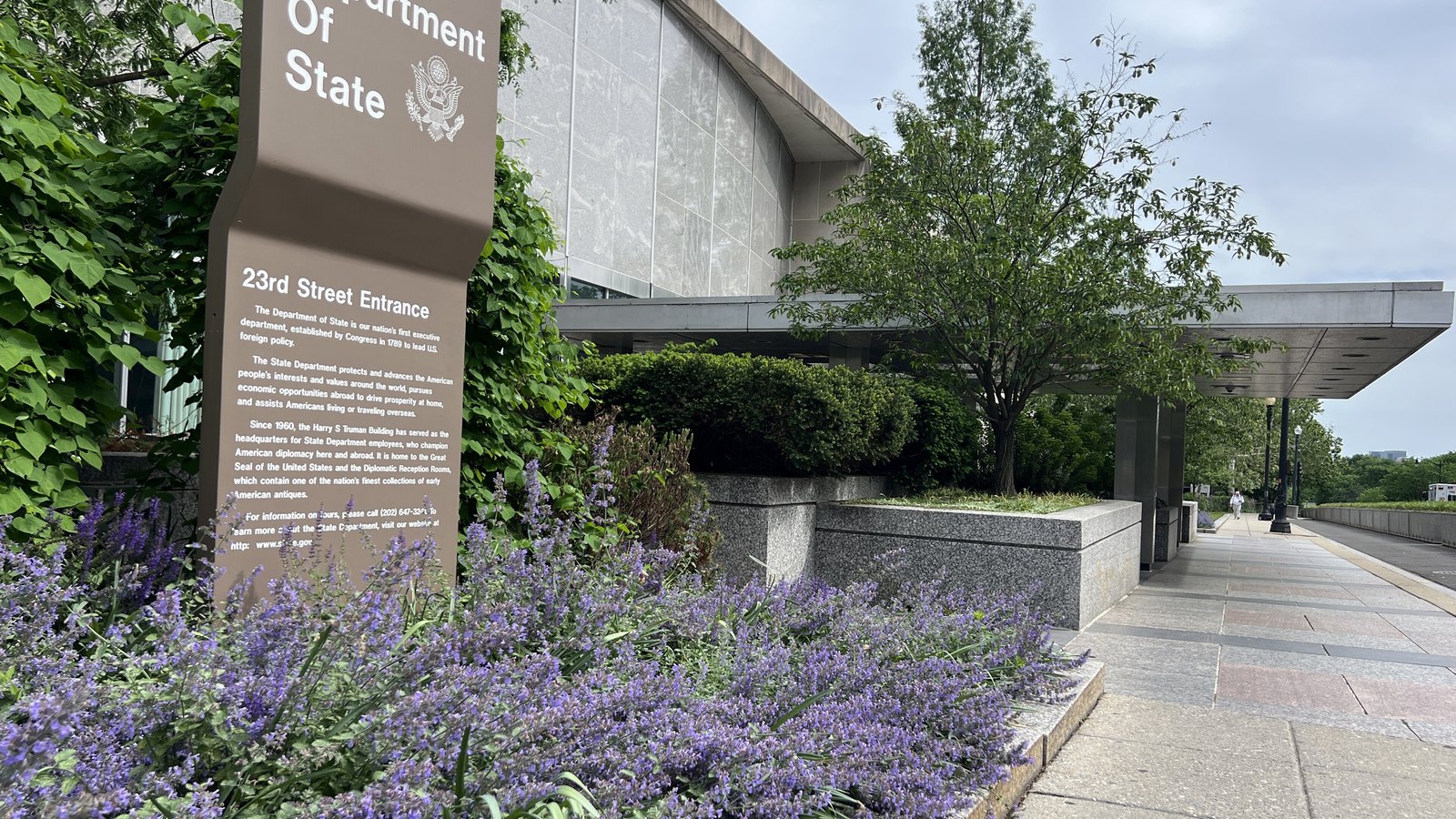
The United States and the Federal Republic of Germany concluded the Sixth U.S.-Germany Joint Committee Meeting on Science and Technology Cooperation in Washington, D.C., on November 20, 2026, establishing a shared bilateral framework to accelerate joint research in critical technologies while harmonising research security risk analyses and dual-use oversight across transatlantic research institutions.
Bilateral Science Cooperation and Priority Research Sectors
The bilateral sessions, held in Washington, D.C., on November 19-20, 2026, brought together senior science policymakers, research agency leaders, and technical experts under the framework of the bilateral U.S.-Germany Science and Technology Agreement. On November 20, 2026, the two governments published the official Joint Statement on the Sixth U.S.-Germany Joint Committee Meeting on Science and Technology Cooperation outlining commitments to deepen scientific collaboration while safeguarding critical technical assets.
The meeting was co-chaired by Brendan Hanrahan, Assistant Secretary for European and Eurasian Affairs at the U.S. Department of State, and Dr. Effrosyni Chelioti, Director General for Strategies and Policy Issues and International Affairs and Europe at Germany’s Federal Ministry of Research, Technology and Space (BMFTR). Both delegations agreed to concentrate bilateral resources and inter-agency coordination around four high-priority technology sectors: advanced robotics, nuclear fusion energy, biotechnology, and critical minerals recovery.
According to the joint statement, the two nations resolved to encourage joint research projects, direct agency-to-agency partnerships, shared technical standards where appropriate, and public-private collaboration to accelerate the translation of scientific discoveries into market applications. Bilateral working groups emphasised that pairing Germany’s engineering precision, fundamental research infrastructure, and manufacturing capabilities with American computational capacity, research scale, and venture commercialisation mechanisms provides mutual economic and security advantages.
Integration of Germany’s National Research Security Platform
A central pillar of the sixth Joint Committee Meeting was the formal commitment to strengthen bilateral research security cooperation, risk analysis, and information-sharing. Delegations agreed to channel bilateral risk coordination through Germany’s newly established National Research Security Platform, aligning administrative oversight with the strategic frameworks outlined by the Federal Ministry of Research, Technology and Space.
Both governments acknowledged that emerging dual-use technologies are subject to persistent foreign interference and illicit acquisition efforts. Strengthening bilateral research security mechanisms ensures that transatlantic open science is not compromised by adversarial technology transfers. Within German higher education, the National Research Security Platform operates under the guiding principle of keeping research as open as possible while remaining as closed as necessary, distributing compliance obligations across a three-tiered architecture:
- Individual researcher awareness: Equipping principal investigators to identify geopolitical sensitivities, potential dual-use diversion risks, and conflicts of commitment in international collaborations.
- Institutional review structures: Expanding university-level compliance units, legal screening bodies, and internal risk assessment offices that review foreign partnerships prior to institutional signing.
- Federal coordination and intelligence: Providing centralized threat assessments, country-specific risk indicators, and rapid advisory services via the national platform’s steering committee and service center.
For research administrators on both sides of the Atlantic, integrating these national platforms establishes common benchmarks for evaluating institutional risk. This coordinated approach supports institutional research security without dismantling fundamental international collaborations.
Transatlantic Standards and Dual-Use Technology Controls
The technical focus areas selected during the meeting involve emerging technologies with significant commercial and national security applications. The delegations emphasized that developing compatible technical standards and harmonised risk-assessment criteria is essential to ensure seamless joint research while managing export-control obligations.
| Priority Technology Sector | Joint Bilateral Focus Areas | Research Security and Governance Mechanisms |
|---|---|---|
| Advanced Robotics | Autonomous systems, multi-agent coordination, industrial automation, human-robot interaction | Algorithmic transparency, code integrity verification, protection of autonomous navigation blueprints |
| Fusion Energy | Magnetic confinement systems, plasma diagnostics, advanced materials testing, modeling software | Protection of high-performance materials formulations, non-proliferation verification, secure supercomputing access |
| Biotechnology | Biomanufacturing scale-up, genomic engineering, synthetic biology pathways, pathogen characterisation | Screening of gene synthesis orders, biological data stewardship, dual-use oversight protocols |
| Critical Minerals Recovery | Hydrometallurgical extraction, electronic waste recycling, magnet recovery, separation chemistry | Supply chain resilience mapping, proprietary chemical process controls, environmental safety standards |
Managing research across these domains requires universities to balance academic freedom against export compliance mandates. Research involving autonomous robotics algorithms or synthetic biology vectors frequently intersects with dual-use research of concern, demanding rigorous institutional oversight. Delegations affirmed that bilateral work will respect established academic governance norms, including the security-relevant research guidance issued by the Deutsche Forschungsgemeinschaft in partnership with the Leopoldina National Academy of Sciences.
Furthermore, research teams working across transatlantic boundaries must navigate intersecting regulatory frameworks. U.S. university research offices must comply with the Export Administration Regulations (EAR) and International Traffic in Arms Regulations (ITAR), while German researchers operate under the EU Dual-Use Regulation and national export regulations administered by the Federal Office for Economic Affairs and Export Control (BAFA). Aligning technical standards helps research institutions manage export controls in international research collaborations without encountering conflicting legal barriers.
Background and Bilateral Science Diplomacy Context
The Joint Committee Meeting serves as the primary governing mechanism for bilateral scientific relations between the United States and Germany, operating under the comprehensive U.S.-Germany Science and Technology Agreement originally signed in 2010. The bilateral committee convenes alternately in Washington and Berlin to review joint agency initiatives, address regulatory frictions, and set strategic priorities for intergovernmental science funding.
The previous Fifth Joint Committee Meeting, held in Berlin in May 2024, resulted in a landmark bilateral joint statement on Quantum Information Science and Technology (QIST), alongside collaborative initiatives in biomanufacturing and clean energy. Since that meeting, geopolitical tensions and systemic technological competition have accelerated policy shifts in European research administration. Germany’s strategic Zeitenwende policy realignment prompted federal ministries and the Alliance of Science Organisations to re-examine scientific openness.
As documented by European policy observers at Research Professional News, Germany’s transition toward establishing a National Platform for Research Security reflects recommendations from the German Science and Humanities Council (Wissenschaftsrat). This shift represents a structural departure from voluntary institutional self-policing toward structured, federally coordinated risk assessment services for higher education institutions.
Operational Implications for University Research Offices
The agreements reached during the Sixth Joint Committee Meeting create concrete compliance and administrative requirements for university research offices, sponsored project administrators, and international partnership directors. Rather than altering basic research definitions, the bilateral understanding introduces heightened verification expectations in specific project workflows:
- International Subaward and Personnel Screening: Sponsored project offices managing joint U.S.-German grants in robotics, fusion, biotechnology, or critical minerals must ensure thorough restricted party screening for all foreign subrecipients, visiting fellows, and international postdocs, ensuring compliance with federal exclusion lists and foreign gift disclosure rules.
- Alignment of Disclosure and Conflict of Commitment Protocols: U.S. institutions subject to National Security Presidential Memorandum 33 (NSPM-33) standards must align their foreign talent program disclosures and biographical sketches with German institutional risk frameworks, ensuring transparent reporting of dual appointments and foreign funding sources.
- Intellectual Property and Consortium Agreements: Collaborative public-private projects bridging German applied research institutes (such as Fraunhofer and Max Planck institutes) and American universities must utilize clear IP allocation terms. Consortium agreements must specify licensing terms, commercialisation milestones, and trade secret protections prior to data generation.
- Data Governance and Research Infrastructure Segregation: High-performance computing workflows, fusion plasma models, and genomic datasets generated under bilateral initiatives must be hosted on secure, access-controlled institutional repositories with multifactor authentication and role-based access controls to prevent unauthorized data exfiltration.
Implementation Timeline and Next Steps
Following the formal conclusion of the Joint Committee Meeting on November 20, 2026, bilateral technical working groups will initiate quarterly coordination meetings to operationalise the priority sectors. Agency-to-agency dialogues between the U.S. National Science Foundation, the Department of Energy, the German Research Foundation (DFG), and the BMFTR will draft joint funding solicitations and collaborative research calls targeted for release in 2027.
Concurrently, technical standards organizations in both nations will establish bilateral roundtables to harmonize public-private data exchange protocols in robotics and critical mineral recovery. Representatives from Germany’s National Research Security Platform and U.S. federal research security offices are scheduled to conduct bi-annual threat information exchanges, developing unified guidance notes and risk screening checklists for universities engaged in transatlantic advanced research.
Sources
- United States Department of State: Joint Statement on the Sixth U.S.-Germany Joint Committee Meeting on Science and Technology Cooperation, checked 2026-11-21
- Federal Ministry of Research, Technology and Space: Research Security, checked 2026-11-21
- Deutsche Forschungsgemeinschaft: Zum Umgang mit sicherheitsrelevanter Forschung, checked 2026-11-21
- Research Professional News: Germany to launch national platform for research security, checked 2026-11-21


