
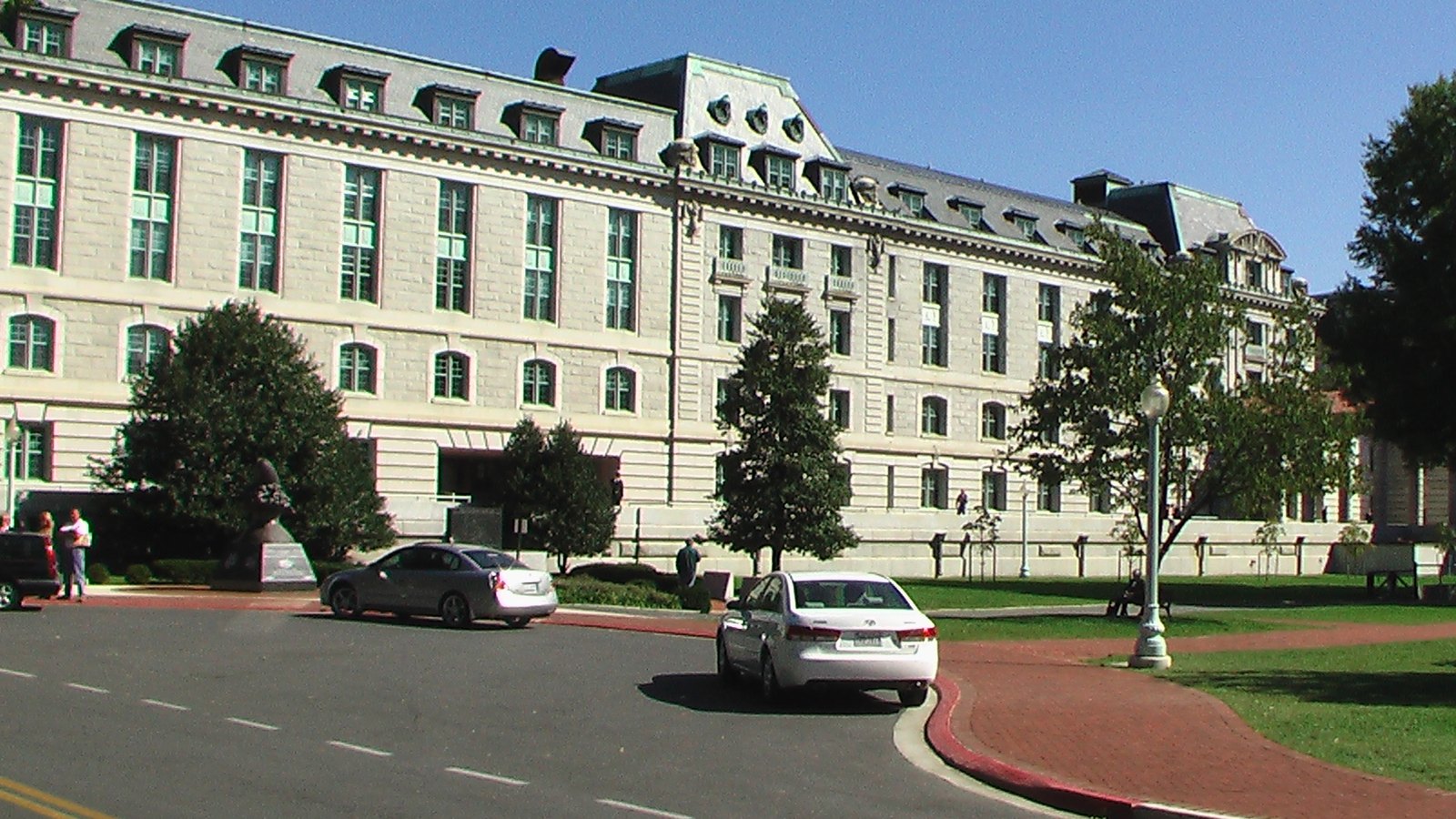
An anonymous civilian professor at the United States Naval Academy filed a proposed federal class-action lawsuit in the U.S. District Court for the District of Maryland challenging the Navy’s abrupt elimination of academic tenure reviews, alleging that military leadership unlawfully erased contractually promised evaluation procedures for dozens of incumbent tenure-track faculty without administrative transition pathways or statutory justification.
Federal Lawsuit Challenges Sudden Elimination of Naval Academy Tenure Reviews
The proposed class action was initiated on behalf of an anonymous tenure-track scholar identified in court records as “Professor Doe 1” by litigation boutique Holon Law Partners, led by litigation partner Jason Ehrenberg. The lawsuit names the Department of the Navy, Acting Secretary of the Navy Hung Cao, Naval Academy Superintendent Rear Admiral Michael J. Borgschulte, and Provost Samara L. Firebaugh as defendants in their official capacities, asserting systemic violations of federal administrative law.
According to coverage by Inside Higher Ed, the dispute emerged after Academy leadership terminated the institutional machinery governing tenure evaluations. The plaintiff joined the Annapolis institution under appointment letters guaranteeing that satisfactory scholarship, teaching, and service would lead to formal tenure evaluation during the sixth probationary year, scheduled for Spring 2027. That schedule was reaffirmed in an official 2026 reappointment letter from the provost.
Reporting from local outlet Report Annapolis indicated that the sudden policy shift left approximately 78 incumbent civilian faculty without a tenure review mechanism. In filings, the plaintiff requested permission to proceed under pseudonym to avoid career reprisal while seeking class certification on behalf of all civilian peers facing the same cancellation.
Core Policy Provisions and the Disputed Directive
The institutional conflict traces to a September 29, 2026 memorandum from Defense Secretary Pete Hegseth directing military service academies to halt civilian tenure appointments, claiming civilian academic norms diluted warfighting lethality. However, the secretarial memo preserved tenure for civilians who already held it, left active-duty military faculty untouched, and omitted guidance regarding incumbent faculty mid-probation.
In response, Naval Academy Provost Samara L. Firebaugh issued PROVOSTINST 12335.1E on November 2, 2026. The instruction rescinded institutional procedures and reporting requirements for academic tenure. Most crucially, it dissolved the Yard-Wide Promotion and Tenure Committee, the faculty body that evaluated dossiers, gathered external peer evaluations, and recommended tenure to the superintendent and naval leadership.
The following table compares the pre-existing institutional framework against PROVOSTINST 12335.1E and the specific legal remedies sought in federal court:
| Governance Dimension | Prior Framework (2023 Faculty Handbook) | PROVOSTINST 12335.1E (Nov 2, 2026) | Remedy Sought in Federal Lawsuit |
|---|---|---|---|
| Evaluation Mechanism | Yard-Wide Promotion and Tenure Committee conducts peer review | Committee dissolved; review procedures eliminated | Order restoring functional peer evaluation committee |
| Incumbent Faculty (~78 scholars) | Mandatory 6th-year tenure review with dossier evaluation | Reviews cancelled; zero transition or grandfathering process | Enjoin cancellation; require timely review of dossiers |
| Tenured Civilian Faculty | Permanent appointment under federal civil service protections | Retained under existing contractual standing | Maintain standing without retroactive impairment |
| Uniformed Military Faculty | Rotational duty assignments governed by service branches | Exempt from directive; unchanged service rotations | No modification requested |
| Administrative Reliance Protection | Reappointment letters reaffirming timeline and criteria | Immediate administrative termination of review pathway | Enforce APA requirements regarding reliance interests |
Administrative Procedure Act Claims and Reliance Interests
The complaint brings two counts under the Administrative Procedure Act (APA), 5 U.S.C. Section 706. The plaintiff contends that PROVOSTINST 12335.1E constitutes arbitrary and capricious agency action because naval officials reversed established personnel policy without addressing the reliance interests of incumbent faculty. Supreme Court precedent—including FCC v. Fox Television Stations, Inc. (2009), Encino Motorcars, LLC v. Navarro (2016), and Department of Homeland Security v. Regents of the University of California (2020)—establishes that agencies reversing prior rules must explicitly account for serious reliance interests.
Legal commentary in Faculty News noted that the lawsuit does not contest the military’s authority to revise future hiring models. Instead, it challenges the unilateral elimination of promised procedures for scholars who built careers and research programs around established promotion benchmarks.
The second count asserts agency action not in accordance with law, arguing the Navy breached statutory and contractual commitments. In higher education, academic tenure frameworks rely on probationary milestones where faculty invest effort in exchange for structured evaluation. The complaint argues that dissolving the evaluation committee without a substitute breached those terms.
Faculty Reactions and Broader Higher Education Concerns
Jason Ehrenberg of Holon Law Partners stated that the suit addresses administrative consistency. When the federal government recruits professionals under written commitments, it cannot extinguish those obligations without addressing reliance interests. Counsel noted that the plaintiff is not asking the court to grant tenure, but to preserve the opportunity for fair evaluation before an impartial academic committee.
The policy has generated concern across higher education governance organizations. Service academy civilian professors perform specialized teaching and research functions distinct from rotational military assignments. Removing tenure tracks mid-career without notice creates severe career instability for civilian scholars dedicated to defense education.
Implications for Service Academy Accreditation and Sponsored Research
Beyond employment law, eliminating tenure review mechanisms carries consequences for institutional accreditation and scientific programs. The Naval Academy is accredited by the Middle States Commission on Higher Education (MSCHE), whose standards mandate published, transparent procedures for faculty appointment, promotion, and governance. Dissolving the primary review committee without an accredited substitute threatens compliance with regional criteria.
The change also impacts sponsored research. Civilian professors at Annapolis lead research funded by the Office of Naval Research, the Defense Advanced Research Projects Agency, and the National Science Foundation. Understanding what a principal investigator does shows that multi-year defense grants depend on institutional stability. Career precarity risks project delays and faculty departures.
Furthermore, defense projects often rely on a co-principal investigator arrangement linking civilian specialists with rotational military officers. Preserving established research project management standards requires predictable faculty trajectories to maintain lab oversight, compliance, and student research mentorship.
Upcoming Federal Court Proceedings and Next Deadlines
The case is pending before the U.S. District Court for the District of Maryland. Key preliminary steps include motions to proceed under pseudonym and for a preliminary injunction. The requested injunction seeks to preserve the Yard-Wide Promotion and Tenure Committee and maintain evaluation pathways pending a ruling on the merits.
Injunctive relief is urgent because tenure dossiers take months to prepare, solicit external reviews, and evaluate. For faculty scheduled for Spring 2027 reviews, waiting for the window to pass would cause irreparable procedural harm. The Department of the Navy and defense officials must file formal responses under federal scheduling rules, teeing up key rulings in early 2027.
Sources
- Holon Law Partners: Naval Academy Tenure Lawsuit, checked 2026-11-26
- Inside Higher Ed: Naval Academy Professor Sues Over Civilian Tenure Cuts, checked 2026-11-26
- Faculty News: Naval Academy Tenure Review Lawsuit Explained, checked 2026-11-26
- Report Annapolis: Federal Lawsuit Challenges Naval Academy’s Elimination of Tenure Review Procedures for Civilian Professors, checked 2026-11-26






