
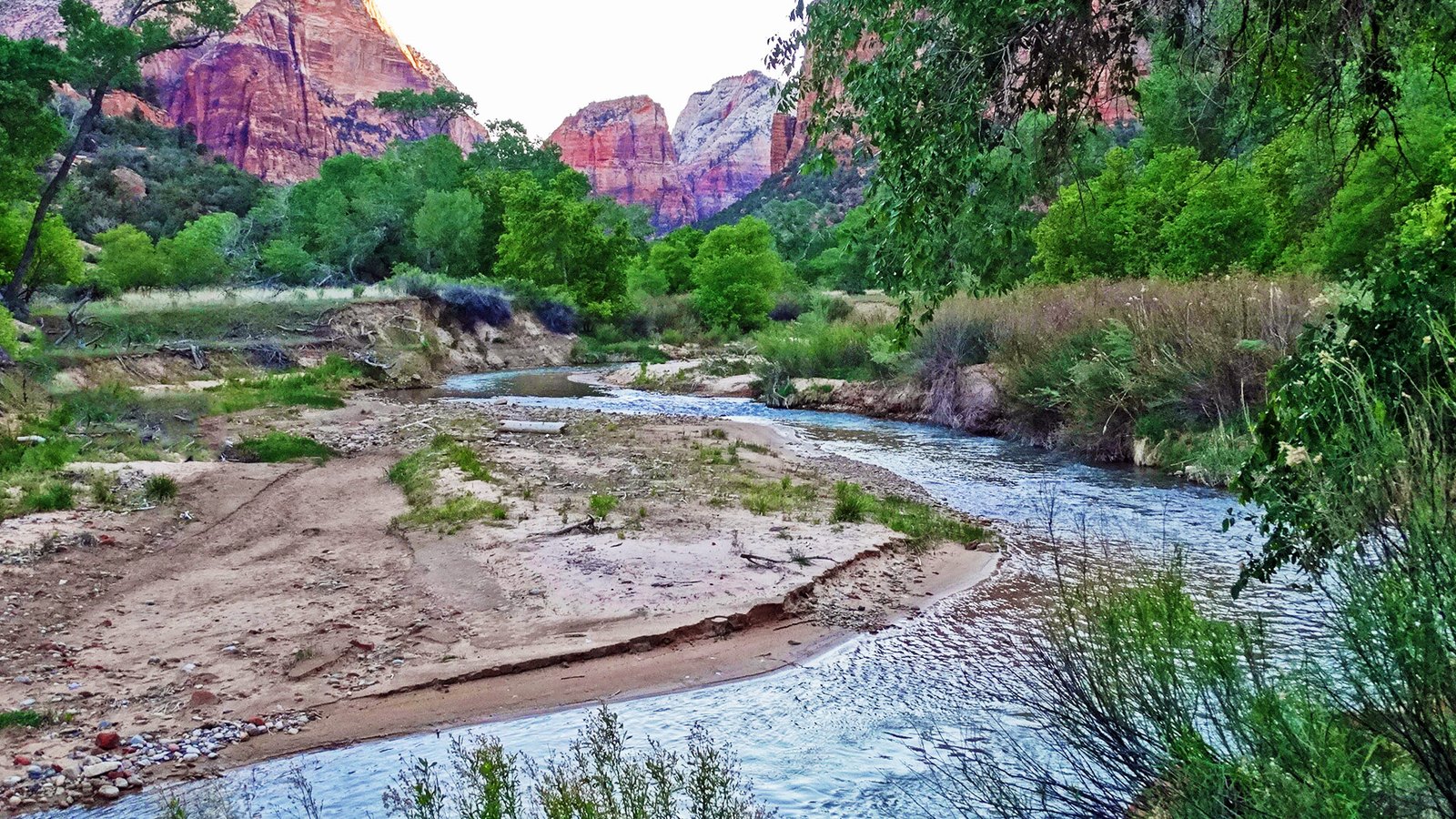
On November 26, 2026, the U.S. Department of Agriculture Natural Resources Conservation Service issued a formal notice in the Federal Register rescinding its Notice of Intent to prepare an Environmental Impact Statement for the Cove-East Fork Virgin River Watershed Plan in Kane County, Utah. The federal decision halts the current National Environmental Policy Act review to conduct additional environmental and economic analyses, directly affecting university research teams, ecological monitoring groups, and compliance officers evaluating southwestern river basin infrastructure.
What happened
The Natural Resources Conservation Service (NRCS) Utah State Office, led by Acting Utah State Conservationist Travis Mote, officially rescinded the Notice of Intent (NOI) originally issued on March 29, 2022 (87 FR 17979, EIS Unique Identification Number EISX-005-53-049-1288324567). Published under Document Number 2026-24078 and detailed in the official rescission notice, the action terminates the ongoing Environmental Impact Statement (EIS) pathway for the proposed Cove-East Fork Virgin River Watershed Plan.
Federal planning for the project has been conducted under the Watershed Protection and Flood Prevention Act of 1954 (Public Law 83-566, as amended) and the Flood Control Act of 1944 (Public Law 78-534), pursuant to USDA regulations at 7 CFR 1b.7. NRCS coordinated the planning with local project sponsors: the Kane County Water Conservancy District and the Washington County Water Conservancy District. Following public comments on the Draft EIS released on September 18, 2026 (91 FR 59129), agency leadership determined that further environmental and economic analyses are necessary to identify viable alternatives and confirm consistency with program authorities.
Key details of the rescinded plan
The Cove-East Fork Virgin River Watershed Plan evaluated several development alternatives centered on building an off-stream earthen dam and a 6,000-acre-foot reservoir near Orderville in Kane County. The preferred alternative also included secondary irrigation pipelines for the Glendale and Mt. Carmel agricultural areas, a booster pump station, and a recreation site. Project coordinator Ammon Boswell stated in project filings that the agency will continue the planning process to assess whether a full EIS remains necessary or if project modifications warrant a different level of review.
The table below summarizes the key milestones, administrative components, and statutory authorities governing the Cove-East Fork Virgin River Watershed Plan:
| Milestone or Component | Administrative Detail | Statutory or Regulatory Basis |
|---|---|---|
| Original Notice of Intent | Published March 29, 2022 (87 FR 17979; ID EISX-005-53-049-1288324567) | Public Law 83-566; 7 CFR 1b.7 |
| Draft EIS Notice of Availability | Published September 18, 2026 (91 FR 59129) | National Environmental Policy Act (NEPA) |
| Rescission Notice Publication | Filed November 25, 2026; effective November 27, 2026 (Doc. 2026-24078) | Watershed Protection and Flood Prevention Act |
| Proposed Storage Capacity | 6,000-acre-foot off-stream reservoir near Orderville, Utah | Watershed and Flood Prevention Operations |
| Ancillary Facilities | Glendale and Mt. Carmel pipelines, booster pump station, recreation area | PL 83-566 Local Cost-Share Agreements |
| Local Project Sponsors | Kane County Water Conservancy District & Washington County Water Conservancy District | Utah Water Conservancy District Act |
| Ecological Focus Area | East Fork Virgin River basin upstream of Zion National Park | Clean Water Act & Endangered Species Act |
Background and regulatory context
The East Fork of the Virgin River flows through Kane County before joining the North Fork at the threshold of Zion National Park. In this arid region, water resources are subject to intense seasonal competition. Regional watershed coordination is facilitated through frameworks established by the Utah Division of Water Resources watershed councils, which unite agricultural, municipal, and conservation interests across the Virgin River basin.
Historically, Public Law 83-566 authorized federal technical and financial assistance for rural flood prevention and agricultural water management. In recent years, local sponsors sought to integrate municipal supply reliability into the project framework to address rapid population growth in southwestern Utah. However, comments on the Draft EIS emphasized potential conflicts between municipal supply expansion and statutory agricultural guidelines under the Watershed and Flood Prevention Operations program, prompting federal planners to reconsider alternative configurations.
Stakeholder perspectives and ecological considerations
The rescission highlights conflicting priorities between infrastructure sponsors and environmental scientists. Local water managers, supported by regional initiatives described in Washington County Water Conservancy District water conservation filings, emphasized that new storage capacity is vital to withstand severe drought cycles and optimize agricultural allocations. Sponsoring districts noted that the off-stream design aimed to capture high spring runoff while maintaining minimum base flows.
In contrast, aquatic scientists and conservation organizations expressed concerns about downstream impacts on river hydrology and native desert fish species, such as the woundfin and Virgin spinedace. Critics cautioned that altering flow dynamics upstream of Zion National Park could impair critical riparian habitats and sediment transport regimes. Public and agency comments submitted on the Draft EIS underscored the need for more rigorous economic cost-benefit calculations and downstream ecological impact modeling.
What it means for researchers, universities and research offices
The rescission notice has direct operational and compliance implications for academic institutions, environmental research teams, and sponsored project offices:
- Recalibrating baseline hydrologic models: Academic researchers analyzing Virgin River flow regimes must update project baselines. Environmental models that assumed impending reservoir construction must revert to extended pre-development scenarios. Scientists utilizing USGS Utah Water Science Center hydrological programs should incorporate updated streamflow monitoring records rather than projected post-dam hydrographs.
- Environmental testing and laboratory quality assurance: Research teams providing analytical chemistry, water quality, and sediment monitoring for regional watershed studies must maintain rigorous data standards. Field sampling protocols and laboratory analyses should adhere to verified standards such as NELAC accreditation standards for environmental laboratories to ensure findings remain admissible in contested regulatory proceedings.
- Data management and provenance tracking: Research offices overseeing multi-year environmental grants in the Virgin River basin should establish structured data repositories. Implementing an enterprise scientific data management system ensures that longitudinal ecological survey data, water temperature logs, and spatial GIS layers are securely archived and easily retrieved during subsequent federal review cycles.
- Methodological benchmarking in environmental literature: Faculty preparing studies on arid-basin water management can reference publications such as the Environmental Monitoring and Assessment journal to benchmark remote sensing methodologies, instream flow assessments, and environmental impact indicators.
- Environmental policy and governance studies: For policy researchers and legal scholars, the pause offers a salient case study in global environmental politics and multi-jurisdictional water governance, illustrating how federal NEPA reviews intersect with local conservancy initiatives and regional conservation mandates.
What happens next
Following Federal Register publication on November 27, 2026, the NRCS Utah State Office will re-evaluate project alternatives in consultation with local sponsors. Specialists will conduct supplemental economic evaluations and environmental reviews to address issues raised in public comments.
Once the supplemental analyses are complete, NRCS will decide whether to publish a new Notice of Intent to prepare an EIS or pursue an Environmental Assessment if refined project designs minimize potential environmental impacts. Stakeholders and research organizations will have opportunities to review and comment on future planning documents once new notices are formally issued.
Sources
- Federal Register: Cove-East Fork Virgin River Watershed Plan, Kane County, UT; Rescission of Notice of Intent, checked 2026-11-26
- Federal Register: Rescission Notice; Cove-East Fork Virgin River Watershed Plan Environmental Impact Statement, Kane County, Utah (Doc. 2026-24078), checked 2026-11-26
- Utah Division of Water Resources: Watershed Councils, checked 2026-11-26
- U.S. Geological Survey: Utah Water Science Center Science Programs, checked 2026-11-26
- Washington County Water Conservancy District: Water Conservation, checked 2026-11-26






