
On 27 November 2026, the U.S. Fish and Wildlife Service filed four coordinated proposed rules under the Endangered Species Act, establishing federal listing determinations and tailored Section 4(d) regulations for five North American species across the Pacific Northwest, Midwest, and Southwest. The sweeping regulatory actions reshape scientific permitting obligations, Section 7 consultation protocols, and field research compliance for university biologists and institutional compliance offices nationwide.
Coordinated Endangered Species Act Filings and Determinations
The U.S. Fish and Wildlife Service (USFWS) placed four distinct proposed rule packages on public inspection on 27 November 2026, advancing federal protections for five imperiled animal and plant taxa. The actions address petition findings across amphibians, reptiles, insects, and rare vascular plants, establishing protections under the Endangered Species Act of 1973 (ESA).
In the Pacific Northwest, USFWS proposed threatened status with Section 4(d) protective regulations for the Cascade torrent salamander (Rhyacotriton cascadae) and Columbia torrent salamander (Rhyacotriton kezeri) under Docket No. FWS-R1-ES-2024-0121. Both salamander species are cold-water specialists endemic to high-gradient headwater streams and moisture-rich microclimates of the Cascade and Coast ranges in Washington and Oregon.
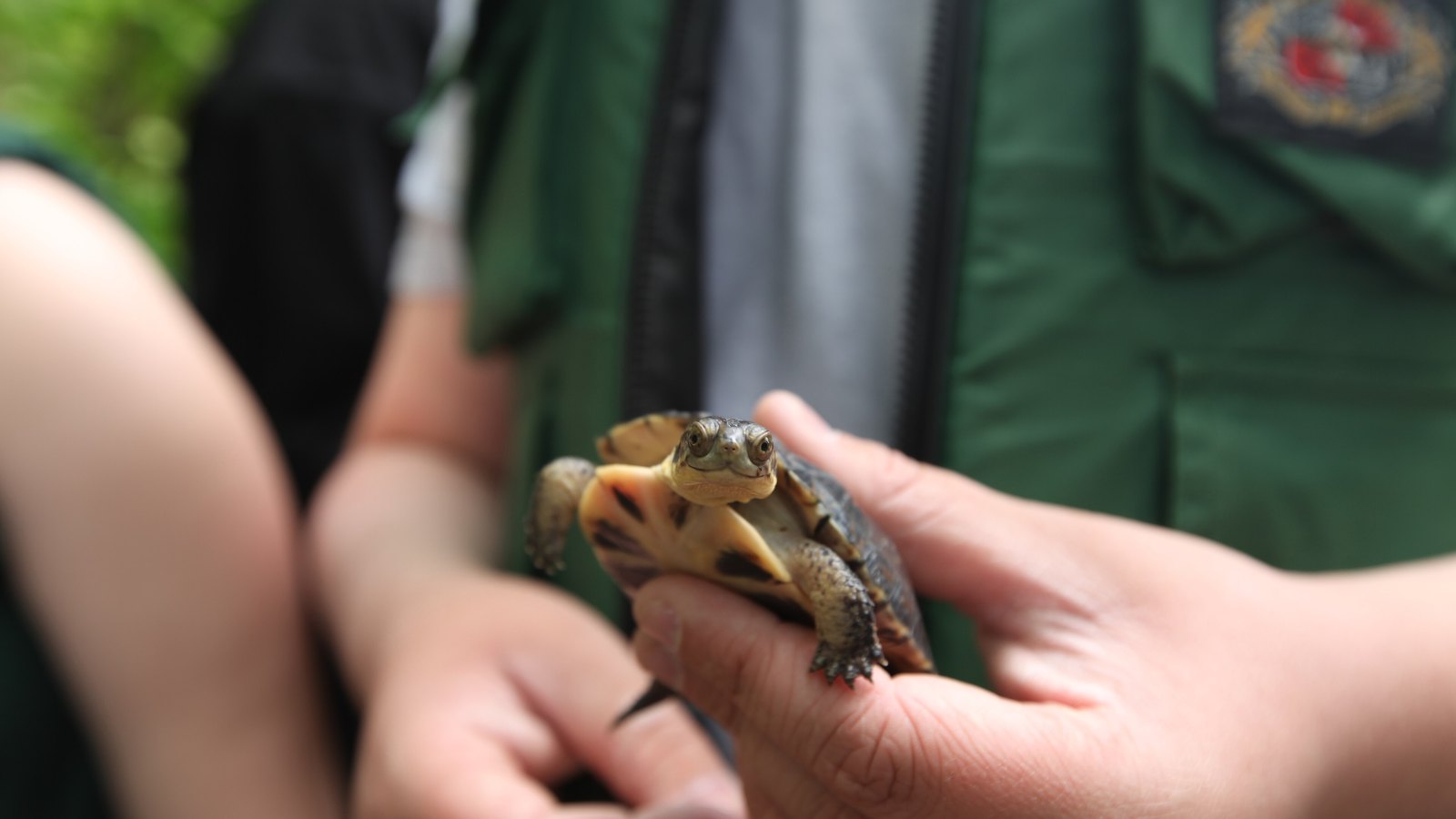
In the Midwest and Eastern United States, the agency proposed threatened status with a Section 4(d) rule (FR Doc. 2026-24221, Docket No. FWS-R3-ES-2026-4390) for the Blanding’s turtle (Emydoidea blandingii) across 14 states and adjacent Canadian provinces. Two Southwestern taxa complete the release: Ferris’s copper butterfly (Lycaena ferrisi) in Arizona, proposed as threatened with a Section 4(d) rule under Docket No. FWS-R2-ES-2024-0158, and Tharp’s bluestar (Amsonia tharpii) in New Mexico and Texas, proposed as endangered under Docket No. FWS-R2-ES-2023-0254.
Species Classifications, Threats, and Regulatory Frameworks
The determinations stem from federal Species Status Assessments evaluating statutory listing factors under ESA Section 4(a)(1), focusing on habitat modification (Factor A) and climate stressors (Factor E). For Cascade and Columbia torrent salamanders, logging road construction, culverts, and timber harvest degrade cold headwater streams. In ecosystem ecology, riparian canopies are recognized as vital buffers against elevated stream temperatures and microclimate desiccation.
Blanding’s turtles face severe habitat fragmentation and road mortality during nesting migrations. Research in movement ecology shows adult females travel over 1,000 meters overland, exposing them to traffic and elevated nest predation by raccoons. The table below outlines the regulatory status and critical habitat findings for all five species:
| Species Common Name | Scientific Name | Proposed Status | Primary Range | Section 4(d) Rule | Critical Habitat Finding |
|---|---|---|---|---|---|
| Cascade Torrent Salamander | Rhyacotriton cascadae | Threatened | Washington, Oregon (Cascade Range) | Yes (tailored take prohibitions) | Prudent but not determinable |
| Columbia Torrent Salamander | Rhyacotriton kezeri | Threatened | Washington, Oregon (Coast Range) | Yes (tailored take prohibitions) | Prudent but not determinable |
| Blanding’s Turtle | Emydoidea blandingii | Threatened | 14 Midwest and Eastern States | Yes (commerce and research exceptions) | Not prudent (poaching risk) |
| Ferris’s Copper Butterfly | Lycaena ferrisi | Threatened | Arizona (White Mountains) | Yes (habitat management provisions) | Not prudent (collection risk) |
| Tharp’s Bluestar | Amsonia tharpii | Endangered | New Mexico, Texas (Chihuahuan Desert) | No (full Section 9 protections) | Prudent but not determinable |
Petitions, Scientific Assessments, and Legal Background
The coordinated determinations follow statutory procedures governed by Title 50, Part 17 of the Code of Federal Regulations. Tharp’s bluestar was initially evaluated by the Smithsonian Institution in 1975, while petitions from conservation groups in 2007 spurred structured reviews. Petitions submitted in 2012 and 2015, documented in historical status review petitions, provided the scientific basis to initiate federal reviews for torrent salamanders and Blanding’s turtles.
The findings synthesize extensive academic research, including microclimatic models by Thurman et al. (2025) and population genetic analyses by Cousins et al. (2026). Concepts discussed in what is ecology underline how long-term field surveys establish the empirical basis for federal conservation determinations. Critical habitat for the torrent salamanders was found prudent but not determinable, granting USFWS a one-year extension under 16 U.S.C. 1533(b)(6)(C)(ii). For Blanding’s turtle and Ferris’s copper, designating critical habitat was found not prudent because publishing maps would increase illegal commercial collection risks.
Agency Rationale and Conservation Stakeholder Responses
Federal officials stated that Section 4(d) rules provide conservation flexibility. Under USFWS listing and classification procedures, Section 4(d) allows customized take prohibitions. USFWS Washington State Supervisor Brad Thompson noted that flexible 4(d) rules facilitate collaboration with forestry partners, while Illinois-Iowa Field Office Supervisor Kraig McPeek highlighted that customized rules support state recovery plans.
Independent conservation groups welcomed the federal protections as a vital step under protected species frameworks. However, herpetologists expressed concern regarding the omission of critical habitat for Blanding’s turtles, noting that roadway mortality and wetland loss remain pervasive threats that require habitat-level protection alongside poaching restrictions.
Compliance Implications for University Researchers and Research Offices
The proposed listings introduce four mandatory compliance obligations for university researchers and research administration offices:
- Scientific Research Permits (ESA Section 10(a)(1)(A)): University faculty and field biologists conducting capture, marking, radio telemetry, genetic sampling, or head-starting on Blanding’s turtles or torrent salamanders will require federal Section 10(a)(1)(A) scientific enhancement permits. State collecting permits will no longer provide sole legal authorization once rules are finalized. Processing timelines under 50 CFR 17.32 require submitting applications months in advance of field work.
- Section 7 Interagency Consultations: Academic projects supported by federal funding—such as National Science Foundation or USDA grants—in occupied habitats must undergo Section 7 consultation to ensure research activities do not jeopardize listed populations.
- IACUC Protocol Revisions: Institutional Animal Care and Use Committees must verify that handling protocols incorporate required biosecurity measures, including field equipment sterilization to avoid spreading amphibian pathogens such as chytrid fungus between streams.
- Geospatial Data Governance: Because USFWS determined critical habitat was not prudent due to collection pressure, universities and museum repositories must redact exact nesting coordinates and colony localities from public theses, preprints, and open-access data portals to prevent illegal harvesting.
Public Comment Deadlines and Procedural Next Steps
The proposed rules are scheduled for official publication in the Federal Register on 30 November 2026, commencing a 60-day public comment period that closes on 29 January 2027. Comments must be submitted through regulations.gov under dockets FWS-R1-ES-2024-0121 (torrent salamanders), FWS-R3-ES-2026-4390 (Blanding’s turtle), FWS-R2-ES-2024-0158 (Ferris’s copper), and FWS-R2-ES-2023-0254 (Tharp’s bluestar).
Requests for public hearings must be submitted in writing within 45 days, by 14 January 2027. Under ESA Section 4(b)(6), USFWS has one year from publication to issue final determinations, with binding protections expected to take effect in late 2027.
Sources
- Federal Register: Public Inspection: Endangered and Threatened Species: Status with Section 4(d) Rule for the Cascade and Columbia Torrent Salamanders, checked 2026-11-27
- Federal Register: Public Inspection: Endangered and Threatened Species: Status with a Section 4(d) Rule for Blanding’s Turtle, checked 2026-11-27
- eCFR: Title 50, Chapter I, Subchapter B, Part 17 – Endangered and Threatened Wildlife and Plants, checked 2026-11-27
- Center for Biological Diversity: Two Pacific Northwest Salamanders Move Closer to Endangered Species Act Protection, checked 2026-11-27
- U.S. Fish and Wildlife Service: Listing and Classification Program, checked 2026-11-27






