
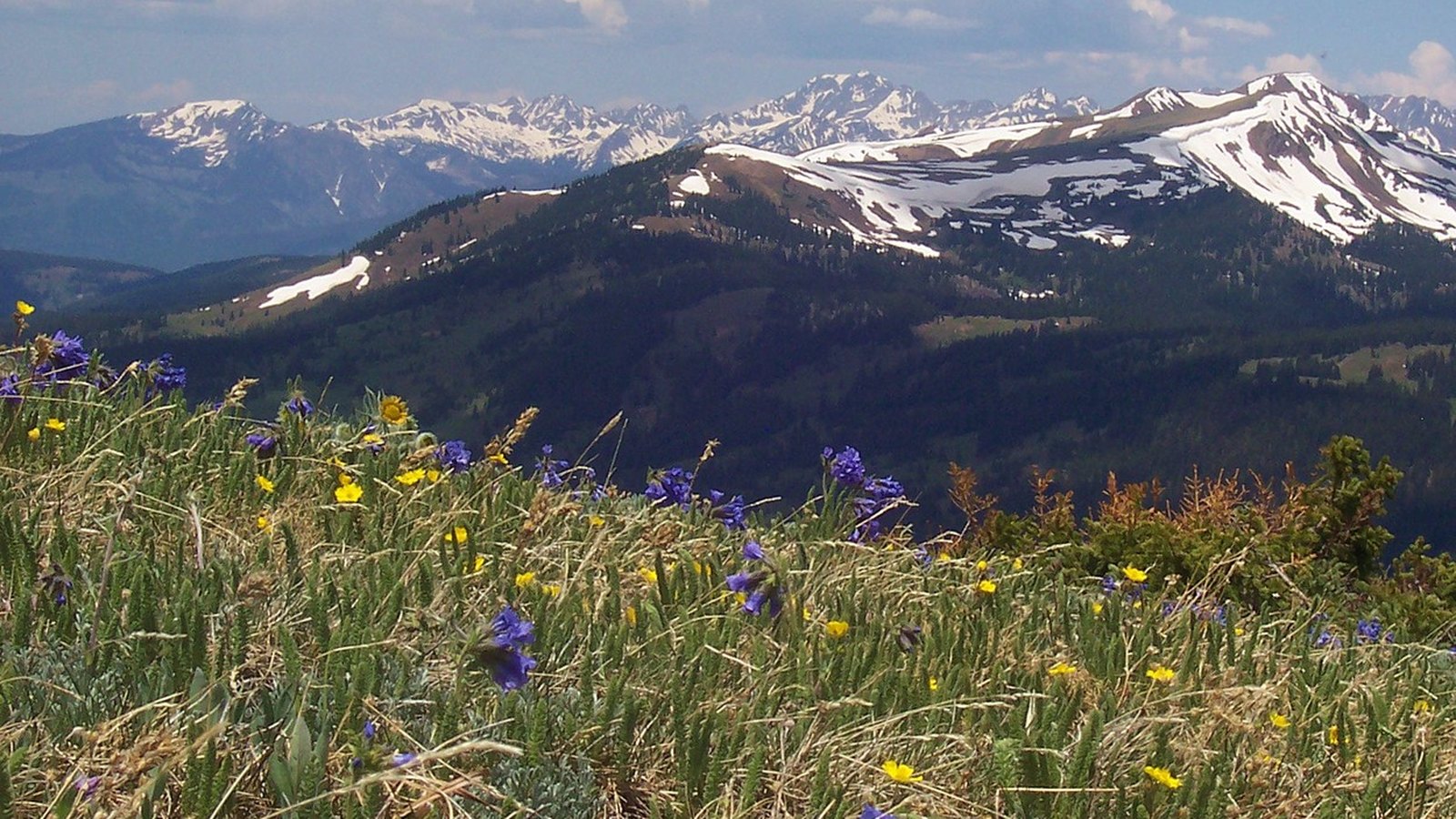
The U.S. Geological Survey posted a cooperative agreement solicitation on November 24, 2026, offering 49,250 dollars in federal funding to upgrade computational pipelines for plant species distribution modeling across Rocky Mountain ecosystems. Issued under opportunity G27AS00041, the award enables an eligible academic or non-profit partner to collaborate directly with federal scientists on remote-sensing biodiversity workflows through January 8, 2027.
Funding Call Overview and Research Scope
Administered through the USGS Fort Collins Science Center under the broader USGS Ecosystems Mission Area, the funding opportunity is cataloged under Assistance Listing 15.808 (U.S. Geological Survey Research and Data Collection). The federal initiative addresses an urgent operational need across western public lands: modernizing species distribution models (SDMs) to track native flora, rare plant communities, and invasive botanical threats with higher spatial and temporal fidelity.
The project will enhance analytical pipelines that integrate botanical occurrence records, functional life-history traits, and environmental predictors derived from satellite remote-sensing constellations, including Landsat and Sentinel-2. By coupling cloud-based computational frameworks with regional ecological datasets, the recipient will refine automated workflows supporting tools such as the USGS Invasive Species Habitat Tool (INHABIT), enabling land managers to anticipate vegetation shifts triggered by climate variability, drought, and ecological disturbance regimes.
Solicitation Parameters and Award Structure
Funding is structured as a two-year cooperative agreement with an initial funding ceiling of 49,250 dollars. Because the mechanism is a cooperative agreement rather than a standard grant, USGS technical staff will maintain substantial involvement in directing computational architectures, benchmarking model accuracy, and co-developing reproducible data workflows. The following table summarizes key administrative and financial parameters of solicitation G27AS00041:
| Parameter | Solicitation Specification | Administrative Significance |
|---|---|---|
| Funding Opportunity | G27AS00041 (Grants.gov ID 364305) | Official solicitation tracking number on Grants.gov |
| Assistance Listing | 15.808: USGS Research and Data Collection | Federal domestic assistance program classification |
| Issuing Program Office | USGS Fort Collins Science Center (FORT) | Ecosystems Mission Area operational research hub |
| Total Program Funding | 49,250 dollars (Award Ceiling: 49,250 dollars; Floor: 1 dollar) | Initial base allocation for a single competitive award |
| Award Mechanism | Cooperative Agreement | Requires substantial USGS scientific and technical collaboration |
| Cost Sharing / Matching | None required (0 percent) | No institutional cost matching mandatory for submission |
| Eligible Network | Rocky Mountain CESU (RM-CESU) affiliated partners | Restricted to formal non-federal members in good standing |
| Indirect Cost Rate Cap | 17.5 percent Modified Total Direct Costs (MTDC) | Mandatory CESU network overhead ceiling |
| Closing Date | January 8, 2027 at 11:59 PM Eastern Time | Electronic submission deadline via Grants.gov Workspace |
Remote-Sensing Integration and Plant Species Distribution Modeling
Contemporary ecological management in the Intermountain West requires moving beyond static, coarse-scale presence-absence mapping toward dynamic, predictive species distribution models. The computational scope funded under G27AS00041 focuses on bridging satellite Earth observation streams with field-collected botanical records. By harmonizing multi-spectral vegetation indices, surface phenology metrics, and terrain variables with plant occurrence databases, the updated modeling pipeline will deliver actionable spatial predictions across diverse montane, riparian, and sagebrush-steppe habitats.
A primary deliverable involves standardizing data pipelines so that newly generated models comply with federal open science mandates. Research teams will document analytical codebases, establish containerized modeling pipelines, and draft formal data access workflows adhering to standards outlined in the data availability statement sample guidance. The resulting algorithms will directly inform multi-agency vegetation management strategies, wildfire recovery planning, and conservation assessments across federal, state, and tribal jurisdictions.
RM-CESU Eligibility and 17.5 Percent Indirect Cost Rate Governance
Participation in solicitation G27AS00041 is strictly restricted to non-federal partners of the Rocky Mountain Cooperative Ecosystem Studies Unit (RM-CESU). Hosted by the University of Montana W.A. Franke College of Forestry and Conservation, the RM-CESU brings together leading regional research universities, state agencies, and non-governmental conservation organizations across Colorado, Montana, Idaho, Wyoming, Utah, and neighboring jurisdictions. Proposals submitted by entities outside this chartered partnership network will be rejected without technical evaluation.
A critical budgeting requirement for university sponsored research offices is the mandatory indirect cost rate cap governing all CESU awards. In accordance with master agreement terms published by the Cooperative Ecosystem Studies Units National Network, participating institutions agree to apply a standardized 17.5 percent overhead rate to project budgets. As articulated in the official CESU indirect cost rate guidance, this 17.5 percent cap applies to Modified Total Direct Costs (MTDC) and takes precedence over standard negotiated institutional rates.
University post-award accountants and pre-award administrators should review institutional protocols for indirect cost recovery to ensure appropriate accounting treatments for this mandated reduction. Because federal cooperative agreements under the CESU framework carry an approved statutory deviation, sponsored programs officers must budget direct project expenditures using the established 17.5 percent ceiling rather than attempting to recover unreimbursed overhead through unapproved matching mechanisms, as detailed in the CASRAI analysis on how to calculate indirect costs (F&A).
Administrative Steps for University Research Offices
Sponsored project offices preparing an application must coordinate closely between principal investigators and administrative officers. Key procedural actions include:
- Verify RM-CESU Affiliation: Confirm that the submitting institution is an active non-federal partner signatory to the Rocky Mountain CESU cooperative agreement master renewal.
- Align Budget Justifications: Ensure personnel compensation, travel, computational supplies, and student support adhere to federal cost principles under Uniform Guidance 2 CFR 200, applying the 17.5 percent MTDC cap without unauthorized fee structures.
- Articulate Substantial Involvement: Clearly delineate shared responsibilities between university researchers and USGS Fort Collins scientists, outlining joint authorship, code repository stewardship, and data management responsibilities.
- Prepare Grants.gov Workspace: Assemble standard federal application packages, including SF-424, SF-424A budget forms, project narratives, biosketches, and data management plans well ahead of system maintenance windows.
Application Timeline and Next Steps
Solicitation G27AS00041 closes electronically through Grants.gov on January 8, 2027, at 11:59 PM Eastern Time. Applications received after this cutoff will not be accepted for review. Following competitive merit evaluation by USGS peer reviewers in early 2027, the agency anticipates issuing the formal cooperative agreement award in mid-2027, supporting project execution through July 31, 2028.
Interested investigators at eligible RM-CESU institutions should contact the USGS Fort Collins Science Center technical lead designated in the opportunity package and notify their institutional sponsored programs office immediately to initiate budget formulation.
Sources
- Grants.gov: USGS G27AS00041 — Cooperative Agreement for Affiliated Partner with Rocky Mountain Cooperative Ecosystem Studies Unit, checked 2026-11-27
- U.S. Geological Survey: Ecosystems Mission Area Research Programs, checked 2026-11-27
- University of Montana: Rocky Mountains Cooperative Ecosystem Studies Unit, checked 2026-11-27
- Cooperative Ecosystem Studies Units National Network: Network Resources and Master Agreements, checked 2026-11-27
- Cooperative Ecosystem Studies Units National Network: Indirect Cost Rate Fact Sheet, checked 2026-11-27






