
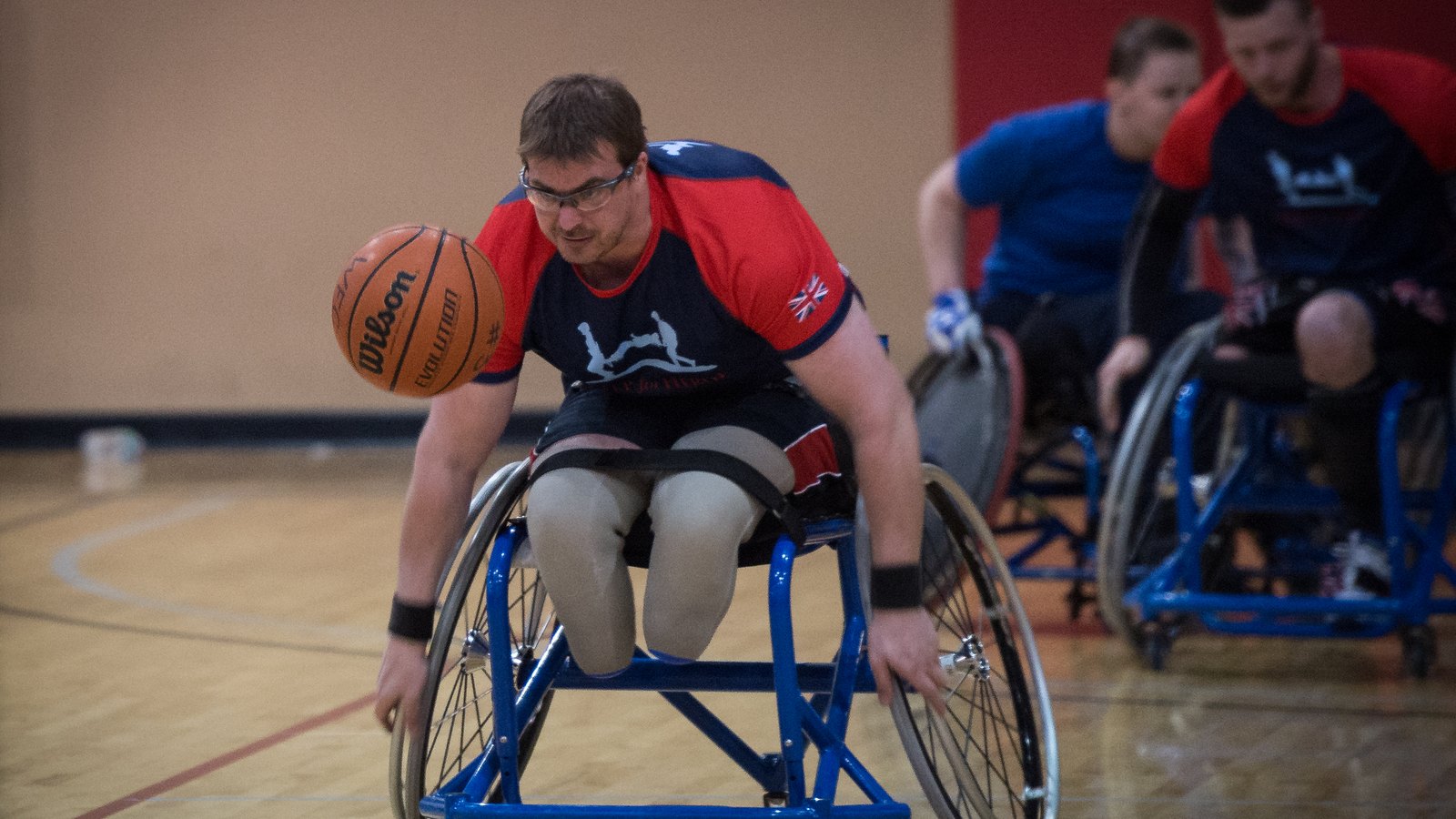
On November 23, 2026, the U.S. Department of Veterans Affairs released a proposed rule modernizing the application and administration procedures for its adaptive sports grant program, aligning the regulations with federal Uniform Guidance under 2 CFR Part 200. The rulemaking eliminates post-deadline application amendments and sole-source noncompetitive awards, establishing stringent submission cutoffs and formal enforcement remedies for university rehabilitation departments and partnering sports organizations.
What happened
The U.S. Department of Veterans Affairs (VA) issued a proposed rule on November 23, 2026, titled “Streamlining the Application Process for Grants for Adaptive Sports Programs for Disabled Veterans and Disabled Members of the Armed Forces,” scheduled for publication in the Federal Register on November 24, 2026. The proposed rule filing (38 CFR Part 77, Docket No. VA-2026-VHA-0496, RIN 2900-AS64) updates the regulations governing federal financial assistance under Assistance Listing 64.034.
Approved by Secretary of Veterans Affairs Douglas A. Collins and submitted by Alternate Federal Register Liaison Officer Gabriela DeCuir, the rulemaking represents the first major overhaul of 38 CFR Part 77 since July 2014. The action is overseen by Rachel McArdle, Deputy Executive Director of the Veterans Health Administration (VHA) Rehabilitation Prosthetics Service. The changes eliminate procedural bottlenecks, require open competition for all awards, and harmonize adaptive sports grant administration with government-wide Uniform Guidance.
Key details of the proposed rule
The rulemaking introduces three substantive revisions and several technical corrections across 38 CFR Part 77:
- Elimination of Post-Deadline Amendments (§ 77.6): The VA removes and reserves § 77.6, which permitted applicants to amend grant applications after the submission deadline. Under Office of Management and Budget (OMB) Memorandum M-04-01, federal grant agencies must publish opportunities on Grants.gov. Because Grants.gov treats each submission as a discrete package, applicants cannot swap individual documents post-submission. Applicants may still resubmit complete replacement packages before the deadline, but no submissions will be accepted once the portal closes.
- Abolition of Noncompetitive Awards (§ 77.13): The rule rescinds § 77.13, § 77.4(c), and related noncompetitive references in §§ 77.9 and 77.10(a). Current rules allowed the VA to invite noncompetitive applications if an entity was deemed the sole capable provider. Rescinding these provisions ensures compliance with 2 CFR 200.204, which requires that federal financial assistance opportunities be openly competed.
- Remedies for Noncompliance (§ 77.21): Section 77.21 is retitled “Remedies for noncompliance,” replacing obsolete text that referenced repealed CFR parts with explicit enforcement authorities under 2 CFR Part 200. The VA may impose specific conditions, disallow costs, withhold disbursements, suspend awards, or terminate grants. Fund recovery provisions from § 77.17 are moved to § 77.21(b), providing a 30-day response window for grantees receiving recovery notices while freezing disbursements during unresolved disputes.
- New Definitions in § 77.2: Formal definitions are added for “suspension” (temporary withdrawal of funding pending corrective action or termination, distinct from government-wide debarment) and “withholding” (pausing disbursements until required documentation or corrective actions are supplied).
- Standardized Terminology and Forms: The VA replaces “Notice of Funding Availability” (NOFA) with “Notice of Funding Opportunity” (NOFO) throughout Part 77. The rule also corrects parenthetical citations in §§ 77.4 and 77.9, replacing construction form SF-424C with Standard Form 424A (Budget Information for Non-Construction Programs, OMB Control No. 4040-0006).
The operational distinctions between the legacy framework and the proposed rule are summarized below:
| Regulatory Area | Legacy Framework (38 CFR Part 77) | Proposed Modernization (2026 Proposed Rule) |
|---|---|---|
| Application Amendments | Permitted post-deadline revisions (§ 77.6) | Removed; strict deadline cutoff; resubmission before closing only |
| Grant Competition | Authorized noncompetitive sole-source grants (§ 77.13) | Removed; mandatory open competition under 2 CFR 200.204 |
| Enforcement and Remedies | Referenced obsolete 38 CFR parts 43 and 49 | Explicit administrative remedies under 2 CFR 200 codified in § 77.21 |
| Solicitation Designation | Notice of Funding Availability (NOFA) | Notice of Funding Opportunity (NOFO) |
| Budget Form Citations | Cited SF-424C (construction) | Corrected to SF-424A (non-construction, OMB 4040-0006) |
Background and context
Statutory authority for adaptive sports grants is codified at 38 U.S.C. 521A, authorizing the VA Secretary to assist eligible entities in planning, developing, and implementing adaptive sports programs for disabled veterans and armed forces members. Regulations implementing the program were promulgated on July 1, 2014 (79 FR 37211). Today, the VA Adaptive Sports Grant Program distributes awards nationwide to support activities ranging from Paralympic training to community health initiatives.
When Part 77 was adopted, § 77.21 referenced 38 CFR parts 43 and 49, which codified legacy OMB circulars (A-21, A-110, A-122). In December 2014, federal agencies adopted the Uniform Guidance in 2 CFR Part 200 (79 FR 75871), adding 2 CFR 802.101 to apply Uniform Guidance to the VA and subsequently removing parts 43 and 49. The proposed rule cleans up these obsolete citations and ties enforcement directly to 2 CFR 200.339 through 200.343.
The VA assessed the rulemaking under Executive Order 14192 (“Unleashing Prosperity Through Deregulation”, 90 FR 2065, February 6, 2025) and determined it to be a deregulatory action that removes outdated procedures without imposing new compliance burdens on small entities or veteran athletes.
Reaction
In its regulatory preamble, the VA stated that the reforms eliminate review delays that previously threatened timely grant distribution. The agency explained that accepting post-deadline amendments created administrative burdens that stalled peer review panels as application numbers expanded.
Adaptive sports bodies, including Move United, have long supported predictable funding calendars to ensure community sports clubs can schedule facilities and coaching staff. Academic institutions, including the University of Illinois Wheelchair Athletics program, similarly rely on transparent grant schedules to support collegiate athletic training and kinesiology research.
What it means for researchers, universities and research offices
The proposed revisions require immediate adjustments in university research administration and sponsored programs offices:
- Enforcing Strict Pre-Award Submission Cutoffs: Because Grants.gov does not allow partial amendments after closing, research offices can no longer submit draft proposals with plans to update budgets later. Sponsored programs offices should set internal deadlines 48 to 72 hours before the federal closing time to ensure complete package validation. For background on solicitation standards, review CASRAI’s analysis of funding opportunity announcement mechanisms.
- Transitioning Away from Noncompetitive Sole-Source Grants: Investigators who previously accessed noncompetitive funding under § 77.13 must now prepare competitive applications scored under §§ 77.5 and 77.8. Proposals must detail measurable athletic outcomes, veteran recruitment plans, and program design.
- Aligning Post-Award Accounting with Uniform Guidance: Codifying remedies under § 77.21 heightens audit sensitivity for adaptive sports expenditures. Project administrators must ensure financial tracking satisfies 2 CFR 200 Subpart D post-award requirements. For institutions managing both commercial and federal assistance, understanding the division in FAR Part 31 vs 2 CFR 200 remains critical for proper cost classification.
- Subrecipient Monitoring and Pass-Through Governance: Universities that pass grant funds through to community sports clubs must incorporate the VA’s suspension, withholding, and recovery terms into subaward agreements. Administrators should perform routine subrecipient risk assessments before issuing subawards.
- Procedures for Noncompliance and Fund Recovery: If the VA issues a notice of intent to recover funds, institutions have 30 days to submit rebuttal documentation. Research accounting teams should maintain audit corrective action plans to resolve documentation deficiencies before disbursements are frozen.
What happens next
Following publication in the Federal Register on November 24, 2026, the VA will accept public comments for 60 days, through January 25, 2027. Comments may be submitted through Regulations.gov under Docket No. VA-2026-VHA-0496 and RIN 2900-AS64. Following review of public feedback, the VA plans to issue a final rule ahead of the Fiscal Year 2027 adaptive sports grant cycle.
Sources
- Federal Register: Streamlining the Application Process for Grants for Adaptive Sports Programs for Disabled Veterans and Disabled Members of the Armed Forces (Proposed Rule), checked 2026-11-23
- Electronic Code of Federal Regulations (eCFR): 2 CFR 200.204 – Federal awarding agency review of merit of proposals, checked 2026-11-23
- U.S. Government Publishing Office (GovInfo): 38 U.S.C. 521A – Adaptive sports programs for disabled veterans and members of the Armed Forces, checked 2026-11-23
- U.S. Department of Veterans Affairs: Adaptive Sports Grant Program Overview, checked 2026-11-23
- Move United: Adaptive Sports Member Programs and Veteran Services, checked 2026-11-23
- University of Illinois Urbana-Champaign: Wheelchair Athletics and Adaptive Sports Program, checked 2026-11-23






