
On 19 November 2026 the Association for Computing Machinery (ACM) awarded the 2026 Gordon Bell Prize to a ten-member team from Chinese institutions, according to its announcement, for the first exascale classical solution to the FeMoco problem. The decision, made at SC26 in Chicago, follows our earlier report on a different Gordon Bell finalist. It matters to anyone who plans or uses large-scale research computing.
What happened
ACM named the team as winner of the 2026 ACM Gordon Bell Prize for the project “Closing the FeMo-Cofactor ‘Quantum-Advantage’ Gap with Exascale Supercomputers”, and said the prize was presented during SC26 in Chicago, Illinois. In the release, as republished by HPCwire, ACM describes the work as the first “exascale” classical solution to the FeMoco CAS problem, the simulation of the iron-molybdenum cofactor involved in converting nitrogen into ammonia.
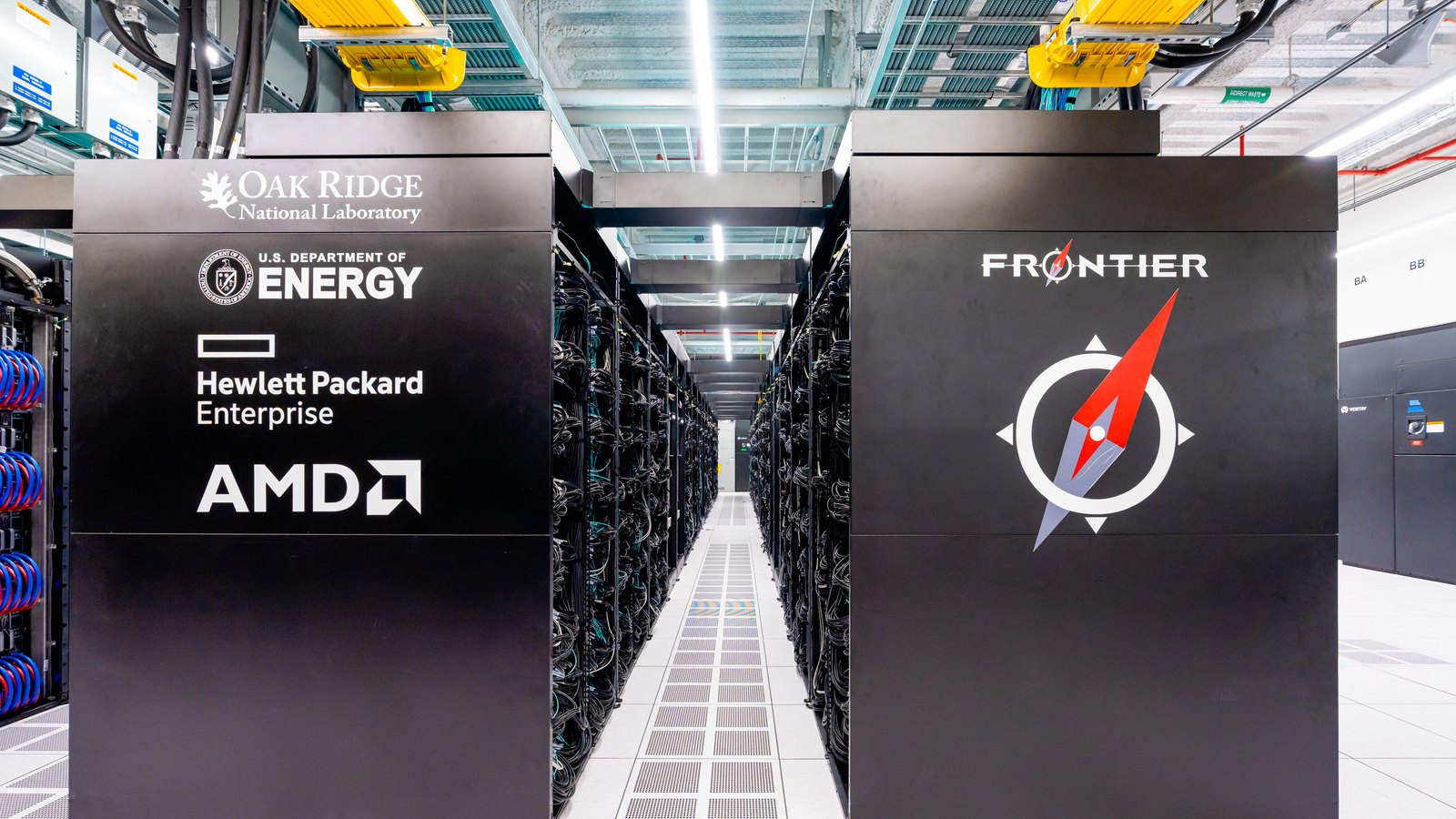
The same day, ACM presented the ACM Gordon Bell Prize for Climate Modelling to a 13-member team drawn mainly from Oak Ridge National Laboratory (ORNL). Its paper is titled “Global Attention with Linear Complexity for Exascale Generative Data Assimilation in Earth System Prediction”, and the team’s algorithm is called STORM, as HPCwire reported from the ACM release.
Key details
| Item | Gordon Bell Prize | Climate Modelling prize |
|---|---|---|
| Project | Closing the FeMo-Cofactor “Quantum-Advantage” Gap with Exascale Supercomputers | Global Attention with Linear Complexity for Exascale Generative Data Assimilation in Earth System Prediction (STORM) |
| Team | Ten members from Chinese institutions | Thirteen members from ORNL, Auburn University, Florida State University, Colorado State University and AMD |
| Machines | LineShine and China’s New-generation Intelligent Super-computer (CNIS) | Frontier |
| Reported performance | 1.456 EFLOP/s in double precision on 20,480 LineShine nodes (58.9% of peak); 5.626 EFLOP/s in mixed precision | Up to 6 ExaFLOPs sustained BF16 throughput; 74,400 GPUs at 96-99% strong-scaling efficiency |
The FeMoco figures come from the paper’s abstract as quoted by ACM. The team members include Honghui Shang, Zhuozhao Xia, Hao Wu, Huan Ma and Jinlong Yang of the University of Science and Technology of China in Hefei, colleagues from the Chinese Academy of Sciences, the National High Performance Computer Engineering Technology Research Center in Beijing, and Yutong Lu of Sun Yat-Sen University in Shenzhen.
For the climate project, HPCwire reports that STORM uses generative AI to replace the traditional two-step data assimilation process with a single step, that it can run ensembles of 32,768 members for uncertainty quantification in 34 seconds on 4,096 GPUs, and that it handles 20 billion spatiotemporal tokens and 177,000 temporal frames. The applications named are hurricane modelling and long-term climate reanalysis, and the winning research will be published in the International Journal of High Performance Computing Applications. The climate prize carries $10,000 funded by Gordon Bell.
Background and context
FeMoco has long served as a showcase problem for quantum computing. MLQ.ai notes that a 2016 paper by researchers at Microsoft and ETH Zurich, later published in PNAS, used it to argue how an error-corrected quantum computer could resolve the nitrogen-fixation mechanism, and that the problem has since appeared in many quantum resource estimates. The winning title frames the new work as narrowing that gap with classical hardware. MLQ.ai also points out that ACM’s release does not say how close the result comes to the accuracy quantum chemists want for the full reaction mechanism, so the result alone does not settle whether FeMoco remains a quantum-advantage target.
The prize itself tracks the progress of parallel computing and rewards innovation in applying high-performance computing to science, engineering and large-scale data analytics. On the US side, Frontier is one of the exascale systems researchers reach through allocation programmes; see our guides to Frontier and to the ASCR Leadership Computing Challenge. The finalist we covered earlier ran on El Capitan.
Reaction and coverage
The Quantum Insider, reporting on 20 November, ran the ACM release with the headline that a 10-member team drawn from Chinese institutions had won, and tagged it under China, LineShine and supercomputing. Chinese outlet Bastille Post, citing the ACM release, linked the two Chinese results to Sugon 8000 (Dengfeng), described as China’s first 100,000-card AI supercluster, put into use in July in Zhengzhou. It also reported that another Chinese team’s model, Super Dynamics on the Cube (SD3), was a finalist for the climate prize, achieving 205.7 simulated days per day at 1.5 kilometre global resolution on 24,576 GPUs.
What it means for researchers, universities and research offices
- Quantum-advantage claims need a classical baseline. A benchmark chemistry problem was solved classically at exascale scale, so proposals that justify quantum hardware by pointing to FeMoco should state which classical results they compare against and at what accuracy.
- Leadership-class access is a research input. Both prizes rest on exascale machines. Research offices supporting computational projects should track the allocation routes for national systems and plan for the engineering effort needed to reach tens of thousands of nodes or GPUs.
- AI-based data assimilation is now a scale-tested method. The STORM figures, including 74,400 GPUs and ensembles of 32,768 members, give weather and climate groups a concrete reference when assessing generative approaches to forecasting and reanalysis.
- International collaboration planning. Chinese teams took the main prize and a climate finalist place, while an ORNL-based, multi-institution team took the climate prize. Offices managing joint work should check compliance guidance such as compute governance and export controls case by case.
What happens next
HPCwire reports that the winning climate research will appear in the International Journal of High Performance Computing Applications. For the FeMoco work, the abstract quoted by ACM is the public technical description so far; readers can compare the full paper against published quantum resource estimates when it is available. Background on the methods is in our guide to QM/MM.
Sources
- ACM: Gordon Bell Prizes Awarded at SC26 Conference (ACM, 19 November 2026)
- Chinese Team Wins 2026 ACM Gordon Bell Prize for Exascale Quantum Chemistry (HPCwire, 19 November 2026)
- STORM Team Wins Gordon Bell Climate Prize for AI-Based Data Assimilation on Frontier (HPCwire, 19 November 2026)
- 10-Member Team Drawn from Chinese Institutions Wins 2026 Gordon Bell Prize (The Quantum Insider, 20 November 2026)
- Chinese team wins the 2026 Gordon Bell Prize for an exascale simulation of a chemistry problem (MLQ.ai, 20 November 2026)
- Research powered by China’s 100,000-card AI supercluster earns Gordon Bell Prize (Bastille Post, 22 November 2026)


