
In a major milestone for quantum many-body physics, researchers from Harvard University, Lawrence Berkeley National Laboratory’s National Energy Research Scientific Computing Center (NERSC), QuEra Computing, and Boston University have experimentally observed prethermal dynamical phase transitions and structured resonant melting across arrays of up to 180 neutral-atom qubits on the programmable Aquila quantum processor.
What happened
In November 2026, the research team published their peer-reviewed findings in the journal Nature, reporting the direct observation of emergent prethermal regimes in isolated quantum systems driven far from equilibrium by sudden quantum quenches. Using QuEra’s Aquila device—an analog quantum processor utilizing individually trapped rubidium-87 atoms in optical tweezer configurations and accessed through Amazon Web Services via Amazon Braket—the team investigated how interacting quantum particles evolve when subjected to sudden parameter changes.
According to reporting by The Quantum Insider, the experiments charted non-equilibrium trajectories across both one-dimensional chains of up to 52 atoms and two-dimensional square lattices containing up to 180 neutral-atom qubits. Rather than thermalizing rapidly toward an unstructured infinite-temperature state as anticipated under conventional statistical mechanics, the systems settled into robust, long-lived prethermal steady states. These long-lived configurations are protected over exponentially extended timescales by kinetic constraints stemming from strong Rydberg blockade interactions.
Analysis highlighted by the Quantum Computing Report revealed that the collaboration identified two primary non-equilibrium phenomena: structured resonant melting in one dimension and a sharp first-order dynamical phase transition in two dimensions. Crucially, the observed two-dimensional dynamical phase transition is driven by the proliferation of Néel-order defects and possesses no direct counterpart in the system’s standard equilibrium phase diagram, confirming that programmable analog quantum simulators can operate in an active discovery mode to uncover previously inaccessible phases of matter.
Key details
The collaborative investigation relied on a tightly integrated hybrid quantum-classical workflow combining programmable neutral-atom hardware, cloud access infrastructure, and high-performance computing clusters.
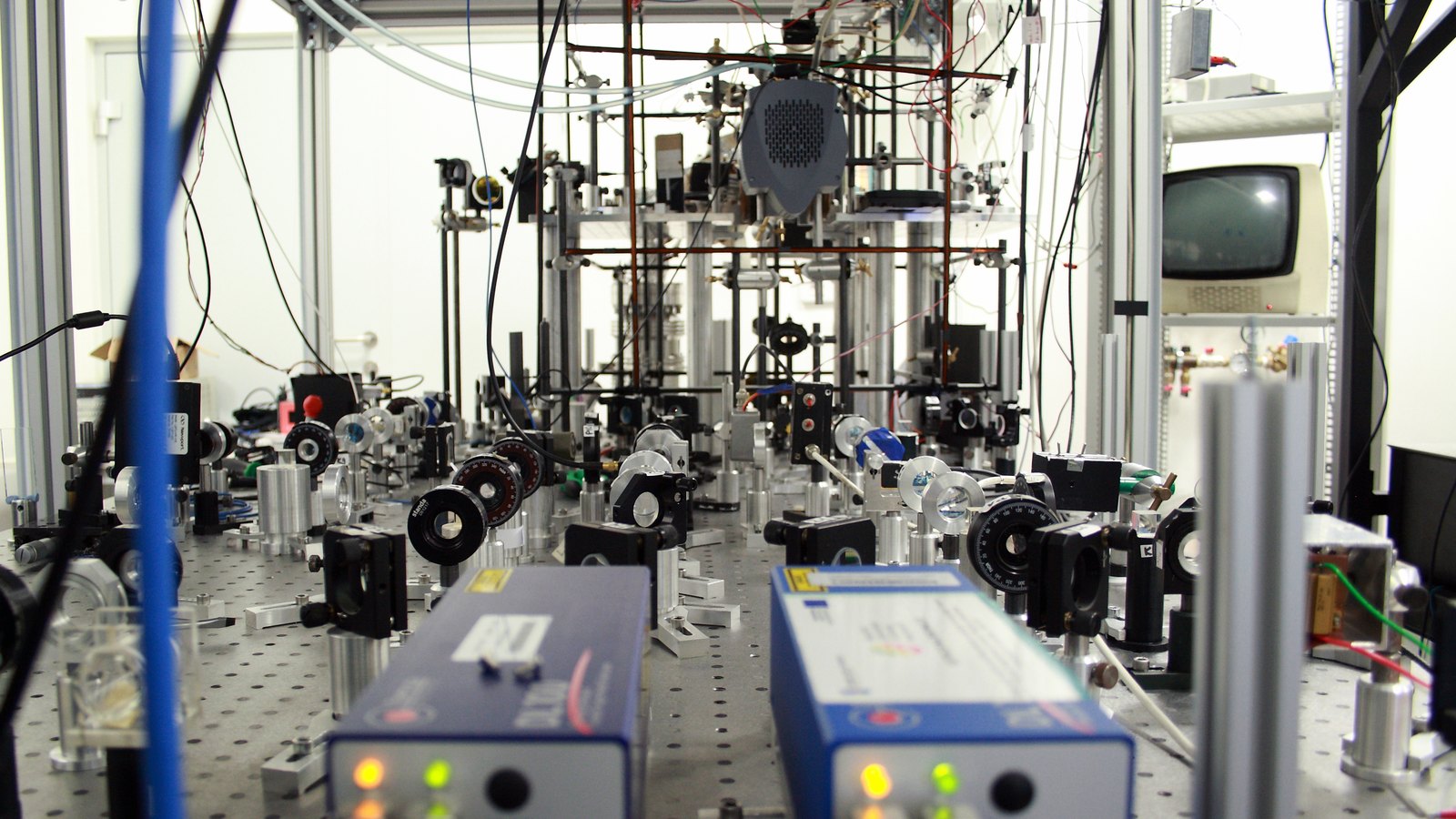
On the hardware side, as detailed on the AWS Quantum Technologies Blog, the team utilized QuEra’s commercial Aquila processor deployed in Boston and made available through Amazon Braket. The system traps neutral rubidium-87 atoms using spatial light modulators and acousto-optic deflectors to generate arbitrary one-dimensional and two-dimensional geometries. Global coherent laser pulses drive transitions between the atomic ground state and high-lying Rydberg states characterized by strong van der Waals interactions. By adjusting laser detuning and Rabi frequency, researchers executed hardware-native sudden quantum quenches that pushed atomic arrays far out of equilibrium.
To establish rigorous computational reproducibility, the experimental runs were systematically cross-benchmarked against classical numerical simulations on NERSC’s Perlmutter supercomputer at Lawrence Berkeley National Laboratory. Classical calculations utilized open-source software through the Bloqade.jl package developed by QuEra, executing exact diagonalization across the blockaded Rydberg subspace. Because exact classical state-vector simulation scales exponentially with qubit count, exact classical diagonalization was computationally constrained to system sizes of up to 20 atoms, underscoring the divide between classical HPC capabilities and the 180-atom physical quantum processor.
| Parameter | Quantum Hardware (Aquila) | Classical HPC (Perlmutter) |
|---|---|---|
| Platform Architecture | Neutral-atom optical tweezer array (Rubidium-87) | HPE Cray EX supercomputer (CPU/GPU nodes) |
| Operating Scale | Up to 180 qubits in 2D, 52 atoms in 1D | Exact diagonalization up to 20 atoms |
| Access Framework | Amazon Braket cloud quantum service | NERSC supercomputing allocation |
| Software Environment | Hardware-native analog pulse control | Bloqade.jl exact state-vector simulation |
| Physical Phenomena | Prethermal states, resonant melting, dynamical transitions | Subspace finite-size scaling and noise validation |
Background and context
Understanding how isolated quantum systems relax after sudden energetic perturbations is a central challenge in modern condensed-matter and many-body physics. Under the standard Eigenstate Thermalization Hypothesis, non-integrable quantum systems typically act as their own internal heat baths, rapidly scrambling quantum information and erasing memory of initial configurations until local observables resemble thermal Gibbs states.
Prethermalization provides an exception to immediate thermal equilibrium. When strong dynamical constraints—such as the Rydberg blockade, where excited atoms prevent nearby neighbors from exciting simultaneously—frustrate particle movement, quantum systems can become trapped in intermediate steady states. While Floquet prethermalization has been studied in periodically driven systems, observing prethermal dynamical phase transitions and structured resonant melting in autonomous, non-driven quantum quenches at macroscopic scales has historically been prevented by decoherence and scaling limitations.
The initial theoretical framework and preliminary numerical verifications for this study were made accessible in an arXiv preprint before formal peer review and experimental execution at full hardware scale. The transition from 20-atom exact diagonalization to 180-atom quantum hardware highlights the growing role of neutral-atom quantum processors. While superconducting circuits and trapped-ion systems offer fast gate execution, neutral atoms in optical tweezers provide superior two-dimensional geometric flexibility and scalability, allowing researchers to arrange hundreds of interacting atoms in custom lattice geometries without fabricated physical wiring.
Reaction
Lead investigators emphasized that the findings mark a transition from benchmarking quantum devices against known physics to employing them as instruments of physical exploration. Researchers from Berkeley Lab’s NERSC noted that achieving precise quantitative alignment between Perlmutter’s classical simulations on 20-atom clusters and Aquila’s hardware outputs provides confidence that the collective phenomena mapped at 180 atoms represent genuine physical behaviors rather than hardware-induced noise or measurement artifacts.
Scientists from QuEra Computing and Harvard University pointed out that the detection of resonant melting—where prethermal order breaks down sharply at predictable multi-excitation resonance frequencies—provides physicists with a quantitative tool to control how quantum information disperses across complex networks. Academic commentators across quantum computing outlets highlighted the generalized Clausius-Clapeyron test used by the team to confirm the first-order nature of the two-dimensional dynamical phase transition, noting that demonstrating thermodynamic-like phase boundaries in far-from-equilibrium quantum states establishes a new standard for non-equilibrium experimentation.
What it means for researchers and research institutions
For research administrators, facility managers, and university departments, this development carries concrete operational, methodological, and infrastructural lessons:
- Hybrid Quantum-HPC Integration: Academic research institutions must adapt computational infrastructure to support hybrid pipelines where supercomputers and cloud-based quantum processors collaborate. High-performance facilities such as the systems described in the Frontier supercomputer analysis will increasingly serve as validation engines for quantum simulators rather than standalone endpoints.
- Experimental and Methodological Rigor: As quantum simulators expand beyond the verification capacity of classical computers, establishing strict methods reproducibility protocols—including public archiving of pulse sequences, calibration logs, and raw single-shot readout distributions—becomes mandatory for peer review in leading physical science journals.
- Democratized Hardware Access: By conducting primary research on a commercially available processor via Amazon Braket rather than an exclusive in-house apparatus, the collaboration demonstrates that university researchers can execute frontier experiments without constructing proprietary cryostats or laser laboratories. Research offices should streamline cloud procurement mechanisms to support specialized quantum computing credits for physics and materials science faculties.
- Software Standardization: The deployment of Julia-based simulation toolkits like Bloqade.jl highlights the necessity of supporting open-source scientific programming environments across institutional computing clusters.
What happens next
Following the publication of the study, the research consortium is advancing toward extended non-equilibrium exploration on next-generation neutral-atom architectures. QuEra has outlined hardware roadmaps aiming to scale programmable neutral-atom processors to larger qubit counts while introducing local optical control and mid-circuit readout capabilities planned across subsequent operational cycles.
At Lawrence Berkeley National Laboratory and NERSC, computational scientists are developing expanded tensor-network algorithms and quantum Monte Carlo techniques to push classical benchmarking beyond the 20-atom limit for weakly entangled prethermal regimes. Meanwhile, experimental teams at Harvard and Boston University are preparing follow-on quench protocols designed to test whether topologically ordered states and quantum many-body scars can remain stable under similar dynamical constraints.
Sources
- Nature: Observation of prethermal dynamical phase transitions and resonant melting, checked 2026-11-21
- The Quantum Insider: QuEra Computing and Berkeley Lab Publish Nature Study of Quantum Dynamics on Up to 180 Qubits, checked 2026-11-21
- Quantum Computing Report: QuEra Computing and Lawrence Berkeley National Lab Observe Prethermal Dynamical Phase Transitions on 180 Qubits in Nature Study, checked 2026-11-21
- AWS Quantum Technologies Blog: Observing prethermal dynamical phase transitions on QuEra Aquila with Amazon Braket, checked 2026-11-21
- arXiv: Probing emergent prethermal dynamics and resonant melting on a programmable quantum simulator, checked 2026-11-21


