
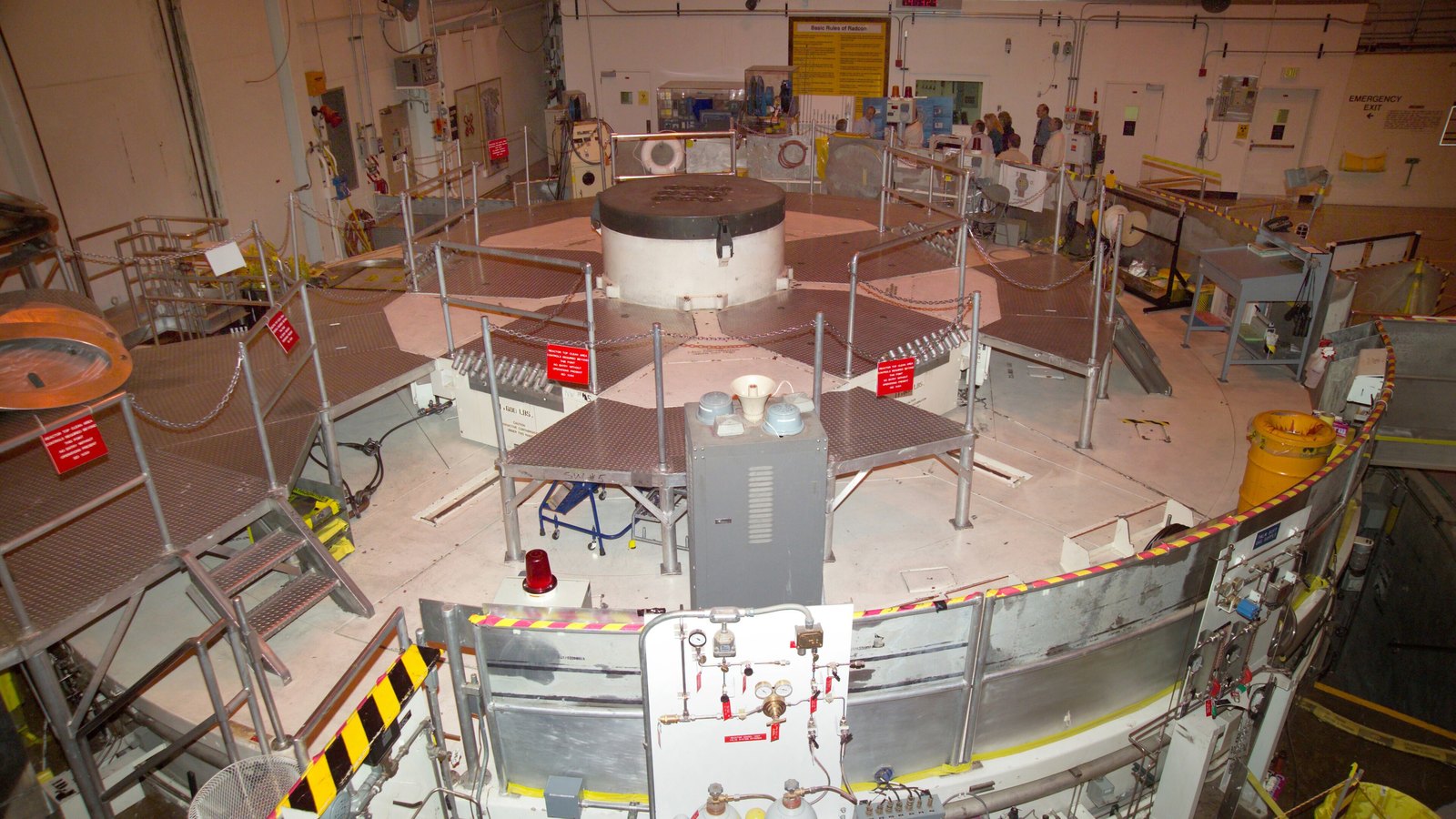
On November 23, 2026, the U.S. Department of Commerce’s Bureau of Industry and Security opened a 60-day public comment period on the renewal of information collection requirements for the U.S.–International Atomic Energy Agency Additional Protocol, mandating annual reporting on civil nuclear fuel-cycle research and development across American universities, national laboratories, and commercial facilities.
Federal Register Notice and Information Collection Scope
The Bureau of Industry and Security (BIS) issued the formal request through Federal Register notice 2026-23758 under Office of Management and Budget (OMB) Control No. 0694-0135. The notice initiates a 60-day public consultation under the Paperwork Reduction Act of 1995 (PRA) prior to submitting the collection to the White House Office of Management and Budget for a three-year extension.
The information collection operationalizes the United States’ international declaration commitments under the U.S.–IAEA Additional Protocol. Implemented domestically pursuant to the Additional Protocol Implementation Act of 2006 (Title II of Public Law 109-401) and Executive Order 13458, the Additional Protocol Regulations (APR) are codified at 15 CFR Parts 781 through 786. Under these regulations, commercial facilities, academic institutions, and independent laboratories must submit standardized annual declarations detailing civil nuclear fuel-cycle activities, equipment fabrication, and physical site configurations to BIS, which aggregates and transmits the data to the International Atomic Energy Agency (IAEA) in Vienna.
Key Reporting Parameters and Form Designations
The Federal Register notice covers reporting forms AP-1 through AP-17 as well as international declaration forms AP-A through AP-Q. Under 15 CFR Part 783, entities conducting civil nuclear fuel cycle-related research and development that does not involve nuclear materials must report their activities annually to the federal government. Response burdens vary widely based on institutional scale, ranging from 23 minutes for routine administrative confirmations to 6 hours for complex technical submissions across distributed campus facilities.
According to Commerce Department estimates, the collection impacts approximately 500 respondent entities nationwide, representing an aggregate annual burden of 920 hours and an estimated public compliance cost of ,400. In accordance with BIS Additional Protocol guidance, reporting entities submit initial reports, annual updates, or simplified no-changes filings.
| Form or Metric | Regulatory Designation | Scope and Compliance Requirements |
|---|---|---|
| OMB Control Number | 0694-0135 | Information collection authorization for mandatory Additional Protocol report forms. |
| Comment Deadline | January 22, 2027 | 60-day public comment window preceding formal submission to OMB for approval. |
| Estimated Respondents | 500 entities | Universities, commercial vendors, and independent non-federal research laboratories. |
| Annual Response Burden | 920 total hours | Per-response completion time ranges between 23 minutes and 6 hours depending on facility complexity. |
| Estimated Public Cost | ,400 | Annual direct public cost associated with form preparation and document submission. |
| Form AP-1 & Form AP-2 | Certification and Contacts | Mandatory institutional identification, location details, and certifying official sign-offs. |
| Form AP-3 | U.S. Government-Involved R&D | Fuel-cycle R&D not involving nuclear material funded or authorized by the U.S. government. |
| Form AP-4 | Non-Government Fuel-Cycle R&D | Civil fuel-cycle research conducted without U.S. government involvement or sponsorship. |
| Form AP-5 | Equipment Manufacturing | Manufacturing, assembly, or construction of centrifuges, diffusion barriers, or reactor items. |
| Form AP-17 | No Changes Report | Streamlined annual certification confirming previously reported location data remains unaltered. |
Regulatory Background and the U.S.–IAEA Additional Protocol
The Additional Protocol emerged from international non-proliferation efforts in the 1990s following the discovery of clandestine nuclear weapons development programs. In 1997, the IAEA Board of Governors adopted the Model Additional Protocol (INFCIRC/540) to strengthen traditional safeguards agreements established under INFCIRC/153. An independent analysis by the Arms Control Association emphasizes that whereas comprehensive safeguards focus strictly on accounting for declared nuclear materials, the Additional Protocol provides international inspectors with expanded rights to information and complementary access regarding the broader civil fuel cycle.
Although the United States is recognized as a nuclear-weapon state under the Treaty on the Non-Proliferation of Nuclear Weapons, Washington ratified the U.S.–IAEA Additional Protocol to demonstrate parity with non-nuclear-weapon states and show that international safeguards do not impose an unfair competitive disadvantage on peaceful civilian industries. Domestic regulatory authority is divided among several federal agencies: the Nuclear Regulatory Commission oversees licensed commercial reactors and special nuclear materials, the Department of Energy manages defense complex facilities, and the Department of Commerce regulates civil non-nuclear-material R&D, manufacturing facilities, and academic institutions. Multilateral export arrangements such as the Nuclear Suppliers Group align closely with these reporting mechanisms to prevent the proliferation of sensitive dual-use technology.
Compliance Considerations for Higher Education and Research Institutions
A common misconception within academic environments is that federal nuclear compliance attaches only when radioactive isotopes or special nuclear materials are physically present inside laboratory facilities. Under 15 CFR Part 783, however, reporting obligations attach directly to technical subject matter within the civil nuclear fuel cycle. Projects investigating centrifuge dynamics, laser-based isotopic separation, spent-fuel reprocessing chemistry, or advanced heavy-water reactor modeling require annual reporting on Form AP-3 or Form AP-4 regardless of whether radioactive substances are handled on site.
As documented in the Cornell Law School Legal Information Institute regulatory reference, the definition of reportable fuel-cycle activities encompasses research carried out both with and without U.S. government sponsorship. Consequently, campus compliance officials managing research security frameworks must actively monitor department-level research portfolios across nuclear engineering, chemical engineering, and materials science. While university scientists frequently rely on the fundamental research exclusion to publish basic research findings openly, this academic publication exclusion does not relieve institutions of their separate statutory obligation to submit administrative declarations under the APR. Furthermore, broader dual-use technology controls governed by the Export Control Reform Act reinforce institutional oversight of sensitive laboratory methodologies.
Implications for University Research Offices and Compliance Officers
For sponsored research administrators and university export control officers, managing compliance under the Additional Protocol requires proactive coordination between campus laboratories and central administration. Guidance issued by the University of Alabama at Birmingham Export Control Office notes that university compliance programs must systematically identify international agreements and specialized federal reporting streams that intersect with academic research. Effective institutional management involves several critical administrative steps:
- Annual Departmental Screening: Research offices should distribute targeted compliance questionnaires to principal investigators in physics, engineering, and chemistry departments each autumn to identify active fuel-cycle projects prior to the January reporting cycle.
- Sponsorship Classification: Administrators must distinguish between federally funded research (Form AP-3) and internally or commercially sponsored investigations (Form AP-4) to ensure accurate reporting to BIS.
- Inspection Readiness: Under 15 CFR Part 784, facilities that report civil fuel-cycle research may be selected for complementary access by IAEA international inspectors. Institutions must establish written inspection response protocols, identify designated facility liaisons, and maintain building floor plans.
- Recordkeeping Compliance: Under 15 CFR Part 786, universities must maintain complete records of all submitted forms, project descriptions, and correspondence for at least three calendar years from the date of submission.
Appointing a dedicated research security officer or export control administrator ensures that university faculty receive appropriate guidance when initiating projects that touch controlled nuclear fuel-cycle areas.
Public Comment Timeline and Next Steps
The 60-day public comment window established by BIS will remain open through January 22, 2027. Academic institutions, research consortia, and industrial manufacturers have an opportunity to provide concrete feedback on the practical administration of the reporting forms. Specifically, the Commerce Department is soliciting input on:
- Whether the proposed information collection is necessary for the proper performance of agency functions and carries practical utility for international non-proliferation goals;
- The accuracy of the agency’s estimate that compliance requires 920 total annual burden hours across 500 respondents;
- Approaches to enhance the clarity, operational utility, and quality of the AP report forms; and
- Methods to minimize reporting burdens through digital submission tools, modernized electronic filing portals, or automated data exchange interfaces.
Comments should reference OMB Control No. 0694-0135 and be submitted by email to the Bureau of Industry and Security information collection liaison. Following the conclusion of the public comment period in January 2027, BIS will review stakeholder recommendations before submitting the final information collection package to OMB for formal three-year renewal approval.
Sources
- Office of the Federal Register: Bureau of Industry and Security Notice 2026-23758, Agency Information Collection Activities; Comment Request; Additional Protocol Report Forms, checked 2026-11-22
- National Archives: Electronic Code of Federal Regulations, Title 15 Part 783, Civil Nuclear Fuel Cycle-Related Activities Not Involving Nuclear Materials, checked 2026-11-22
- Bureau of Industry and Security: U.S. Additional Protocol Regulations and Reporting Requirements, checked 2026-11-22
- Arms Control Association: IAEA Safeguards Agreements and Additional Protocols at a Glance, checked 2026-11-22
- Cornell Law School Legal Information Institute: 15 CFR Part 783, Additional Protocol Regulations, checked 2026-11-22
- University of Alabama at Birmingham: U.S. Governing Authorities and Regulations for Export Controls, checked 2026-11-22






