
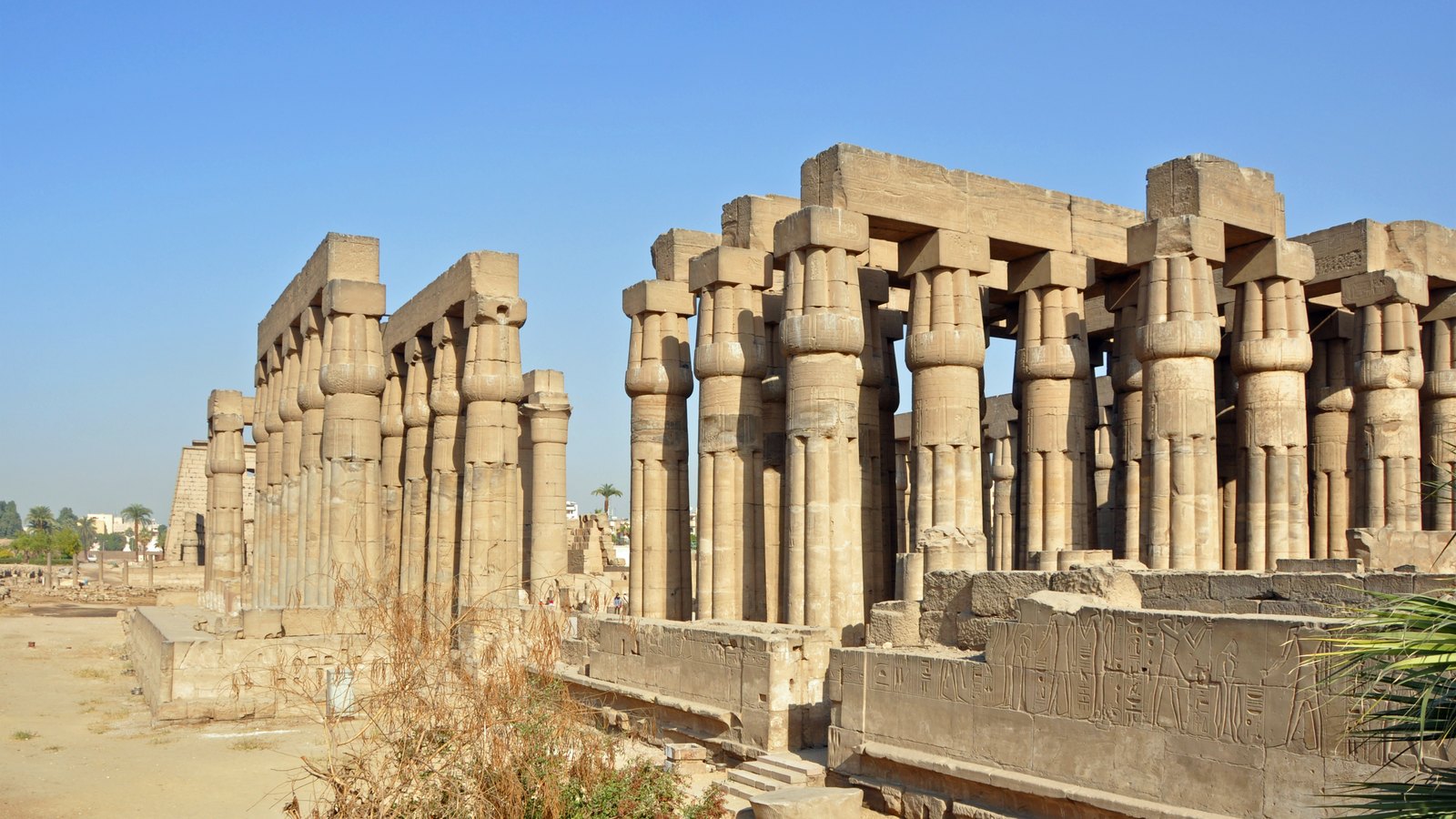
On November 23, 2026, U.S. Customs and Border Protection published a final rule extending bilateral import restrictions on archaeological and ethnological material from Egypt through November 30, 2031, requiring American university museums, academic researchers, and compliance offices to maintain stringent provenance documentation and export certification before importing historical artifacts.
What Happened: CBP Extends Bilateral Cultural Property Agreement
The Department of Homeland Security and U.S. Customs and Border Protection issued a final rule, designated CBP Dec. 26-21 with Regulation Identifier Number RIN 1685-AA50, amending federal customs regulations at 19 CFR Part 12. The regulatory action, published in the Federal Register notice on Egyptian cultural property import restrictions, formalizes a five-year extension of import controls governing archaeological and ethnological items from Egypt. The decision implements a bilateral agreement executed by the United States and the Arab Republic of Egypt on November 9, 2026.
Under the Convention on Cultural Property Implementation Act (Pub. L. 97-446, 19 U.S.C. 2601 et seq.), the United States implements the 1970 UNESCO Convention on the Means of Prohibiting and Preventing the Illicit Import, Export and Transfer of Ownership of Cultural Property. Bilateral agreements enacted under 19 U.S.C. 2602(b) operate for five-year terms and may be extended under 19 U.S.C. 2602(e) and 19 CFR 12.104g(a) when the executive branch determines that cultural heritage remains vulnerable to pillage and that import controls offer vital protection.
The final rule was reviewed and approved under delegated authority by Susan S. Thomas, Executive Assistant Commissioner of the CBP Office of Trade, pursuant to Department of Homeland Security Delegation 07010.3 and Treasury Order 100-20. Operational enforcement will be managed by CBP Trade Programs Directorate, while legal determinations remain with the Cargo Security, Carriers and Restricted Merchandise Branch within Regulations and Rulings.
Key Details: Designated Material Categories and Regulatory Provisions
The extended restrictions apply to items on the Designated List originally published in CBP Dec. 16-23 and expanded in CBP Dec. 21-17. The categories cover archaeological material dating from approximately 300,000 B.C. to A.D. 1750 and ethnological material spanning A.D. 1517 to 1914. Schedules and classification criteria are maintained on the U.S. Department of State cultural property agreements portal.
The designated archaeological and ethnological groups include:
- Stone Objects: Monumental sculpture, architectural reliefs, sarcophagi, boundary stelae, statuettes, vessels, and Paleolithic through Dynastic stone tools.
- Ceramic and Clay Objects: Predynastic Naqada pottery, Pharaonic painted jars, Coptic terracotta lamps, Islamic glazed ceramics, and inscribed ostraca.
- Metal Artifacts: Cast and hammered statuettes, ceremonial vessels, jewelry, weapons, tools, and coins struck in bronze, silver, and gold up to A.D. 1750.
- Papyrus, Leather, and Parchment: Inscribed scrolls, fragments, cartonnage, and manuscripts in Hieroglyphic, Demotic, Coptic, Greek, and Arabic scripts.
- Wood, Faience, and Glass: Wooden coffins, statues, glass vessels, and Egyptian faience amulets and ushabti figurines.
- Ethnological Cultural Material: Ottoman and modern architectural elements, liturgical metalware, religious manuscripts, and ceremonial textiles (A.D. 1517–1914).
Under 19 U.S.C. 2606 and 19 CFR 12.104c, any designated article attempting entry into the United States is subject to detention and seizure unless accompanied by an official export certificate from the Government of Egypt, or verifiable evidence that the item left Egypt prior to restriction dates or at least ten years before U.S. entry. When research institutions exchange scientific specimens or artifact residues, compliance teams coordinate custody through a material transfer agreement to ensure regulatory traceability.
| Regulatory Action | Citation | Effective Dates | Covered Cultural Property | Authority |
|---|---|---|---|---|
| Initial Bilateral MOU | 81 FR 87805 (CBP Dec. 16-23) | Nov. 30, 2016 – Nov. 30, 2021 | Archaeological material from ~5,200 B.C. to A.D. 1517 | 19 U.S.C. 2602 |
| Superseding MOU | 86 FR 68546 (CBP Dec. 21-17) | Nov. 30, 2021 – Nov. 30, 2026 | Expanded to 300,000 B.C. – A.D. 1750; added ethnological (1517–1914) | 19 U.S.C. 2602(e) |
| Extension Rule | 91 FR 75451 (CBP Dec. 26-21) | Nov. 30, 2026 – Nov. 30, 2031 | Maintains full archaeological (300,000 B.C.–1750) and ethnological scope | Pub. L. 97-446 |
Background and Context: Evolution of U.S.-Egypt Cultural Heritage Protection
The bilateral framework between Washington and Cairo represents a central pillar of international antiquities protection. Following heightened looting risks across the Middle East in the early 2010s, the Government of Egypt requested U.S. import restrictions under Article 9 of the 1970 UNESCO Convention. The Cultural Property Advisory Committee (CPAC), a presidentially appointed body of archaeologists, museum curators, and legal experts, reviewed extensive evidence before recommending a bilateral agreement in 2016.
The initial 2016 agreement focused on Pharaonic through medieval artifacts, but field researchers writing in publications such as the American Journal of Archaeology documented ongoing threats to prehistoric sites and Ottoman-era structures. In response, both nations updated the Designated List in 2021 to protect early Paleolithic tools and historic ethnological heritage. The 2026 extension began with a State Department notice on January 26, 2026 (91 FR 3294). Following CPAC review, Assistant Secretary determinations on August 6, 2026, and diplomatic execution on November 9, 2026, CBP finalized the extension.
Sector Reaction and Academic Heritage Stewardship
The five-year renewal has received strong support from archaeological bodies and museum professionals. The Archaeological Institute of America site preservation initiative highlights that import restrictions at major border points suppress the black market demand fueling illicit excavations in Egypt.
University curators and museum registrars also align acquisition practices with federal import mandates. The American Alliance of Museums standards on archaeological material require institutions to verify provenance and reject unprovenanced artifacts that lack legal export certification from their country of origin. Upholding these standards reflects core principles of research ethics, safeguarding academic collections from questionable antiquities.
What It Means for Researchers, Universities, and Research Offices
For academic institutions, campus museums, and research offices, CBP Dec. 26-21 establishes clear compliance duties:
- Provenance Documentation: University museums and departments must establish clear provenance before acquiring, borrowing, or exhibiting Egyptian items. Objects must have verifiable proof of export prior to December 2016 (archaeological) or December 2021 (ethnological), or carry an official export permit from Egypt’s Ministry of Tourism and Antiquities.
- Fieldwork and Specimen Transfers: Research missions transporting soil samples, ceramic sherds, or organic residues for laboratory dating or isotopic analysis must obtain formal export clearance from Egyptian authorities before shipping to U.S. labs.
- Customs Filings and Logistics: Shipping coordinators and customs brokers must correctly declare designated items on entry filings. Missing documentation leads to immediate customs detention under 19 CFR 12.104c.
- Research Security and Oversight: Compliance teams should align antiquities clearance with broader export control regulations in international collaboration to maintain seamless institutional compliance.
What Happens Next: Implementation and Long-Term Compliance Milestones
The final rule takes effect on November 30, 2026, ensuring continuous import restrictions across all U.S. ports through November 30, 2031.
Throughout this period, CBP and the State Department will coordinate bilateral enforcement with Egyptian authorities. Ahead of the 2031 expiration date, CPAC will conduct another statutory review to evaluate the agreement’s effectiveness and recommend future extensions.
Sources
- Federal Register: Extension of Import Restrictions Imposed on Archaeological and Ethnological Material of Egypt, checked 2026-11-23
- U.S. Department of State: Current Agreements and Import Restrictions, checked 2026-11-23
- Archaeological Institute of America: Site Preservation Program, checked 2026-11-23
- American Alliance of Museums: Standards Regarding Archaeological Material and Ancient Art, checked 2026-11-23






