
U.S. Customs and Border Protection and the Department of the Treasury have formally extended import restrictions on archaeological and Byzantine ethnological materials from Greece through November 21, 2031, imposing heightened provenance documentation standards that directly affect university excavations, museum loan agreements, and archaeometry testing laboratories across the United States.
Bilateral Extension and Regulatory Framework
On November 20, 2026, U.S. Customs and Border Protection (CBP), operating within the Department of Homeland Security in conjunction with the Department of the Treasury, published a final rule in the Federal Register (FR Doc. 2026-23724, CBP Dec. 26-20) extending import restrictions on designated Greek cultural property for five years. The final rule, effective November 21, 2026, amends federal customs regulations at 19 CFR 12.104g(a) to reflect the continued bilateral commitment between the United States and the Hellenic Republic.
The legal framework rests upon the Convention on Cultural Property Implementation Act (CPIA, 19 U.S.C. 2601 et seq.), which implements the 1970 UNESCO Convention. Under the CPIA, the United States may enter into bilateral agreements to restrict imports of designated archaeological and ethnological materials whose pillage endangers a nation’s cultural heritage. Extending the underlying 2011 Memorandum of Understanding (MOU) prevents unauthorized entry unless the importer provides official export permits from the Hellenic Ministry of Culture or verified proof of lawful pre-restriction acquisition.
Designated Categories and Restriction Parameters
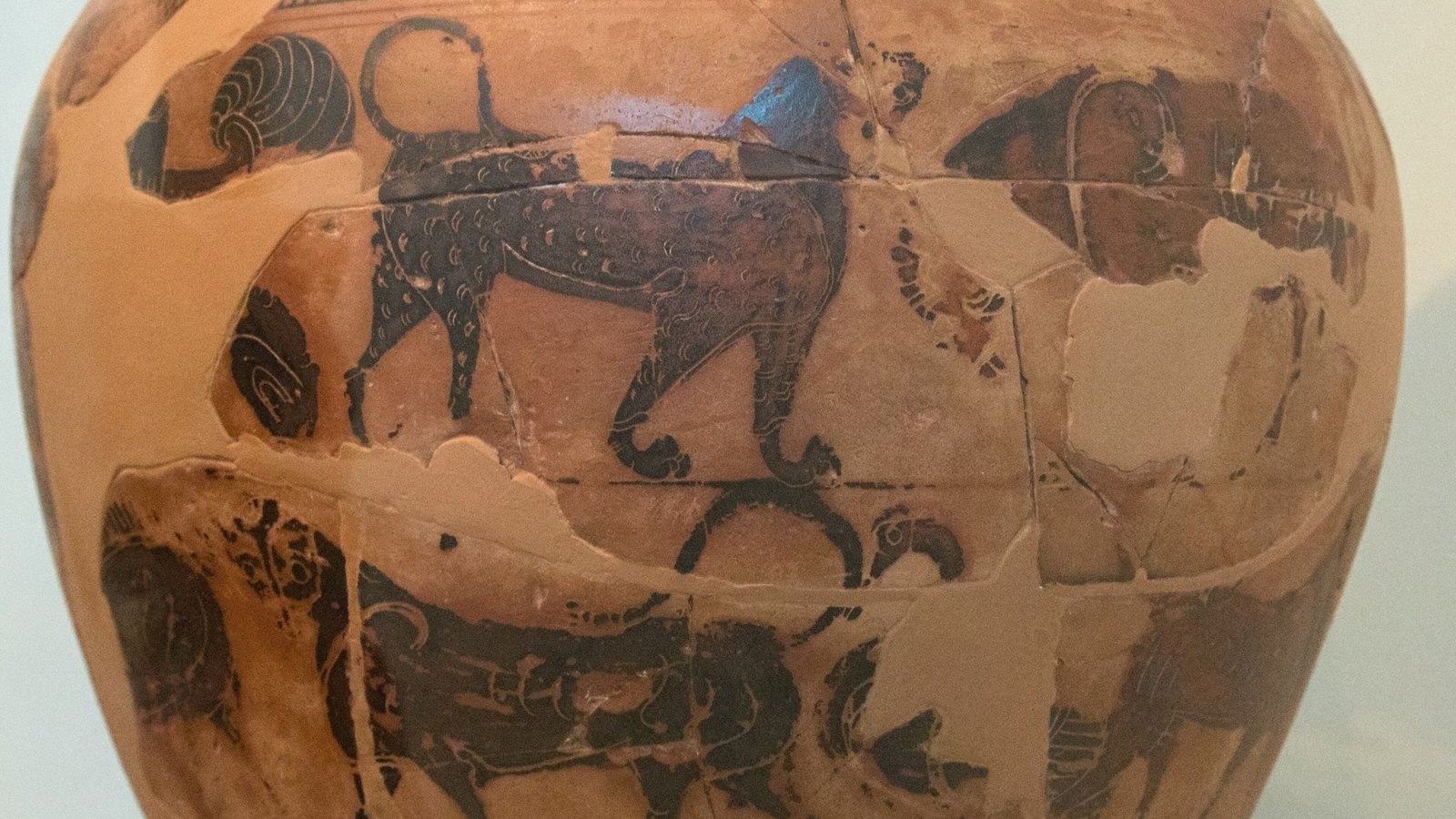
The renewed restrictions cover two major categories of cultural property originating in the Hellenic Republic. The first category covers archaeological material dating from the Upper Paleolithic period (approximately 20,000 B.C.) through the 15th century A.D. This designation includes stone sculpture and architecture, metal artifacts in bronze, iron, silver, and gold, ceramics from Neolithic wares to classical Attic painted vases, terracotta figurines, inscribed tablets, glass, bone, ivory, and intact or fragmented wall paintings and mosaics.
The second category encompasses ecclesiastical ethnological material from the Early Christian, Byzantine, and post-Byzantine periods, dating from the 4th century A.D. (circa A.D. 324) through 1830 A.D. Protected objects include religious icons painted on wood panels, church architectural elements, marble relief carvings, liturgical vessels, vestments, and illuminated manuscripts.
| Designated Category | Chronological Horizon | Representative Material Types | Required Import Documentation |
|---|---|---|---|
| Greek Archaeological Material | Upper Paleolithic (ca. 20,000 B.C.) to 15th Century A.D. | Ceramics, stone sculpture, bronze armor, coins, glass, mosaics | Hellenic Ministry of Culture export permit or verified pre-2011 provenance |
| Ecclesiastical Ethnological Material | Early Christian to Post-Byzantine (A.D. 324 to 1830) | Panel icons, liturgical textiles, church metalwork, manuscripts | Hellenic Ministry of Culture export permit or verified pre-2011 provenance |
| Scientific and Research Loans | All designated periods | Excavated artifacts, radiocarbon samples, osteological remains | Official temporary scientific export permit and institutional loan agreement |
| Pre-Restriction Inventory | Acquired prior to November 21, 2011 | Holdings outside Greece | Verifiable documentation proving continuous lawful possession outside Greece |
Evolution of the U.S.–Greece Cultural Property Agreement
The bilateral agreement was originally signed on July 17, 2011, and took effect on November 21, 2011 (CBP Dec. 11-25). The accord established a five-year framework to curb clandestine excavation and illicit antiquities trade. Following extensions in 2016 (CBP Dec. 16-21) and 2021 (CBP Dec. 21-16), the agreement underwent statutory review in 2026. Documentation from the State Department Cultural Heritage Center explains how bilateral MOUs are evaluated to confirm that pillage risks persist and that partner states maintain active domestic protection measures while enabling cultural exchange.
The extension was formalized on October 7, 2026, when Greek Minister of Culture Lina Mendoni and U.S. Assistant Secretary of State for Educational and Cultural Affairs Catherine Dillon signed the renewed accord in Athens during the 6th U.S.–Greece Strategic Dialogue. Reporting by The National Herald noted that bilateral cooperation helped secure the restitution of 425 cultural objects between 2021 and 2026, including 98 items returned directly under MOU procedures alongside joint operations with Homeland Security Investigations and the Manhattan District Attorney’s Antiquities Trafficking Unit.
Stakeholder Perspectives and Regulatory Deliberations
The extension followed public proceedings before the Cultural Property Advisory Committee (CPAC) in Washington from March 3 to 5, 2026. Academic bodies, including the Archaeological Institute of America and the American School of Classical Studies at Athens, submitted testimony supporting renewal. Researchers emphasized that unconstrained trade in unprovenanced artifacts incentivizes destructive looting, destroying archaeological context before scientific analysis can occur.
Conversely, commercial art trade representatives and numismatic groups voiced concerns regarding broad listing categories. Detailed policy analysis from Cultural Property News noted that perpetual five-year extensions impose heavy documentation burdens on collectors and dealers, particularly for widely circulated ancient coins minted outside modern territorial boundaries. Nevertheless, CPAC concluded that ongoing illicit market pressures justified continuing import controls across all designated categories.
Operational Impact on Universities, Museums, and Archaeometry Labs
For academic research institutions, the five-year extension mandates strict compliance across departments and sponsored programs. Field excavation projects conducted in Greece must adhere to Greek heritage law (Law 3028/2002) and federal customs standards. Research findings and site analyses regularly reported in publications such as the American Journal of Archaeology depend upon verifiable stratigraphic documentation and formal excavation licenses issued by regional archaeological ephorates.
When physical specimens—such as ceramic sherds, charcoal, or osteological samples—are shipped to U.S. university laboratories for destructive testing (including radiocarbon dating, stable isotope mass spectrometry, or petrographic analysis), researchers cannot treat them as regular research goods. Shipments lacking export permits from the Hellenic Ministry of Culture face detention by CBP at ports of entry under 19 U.S.C. 2606. Research offices should document sample shipments using a formal material transfer agreement referencing valid permit numbers, while maintaining alignment with international access and benefit-sharing compliance standards.
University museums and galleries hosting temporary loans must follow parallel clearance protocols. Institutional shipments must pass standard customs clearance process checks, filing formal Entry Summaries citing CPIA designations. Under 19 CFR 12.104c, if an importer lacks an export certificate at arrival, CBP detains the shipment for 90 days, extendable up to one year to obtain foreign documentation. If valid permits or lawful pre-restriction proof are not produced, items face seizure and forfeiture under 19 U.S.C. 2609. Consequently, research institutions must embed cultural property screening into their policies for international research collaboration.
Implementation Timeline and Future Reviews
The extended import restrictions take effect on November 21, 2026, and remain in force through November 21, 2031. Throughout this five-year period, U.S. and Greek authorities will maintain bilateral customs coordination, law enforcement training, and provenance verification programs. The Hellenic Ministry of Culture also announced an upcoming exhibition at the National Archaeological Museum in Athens featuring antiquities repatriated from the United States.
University compliance offices, academic departments, and museum registrars should use the renewal window to review existing loan agreements, audit incoming archaeological material, and verify permit tracking systems. Under statutory review requirements, CPAC will open the next public evaluation process for the U.S.–Greece agreement in early 2031 before the November expiration.
Sources
- Federal Register: Extension of Import Restrictions Imposed on Archaeological and Ethnological Material of Greece (CBP Dec. 26-20), checked 2026-11-22
- Electronic Code of Federal Regulations: 19 CFR 12.104g Specific Items or Categories Designated by Agreements, checked 2026-11-22
- U.S. Department of State Cultural Heritage Center: Greece Cultural Property Agreement, checked 2026-11-22
- The National Herald: Greece, U.S. Strengthen Cooperation on Cultural Heritage Protection – MoU Renewed Until 2031, checked 2026-11-22
- Cultural Property News: The Greece MOU Request: Broad Restrictions, Thin Evidence, checked 2026-11-22






