
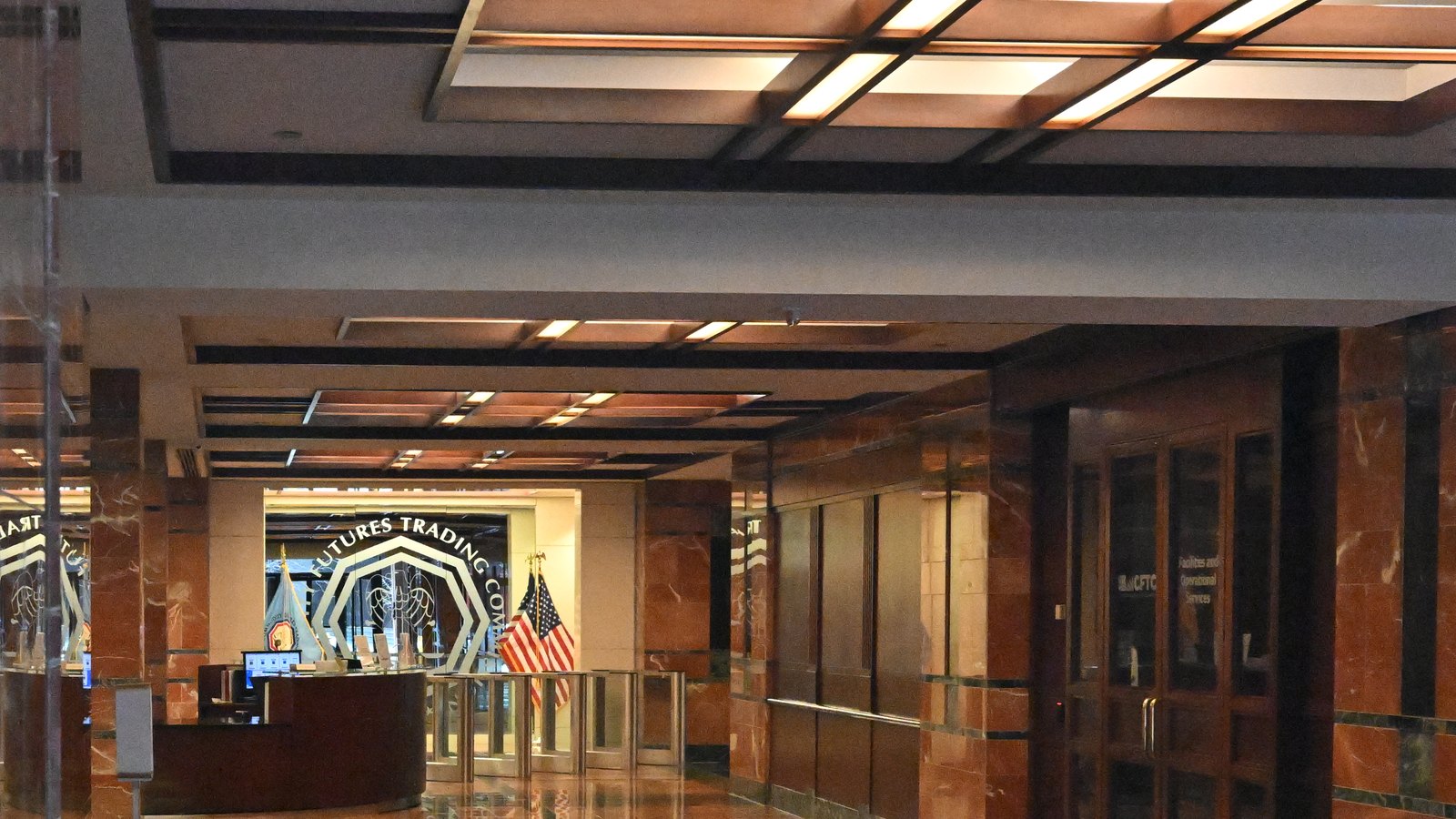
On November 23, 2026, the Commodity Futures Trading Commission submitted two companion regulatory information collections governing commodity pool operator activities and security futures products to the Office of Management and Budget for final clearance, establishing significant operational reporting baselines that directly impact university endowment investment offices, academic derivatives compliance programs, and quantitative financial-econometrics researchers across the United States.
Regulatory Filings Forwarded to OMB
The Commodity Futures Trading Commission (CFTC) published two formal notices in the Federal Register on November 23, 2026, submitting major information collection requests to the Office of Information and Regulatory Affairs (OIRA) within the Office of Management and Budget (OMB). Under Federal Register notice 2026-23801, the Commission requested renewal of OMB Control No. 3038-0005, governing rules relating to the operations and activities of commodity pool operators (CPOs) and commodity trading advisors (CTAs), as well as monthly reporting by futures commission merchants (FCMs). Concurrently, through Federal Register notice 2026-23800, the agency forwarded OMB Control No. 3038-0059 for Part 41 rules governing security futures products.
Both submissions proceed under the Paperwork Reduction Act of 1995, requiring federal agencies to justify administrative burdens. The Part 4 collection derives from Sections 4n(3) and 8a(5) of the Commodity Exchange Act (7 U.S.C. 6n(3) and 7 U.S.C. 8a(5)), empowering the Commission to establish recordkeeping and disclosure regimes. The Part 41 collection is rooted in Section 4d(c) of the Commodity Exchange Act (7 U.S.C. 6d(c)), requiring coordination with the Securities and Exchange Commission (SEC) to avoid conflicting regulations for dually registered intermediaries. Public comments on both proposed extensions remain open through December 23, 2026.
Key Specifications and Burden Hours
The two collections differ substantially in scope and compliance volume. While the Part 4 CPO and CTA framework encompasses tens of thousands of active market participants, fund administrators, and pool principals, Part 41 addresses structural election requirements for dually registered clearing and execution entities operating across securities and futures exchanges.
| Metric or Characteristic | OMB Control No. 3038-0005 (Part 4) | OMB Control No. 3038-0059 (Part 41) |
|---|---|---|
| Federal Register Citation | 91 FR 75501 (Doc. 2026-23801) | 91 FR 75503 (Doc. 2026-23800) |
| Governing Regulation | 17 CFR Part 4 (CPOs, CTAs, FCMs) | 17 CFR Part 41 (Security Futures) |
| Statutory Authority | CEA Sections 4n(3) and 8a(5) | CEA Section 4d(c) and SIPA |
| Affected Entities | CPOs, CTAs, FCMs, and pool principals | DCMs (2) and FCMs (8) |
| Estimated Respondent Count | 49,083 respondents | 10 respondents |
| Reports per Respondent | 8.8 exempt pools/reports | Occasional structural election |
| Average Burden per Response | Variable by form and exemption tier | 60 hours (rounded) |
| Total Annual Burden Hours | 432,325 hours | 603 hours |
| Operating and Capital Costs | Detailed in Supporting Statement | Zero reported capital or operating costs |
| Public Comment Deadline | December 23, 2026 | December 23, 2026 |
Under the regulatory framework codified in Title 17 Part 4 of the Code of Federal Regulations, the 432,325 aggregate annual burden hours represent recurring compliance obligations, including initial registration disclosures, annual pool financial statements, monthly account statements, and electronic filings through Form CPO-PQR and Form CTA-PR. As codified and analyzed in Cornell Law School Legal Information Institute, these operational mandates ensure that pool participants receive transparent accounts of risk exposures, fee structures, and trading strategies.
Statutory Context and Inter-Agency Coordination
The operational framework of 17 CFR Part 4 expanded significantly following the Dodd-Frank Wall Street Reform and Consumer Protection Act of 2010, which integrated swaps into the Commodity Exchange Act. The authoritative regulatory compilation maintained in the U.S. Government Publishing Office CFR repository illustrates how reporting rules apply across diverse investment vehicles, distinguishing between fully registered entities and operators claiming targeted exclusions.
In parallel, the Part 41 collection under OMB Control No. 3038-0059 represents inter-agency coordination between the CFTC and the SEC. When financial firms operate dually as broker-dealers under securities laws and as futures commission merchants under commodities laws, transactions in security futures products create overlapping jurisdictions. Section 4d(c) mandates that dually registered firms establish a clear election for customer accounts: either treating transactions as securities subject to the Securities Investor Protection Act (SIPA) insurance framework, or treating them as futures subject to statutory customer fund segregation under the Commodity Exchange Act. In evaluating federal reporting burdens, these dual tracks are aligned with overarching OMB compliance review mechanisms that assess administrative necessity and cost-benefit balances.
Institutional Perspectives and Administrative Feedback
The submission of both information collections follows a 60-day preliminary consultation period initiated in August 2026. For the Part 4 collection (91 FR 52677, August 14, 2026), the Commission received one formal comment submitted anonymously to the public docket, asserting that the CFTC preliminary notice omitted monetized public labor costs and operational overhead expenses necessary to evaluate the economic impact of Part 4 recordkeeping.
In its final submission to OMB, the CFTC responded that monetized figures, detailed labor rates across compliance officers and legal personnel, and system maintenance expenditures are fully incorporated into the formal Supporting Statement submitted to OIRA. Because the commenter did not challenge the underlying utility of the regulatory collections or provide alternative empirical estimates, the Commission maintained its baseline calculation of 432,325 burden hours. For the Part 41 collection (91 FR 53610, August 19, 2026), no substantive comments were filed, leading the agency to retain its 603-hour estimate across 10 institutional respondents.
Financial industry participants and legal practitioners have consistently emphasized predictable filing schemas and automated data validation. Through the National Futures Association (NFA), registered CPOs utilize the EasyFile digital platform to satisfy Form CPO-PQR reporting. By maintaining standardized XML schema validations and substituted compliance pathways, the regulatory apparatus seeks to limit administrative friction while preserving market transparency. These mechanisms align directly with the broader objectives of institutional research integrity and compliance across complex regulated environments.
Implications for University Endowments and Quantitative Researchers
Although CFTC Part 4 regulations primarily target commercial asset managers, their technical definitions carry direct legal consequences for university endowment funds and institutional investment offices. Modern university endowments routinely deploy asset allocation strategies involving commingled private funds, real-asset syndicates, foreign exchange hedging, and synthetic derivative overlays. Under statutory definitions, commingled vehicles utilizing commodity interests or swaps can qualify as commodity pools, potentially subjecting university investment committees or internal asset management corporations to CPO registration.
To prevent administrative diversion from educational missions, university endowment managers rely on specific exemptive safe harbors within Part 4. The primary mechanism is CFTC Rule 4.13(a)(3), commonly known as the de minimis exemption, which relieves operators from full registration and Form CPO-PQR filing if commodity interest positions remain below statutory thresholds (such as 5 percent of portfolio liquidation value dedicated to initial margin and option premiums). Alternatively, qualifying educational endowment pools utilize exclusions under Rule 4.5. Ensuring strict ongoing adherence to these trading thresholds requires robust administrative tracking, reinforcing the vital role of internal controls in institutional compliance frameworks established across major academic institutions.
Beyond institutional portfolio management, the OMB review holds profound value for academic economists, financial econometricians, and quantitative market researchers. Aggregated data harvested through Form CPO-PQR, Form CTA-PR, and CFTC commitments of traders reports constitute primary empirical datasets for studying market microstructure, price discovery dynamics, liquidity shocks, and systemic leverage in derivatives markets. Academic researchers evaluating portfolio risk modeling and the macroeconomic transmission of commodities shocks depend on the consistency, granular categorization, and data integrity established by federal reporting collections. Rigorous compliance baselines established at the federal level reinforce best practices in research data governance protocols, ensuring public data releases remain reproducible, verifiable, and structurally sound for scientific inquiry.
Next Steps and Regulatory Timeline
The publication of notices 2026-23801 and 2026-23800 initiates a 30-day review period during which OIRA will evaluate the CFTC submissions against Paperwork Reduction Act standards. Interested parties, including institutional investors, higher education financial associations, derivatives market participants, and academic researchers, must transmit all formal comments to OMB on or before December 23, 2026.
Submissions may be entered electronically through the federal Reginfo.gov portal or via Regulations.gov under the relevant agency docket listings. Following the conclusion of the 30-day comment window, OMB will determine whether to approve the three-year extensions for OMB Control Nos. 3038-0005 and 3038-0059. Regulated market participants, university investment offices, and intermediary compliance teams must maintain regular reporting cycles through NFA EasyFile and ensure all annual pool documentation aligns with current federal standards.
Sources
- Federal Register: Agency Information Collection Activities Under OMB Review (Rules Relating to the Operations and Activities of Commodity Pool Operators, OMB Control No. 3038-0005), checked 2026-11-29
- Federal Register: Agency Information Collection Activities Under OMB Review (Part 41 Security Futures Products, OMB Control No. 3038-0059), checked 2026-11-29
- Electronic Code of Federal Regulations: 17 CFR Part 4 — Commodity Pool Operators and Commodity Trading Advisors, checked 2026-11-29
- Legal Information Institute: 17 CFR Part 4 — Commodity Pool Operators and Commodity Trading Advisors, checked 2026-11-29
- GovInfo: Title 17 Code of Federal Regulations Part 4 (Commodity Pool Operators and Commodity Trading Advisors), checked 2026-11-29






